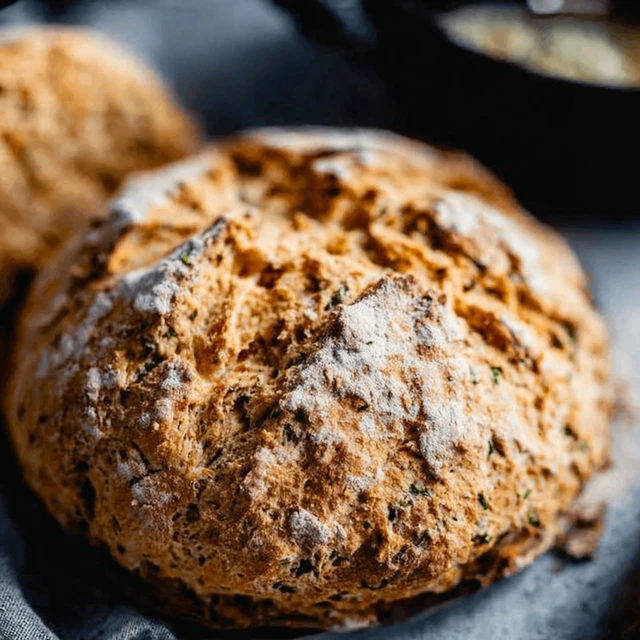
Some breads are built on the slow, patient magic of yeast, a process of rising and waiting that can span hours or even days. This is not one of those breads. Oatmeal soda bread is a creature of beautiful, rustic immediacy, a testament to the idea that a warm, hearty loaf can be yours in under an hour, born from pantry staples and a bit of culinary alchemy between buttermilk and baking soda. It’s the bread you make when the craving for comfort strikes without warning, when a pot of soup is simmering on the stove and demands a worthy companion, right now.
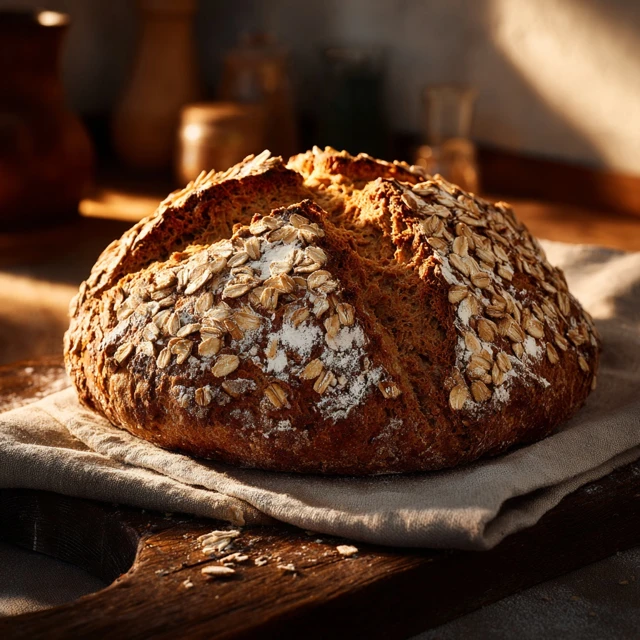
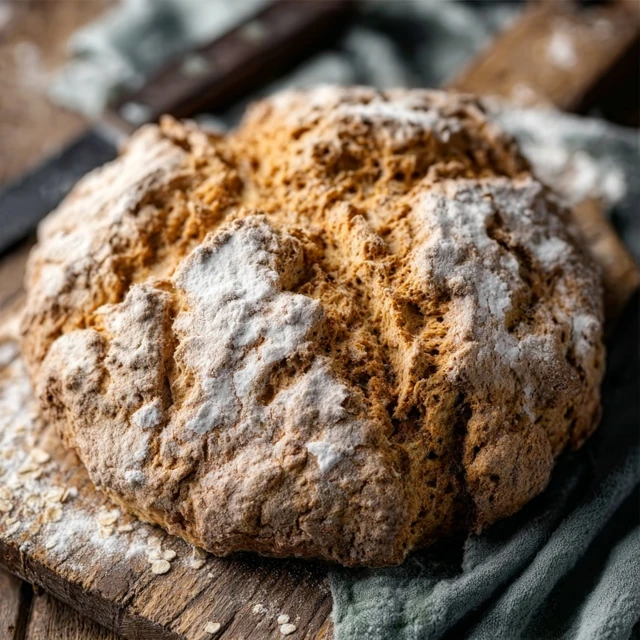
The result is a loaf with a craggy, golden-brown crust that crackles ever so slightly under the knife, revealing a soft, wonderfully moist, and chewy crumb inside. The rolled oats lend a wholesome, nutty flavor and a delightful texture that sets it apart from its plainer cousins. Each slice is a perfect canvas, dense enough to hold a generous smear of cold butter, yet tender enough to melt in your mouth, carrying the subtle, tangy whisper of buttermilk in every bite.
Why This Oatmeal Soda Bread Works
- No Yeast, No Kneading, No Waiting: This is the ultimate quick bread. The chemical reaction between baking soda and buttermilk does all the work, meaning you can go from mixing bowl to cooling rack in about 45 minutes.
- Hearty & Wholesome Texture: The addition of rolled oats creates a wonderfully rustic, chewy, and substantial crumb that is both satisfying and delicious. It feels like a bread with history and character.
- Incredibly Versatile: It’s just as perfect toasted with jam for a quick breakfast as it is for sopping up the last drops of a rich stew for dinner. Its subtle flavor complements both sweet and savory pairings.
Gather Your Supplies

The beauty of this bread lies in its simplicity. You likely have most, if not all, of these ingredients waiting in your kitchen right now. They come together to create something far greater than the sum of their parts.
- All-Purpose Flour: (The primary structural component, giving the bread its body and form).
- Old-Fashioned Rolled Oats: (The star of the show, providing a nutty flavor, chewy texture, and that classic rustic look. Do not use instant or steel-cut oats).
- Granulated Sugar: (Just a touch to balance the tang of the buttermilk and add a hint of sweetness).
- Baking Soda: (The essential leavening agent that reacts with the buttermilk to create the lift and airy texture, making yeast unnecessary).
- Salt: (Crucial for enhancing all the other flavors in the bread).
- Buttermilk: (The acidic liquid that activates the baking soda. Its tang is a signature flavor of soda bread).
- Large Egg: (Adds richness, moisture, and helps bind the ingredients together for a more tender crumb).
- Unsalted Butter, melted: (Provides flavor, richness, and contributes to the soft texture of the interior).
Pantry Alternatives
Don’t have everything on hand? No problem. This recipe is wonderfully forgiving and easy to adapt.
- No Buttermilk? You can easily make a substitute. For every 1 cup of buttermilk, use 1 cup of regular milk mixed with 1 tablespoon of either lemon juice or white vinegar. Let it sit for 5-10 minutes to curdle slightly before using.
- Flour Swaps: For an even heartier loaf, you can substitute up to half of the all-purpose flour with whole wheat flour. This will result in a denser, nuttier bread, reminiscent of a classic Irish Brown Bread.
- Sweetener Options: Feel free to swap the granulated sugar for an equal amount of brown sugar for a deeper, molasses-like flavor, or use a tablespoon of honey or maple syrup.
- Fat Alternatives: If you’re out of butter, you can use a neutral-flavored oil like canola or vegetable oil in its place. The flavor will be slightly different, but the texture will still be lovely.
Make It Your Own
While this bread is perfect in its classic form, it also serves as a fantastic base for your own creative additions. Think of it as a blank canvas for flavor.
- Savory Herb and Cheese: Add 1 cup of shredded sharp cheddar cheese, 2 tablespoons of chopped fresh chives, and 1 teaspoon of dried rosemary to the dry ingredients. This version is absolutely incredible served warm with a bowl of soup.
- Sweet and Fruity: For a breakfast-worthy twist, mix in 3/4 cup of raisins or dried cranberries and 1 teaspoon of ground cinnamon with the dry ingredients. It’s delicious toasted and slathered with butter.
- Seeded Crust: Before baking, brush the top of the loaf with a little extra buttermilk and sprinkle generously with a mix of seeds like pumpkin seeds, sunflower seeds, and sesame seeds for extra crunch and visual appeal.
- Muffin Form: If you love the idea of individual portions, you can adapt this recipe to make something similar to these Irish Soda Bread Muffins. Simply divide the dough into a greased muffin tin and reduce the baking time to 20-25 minutes.
How to Make Oatmeal Soda Bread

The process is straightforward and quick. The most important rule is to work gently and swiftly once the wet ingredients are added to the dry.
Step 1: Prepare Your Oven and Pan
First things first, preheat your oven to 375°F (190°C). This is crucial because the leavening action starts immediately, and you want the oven ready to go. Lightly grease a baking sheet or line it with parchment paper for easy cleanup.
Step 2: Combine the Dry Ingredients
In a large mixing bowl, whisk together the all-purpose flour, rolled oats, granulated sugar, baking soda, and salt. Whisking is important as it evenly distributes the baking soda, ensuring a consistent rise throughout the loaf. This is a key difference from a standard Traditional Irish Soda Bread, as the oats add a completely different texture. The versatility of oats is amazing; they can create a hearty bread or even something sweet like Irish Oatmeal Cookies.
Step 3: Mix in the Wet Ingredients
In a separate, smaller bowl, whisk together the buttermilk and the egg until they are well combined. Pour this mixture, along with the melted butter, into the bowl with the dry ingredients.
Step 4: Form the Dough
Using a spatula or wooden spoon, mix the ingredients until they just come together to form a shaggy, sticky dough. Do not overmix. A few dry spots are perfectly fine. Overworking the dough will develop the gluten and result in a tough, dense bread instead of a tender one.
Turn the dough out onto a lightly floured surface. With floured hands, gently and quickly bring the dough together into a round, slightly flattened disc, about 6-7 inches in diameter. Transfer the loaf to your prepared baking sheet.
Step 5: Score and Bake
Using a sharp knife, cut a deep “X” across the top of the loaf, about half an inch deep. This isn’t just for decoration; it allows heat to penetrate the center of the dense loaf, helping it to bake evenly.
Place the baking sheet in the preheated oven and bake for 35-45 minutes. The bread is done when it’s a deep golden brown and sounds hollow when you tap the bottom.
Step 6: Cool and Enjoy
Remove the bread from the oven and transfer it to a wire rack to cool completely. While it’s tempting to slice into it immediately, letting it cool allows the crumb to set properly. This step is essential for getting clean slices.
Expert Tips for Success
- Do Not Overmix: This is the most critical rule of soda bread. Mix only until the dough just comes together. A shaggy, slightly lumpy dough is exactly what you want for a tender, light crumb.
- Work Quickly: Once the buttermilk hits the baking soda, the chemical reaction that creates the rise begins. For the best lift, you need to get the bread shaped and into the hot oven as quickly as possible.
- Trust the Hollow Sound: The best way to check for doneness is to carefully lift the loaf (with an oven mitt!) and give the bottom a firm tap. If it sounds hollow, like a drum, it’s ready. If it sounds dull, it needs a few more minutes.
What to Serve with Oatmeal Soda Bread
This rustic loaf is a welcome addition to almost any meal, bridging the gap between breakfast, lunch, and dinner with ease.
For a simple and classic treat, serve a thick, warm slice with a generous amount of good-quality salted butter and your favorite jam or honey. It’s a perfect start to the day or a lovely afternoon snack with a cup of tea.
This bread was practically made for soup season. Its sturdy texture is ideal for dipping and sopping up every last bit of a hearty broth. It is an absolutely perfect partner for a rich, pub-style
What can I use if I don’t have buttermilk?
You can easily make a substitute by mixing 1 cup of regular milk with 1 tablespoon of either lemon juice or white vinegar. Let the mixture sit for 5-10 minutes to curdle slightly before using it in the recipe.
Why is it so important not to overmix the soda bread dough?
Overmixing the dough develops the gluten, which results in a tough and dense bread instead of a tender one. You should only mix until the ingredients just come together to form a shaggy, sticky dough.
Can I use instant or steel-cut oats instead of rolled oats?
No, the article specifically advises against it. You should use old-fashioned rolled oats to achieve the intended nutty flavor, chewy texture, and classic rustic look of the bread.
How does this bread rise without any yeast?
This bread uses a chemical reaction for leavening. The baking soda (an alkali) reacts with the acidic buttermilk, creating carbon dioxide gas that gives the bread its lift and airy texture, making yeast unnecessary.
Rustic Oatmeal Soda Bread
Ingredients
Equipment
Method
- Preheat your oven to 375°F (190°C). Lightly grease a baking sheet or line it with parchment paper.
- In a large mixing bowl, whisk together the all-purpose flour, rolled oats, granulated sugar, baking soda, and salt until well combined.
- In a separate medium bowl, whisk together the buttermilk and the egg. Pour this mixture, along with the melted butter, into the dry ingredients.
- Using a spatula or wooden spoon, mix until the ingredients just come together to form a shaggy, sticky dough. Do not overmix.
- Turn the dough out onto a lightly floured surface. With floured hands, gently and quickly shape the dough into a round, slightly flattened disc, about 6-7 inches in diameter. Transfer the loaf to your prepared baking sheet.
- Using a sharp knife, cut a deep ‘X’ across the top of the loaf, about half an inch deep. This helps the center bake evenly.
- Bake for 35-45 minutes, or until the loaf is deep golden brown and sounds hollow when you tap the bottom.
- Remove the bread from the oven and transfer it to a wire rack to cool completely before slicing and serving.