Ingredients
Equipment
Method
- Preheat oven to 325°F (163°C).
- Pat the chuck roast completely dry with paper towels. Generously season all over with salt and pepper.
- Heat oil in a large Dutch oven over medium-high heat until shimmering. Sear the roast for 4-5 minutes per side, including the edges, until a deep brown crust forms. Transfer roast to a plate.
- Reduce heat to medium. Add the chopped onions, carrots, and celery to the pot with a pinch of salt. Cook for 8-10 minutes, stirring occasionally, until softened and starting to brown.
- Add the smashed garlic and tomato paste. Cook for 1 minute, stirring, until the paste darkens slightly and becomes fragrant.
- Pour in the red wine, scraping the bottom of the pot with a wooden spoon to release all the browned bits. Simmer for 2-3 minutes to cook off the raw alcohol.
- Add the beef broth, thyme sprigs, and bay leaves. Bring to a simmer.
- Carefully place the seared roast back into the pot along with any accumulated juices. Cover with the lid.
- Transfer the covered pot to the preheated oven. Braise undisturbed for 2 hours.
- Carefully remove the pot from the oven. Nestle the potato chunks and remaining carrot chunks around the roast, submerging them in the liquid as much as possible.
- Cover and return to the oven for another 1 to 1.5 hours, until the meat and vegetables are fork-tender.
- Transfer the meat and vegetables to a platter and tent loosely with foil to rest.
- For the gravy, skim excess fat from the surface of the braising liquid. For a thicker gravy, simmer the liquid on the stovetop for 10-15 minutes to reduce, or whisk in a slurry of 2 tablespoons cornstarch mixed with 2 tablespoons cold water and simmer until thickened.
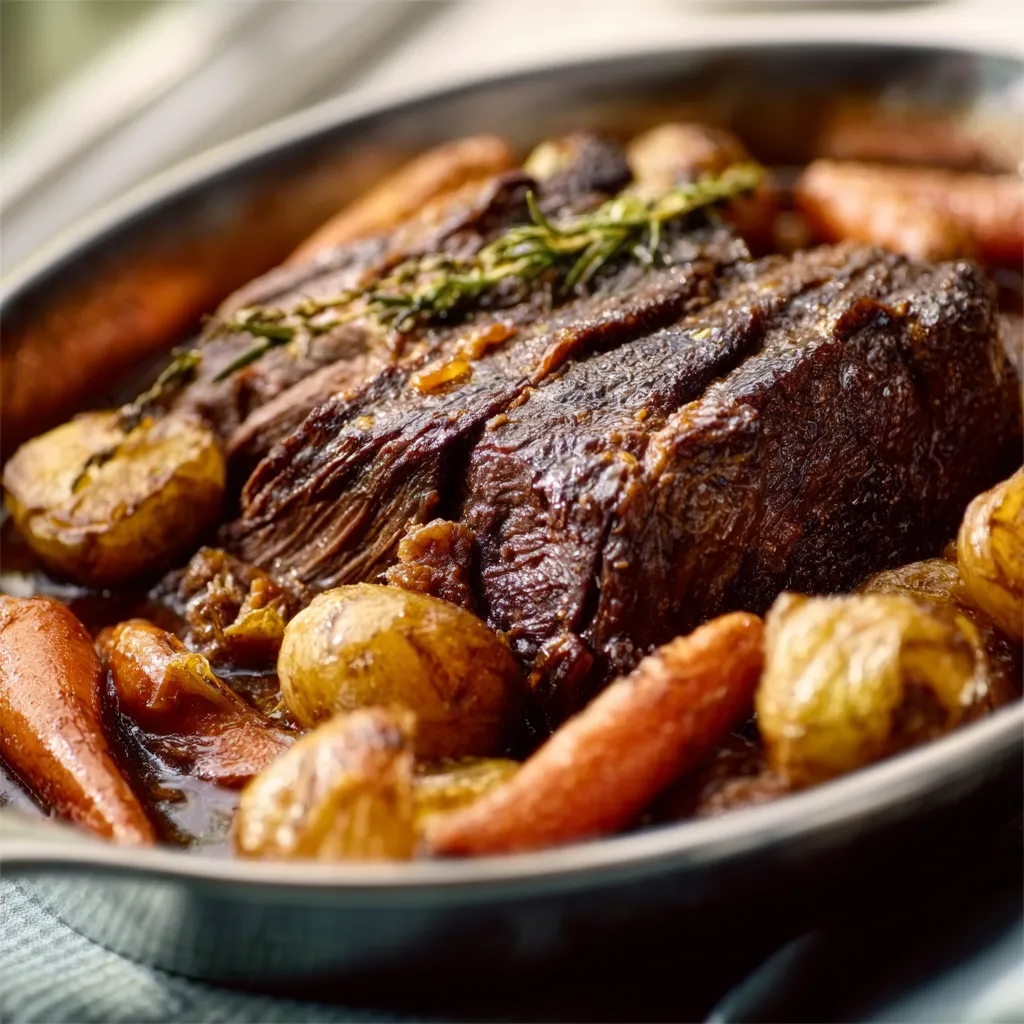
- Shred or slice the roast. Serve with the vegetables and gravy.
Notes
For best results, do not skip the searing step. Use a chuck roast for its ideal fat content. If you don't have red wine, substitute with 1 cup beef broth mixed with 1 tablespoon balsamic vinegar. Leftovers can be stored in an airtight container in the refrigerator for up to 4 days. The flavor often improves the next day. For a slow cooker version, complete steps 2-7 on the stovetop, then transfer everything to a slow cooker and cook on LOW for 8-10 hours.