Some dishes whisper, and some sing. This pea and bacon risotto belts out a full-throated aria of flavor right from the pan, a vibrant celebration of salty, sweet, and savory that feels both incredibly comforting and surprisingly elegant. It’s the kind of meal that commands your attention, not with complex techniques, but with the simple, soul-satisfying magic that happens when a few perfect ingredients are treated with a little patience and a lot of love.
Forget any notion of risotto being a fussy, restaurant-only affair. This is your weeknight hero, your dinner party showstopper, your “I need comfort food now” champion. We’re talking about a creamy, dreamy river of rice, studded with crispy, salty jewels of bacon and punctuated by bursts of sweet, tender peas, all held together by a savory Parmesan embrace. It’s a textural masterpiece that will make you feel like a culinary genius, one patient stir at a time.
The Pea and Bacon Risotto Difference
- The Salty-Sweet Symphony: The smoky, salty crunch of bacon is the perfect counterpoint to the bright, sweet pop of the peas. This isn’t just a random combination; it’s a classic pairing that creates a dynamic, unforgettable flavor profile in every single bite.
- Creaminess Without the Cream: The magic of this recipe lies in the technique. By slowly adding warm broth and constantly stirring, you release the natural starches from the Arborio rice, creating a luxuriously creamy sauce without a single drop of heavy cream.
- Perfect Textural Contrast: From the al dente chew of the rice to the crispiness of the bacon and the tender burst of the peas, this dish is a masterclass in texture. It keeps your palate engaged and makes each spoonful more interesting than the last.
The Building Blocks

The beauty of a great risotto is that it relies on a handful of high-quality, humble ingredients. There’s nowhere to hide, so choosing the best you can find will make all the difference between a good risotto and a truly spectacular one.
- 1 tbsp Olive Oil: Just enough to get things started and help render the bacon fat.
- 6 slices Thick-Cut Bacon, chopped: (The star of the show. Thick-cut provides a meatier, more satisfying chew and won’t get lost in the creamy rice).
- 1 large Shallot, finely chopped: (Shallots offer a milder, more delicate onion flavor that complements the other ingredients without overpowering them).
- 2 cloves Garlic, minced: For that essential aromatic depth.
- 1 ½ cups Arborio Rice: (This is non-negotiable! Its high starch content is what creates the signature creamy texture of risotto. Do not rinse it!).
- ½ cup Dry White Wine (like Sauvignon Blanc or Pinot Grigio): (This adds a crucial layer of acidity and complexity, cutting through the richness of the dish).
- 6 cups Chicken or Vegetable Broth, warm: (Using warm broth is key; adding cold liquid will shock the rice and stop the cooking process, resulting in a less creamy risotto).
- 1 cup Frozen Peas: Thawed slightly. They get added at the end to maintain their bright color and sweet pop.
- 1 cup freshly grated Parmesan Cheese: (Please, grate your own! Pre-shredded cheese has anti-caking agents that prevent it from melting smoothly).
- 2 tbsp Unsalted Butter, cold: Stirred in at the very end for extra gloss and richness.
- Freshly ground Black Pepper and Salt, to taste: Essential for seasoning, but be mindful of the salt from the bacon and Parmesan.
- Fresh Parsley or Chives, for garnish (optional): Adds a touch of freshness and color.
Pantry Substitutions
Don’t have everything on the list? No problem. A great cook knows how to improvise, and this recipe is wonderfully flexible.
- No Arborio Rice? Carnaroli is the next best choice, often called the “king” of risotto rices. In a real pinch, Vialone Nano will also work. Avoid long-grain rice like Basmati or Jasmine, as they lack the necessary starch.
- Bacon Alternatives: Diced pancetta is a fantastic, more authentically Italian substitute. Prosciutto, crisped up and crumbled on top at the end, also works beautifully. For a vegetarian option, omit the bacon and start by sautéing mushrooms in butter for a similar umami depth.
- No White Wine? You can simply use an extra half-cup of chicken broth with a teaspoon of white wine vinegar or lemon juice stirred in to replicate the acidity.
- Cheese Swaps: Pecorino Romano can be used for a sharper, saltier flavor. A mix of Parmesan and Asiago is also delicious.
Gourmet Variations
Once you’ve mastered the basic recipe, it’s time to play! Think of this as your canvas for creating something truly special. These little twists can elevate your risotto from amazing to absolutely unforgettable.
One of my favorite additions is a handful of fresh mint, finely chopped and stirred in with the peas. The combination of mint, pea, and bacon is a classic for a reason—it’s bright, refreshing, and incredibly sophisticated.
For a burst of brightness, add the zest of one lemon along with the Parmesan cheese at the end. The citrus oil cuts through the richness of the bacon and cheese, making the entire dish feel lighter and more vibrant.
Another fantastic upgrade is to add a few sautéed mushrooms. Cook them separately until golden brown and stir them in during the last few minutes of cooking. This adds an earthy, umami-rich layer that complements the smoky bacon perfectly. If you love mushrooms, you should definitely try my classic Mushroom Risotto recipe next!
Finally, consider a drizzle of high-quality truffle oil just before serving. A little goes a long way, but it adds an unmistakable touch of luxury that will make your guests think you’ve been hiding a culinary degree.
The Complete Method

The process of making risotto is a rhythm. It’s about patience, attention, and the gentle act of stirring. Put on some music, pour yourself a glass of that wine, and enjoy the process. It should take about 25-30 minutes of active cooking time.
1. Render the Bacon & Sauté the Aromatics
Place a large, heavy-bottomed pot or Dutch oven over medium heat. Add the chopped bacon and cook, stirring occasionally, until it’s crispy and the fat has rendered, about 6-8 minutes. Using a slotted spoon, remove the bacon to a paper towel-lined plate, leaving about 1-2 tablespoons of the rendered fat in the pot. If you have more, discard the excess. The flavor in that fat is pure gold! The technique of rendering bacon is also key in dishes like my Colcannon With Cabbage Bacon.
Add the chopped shallot to the pot and sauté in the bacon fat for 2-3 minutes until softened and translucent. Add the minced garlic and cook for another minute until fragrant, being careful not to let it burn. This aromatic base is the foundation of your risotto’s flavor.
2. Toast the Rice & Deglaze
Pour the Arborio rice directly into the pot with the aromatics. Stir constantly for about 1-2 minutes, ensuring every grain is coated in the flavorful fat. This step, called *tostatura*, is crucial. It toasts the outside of the rice, helping it absorb the broth slowly and preventing it from becoming mushy. You’ll know it’s ready when the edges of the grains look translucent.
Now, pour in the dry white wine. It will sizzle and steam immediately. Stir continuously, scraping up any browned bits from the bottom of the pot, until the wine has been almost completely absorbed by the rice. The sharp smell of alcohol will cook off, leaving behind a wonderful, complex aroma.
3. The Art of the Ladle
This is the heart of the risotto-making process. Ensure your 6 cups of broth are simmering gently in a separate saucepan nearby. Using a ladle, add one full ladle of warm broth to the rice. Stir gently but consistently until the liquid is almost fully absorbed. Don’t rush it. The stirring motion is what coaxes the starches out of the rice to create that creamy texture.
Once the first ladle of broth is absorbed, add another. Repeat this process, ladle by ladle, stirring frequently and waiting for each addition to be absorbed before adding the next. It’s a meditative process. This is your time to just focus on the dish. This slow, patient method is what separates a true risotto from other rice dishes like a one-pot Butter Chicken And Rice or a hands-off Crockpot Lemon Herb Chicken And Rice, which are delicious in their own right but achieve their texture differently.
4. The Final Flourish
After about 18-20 minutes of adding broth, start tasting the rice. You’re looking for a texture that is *al dente*—cooked through but still with a slight bite or chew in the center. You may not need all of the broth, or you might need
How does this risotto get so creamy without using any heavy cream?
The creaminess comes from the technique, not from dairy. By slowly adding warm broth and constantly stirring, you release the natural starches from the Arborio rice, which creates a luxuriously creamy sauce without a single drop of cream.
Can I use a different type of rice instead of Arborio?
Arborio rice is highly recommended due to its high starch content, which is essential for a creamy texture. If unavailable, Carnaroli or Vialone Nano are the next best choices. You should avoid long-grain rice like Basmati or Jasmine, as they will not produce the correct creamy consistency.
What can I substitute for the bacon or white wine in this recipe?
For a bacon alternative, you can use diced pancetta or crisped prosciutto. For a vegetarian option, sauté mushrooms in butter for umami depth. If you don’t have white wine, use an extra half-cup of broth mixed with a teaspoon of white wine vinegar or lemon juice to replicate the acidity.
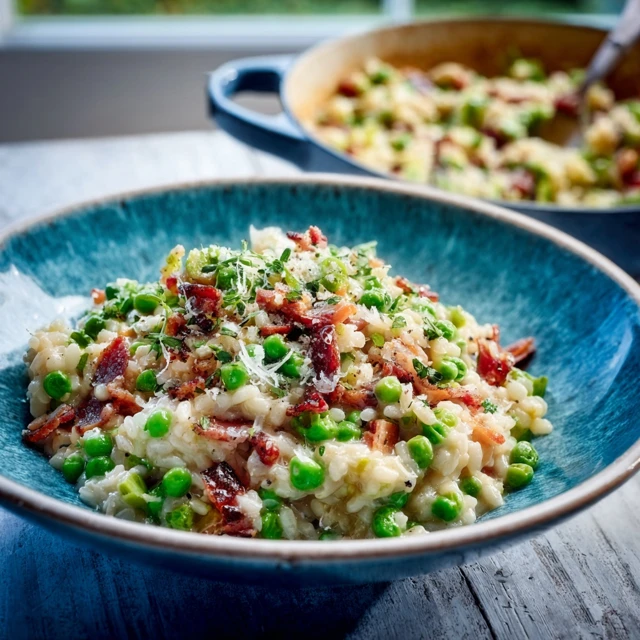
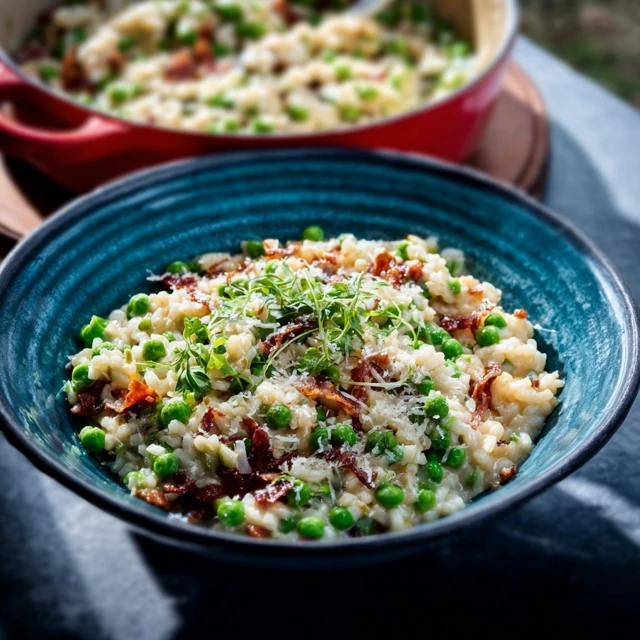
Unforgettable Pea and Bacon Risotto
Ingredients
Equipment
Method
- In a small saucepan, bring the chicken or vegetable broth to a simmer over low heat. Keep it warm throughout the cooking process.
- Place a large, heavy-bottomed pot or Dutch oven over medium heat. Add the chopped bacon and cook, stirring occasionally, until crispy, about 6-8 minutes. Use a slotted spoon to transfer the bacon to a paper towel-lined plate, leaving 1-2 tablespoons of rendered fat in the pot.
- Add the finely chopped shallot to the pot and sauté in the bacon fat for 2-3 minutes until softened. Add the minced garlic and cook for another minute until fragrant.
- Add the Arborio rice to the pot. Stir constantly for 1-2 minutes to toast the grains, ensuring they are fully coated in the fat. The edges of the rice should look translucent.
- Pour in the white wine to deglaze the pot. Stir continuously, scraping up any browned bits from the bottom, until the wine is almost completely absorbed.
- Add one ladle of the warm broth to the rice. Stir gently but frequently until the liquid is absorbed. Continue adding the broth one ladle at a time, waiting for each addition to be absorbed before adding the next. This process should take about 18-20 minutes.
- Once the rice is al dente (cooked through with a slight bite), stir in the thawed peas and the cooked bacon. Cook for one more minute.
- Remove the pot from the heat. Vigorously stir in the cold butter and the grated Parmesan cheese until the risotto is creamy and glossy. This is the ‘mantecatura’ step.
- Taste and season with salt and freshly ground black pepper. Be mindful that the bacon and Parmesan are already salty. Let the risotto rest for 1-2 minutes.
- Serve immediately in warm bowls, garnished with extra Parmesan cheese and fresh parsley or chives, if desired.
Notes
– Do Not Rinse Rice: Rinsing Arborio rice removes the surface starch that is essential for creating a creamy texture.
– Use Warm Broth: Adding cold liquid can shock the rice and hinder the cooking process. Always use warm or simmering broth.
– Bacon Alternatives: Diced pancetta can be used instead of bacon. For a vegetarian option, omit bacon and sauté 8oz of sliced mushrooms in butter for umami depth.
– Wine Substitute: If you don’t have white wine, use an extra half-cup of broth mixed with 1 teaspoon of white wine vinegar or lemon juice.
– Cheese Swaps: Pecorino Romano offers a sharper flavor, while a mix of Parmesan and Asiago is also delicious.
– Gourmet Twists: For a burst of freshness, add the zest of one lemon or a handful of chopped fresh mint along with the Parmesan. A drizzle of high-quality truffle oil just before serving adds a touch of luxury.