There is a bread that whispers of necessity, of resourcefulness, and of the quiet magic that happens when simple things are done just right. It doesn’t wait for yeast or demand your patience; it’s a bread born from the immediate need for something warm, substantial, and honest on the table.
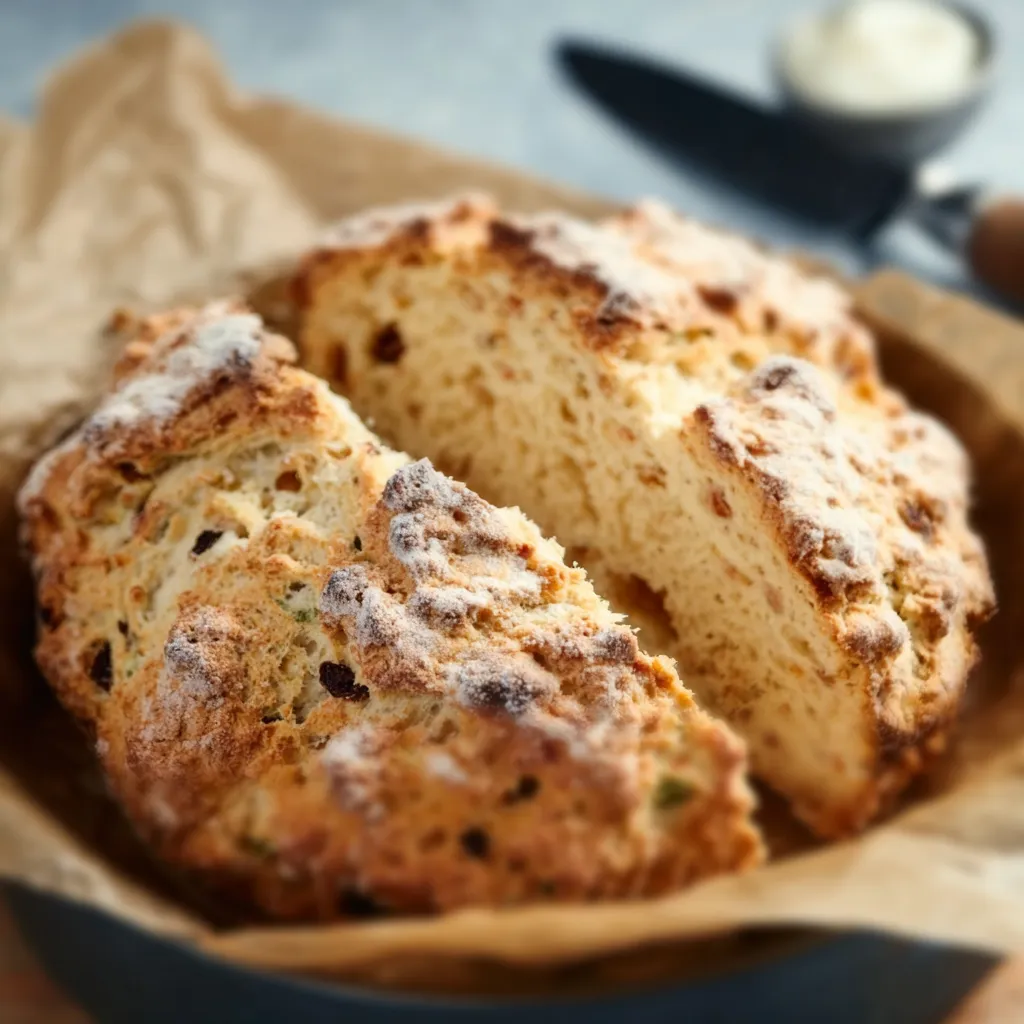
What emerges from your oven will be a rustic, craggy-crowned loaf with a tender, slightly crumbly interior and a flavor that is profoundly, comfortingly wheaty. It’s a bread that feels both ancient and immediate, perfect for slathering with good butter or sopping up the last bits of a hearty stew.
Why This Recipe Works
- Bold Reason 1 (Texture/Flavor): The combination of buttermilk’s tang and baking soda’s reaction creates a uniquely tender crumb with a signature, slightly sour depth that store-bought bread can’t replicate.
- Bold Reason 2 (Technique): A light, confident hand when mixing ensures the loaf stays soft and doesn’t become tough, while a deep cross cut allows for proper expansion and that classic soda bread look.
- Bold Reason 3 (Result): In under an hour, with zero rising time, you go from four ingredients in a bowl to a fragrant, golden-brown loaf that makes your entire kitchen smell like a haven.
What Goes Into This Dish
This is where the beauty of tradition shines. You don’t need a pantry full of exotic items. You just need four humble, high-quality components that, when combined with care, become so much more than the sum of their parts.
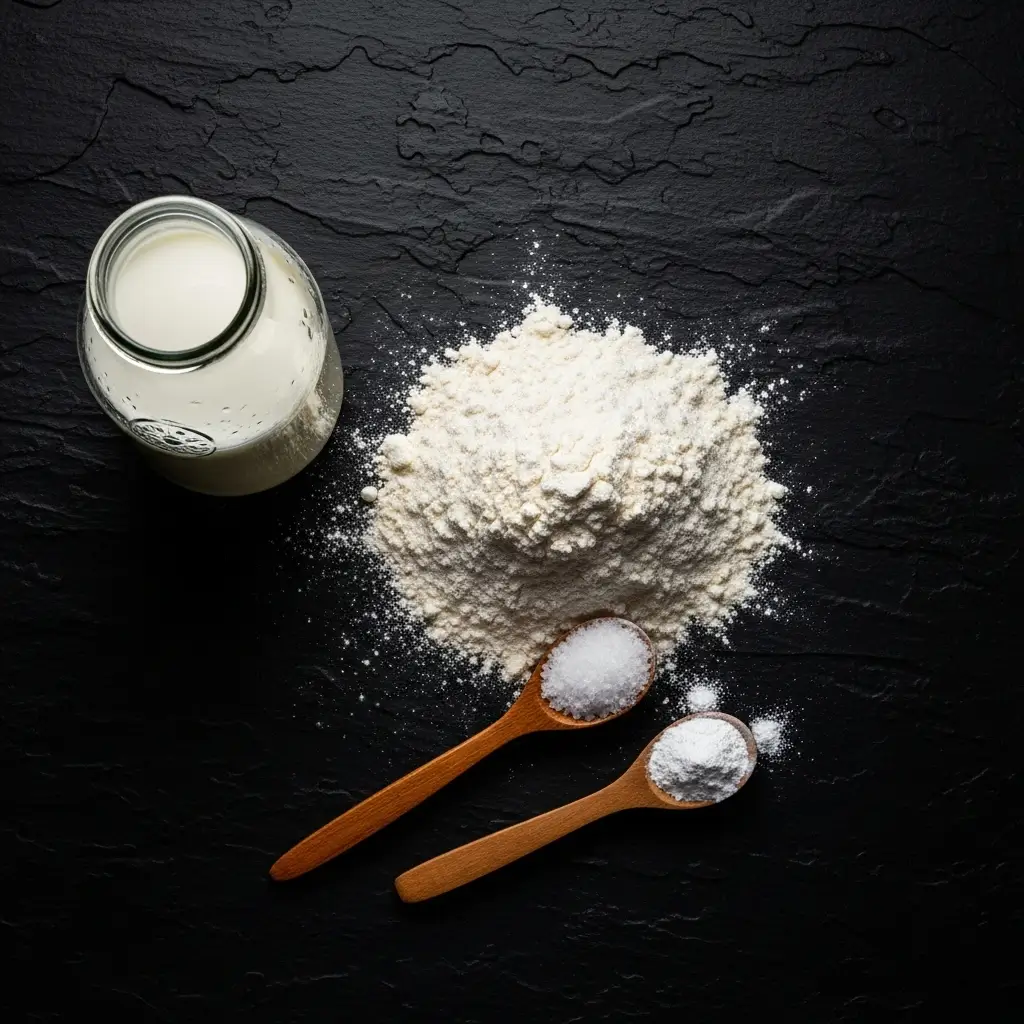
- 450g (about 3 ½ cups) Plain White Flour: The foundation. Using a good quality plain flour (all-purpose) is key for the right structure.
- 1 tsp Salt: Crucial for enhancing all the other flavors in the bread. Don’t skip it.
- 1 tsp Bicarbonate of Soda (Baking Soda): This is your leavening agent. It must be fresh for a good rise. (Check the date!)
- 350-400ml (about 1 ½ cups) Buttermilk: The liquid catalyst. Its acidity activates the soda and creates the tender texture. If you don’t have buttermilk, see my easy swap below.
Pantry Substitutions
- No Buttermilk? Make your own “soured milk.” Add 1 tablespoon of lemon juice or white vinegar to a measuring jug, then top up to the 350ml mark with regular milk. Stir and let it sit for 5 minutes until it curdles slightly.
- Want Wholegrain? You can substitute up to half of the white flour with wholemeal flour for a nuttier, denser loaf. You may need a touch more buttermilk.
- Dairy-Free? Use a plant-based milk mixed with lemon juice as above. Unsweetened almond or oat milk works well.
- Add Seeds: A handful of rolled oats or a sprinkle of sesame or flax seeds on top before baking adds wonderful texture and visual appeal.
Chef’s Twists
Once you’ve mastered the pure, classic form, the canvas is yours to play with. These simple additions can transform your soda bread into a centerpiece for any meal.
Stir a handful of sharp grated cheddar cheese and some chopped fresh chives into the dry ingredients. The result is a savory, pull-apart delight that rivals any Cheesy Pull Apart Christmas Bread.
For a sweet and fragrant twist, add 50g of sugar, a handful of plump raisins or currants, and a teaspoon of caraway seeds (if you like them) to the dry mix. It’s incredible toasted and buttered.
Create a garlic-herb butter loaf by brushing the hot, freshly baked bread with a mixture of melted butter, minced garlic, and parsley. It gives you all the cozy vibes of Garlic Rolls in a rustic, free-form loaf.
How to Make Traditional Soda Bread
This process is wonderfully quick. Have everything measured and your oven pre-heated before you start. The goal is to work efficiently and gently, from mixing to baking, to capture all that lovely rise.
You’ll be amazed at how fast it comes together. Let’s walk through it, step by comforting step.
1. Prep and Preheat
Start by preheating your oven to 200°C (400°F). This is important because the bread needs to go into a properly hot oven the moment the dough is shaped. Take a baking sheet and dust it lightly with flour or line it with parchment paper.
2. Combine the Dry Ingredients
In a large, roomy mixing bowl, sift together the flour, salt, and bicarbonate of soda. Sifting isn’t just for finesse; it aerates the flour and ensures the baking soda is evenly distributed, which is critical for an even rise.
Use a whisk to give everything a final stir. This guarantees there are no little pockets of salt or soda hiding in the flour.
3. Create the Dough
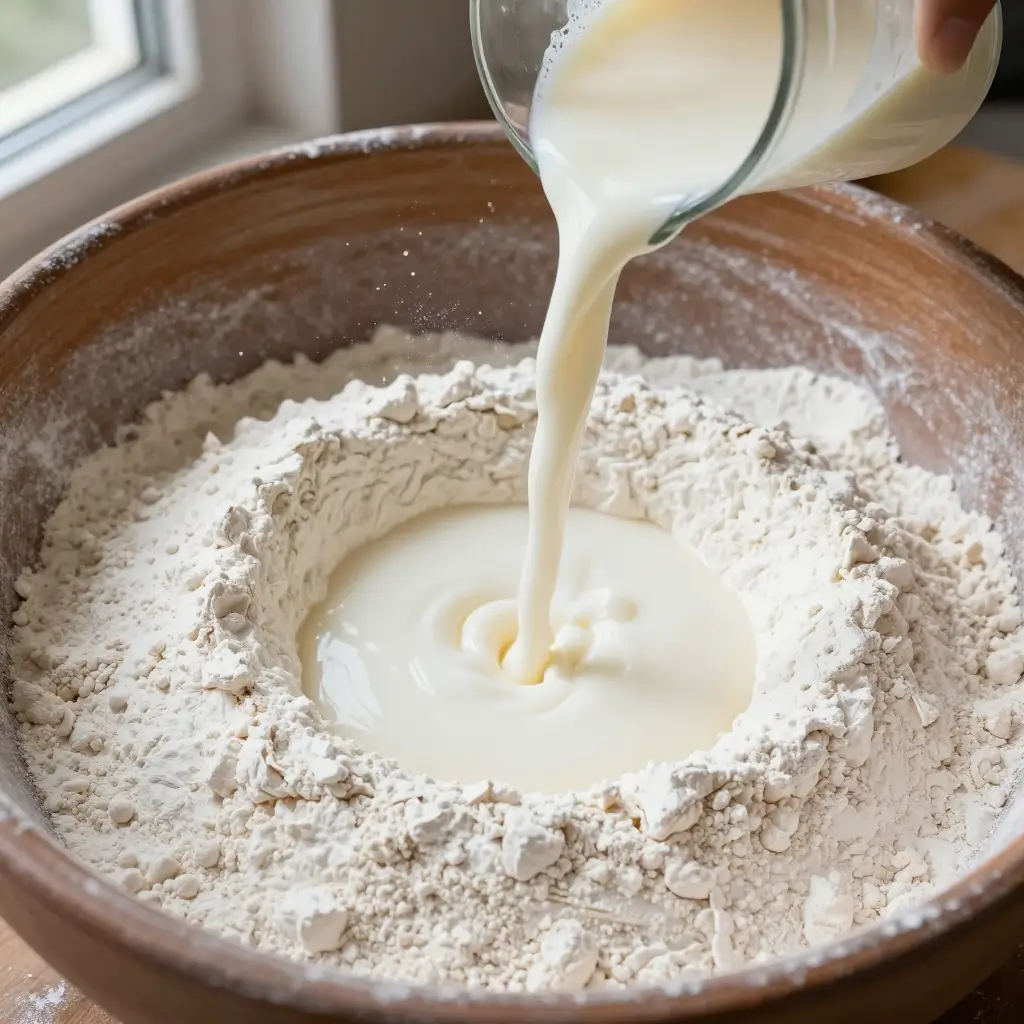
Make a well in the center of your flour mixture. Pour in most of the buttermilk, starting with 350ml. Using your fingers or a blunt-ended knife, start to mix, drawing the flour in from the sides.
The dough should be quite soft, but not overly sticky. If it feels too dry and there are lots of floury bits remaining, add the remaining buttermilk a little at a time. Different flours absorb liquid differently, so trust the feel.
4. Shape with Care
Turn the shaggy dough out onto a lightly floured surface. Now, here’s the secret: handle it as little as possible. Gently pat and coax it into a round, about 6-7cm (2.5 inches) thick.
Don’t knead it like a yeast bread. You’re just bringing it together. Overworking it will develop the gluten and make the bread tough.
5. Score and Bake
Place your round onto the prepared baking sheet. Using a sharp, floured knife, cut a deep cross into the dough, going almost all the way through to the bottom. This is called “blessing the bread” and it helps the heat penetrate, ensuring the center bakes through.
Bake for 40-45 minutes. The loaf is done when it is a deep, golden brown and sounds hollow when you tap the bottom. If you’re unsure, a skewer inserted into the center should come out clean.
6. Cool for Perfect Texture
This is the hardest part! Transfer the baked loaf to a wire rack and let it cool for at least 30 minutes. The inside is still setting as it cools.
Slicing into it while it’s steaming hot will make it gummy. The wait is worth it for that perfect, tender crumb. The aroma, however, is yours to enjoy immediately.
Common Mistakes to Avoid
- Over-mixing the Dough: This is the number one error. The moment the flour is hydrated, gluten starts to form. Mix just until combined, even if it looks a bit ragged. A light touch equals a tender loaf.
- Using Old Baking Soda: Bicarbonate of soda loses its potency over time. If your box has been open for more than 6 months, it may not give you the lift you need. Test it by dropping a pinch in vinegar; it should fizz vigorously.
- Not Scoring Deeply Enough: A shallow cut is just for looks. A deep, confident cross (about 3/4 of the way through the dough) is functional. It allows the center of the loaf to expand and bake evenly, preventing a dense middle.
Perfect Pairings
Fresh, warm soda bread is a gift that keeps on giving throughout the day. For breakfast or a snack, it’s sublime toasted and slathered with good butter and a dollop of tangy marmalade or rich honey.
At lunch or dinner, it’s the ultimate companion to soups and stews. Its sturdy crust and soft interior are perfect for dipping and cleaning your bowl. It transforms a simple bowl of soup into a feast.
For a decadent treat, brush slices with garlic butter and toast them until crisp. It’s a simpler, rustic cousin to those irresistible Garlic Butter Rolls. Serve it alongside a creamy pasta dish or a big, hearty salad.
Think of it as your edible spoon for creamy dips or a base for sharp cheddar and chutney. Its mild tang and substantial texture make it incredibly versatile, much like how Garlic Butter Bread Rolls can elevate any pasta night.
First time making Traditional Soda Bread? I hope this guide made it easy. Let me know how it turned out!
What are the four essential ingredients for traditional soda bread?
The four essential ingredients are plain white flour, salt, bicarbonate of soda (baking soda), and buttermilk.
What is the most common mistake to avoid when making soda bread?
The most common mistake is over-mixing the dough, which develops gluten and makes the bread tough. Mix just until the ingredients are combined.
How can I make a dairy-free version of this soda bread?
You can make a dairy-free version by using a plant-based milk (like unsweetened almond or oat milk) mixed with lemon juice or vinegar to create a buttermilk substitute.
Why is it important to score a deep cross on the dough before baking?
Scoring a deep cross (almost to the bottom) is functional, not just decorative. It allows the heat to penetrate and the center of the loaf to expand properly, ensuring even baking and preventing a dense middle.

Traditional Soda Bread
Ingredients
Equipment
Method
- Preheat the oven to 200°C (400°F). Lightly dust a baking sheet with flour or line it with parchment paper.
- In a large mixing bowl, sift together the flour, salt, and bicarbonate of soda. Use a whisk to ensure even distribution.
- Make a well in the center of the dry ingredients. Pour in most of the buttermilk, starting with 350ml.
- Using your fingers or a blunt knife, mix gently, drawing the flour in from the sides until a soft, slightly sticky dough forms. Add the remaining buttermilk a little at a time if the dough seems too dry.
- Turn the shaggy dough out onto a lightly floured surface. Gently pat and shape it into a round loaf about 6-7cm (2.5 inches) thick. Do not knead.
- Place the loaf on the prepared baking sheet. Using a sharp, floured knife, cut a deep cross into the top, almost all the way through to the bottom.
- Bake for 40-45 minutes, until the loaf is deep golden brown and sounds hollow when tapped on the bottom.
- Transfer the baked loaf to a wire rack and let it cool for at least 30 minutes before slicing for the best texture.