There is a moment, right as the seasons pivot, when the market stalls shift from sturdy roots to tender, hopeful shoots. That’s the precise moment to make this pasta primavera, a dish that’s less a strict recipe and more a guided celebration of that fleeting, vibrant window.
What you get is a plate that tastes like optimism itself—tender-crisp vegetables in a light, glossy sauce that clings to every strand of pasta, finished with a shower of sharp cheese and fresh herbs. It’s a dinner that feels both effortlessly chic and deeply comforting, a true testament to the power of simple, seasonal ingredients.
Why This Recipe Works
- Bold Reason 1 (Flavor & Texture): We cook the vegetables in stages, respecting their individual needs. This ensures you get sweet, blistered asparagus and crisp-tender peas, not a mushy, one-note vegetable medley.
- Bold Reason 2 (Technique): The sauce is built right in the pan using starchy pasta water, lemon, and butter. This creates a creamy, emulsified coating that marries everything together without being heavy or overly rich.
- Bold Reason 3 (Result): It’s incredibly adaptable and fast. The framework is foolproof, allowing you to swap in whatever spring gems look best at the market, resulting in a vibrant, restaurant-quality meal in about 30 minutes.
What Goes Into This Dish
The soul of this dish is the produce, so seek out the freshest, brightest vegetables you can find. Don’t stress about perfection; this is about capturing the spirit of the season. A good olive oil and a wedge of real Parmigiano-Reggiano will make all the difference in the final flavor.
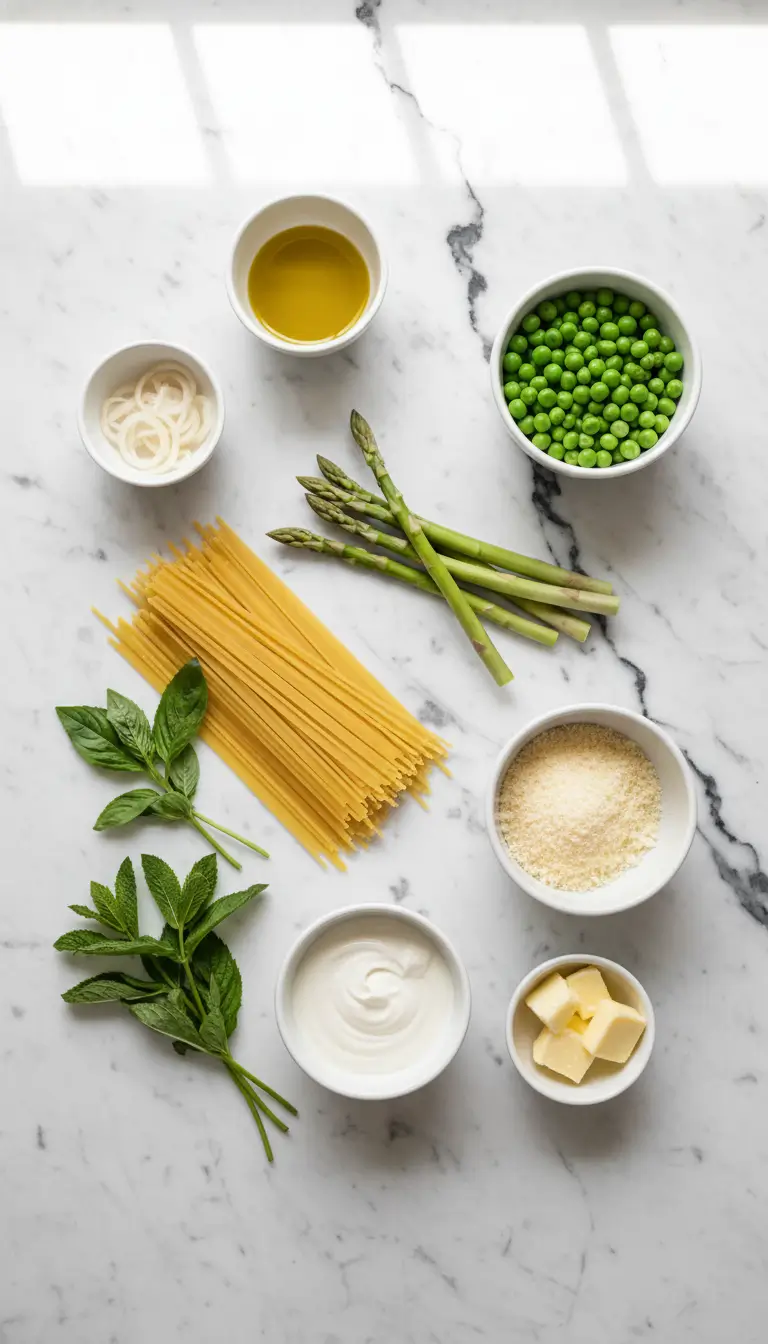
- Pasta (8 oz): Long shapes like fettuccine, linguine, or spaghetti are classic. Their strands carry the sauce and vegetables beautifully.
- Extra-Virgin Olive Oil (3 tbsp): Use a good one for finishing. Its fruity flavor is a key component, not just a cooking fat.
- Shallot (1 large, thinly sliced): Milder and sweeter than onion, it creates a delicate aromatic base.
- Asparagus (1 bunch, trimmed and cut into 2-inch pieces): The quintessential spring vegetable. Look for firm, bright green stalks with tight tips.
- Fresh Peas (1 cup, shelled): If you can find them, fresh peas are a revelation. Frozen peas are a fantastic, sweet standby.
- Heavy Cream or Half-and-Half (1/3 cup): Just a splash for body and richness. You can omit it for a lighter, more brothy sauce.
- Lemon (Zest and juice of 1): Non-negotiable. The zest adds perfume and the juice brings a necessary bright acidity that lifts the entire dish.
- Unsalted Butter (2 tbsp, cold): Whisked in at the end off the heat to thicken and glossify the sauce (this is called monter au beurre).
- Parmigiano-Reggiano (3/4 cup, finely grated): For salty, umami depth. Freshly grate it from a block for the best texture and flavor.
- Fresh Herbs (1/4 cup, like basil, mint, or chives): The final confetti. Basil is classic, but mint adds a stunning, fresh twist.
- Kosher Salt & Freshly Cracked Black Pepper: To taste throughout the process.
Pantry Substitutions
- No Shallot? Use 1/2 a sweet yellow onion, finely diced. Cook it a minute or two longer to soften its sharper bite.
- Allergic to Dairy? Omit the cream and butter. Finish with a generous glug of your best olive oil for richness instead.
- Different Veggies? Thinly sliced zucchini, sugar snap peas, or baby spinach are all wonderful. Add tender greens like spinach at the very end, just to wilt.
- No Fresh Herbs? A teaspoon of dried Italian seasoning added with the shallots works, but do try to find at least some fresh parsley or chives for finishing.
Creative Add-ins
Once you’ve mastered the base, play with these twists to make it new again. Each one creates a completely different vibe from the same core recipe.
A spoonful of pesto stirred in at the end adds a powerful basil-garlic punch. For a protein boost, add sautéed shrimp or shredded rotisserie chicken with the vegetables. A pinch of red pepper flakes with the shallot brings a gentle, warming heat. For a nutty finish, toast some pine nuts or slivered almonds and sprinkle them on top.
Let’s Get Cooking
This process moves quickly, so have all your ingredients prepped and within arm’s reach before you turn on the stove. The goal is to have your pasta and vegetables finish at roughly the same time, ready to come together in the pan.
1. Prep and Boil
Bring a large pot of well-salted water to a rolling boil. Cook your pasta according to package directions for al dente. Just before draining, carefully scoop out about 1 1/2 cups of the starchy pasta water. This liquid gold is crucial for our sauce.
Drain the pasta but do not rinse it. Set it aside while you start the vegetables.
2. Sauté the Aromatics
While the pasta cooks, heat 2 tablespoons of olive oil in a large skillet or Dutch oven over medium heat. Add the sliced shallot and a pinch of salt. Cook, stirring often, until the shallot is soft and translucent, about 3-4 minutes. You’re building flavor from the bottom up.
3. Cook the Vegetables in Stages
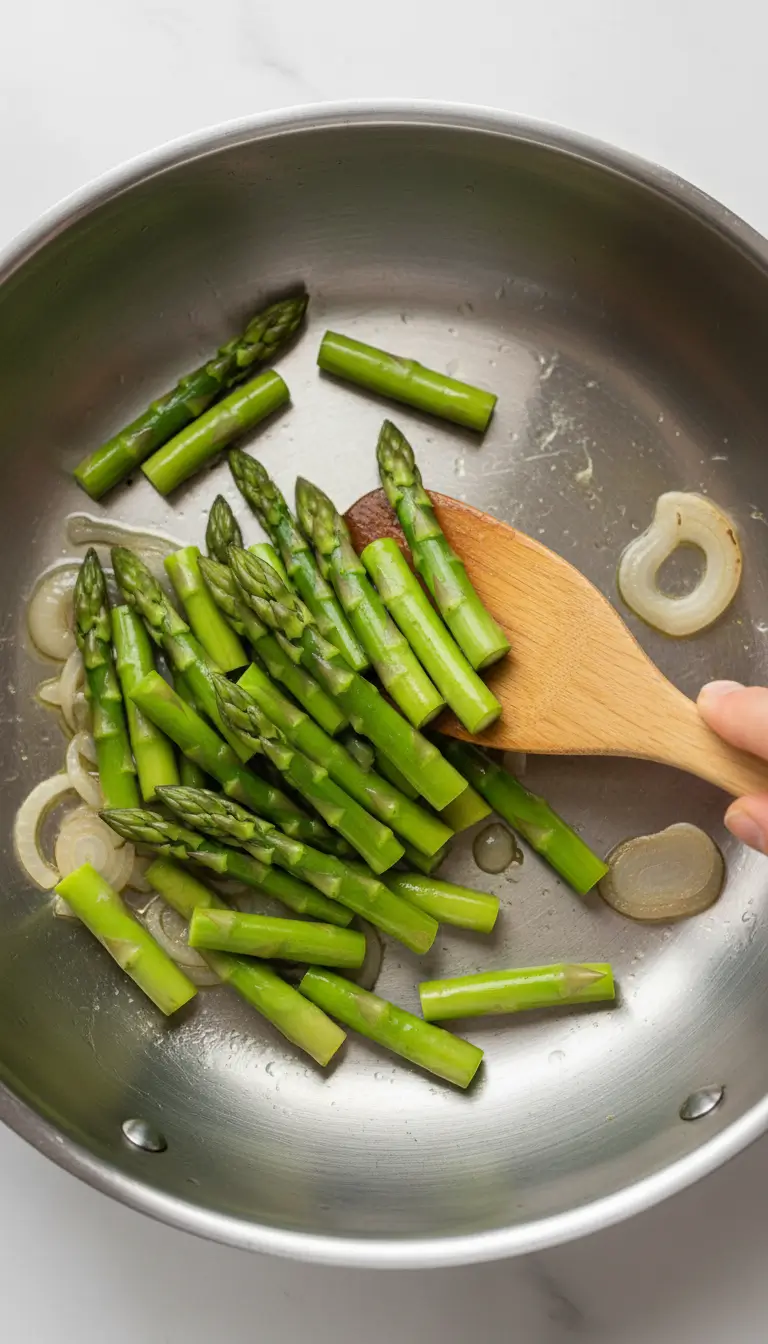
Increase the heat to medium-high. Add the asparagus pieces to the skillet. Let them cook undisturbed for a minute to get a little color, then stir and cook for another 2-3 minutes until bright green and just tender-crisp.
Now, add the fresh peas (if using frozen, you’ll add them later). Stir and cook for another minute. If you’re using frozen peas, add them in the next step with the liquids so they just heat through without overcooking.
4. Build the Sauce Base
Reduce the heat to medium. Pour in the heavy cream (if using), lemon zest, and about 1/2 cup of the reserved pasta water. Let it simmer for a minute, allowing the flavors to meld and the liquid to reduce slightly.
This is also when you’d add frozen peas. Stir them in and let them warm through in the simmering liquid.
5. Bring It All Together
Add the drained al dente pasta directly to the skillet with the vegetables and sauce. Using tongs, toss everything vigorously. The starch from the pasta will help thicken the liquid.
Add more pasta water, a splash at a time, until you have a loose, glossy sauce that coats every strand. The pasta will continue to absorb the sauce.
6. The Final Enrichment
Take the skillet off the heat. This is critical. Add the cold butter, the lemon juice, and half of the grated Parmigiano-Reggiano. Toss, toss, toss until the butter is completely melted and emulsified into the sauce.
This off-heat step prevents the sauce from breaking and creates a velvety texture.
7. Finish and Serve
Taste and season generously with more salt and black pepper as needed. Fold in most of your fresh herbs. Divide among bowls and top with the remaining cheese, herbs, and a final drizzle of your best olive oil.
Common Mistakes to Avoid
- Overcooking the Vegetables: They should have bite and brightness. Add them in order of cooking time and don’t walk away. Mushy vegetables ruin the texture.
- Skipping the Pasta Water: This starchy water is the magic that creates the sauce. Tap water will just make it watery and bland. Always reserve a cup or two before draining.
- Adding Cheese Over High Heat: Adding the final cheese while the pan is still on the burner can cause it to clump and become stringy. Off the heat, it melts smoothly into the sauce.
Complete the Menu
This pasta is a vibrant, satisfying main, but it plays well with others. Start with something light and crunchy like Ultimate Fresh Vegetable Spring Rolls for a textural contrast.
A simple green salad on the side is perfect. Try the Ultimate Blueberry Pistachio Spring Salad for a sweet and savory pairing, or the Ultimate Deconstructed Spring Roll Salad for Asian-inspired flavors.
For a heartier spread, serve it alongside a simply grilled chicken breast or a piece of seared salmon. And if you love this pasta format, you must try our classic Tomato Basil Pasta when summer tomatoes are ripe, or a Spicy Southwest Pasta Salad for your next BBQ. Come autumn, our Fall Harvest Pasta Salad follows the same seasonal spirit.
This keeps beautifully in the fridge. Tried meal prepping it? Tell us how it went!

What is the most important ingredient for making a great pasta primavera?
The soul of the dish is the freshest, brightest seasonal produce you can find. The recipe is a celebration of spring vegetables like asparagus and fresh peas, and their quality is paramount.
Why is it important to add the cheese and butter off the heat?
Adding the final Parmigiano-Reggiano and cold butter after taking the skillet off the heat is critical. This prevents the sauce from breaking and the cheese from clumping, ensuring a velvety, emulsified texture.
Can I make this pasta primavera if I’m allergic to dairy?
Yes. You can omit the heavy cream and butter. Finish the dish with a generous pour of your best extra-virgin olive oil to add the necessary richness to the sauce instead.
What is the purpose of reserving starchy pasta water, and what happens if I skip this step?
The starchy pasta water is the magic ingredient that helps create a creamy, glossy sauce that clings to the pasta. Using tap water instead will make the sauce watery and bland, so always reserve a cup or two before draining.

Spring Vegetable Pasta Primavera
Ingredients
Equipment
Method
- Bring a large pot of well-salted water to a rolling boil. Cook the pasta according to package directions until al dente. Just before draining, carefully reserve 1 1/2 cups of the starchy pasta water. Drain the pasta and set aside.
- While the pasta cooks, heat 2 tablespoons of olive oil in a large skillet or Dutch oven over medium heat. Add the sliced shallot and a pinch of salt. Cook, stirring often, until soft and translucent, about 3-4 minutes.
- Increase the heat to medium-high. Add the asparagus pieces to the skillet. Cook undisturbed for 1 minute, then stir and cook for another 2-3 minutes until bright green and tender-crisp.
- Add the fresh peas (if using) and cook for 1 more minute. (If using frozen peas, wait for the next step).
- Reduce the heat to medium. Pour in the heavy cream (if using), lemon zest, and 1/2 cup of the reserved pasta water. Bring to a simmer. If using frozen peas, add them now. Let the sauce simmer for 1 minute to reduce slightly and warm the peas.
- Add the drained pasta to the skillet with the vegetables and sauce. Using tongs, toss everything vigorously. Add more pasta water, a splash at a time, until a loose, glossy sauce coats every strand.
- Remove the skillet from the heat. Add the cold butter, lemon juice, and half of the grated Parmigiano-Reggiano. Toss continuously until the butter is completely melted and emulsified into a velvety sauce.
- Taste and season generously with salt and black pepper. Fold in most of the fresh herbs. Divide among bowls and top with the remaining cheese, herbs, and a final drizzle of the remaining 1 tablespoon of olive oil.