Certain dishes have a way of whispering comfort directly to your soul, and these tender chicken meatballs swimming in a fragrant coconut curry are one of them. This isn’t a recipe that demands a whole afternoon or a pantry full of obscure ingredients; it’s about the simple magic that happens when a few good things come together in a single pan, creating a meal that feels both special and wonderfully easy.
What you end up with is a beautiful harmony of flavors and textures. The meatballs are impossibly light and juicy, a perfect contrast to the rich, velvety curry sauce that clings to every single one. It’s a dish that fills your kitchen with the most incredible aroma and delivers a restaurant-quality meal that you’ll be proud to have made yourself.
Why This Method Works
- Panko for Tenderness: We use panko breadcrumbs, not regular ones. Their light, airy structure soaks up moisture without becoming dense, ensuring your meatballs are wonderfully tender and never tough.
- Sear First, Simmer Later: Searing the meatballs before they go into the sauce is a non-negotiable step. This creates a golden-brown crust, a process called the Maillard reaction, which builds a deep, savory foundation of flavor for the entire dish.
- Full-Fat Coconut Milk is Key: Don’t be tempted by the “lite” version here. Full-fat coconut milk provides the necessary fat content for a luxuriously creamy sauce that won’t curdle or become watery when simmered.
Gather Your Ingredients
For the Chicken Meatballs:
- Ground Chicken: (1 pound) I prefer ground chicken that isn’t overly lean, as a little fat ensures the meatballs stay moist and flavorful.
- Panko Breadcrumbs: (1/2 cup) This is our secret weapon for light, airy meatballs. They absorb moisture without compacting the meat.
- Grated Ginger & Garlic: (1 tablespoon each, fresh) Fresh is always best here; it provides a vibrant, aromatic punch that dried powders just can’t match.
- Cilantro: (1/4 cup, finely chopped) Adds a burst of fresh, herbaceous flavor right inside the meatballs.
- Soy Sauce: (1 tablespoon) For a touch of savory, umami seasoning.
- Egg: (1 large) This is our binder, holding everything together so the meatballs don’t fall apart as they cook.
For the Coconut Curry Sauce:
- Coconut Oil: (1 tablespoon) A neutral oil that complements the coconut milk in the sauce.
- Shallot: (1, finely chopped) Milder and sweeter than a regular onion, it provides a delicate aromatic base.
- Garlic & Ginger: (1 tablespoon each, minced) More of this dynamic duo to build layers of flavor in our sauce.
- Red Curry Paste: (2-3 tablespoons) This is the heart of the dish. Use a good quality brand, as it provides all the complex notes of lemongrass, galangal, and chili in one convenient spoonful.
- Full-Fat Coconut Milk: (1 13.5-ounce can) This is non-negotiable for a rich, creamy sauce that coats the meatballs beautifully.
- Chicken Broth: (1/2 cup) Helps to thin the sauce to the perfect consistency for simmering.
- Fish Sauce: (1-2 teaspoons) Don’t be afraid of it! It adds an incredible depth of savory, salty flavor that is essential to Thai cooking.
- Brown Sugar or Coconut Sugar: (1 teaspoon) Just a touch to balance the saltiness and acidity, rounding out the flavors.
- Lime: (Juice of 1) Added at the very end, it brightens everything up and cuts through the richness of the coconut milk.
- For Garnish: Fresh cilantro, basil, sliced red chili, and extra lime wedges.
Simple Swaps
Don’t fret if your pantry is missing an item or two. This recipe is wonderfully flexible.- No Ground Chicken? Ground turkey or ground pork work beautifully as a substitute.
- Out of Panko? Regular breadcrumbs will work in a pinch, but use slightly less as they are denser.
- Different Curry Paste: Green or yellow curry paste can be used for a different, but equally delicious, flavor profile.
- No Fish Sauce? You can use soy sauce or tamari, but the flavor won’t be quite as authentic. Start with a smaller amount and taste as you go.
- No Shallot? A small yellow onion, finely chopped, is a perfectly acceptable alternative.
Tried & True Variations
Once you’ve mastered the basic recipe, it’s fun to play around and make it your own. Here are a few variations that my family loves.Add a handful of fresh spinach or chopped kale to the sauce during the last few minutes of simmering. The greens will wilt down beautifully and add extra nutrients.
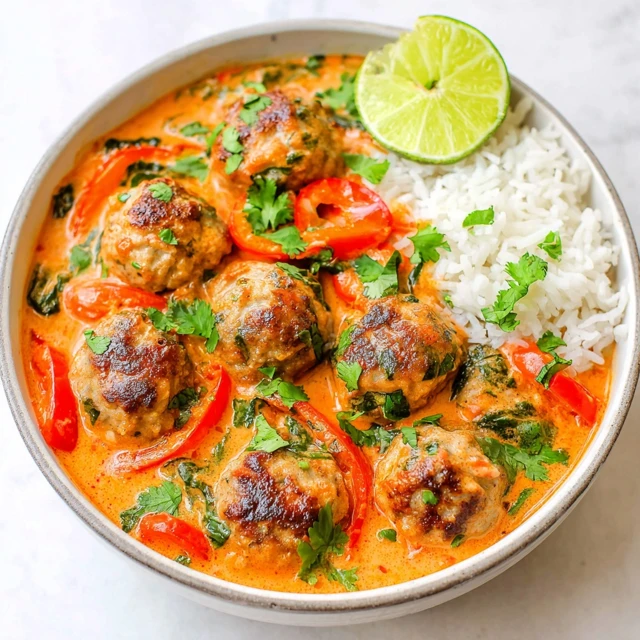
For a heartier meal, add some vegetables. Sliced red bell peppers, bamboo shoots, or snow peas can be added to the sauce to simmer along with the meatballs.
If you love spice, don’t be shy! Add a pinch of red pepper flakes to the meatball mixture or a sliced Thai chili to the sauce as it simmers.
For a complete one-pot meal, you can even add cooked rice noodles directly to the pan at the end, turning it into something reminiscent of a Thai Red Curry Noodle Soup.
The Time-Tested Method
1. Form the Tender Meatballs
In a large bowl, combine the ground chicken, panko breadcrumbs, grated ginger and garlic, chopped cilantro, soy sauce, and the egg. Use your hands—it’s truly the best tool—to gently mix everything together until just combined. Be careful not to overwork the mixture, as this can lead to tough meatballs.Once mixed, roll the mixture into uniform balls, about 1 to 1.5 inches in diameter. This should yield about 18-20 meatballs. Placing them on a parchment-lined plate or baking sheet makes for easy cleanup.
2. Sear for a Golden Crust
Heat the coconut oil in a large, deep skillet or Dutch oven over medium-high heat. Once the oil is shimmering, carefully place the meatballs in the pan in a single layer. You may need to do this in two batches to avoid overcrowding the pan.Sear the meatballs for 2-3 minutes per side, until they are beautifully golden brown all over. They don’t need to be cooked through at this point; we’re just developing that crucial layer of flavor. Once browned, remove the meatballs from the skillet and set them aside on a clean plate. This technique is similar to how you’d start many meatball dishes, including these delightful Pineapple Teriyaki Chicken Meatballs.
3. Build the Aromatic Curry Sauce
Lower the heat to medium and add the chopped shallot to the same skillet, scraping up any browned bits left from the meatballs. Cook for about 2-3 minutes until softened. Add the minced garlic and ginger and cook for another minute until fragrant—be careful not to let them burn.Stir in the red curry paste and cook for one minute more, stirring constantly. This step is called “blooming” the paste, and it helps to awaken all the aromatic spices, creating a much deeper flavor for your sauce. It’s a foundational step in many curry dishes, from a Brazilian Coconut Chicken Curry to a classic Thai soup.
4. Simmer to Perfection
Pour in the can of full-fat coconut milk and the chicken broth, whisking to combine everything with the curry paste. Bring the sauce to a gentle simmer, then stir in the fish sauce and brown sugar.Carefully return the seared meatballs to the skillet, nestling them into the sauce. Reduce the heat to low, cover the pan, and let everything simmer gently for 10-15 minutes, or until the meatballs are cooked through and the sauce has thickened slightly. The gentle simmer is key, as a rolling boil can cause the coconut milk to separate. This slow infusion of flavor is what makes dishes like Slow Cooker Thai Coconut Chicken Soup so delicious.
5. Finish with Freshness
Once the meatballs are cooked, turn off the heat. Squeeze the fresh lime juice all over the dish and give it a gentle stir. This final hit of acidity is what makes all the flavors pop and provides a beautiful balance to the rich curry.Taste the sauce one last time and adjust if needed. It might need another splash of fish sauce for saltiness or a tiny bit more sugar for balance. Trust your palate!
Notes from My Kitchen
Over the years, I’ve learned a few little things that help this recipe turn out perfectly every single time. Here are my most important tips.- Don’t Overmix the Meatballs: The number one cause of tough meatballs is overworking the meat. Mix the ingredients with a light touch, just until everything is incorporated.
- Use a Gentle Simmer: Never let your coconut curry come to a rapid boil. A high heat can cause the coconut milk to “break” or separate, resulting in a grainy texture. A low, gentle bubble is all you need.
- Taste, Taste, Taste: The amounts for fish sauce, sugar, and lime juice are a starting point. Different brands of curry paste and coconut milk have varying levels of salt and sweetness, so always taste the sauce at the end and adjust it to your liking.
- Wet Your Hands: To prevent the meatball mixture from sticking to your hands while rolling, keep a small bowl of water nearby and dampen your palms occasionally. It makes the process much cleaner and faster.
Perfect Pairings
This dish is a star all on its own, but it loves a few simple companions to make it a complete meal. Serve the meatballs and their glorious sauce over a bed of fluffy jasmine rice to soak up every last drop.For a lighter option, rice noodles or quinoa are also wonderful. I also love to serve it with a side of steamed or roasted vegetables, like broccoli or bok choy, to add a bit of green to the plate. It’s a more complete meal than a simple Coconut Chicken And Rice, but just as comforting.
Set out small bowls of fresh cilantro, Thai basil, thinly sliced red chilies, and extra lime wedges so everyone can garnish their own bowl. This is similar to how you might serve a brothy Coconut Curry Soup With Steamed Dumplings, allowing for personal customization.
Did you change any ingredients? Let me know in the comments how you made this recipe your own
What is the secret to making the chicken meatballs tender and not tough?
The key to tender meatballs is using Panko breadcrumbs, which have a light, airy structure that absorbs moisture without becoming dense. It is also crucial to mix the ingredients with a light touch and only until just combined, as overworking the meat will result in tough meatballs.
Can I use lite coconut milk instead of full-fat for the curry sauce?
No, the recipe specifies that full-fat coconut milk is non-negotiable. It provides the necessary fat content to create a luxuriously creamy sauce that won’t curdle or become watery when simmered. Using a ‘lite’ version will result in a less rich and thinner sauce.
Why do I need to sear the meatballs before simmering them in the sauce?
Searing the meatballs is a critical step for building flavor. This process creates a golden-brown crust (the Maillard reaction), which establishes a deep, savory foundation for the entire dish. The meatballs don’t need to be cooked through during searing, as they will finish cooking while simmering in the curry.
What can I serve with these Thai chicken meatballs?
For a complete meal, serve the meatballs and sauce over a bed of fluffy jasmine rice, rice noodles, or quinoa. You can also add a side of steamed or roasted vegetables like broccoli or bok choy. For garnish, offer bowls of fresh cilantro, Thai basil, and sliced red chilies.
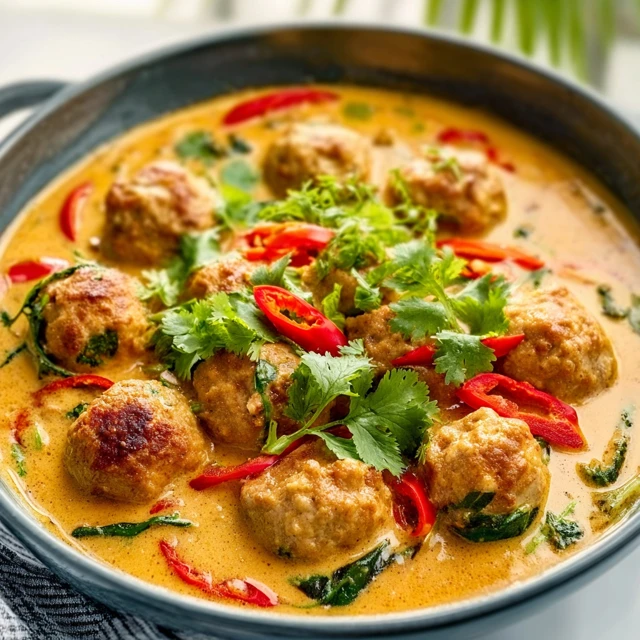
Simmering Thai Chicken Meatballs in Coconut Curry
Ingredients
Equipment
Method
- In a large bowl, combine the ground chicken, panko breadcrumbs, grated ginger and garlic, chopped cilantro, soy sauce, and the egg. Use your hands to gently mix until just combined, being careful not to overwork the mixture. Roll into uniform balls, about 1 to 1.5 inches in diameter (should yield 18-20 meatballs).
- Heat the coconut oil in a large, deep skillet or Dutch oven over medium-high heat. Once shimmering, carefully place the meatballs in a single layer (work in batches if needed). Sear for 2-3 minutes per side, until golden brown all over. Remove the meatballs from the skillet and set aside.
- Lower the heat to medium. Add the chopped shallot to the same skillet and cook for 2-3 minutes until softened, scraping up any browned bits. Add the minced garlic and ginger and cook for another minute until fragrant.
- Stir in the red curry paste and cook for one minute more, stirring constantly to ‘bloom’ the spices.
- Pour in the full-fat coconut milk and chicken broth, whisking to combine. Bring the sauce to a gentle simmer, then stir in the fish sauce and brown sugar.
- Carefully return the seared meatballs to the skillet. Reduce the heat to low, cover, and simmer gently for 10-15 minutes, or until the meatballs are cooked through and the sauce has thickened slightly.
- Turn off the heat. Squeeze the fresh lime juice all over the dish and stir gently. Taste the sauce and adjust seasoning with more fish sauce or sugar if needed.
- Serve immediately, garnished with fresh cilantro, basil, sliced red chili, and extra lime wedges. This dish is excellent over jasmine rice or rice noodles.