It’s a plate that feels like a hug from the inside out, a meal steeped in tradition yet often left behind when the carb count gets tallied. This version isn’t about missing out; it’s about reclaiming the deeply savory, utterly satisfying soul of the dish without a single compromise. We’re keeping every ounce of that briny, peppery, melt-in-your-mouth magic firmly on the menu.
The result is a dinner that’s both spectacularly simple and deeply nourishing. Tender, salty corned beef shreds with just a fork, nestled alongside sweet, buttery cabbage and carrots that have soaked up all the rich, spiced broth. It’s a complete, one-pot wonder that proves comfort food and your wellness goals can sit at the very same table, happily.
Why This Recipe Works
- Bold Reason 1 (Flavor Depth): We treat the spice packet as a starting point, not the finish line. A few extra aromatics in the simmering liquid build a profoundly flavorful base that the beef and vegetables absorb completely.
- Bold Reason 2 (Texture Perfection): By cooking the cabbage separately at the end, we avoid the common pitfall of mushy, waterlogged greens. It stays vibrant, slightly crisp-tender, and full of its own sweet character.
- Bold Reason 3 (Effortless Elegance): This is a truly hands-off main event. The stove does the heavy lifting, leaving you free to whip up a simple side or just enjoy the incredible aroma filling your kitchen.
What Goes Into This Dish
The beauty of this recipe lies in its simplicity, but the quality of your core ingredients makes a tangible difference. Starting with a well-marbled corned beef flat cut ensures tenderness, and fresh vegetables will reward you with the best texture and flavor.
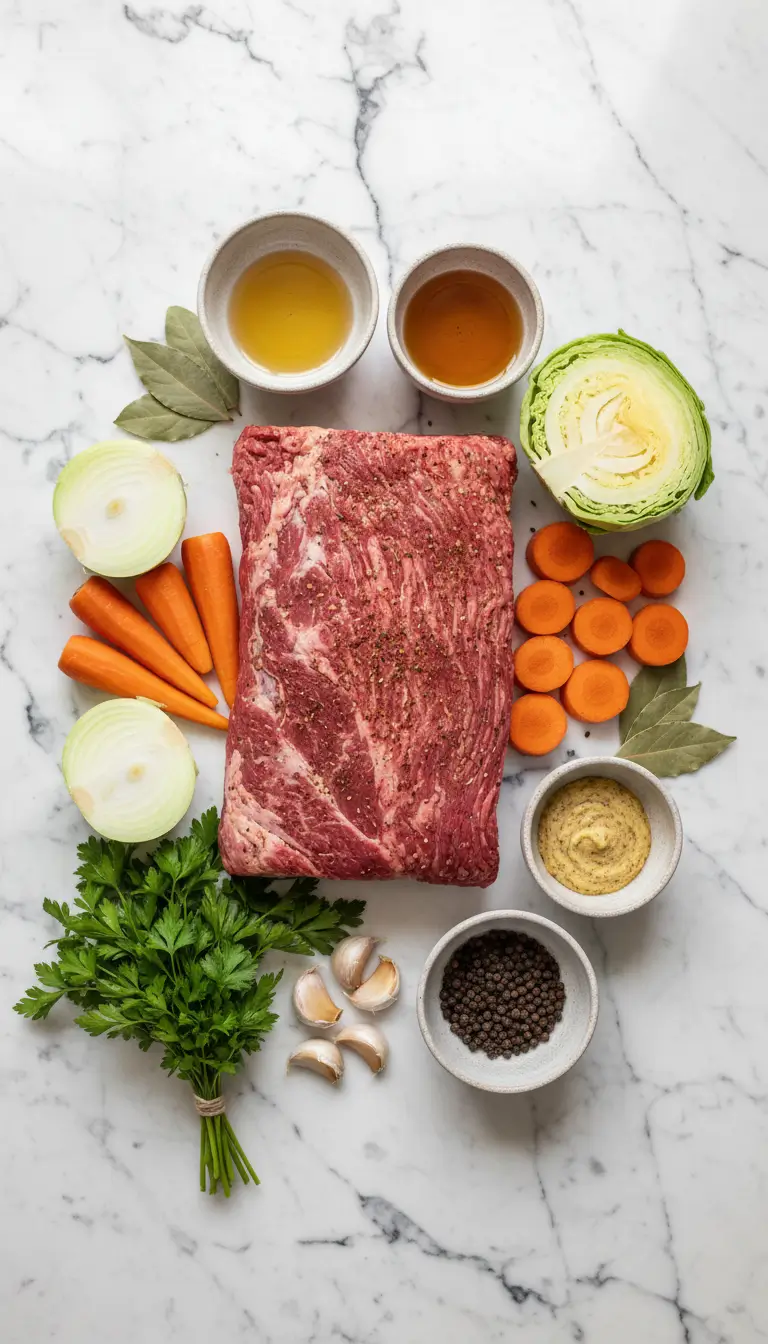
- 1 (3 to 4 pound) corned beef brisket, with its included spice packet
- 1 tablespoon avocado oil or ghee
- 1 yellow onion, cut into large wedges
- 4 cloves garlic, smashed
- 2 bay leaves
- 1 tablespoon whole black peppercorns
- 1 tablespoon apple cider vinegar (helps tenderize the meat)
- Water, to cover
- 1 large head of green cabbage, cut into 8 wedges (keep the core intact to hold the wedges together)
- 4 large carrots, peeled and cut into 3-inch chunks
- Fresh parsley, chopped (for garnish)
- Stone-ground mustard or sugar-free mustard glaze, for serving
Pantry Substitutions
- No avocado oil? Use any other high-heat cooking oil like refined coconut oil or light olive oil. Butter can burn, so ghee is a safer bet.
- Out of apple cider vinegar? A splash of white vinegar or even the juice from a dill pickle jar will work in a pinch to add that necessary acidity.
- For a different vegetable profile, swap the carrots for chunks of turnip or radish, which also stay beautifully firm and low-carb.
- If you prefer a more intense spice flavor, add a teaspoon of coriander seeds or a few whole allspice berries to the pot with the peppercorns.
Chef’s Twists
Once you’ve mastered the classic, these simple twists can take your keto corned beef dinner in exciting new directions. They’re perfect for using leftovers or making a second batch feel completely new.
Try finishing the cooked, shredded beef under the broiler for a few minutes with a brush of sugar-free barbecue sauce or mustard for crispy, caramelized edges. For a stunning presentation, serve the tender beef and vegetables over a bed of creamy cauliflower mash instead of on the side.
Infuse the cooking broth with a halved lemon or orange for a bright, citrusy note that cuts through the richness beautifully. And don’t forget, any leftovers are prime material for a fantastic Keto Reuben Roll Ups or crispy Crispy Reuben Egg Rolls.
Step-by-Step Instructions
This method is forgiving and straightforward, breaking down into two main phases: the long, slow braise for the beef, and the quick cook for the veggies. Set aside a good afternoon for the beef to become perfectly tender.
1. Prepare and Sear the Brisket
Remove the corned beef brisket from its packaging and rinse it thoroughly under cold water. Pat it completely dry with paper towels. This step is crucial for getting a good sear.
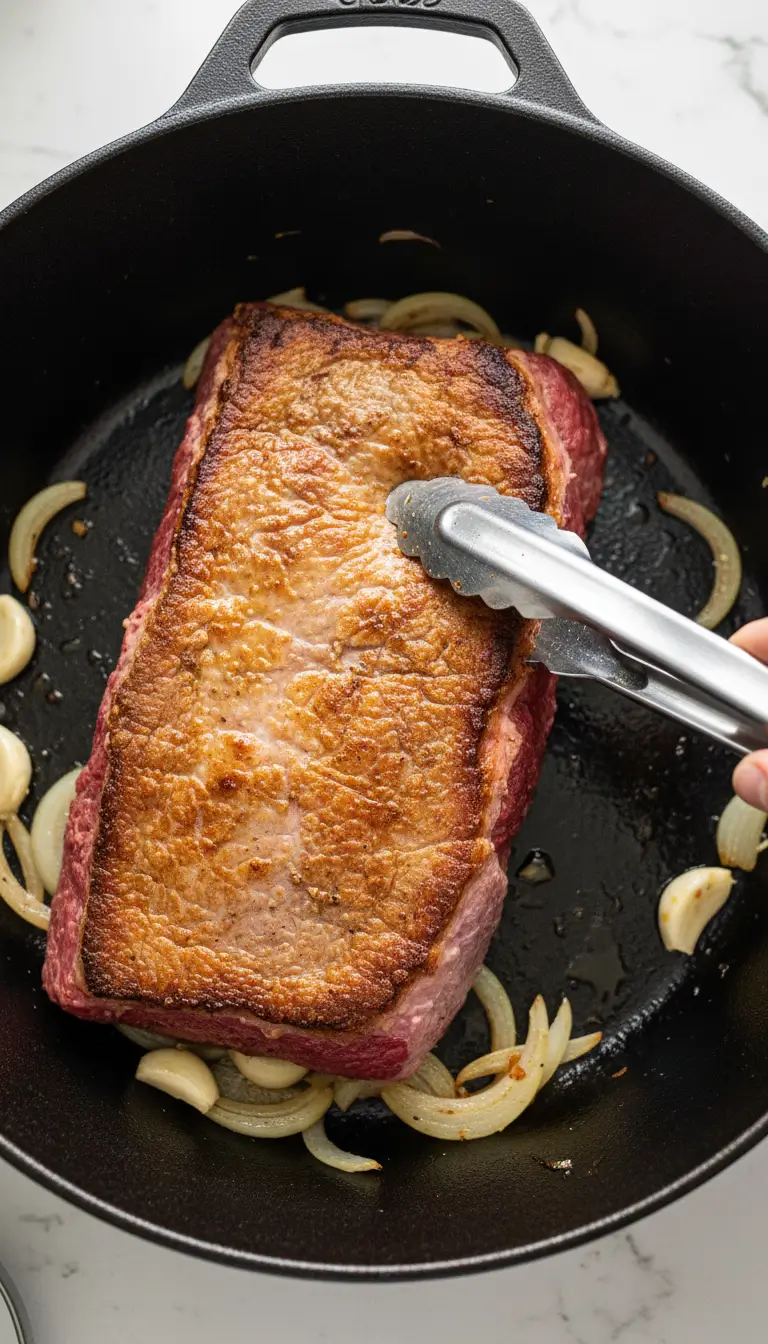
Heat the avocado oil or ghee in a large, heavy-bottomed pot or Dutch oven over medium-high heat. Sear the brisket fat-side down first, until a deep golden brown crust forms, about 4-5 minutes per side.
2. Build the Braising Liquid
Once the brisket is seared, remove it from the pot and set it aside on a plate. Add the onion wedges and smashed garlic to the pot. Sauté for just 2-3 minutes until they begin to soften and become fragrant.
Return the brisket to the pot, along with any accumulated juices. Add the spice packet, bay leaves, peppercorns, and apple cider vinegar. Pour in enough fresh water to just cover the meat completely.
3. The Long, Slow Simmer
Bring the pot to a boil, then immediately reduce the heat to the lowest possible setting to maintain a bare simmer. Cover the pot with a tight-fitting lid.
Let the corned beef simmer gently for about 3 to 3.5 hours. You can also transfer everything to a preheated 300°F (150°C) oven for a perfectly even cook, as detailed in our Oven Roasted Corned Beef guide. The meat is ready when it is fork-tender and easily shreds.
4. Cook the Vegetables
Once the beef is tender, carefully remove it from the pot and place it on a cutting board, tenting it loosely with foil to keep warm. Increase the heat under the pot to bring the broth back to a steady simmer.
Add the carrot chunks to the simmering broth and cook for about 10 minutes. Then, gently submerge the cabbage wedges into the broth. Cook for an additional 10-15 minutes, until both the carrots and cabbage are tender but still have a bit of bite.
5. Rest, Slice, and Serve
Let the corned beef rest for at least 10-15 minutes before slicing. This allows the juices to redistribute, ensuring every slice is moist. Always slice the beef against the grain for the most tender result.
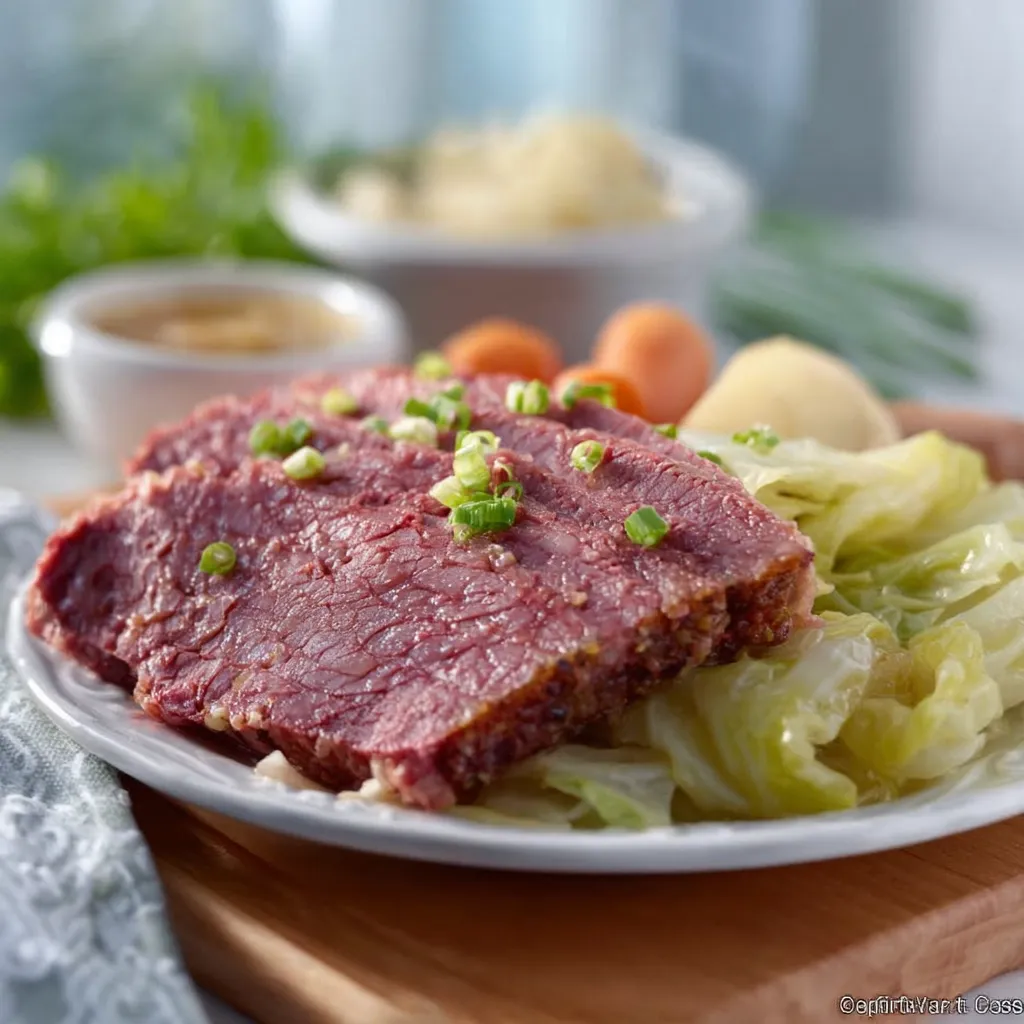
Use a slotted spoon to arrange the cabbage wedges and carrots on a large serving platter. Place the sliced or shredded corned beef alongside. Ladle a bit of the cooking broth over everything, garnish with fresh parsley, and serve immediately with plenty of mustard.
Common Mistakes to Avoid
- Bold Warning 1: Skipping the Sear: Searing isn’t just for looks. It creates a flavor foundation through the Maillard reaction that infuses the entire braising liquid. Don’t rush this step.
- Bold Warning 2: Boiling, Not Simmering: A rolling boil will toughen the meat fibers, resulting in a chewy, stringy brisket. A gentle, lazy bubble is the key to fall-apart tenderness.
- Bold Warning 3: Overcooking the Cabbage: Adding the cabbage too early turns it into a sad, gray, sulfurous mush. It needs just a brief bath in the flavorful broth at the end to become perfect.
Complete the Menu
This dish is a hearty centerpiece, but the right accompaniments turn it into a feast. A dollop of tangy, full-fat sour cream or a horseradish cream sauce is a non-negotiable for many. A simple side salad with a sharp vinaigrette helps cut through the richness beautifully.
For a truly decadent spread, serve it with a side of buttery, whipped cauliflower purée to soak up the juices. And if you love the convenience of set-and-forget cooking, the principles here translate perfectly to our Slow Cooker Corned Beef And Cabbage method for those busy days.
The leftovers are arguably even better the next day. Shred the remaining beef and pan-fry it with chopped cabbage for a incredible hash, topped with a fried egg. You can also explore the classic preparation in our traditional Corned Beef And Cabbage recipe for comparison.
Thanks for stopping by! I hope this dish brings joy to your table.
How do you prevent the cabbage from becoming mushy in this keto corned beef recipe?
To prevent mushy cabbage, cook it separately at the end. After removing the tender corned beef, add the cabbage wedges to the simmering broth and cook for only 10-15 minutes until tender but still slightly crisp. This keeps it vibrant and avoids the waterlogged texture that occurs from overcooking.
What is a key substitution for apple cider vinegar if I don’t have any?
If you don’t have apple cider vinegar, you can use a splash of white vinegar or even the juice from a dill pickle jar. The acidity helps tenderize the meat, which is the primary function in this recipe.
Why is it important to sear the corned beef brisket before simmering?
Searing the brisket creates a deep golden brown crust through the Maillard reaction, which builds a foundational flavor that infuses the entire braising liquid. Skipping this step means missing out on that extra layer of savory depth.
What are some creative ways to use leftovers from this keto corned beef dinner?
Leftovers are great for making a crispy hash by pan-frying shredded beef with chopped cabbage and topping with a fried egg. You can also use them to make Keto Reuben Roll-Ups or Crispy Reuben Egg Rolls. Another idea is to broil the shredded beef with a sugar-free sauce for caramelized edges.

Keto Corned Beef and Cabbage Low Carb Dinner
Ingredients
Equipment
Method
- Remove corned beef from packaging and rinse thoroughly under cold water. Pat completely dry with paper towels.
- Heat avocado oil or ghee in a large Dutch oven over medium-high heat. Sear the brisket fat-side down first until a deep golden brown crust forms, about 4-5 minutes per side.
- Remove seared brisket and set aside on a plate. Add onion wedges and smashed garlic to the pot. Sauté for 2-3 minutes until fragrant.
- Return the brisket to the pot with any juices. Add the spice packet, bay leaves, peppercorns, and apple cider vinegar.
- Pour in enough fresh water to just cover the meat completely.
- Bring to a boil, then immediately reduce heat to the lowest setting to maintain a bare simmer. Cover with a tight-fitting lid.
- Simmer gently for 3 to 3.5 hours, or until the meat is fork-tender and easily shreds.
- Once beef is tender, carefully remove it from the pot and place on a cutting board. Tent loosely with foil to keep warm.
- Increase heat to bring the broth back to a steady simmer. Add carrot chunks and cook for 10 minutes.
- Gently submerge cabbage wedges into the broth. Cook for an additional 10-15 minutes, until vegetables are tender but still have a bit of bite.
- Let the corned beef rest for 10-15 minutes before slicing. Always slice against the grain.
- Use a slotted spoon to arrange cabbage and carrots on a serving platter. Place sliced or shredded corned beef alongside.
- Ladle a bit of the cooking broth over everything, garnish with fresh parsley, and serve immediately with mustard.