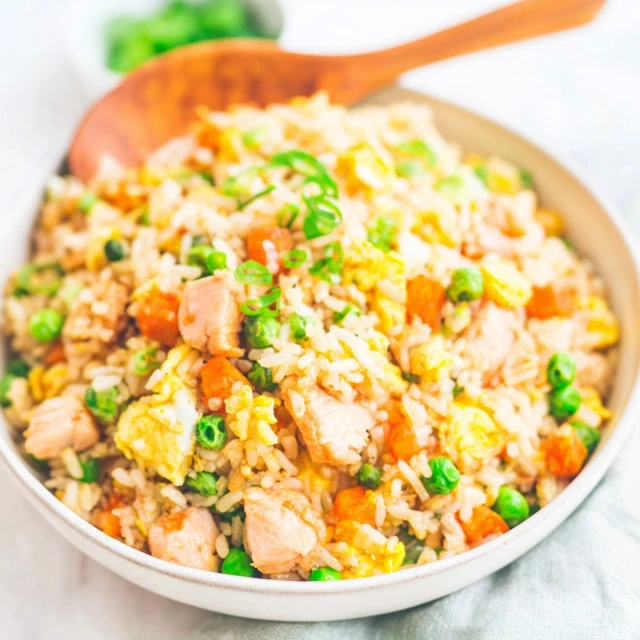
Restaurant-style fried rice often feels like a culinary mirage, something you can only truly enjoy from a takeout container. We’ve all been there: you follow a recipe, but the result is a pan of slightly mushy, disappointingly bland rice that’s a pale imitation of the real thing. This recipe is the end of that cycle. It’s the culmination of countless attempts to crack the code, a foolproof method that delivers on the promise of perfectly separate, fluffy grains of rice, each one kissed by the savory, umami-rich sauce and the subtle, smoky essence of a screaming-hot pan.
This isn’t just a recipe for using up leftovers; it’s a blueprint for creating a dish that will make you feel like a wok master in your own kitchen. We’re talking tender bites of seasoned chicken, crisp-tender vegetables, and swirls of delicate egg all tossed together in a symphony of textures and flavors. Prepare to say goodbye to takeout for good, because the best chicken fried rice you’ve ever had is about to come from your very own stove.
The Chicken Fried Rice Difference
- Perfectly Chewy Grains: The non-negotiable use of cold, day-old rice is the foundation. This ensures the grains stay separate and firm, absorbing the sauce without ever becoming mushy or sticky.
- High-Heat Wok Hei: We mimic the “breath of the wok” by using high heat and cooking ingredients in stages. This technique creates a subtle smokiness and deepens the flavor in a way low-and-slow cooking never could.
- Balanced, Savory Sauce: This simple sauce combination hits all the right notes—salty, sweet, and packed with umami. It coats every grain without drowning the dish, letting the individual ingredients shine.
The Building Blocks

The magic of incredible fried rice lies in using simple, high-quality ingredients and understanding the role each one plays. Don’t be tempted to swap things out until you’ve tried it this way once; you’ll see how these components work together to create that classic flavor profile.
- Cooked, Chilled Rice: (This is the most important ingredient!) You need about 3-4 cups of day-old, cold long-grain white rice, like Jasmine or Basmati. Freshly cooked rice contains too much moisture and will turn to mush.
- Boneless, Skinless Chicken: About 1 pound of chicken thighs or breasts, cut into small, bite-sized pieces. Thighs are recommended for their flavor and because they stay more tender.
- Soy Sauce: (The savory backbone of the sauce) Use a good quality, low-sodium soy sauce to control the saltiness.
- Toasted Sesame Oil: (For aroma and nutty flavor) A little goes a long way! This is added at the end, off the heat, to preserve its delicate flavor.
- Eggs: Two large eggs, lightly beaten. They add richness, protein, and that classic yellow swirl throughout the rice.
- Aromatics: Minced garlic and grated fresh ginger are essential for building the base layer of flavor.
- Vegetables: A classic mix of diced onion, carrots, and frozen peas. The frozen peas are added near the end so they stay bright green and pop with sweetness.
- Green Onions (Scallions): Thinly sliced, for a fresh, mild oniony bite and a splash of color at the end.
- Neutral Oil: A high-smoke-point oil like canola, vegetable, or avocado oil is crucial for high-heat cooking.
- Optional Flavor Enhancers: A splash of Shaoxing wine (or dry sherry) and a pinch of white pepper can add another layer of authentic flavor.
Swaps & Alternatives
While the classic recipe is a must-try, fried rice is wonderfully adaptable. Here are a few reliable substitutions if you need to raid your pantry.- Protein: No chicken? No problem. Substitute with peeled and deveined shrimp, thinly sliced pork, firm tofu, or even leftover steak. Just adjust the cooking time accordingly.
- Rice: While long-grain white rice is best, you can use brown rice or even quinoa for a healthier twist. Just make sure it’s cooked and thoroughly chilled first.
- Vegetables: Feel free to add other quick-cooking veggies like diced bell peppers, corn, broccoli florets, or chopped bok choy.
- Soy Sauce: For a gluten-free version, use tamari or coconut aminos. They provide a similar savory, umami flavor.
Flavor Boosts
Ready to take your fried rice to the next level? Once you’ve mastered the basic technique, try incorporating one of these chef-inspired twists for a truly memorable meal.First, consider adding a few slices of Chinese sausage (lap cheong). Pan-fry it before you cook the chicken to render out its delicious, sweet-and-savory fat, and use that fat to cook the rest of your ingredients. It adds an incredible depth of flavor.
For a huge umami punch, add a teaspoon of fish sauce or oyster sauce to your sauce mixture. It might sound unusual, but it provides a background savoriness that you can’t quite place but will absolutely love.
If you enjoy a bit of heat, a spoonful of chili garlic sauce or a few dashes of sriracha stirred in with the sauce will give your fried rice a welcome kick.
Finally, for a sweet and tangy surprise reminiscent of Thai-style fried rice, add a half-cup of fresh pineapple chunks during the last minute of cooking. The burst of juicy sweetness is a fantastic contrast to the savory chicken and rice.
Step-by-Step Instructions

1. Prep Your Ingredients (Mise en Place)
This is the most crucial step for a stress-free experience. Because the cooking process is so fast, you won’t have time to chop vegetables or measure sauces once you start. Cut your chicken, dice your onions and carrots, mince the garlic, grate the ginger, and slice your green onions. Whisk your sauce ingredients together in a small bowl. Have your beaten eggs and frozen peas ready to go. Finally, take your cold rice out of the fridge and use your hands to gently break up any large clumps.2. Cook the Chicken and Eggs
Heat about a tablespoon of oil in a large skillet or wok over medium-high heat until it shimmers. Add the seasoned chicken pieces in a single layer and cook, stirring occasionally, until golden brown and cooked through. Remove the chicken from the pan and set it aside on a plate.Reduce the heat slightly and add the beaten eggs to the same pan. Scramble them quickly, breaking them into small pieces with your spatula as they cook. This should only take about a minute. Once cooked, slide the eggs onto the plate with the chicken.
3. Sauté the Aromatics and Veggies
Add another tablespoon of oil to the hot pan. Add the diced onion and carrots and stir-fry for 2-3 minutes until the onion is translucent and the carrots are slightly softened. Now, add the minced garlic and grated ginger. Cook for another 30 seconds until fragrant, stirring constantly to prevent them from burning. This step builds the aromatic foundation of the dish.4. Fry the Rice
Turn the heat up to high. Add the cold, broken-up rice to the skillet. Use your spatula to press and flatten the rice against the pan’s surface, letting it sit for 15-20 seconds to get a little crispy. Then, stir and toss, breaking up any remaining clumps. Continue this press-and-toss method for about 3-4 minutes. You want to hear the rice sizzling and popping; this is how you know you’re frying it, not steaming it.5. Build the Sauce and Combine
Once the rice is heated through and the grains are separate, pour the prepared sauce mixture evenly over the top. Immediately start tossing and stirring to coat every single grain. The sauce will absorb quickly.Now, return the cooked chicken and scrambled eggs to the pan. Add the frozen peas and continue to stir-fry for another 1-2 minutes, until everything is well combined and heated through. The residual heat will cook the peas perfectly, keeping them vibrant and tender.
6. Final Touches and Garnish
Turn off the heat completely. This is a crucial final step. Drizzle the toasted sesame oil over the fried rice and add most of the sliced green onions (reserving some for garnish). Give it one final, thorough toss to distribute the flavors. The sesame oil is a finishing oil; adding it off the heat preserves its delicate, nutty aroma. Serve immediately, garnished with the remaining green onions.Avoid These Pitfalls
- Using Fresh, Warm Rice: This is the number one mistake. Warm rice is full of moisture and starch, which will cause it to clump together and turn into a sticky, gummy mess in the pan. Cold, day-old rice is a must.
- Overcrowding the Pan: If you pack too many ingredients into the pan at once, the temperature will drop. Instead of stir-frying, your ingredients will steam, making them soggy. Cook in batches if necessary.
- A Low-Temperature Pan: Fried rice needs high heat to achieve that signature texture and “wok hei” flavor. Make sure your pan and oil are screaming hot before you add your ingredients.
Perfect Pairings
Chicken Fried Rice is a fantastic one-pan meal all on its own, satisfying enough to be the star of your dinner table. You truly don’t need much else to make it a complete and delicious experience.However, if you’re looking to create a full-on, takeout-style feast at home, it plays beautifully with other dishes. Imagine a table spread with this perfect fried rice alongside a saucy, savory Beef And Broccoli. The combination is an absolute classic for a reason.
For a bigger spread, you could also serve it with a platter of Chicken Chow Mein, allowing everyone to mix and match their favorites. It also serves as a wonderful base for other entrees, like crispy Japanese Chicken Katsu Bowls, soaking up any extra sauce beautifully.
If you love the idea of a simple, all-in-one chicken and rice dish, you might also enjoy exploring other flavor profiles. A Teriyaki Chicken Rice Bowl offers a sweet and savory alternative, while a Butter Chicken And Rice One Pot brings comforting Indian spices to the table. And for those days when you want the flavor without the active cooking time, don’t forget the set-it-and-forget-it magic of Crockpot Chicken Fried Rice.
Did you change any ingredients? Let me know in the comments how you made this recipe your own
Why is it so important to use cold, day-old rice for this recipe?
Using cold, day-old rice is the most crucial step for successful fried rice. Freshly cooked rice contains too much moisture, which causes it to steam in the pan and become mushy and sticky. Cold, drier rice ensures the grains stay separate and firm, allowing them to fry properly and absorb the sauce.
What is ‘wok hei’ and how can I achieve that smoky flavor at home?
Wok hei, or the ‘breath of the wok,’ is the subtle smoky flavor found in restaurant fried rice. You can mimic this at home by using a very hot pan or wok with a high-smoke-point oil. Cooking ingredients in stages over high heat, rather than all at once, prevents steaming and helps create that signature fried texture and deep flavor.
Can I use other proteins or vegetables in this fried rice?
Yes, this recipe is very adaptable. You can easily substitute the chicken with other proteins like peeled shrimp, thinly sliced pork, firm tofu, or leftover steak. You can also add other quick-cooking vegetables such as diced bell peppers, corn, broccoli florets, or chopped bok choy.
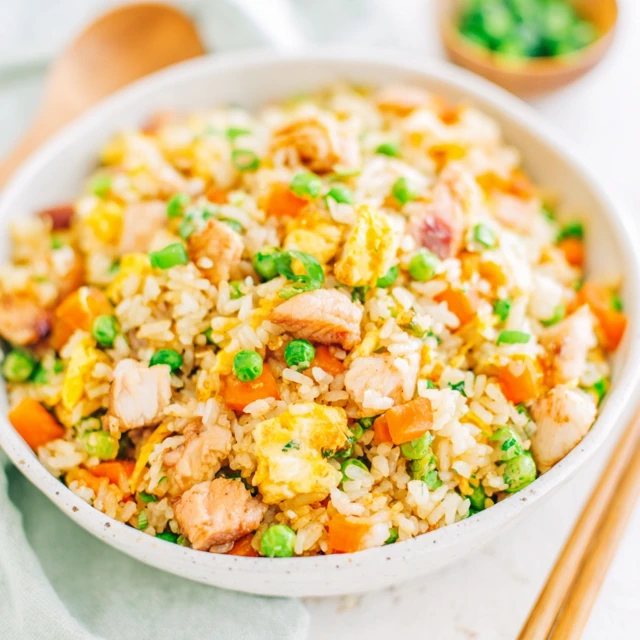
Foolproof Chicken Fried Rice at Home
Ingredients
Equipment
Method
- Prepare all ingredients (mise en place): Cut the chicken and vegetables, mince garlic, grate ginger, and slice green onions. In a small bowl, whisk together the soy sauce, Shaoxing wine, and white pepper. Use your hands to gently break up any large clumps in the cold rice.
- Heat 1 tablespoon of oil in a large skillet or wok over medium-high heat until shimmering. Add the chicken in a single layer and cook, stirring occasionally, until golden brown and cooked through. Remove the chicken to a plate.
- Reduce heat slightly, add the beaten eggs to the pan, and scramble quickly, breaking them into small pieces. This should take about 1 minute. Transfer the cooked eggs to the plate with the chicken.
- Add another tablespoon of oil to the hot pan. Add the diced onion, carrots, and the white parts of the green onions. Stir-fry for 2-3 minutes until softened. Add the minced garlic and grated ginger and cook for 30 seconds more until fragrant, stirring constantly.
- Increase the heat to high. Add the remaining tablespoon of oil, followed by the cold rice. Use your spatula to press and toss the rice, breaking up clumps, for 3-4 minutes until it is heated through and sizzling.
- Pour the prepared sauce mixture over the rice and toss immediately to coat every grain. Return the cooked chicken and scrambled eggs to the pan. Add the frozen peas and stir-fry for 1-2 minutes until everything is combined and heated through.
- Turn off the heat. Drizzle with the toasted sesame oil and add most of the green parts of the green onions. Give everything one final toss to combine. Serve immediately, garnished with the remaining green onions.