Flaking a perfectly cooked salmon fillet is one of those small kitchen joys, a gentle nudge with a fork that reveals tender, rosy layers. It’s a moment of pure texture, and it’s the entire foundation of a salmon salad that refuses to be a mushy, one-note affair. We’re leaving behind the days of over-mixed, mayonnaise-heavy salads and stepping into a world where every bite is a celebration of the fish itself.
This recipe delivers a salmon salad that is light yet creamy, packed with bright, fresh flavors from dill and lemon, and punctuated by the crisp crunch of celery and red onion. It’s the kind of salad that makes you rethink lunch entirely, perfect for piling high on toasted sourdough, scooping up with crackers, or stuffing into a ripe avocado for a meal that feels both indulgent and incredibly wholesome.
The Salmon Salad Difference
- Flaky, Not Mushy: By starting with a perfectly cooked salmon fillet and gently flaking it, we preserve large, tender pieces of fish. This avoids the pasty texture that plagues many canned fish salads.
- A Perfectly Balanced Dressing: This isn’t just a mayo-dump situation. We create a vibrant dressing with creamy mayonnaise, tangy Dijon mustard, and fresh lemon juice that complements the rich salmon without overpowering it.
- Layers of Freshness and Crunch: Finely diced celery and red onion provide an essential crisp texture, while a generous amount of fresh dill adds an irreplaceable, bright, herbaceous note that cuts through the richness.
The Building Blocks
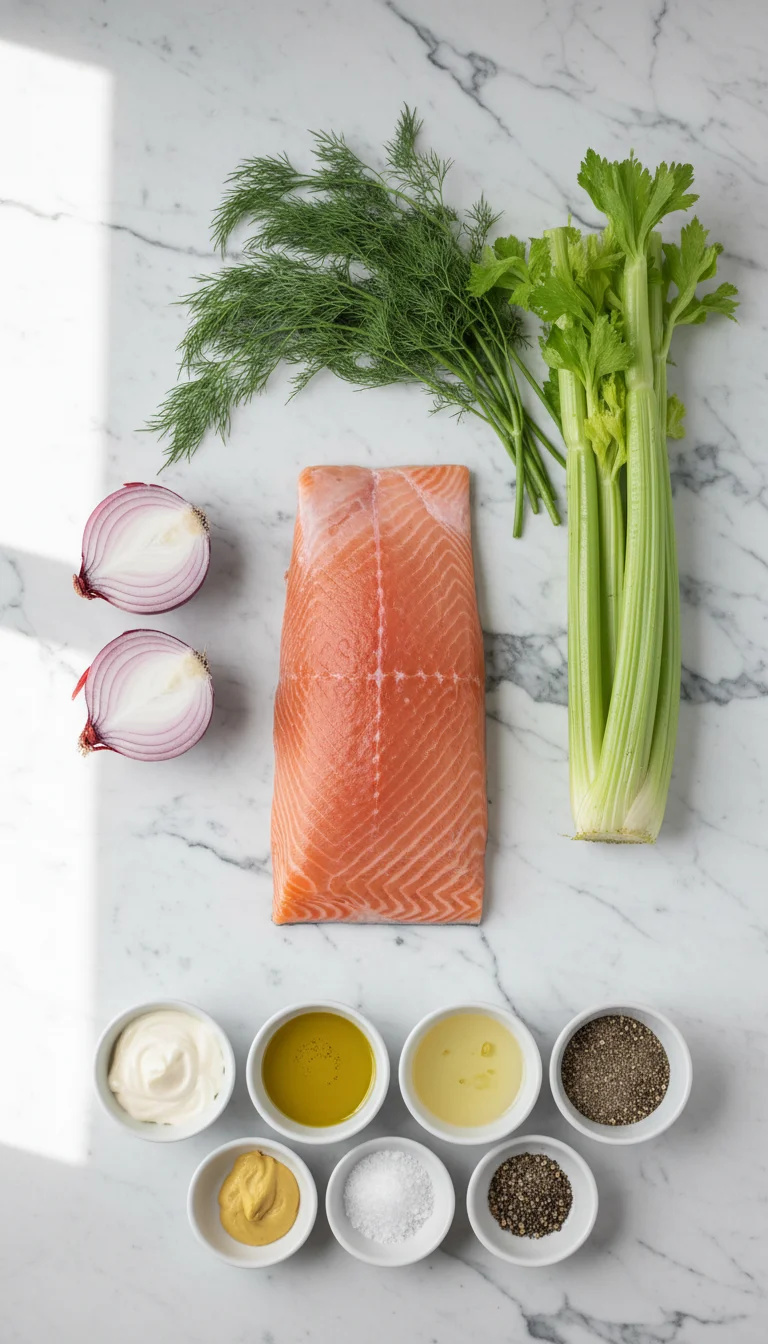
The magic of this recipe lies in its simplicity and the quality of its components. Using fresh, vibrant ingredients is the key to transforming a good salmon salad into an unforgettable one. Each element plays a crucial role in creating the final, harmonious flavor profile.
- Salmon Fillet: (The star of the show). Use a high-quality, fresh salmon fillet, about 1 pound. King, Sockeye, or Coho all work beautifully. Cooking it yourself ensures the perfect flaky texture.
- Mayonnaise: (For creaminess and binding). Use a good-quality, full-fat mayonnaise like Duke’s or Kewpie for the richest flavor and best texture.
- Celery: (For that essential crunch). Finely diced celery adds a fresh, clean crunch that provides a wonderful textural contrast to the soft salmon.
- Red Onion: (For a bit of sharp bite). Mince it very finely so its flavor is distributed evenly without being overwhelming. Soaking it in cold water for 10 minutes can mellow its bite if you prefer.
- Fresh Dill: (The perfect herbal partner). There is no substitute for fresh dill here. Its bright, slightly anise-like flavor is a classic pairing with salmon for a reason.
- Dijon Mustard: (For a tangy kick). A spoonful of Dijon adds a wonderful depth and tang that cuts through the richness of the mayo and salmon.
- Lemon Juice: (For brightness). Freshly squeezed lemon juice is non-negotiable. It brightens all the flavors and keeps the salad tasting light and zesty.
- Salt and Black Pepper: (To season and enhance). Season the salmon before cooking and adjust the final salad to your taste. Freshly cracked black pepper is always best.
- Olive Oil: For cooking the salmon.
Swaps & Alternatives
Don’t have everything on hand? No problem! This recipe is wonderfully flexible. Here are a few simple swaps you can make in a pinch.
- For the Salmon: While freshly cooked is best, you can absolutely use high-quality canned salmon. Just be sure to drain it very well and gently flake it. Smoked salmon also works for a saltier, smokier twist.
- For the Mayonnaise: For a lighter version, you can substitute half or all of the mayonnaise with full-fat Greek yogurt or sour cream. It will be tangier, so you may want to adjust the lemon juice.
- For the Herbs: If you’re not a fan of dill, fresh parsley, chives, or even tarragon can be used instead for a different but equally delicious flavor profile.
- For the Red Onion: Shallots are a fantastic, milder substitute for red onion. Green onions (scallions) will also work, providing a gentler onion flavor.
- For the Celery: If you need that crunch but are out of celery, try finely diced cucumber (seeds removed), jicama, or even a crisp apple like a Granny Smith for a sweet-tart element.
Gourmet Variations
Once you’ve mastered the classic, it’s fun to play around and make it your own. Think of this base recipe as a perfect canvas for your culinary creativity. These little additions can elevate your salmon salad from a simple lunch to a gourmet experience.
- Add a Briny Pop: A tablespoon of drained capers or finely chopped cornichons can add a fantastic salty, briny kick that beautifully complements the rich salmon.
- Incorporate Creamy Egg: Gently fold in one or two chopped hard-boiled eggs. This adds another layer of creamy texture and makes the salad even more substantial and satisfying.
- Bring Some Heat: For those who like a little spice, a dash of your favorite hot sauce, a pinch of red pepper flakes, or even some finely minced jalapeño can add a welcome warmth to the salad. This is a great trick if you love our Spicy Salmon Sushi Bake.
- Use Smoked Salmon: Swap the cooked salmon fillet for high-quality hot-smoked salmon. This imparts a deep, smoky flavor throughout the salad, making it feel extra luxurious.
How to Make Salmon Salad
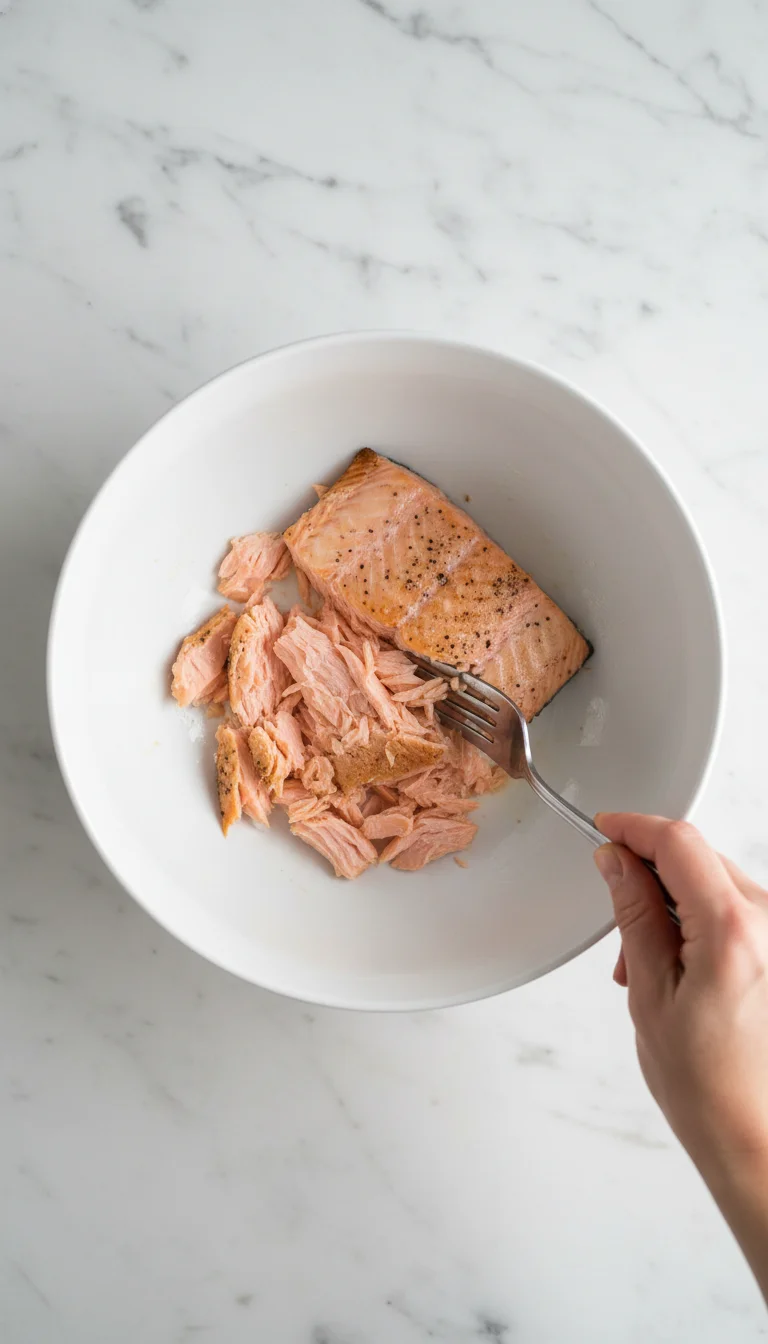
The process is straightforward and rewarding, broken down into a few simple stages. The key is to handle the salmon gently at every step to maintain those beautiful, large flakes. This method takes about 20 minutes of active time, plus chilling.
1. Cook the Salmon
First, preheat your oven to 400°F (200°C). Pat the salmon fillet completely dry with paper towels—this is crucial for getting a nice sear. Place it on a baking sheet lined with parchment paper for easy cleanup. Drizzle the fillet with a little olive oil and season generously on all sides with salt and pepper. Bake for 12-15 minutes, or until the salmon is cooked through and flakes easily with a fork. The exact time will depend on the thickness of your fillet. For another easy salmon cooking method, check out our Sheet Pan Salmon And Vegetables.2. Cool and Flake the Fish
This step is the secret to a great texture. Once the salmon is cooked, remove it from the oven and let it cool completely on the baking sheet. You can speed this up by placing it in the refrigerator for about 15-20 minutes. Once cool to the touch, use a fork to gently flake the salmon into large, bite-sized pieces in a large mixing bowl. Avoid shredding it into tiny bits; we want distinct flakes.3. Prepare the Dressing
While the salmon cools, you can prepare the dressing and the other components. In a small bowl, whisk together the mayonnaise, Dijon mustard, and fresh lemon juice until smooth and creamy. This simple combination is so effective, much like the sauce in our Pan Seared Salmon With Creamy Dill Sauce.4. Combine and Chill
To the large bowl with the flaked salmon, add the finely diced celery, minced red onion, and chopped fresh dill. Pour the prepared dressing over the top. Using a rubber spatula, gently fold everything together until just combined. Be careful not to over-mix! You want to coat all the ingredients without breaking up those beautiful salmon flakes. Taste and adjust seasoning with more salt, pepper, or lemon juice if needed. For the best flavor, cover the bowl and chill in the refrigerator for at least 30 minutes to allow the flavors to meld.Avoid These Pitfalls
- Overcooking the Salmon: The most common mistake. Dry, overcooked salmon will result in a dry, chalky salad, no matter how good your dressing is. Cook it until it’s *just* opaque and flakes easily.
- Over-mixing the Salad: It’s tempting to stir vigorously, but this will break down the salmon flakes and turn your beautiful, textured salad into a uniform paste. Fold gently until just combined.
- Skipping the Chill Time: Don’t rush it! Chilling the salad for at least 30 minutes is crucial. This allows the flavors of the onion, dill, and lemon to meld together and permeate the salmon, resulting in a much more delicious final product.
Perfect Pairings
This salmon salad is incredibly versatile, ready to be the star of your lunch or a light dinner. It’s more than just a sandwich filling; it’s a building block for dozens of delicious meals. If you’re looking for other fantastic salad meals, our Grilled Balsamic Steak Salad is another must-try.
Here are some of my favorite ways to serve it:
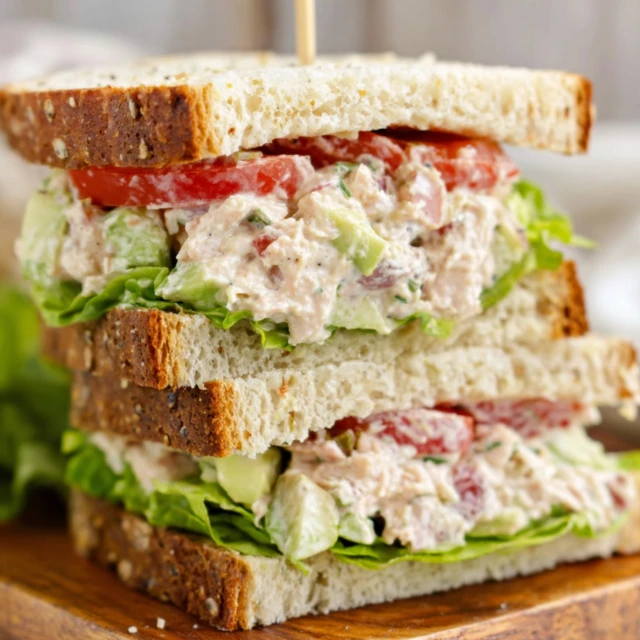
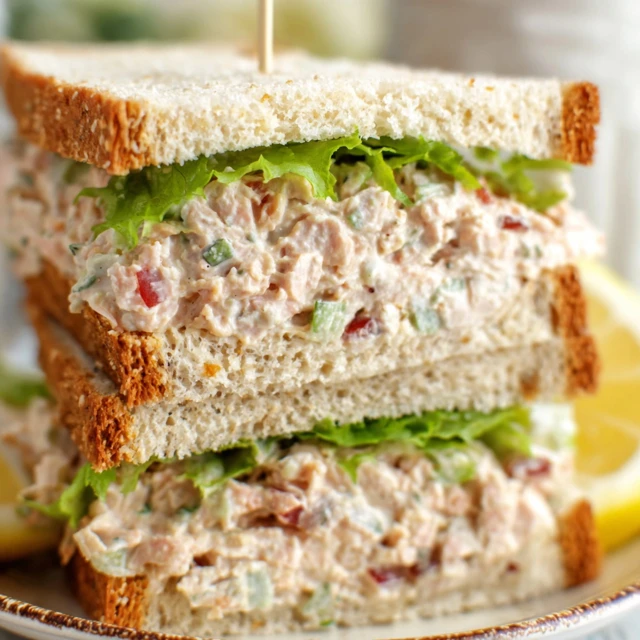
- The Epic Sandwich: Pile it high on toasted sourdough, rye, or a buttery croissant. Add a layer of crisp lettuce leaves (like butter lettuce or romaine) and some juicy tomato slices for the perfect bite.
- Elegant Lettuce Wraps: For a lighter, low-carb option, scoop the salmon salad into crisp, sturdy lettuce cups like iceberg, butter lettuce, or endive leaves. It’s a refreshing and crunchy alternative, similar to the concept of our Deconstructed Spring Roll Salad.
- Stuffed Avocados or Tomatoes: Halve an avocado and remove the pit, or hollow out a large, ripe tomato. Fill the center with a generous scoop of salmon salad for a beautiful, satisfying, and healthy meal.
- On a Bed of Greens: Serve a large scoop over a bed of mixed greens or arugula with a light vinaigrette for a simple yet elegant salad.
- With Crackers and Veggies: Arrange the salmon salad on a platter surrounded by your favorite crackers, pita chips, and an assortment of crunchy vegetables like cucumber slices, bell pepper strips, and carrot sticks for a fantastic appetizer or snack board. This is a great alternative when you want something simpler than a full dish like Lemon Garlic Butter Shrimp.
Did you change any ingredients? Let me know in the comments how you made this recipe your own
What is the secret to getting a flaky, non-mushy salmon salad?
The key is to start with a perfectly cooked salmon fillet, let it cool completely, and then gently flake it into large pieces with a fork. When mixing, fold the ingredients together gently with a spatula and avoid over-mixing to preserve the distinct flakes of fish.
Can I use canned or smoked salmon for this recipe instead of fresh?
Yes, you can. The article suggests that high-quality canned salmon is a great alternative, but be sure to drain it very well. For a saltier, smokier twist, you can also use hot-smoked salmon in place of the freshly cooked fillet.
Are there any good substitutes for mayonnaise or fresh dill?
Absolutely. For a lighter, tangier dressing, you can replace some or all of the mayonnaise with full-fat Greek yogurt or sour cream. If you don’t care for dill, fresh parsley, chives, or tarragon are excellent herbal alternatives.
What are some ways to serve this salmon salad besides in a sandwich?
This salmon salad is very versatile. You can serve it in crisp lettuce cups for a low-carb option, stuff it into avocados or tomatoes for a wholesome meal, place a scoop over a bed of mixed greens, or offer it as a dip with crackers and fresh vegetables.
Flaky Salmon Salad for Epic Sandwiches
Ingredients
Equipment
Method
- Cook the Salmon: Preheat your oven to 400°F (200°C). Pat the salmon fillet completely dry with paper towels. Place it on a baking sheet lined with parchment paper. Drizzle with olive oil and season generously on all sides with salt and pepper. Bake for 12-15 minutes, or until the salmon is cooked through and flakes easily with a fork.
- Cool and Flake the Fish: Remove the salmon from the oven and let it cool completely. To speed this up, you can place it in the refrigerator for 15-20 minutes. Once cool, use a fork to gently flake the salmon into large, bite-sized pieces in a large mixing bowl. Avoid shredding it too finely.
- Prepare the Dressing: While the salmon cools, whisk together the mayonnaise, Dijon mustard, and fresh lemon juice in a small bowl until smooth and creamy.
- Combine and Chill: To the large bowl with the flaked salmon, add the finely diced celery, minced red onion, and chopped fresh dill. Pour the dressing over the top. Use a rubber spatula to gently fold everything together until just combined, being careful not to break up the salmon flakes. Taste and adjust seasoning with more salt, pepper, or lemon juice if needed. Cover and chill for at least 30 minutes before serving to allow the flavors to meld.