Most corned beef recipes ask for a gentle simmer, a patient poach that yields a tender, almost flaky result. This one asks for something else entirely: a riot of heat, a crackling crust, and vegetables that drink deeply of rendered fat and spice.
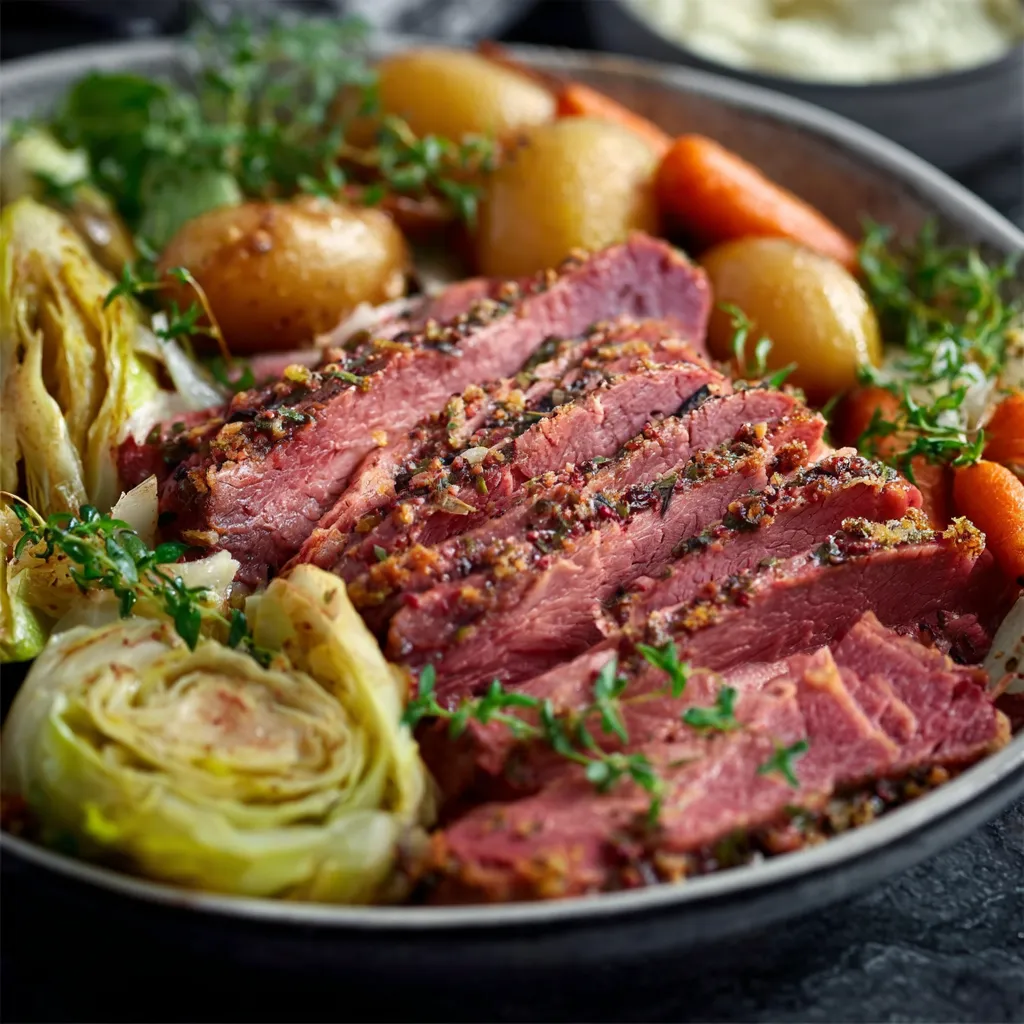
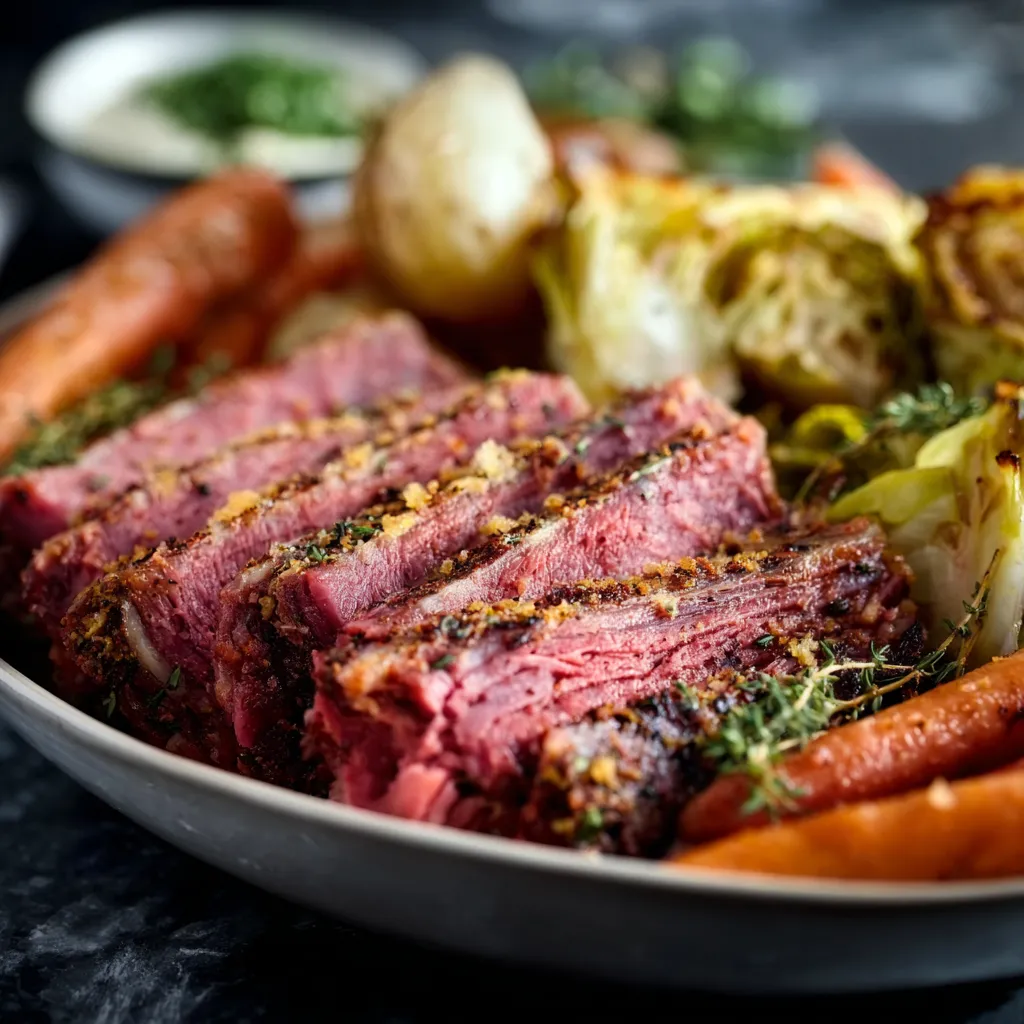
What emerges from your oven is a revelation. The beef is transformed, its exterior shatteringly crisp like the best bacon, guarding a succulent, salty interior. The cabbage wedges caramelize at the edges, their sweetness a perfect foil, while potatoes and carrots roast in the glorious, spiced drippings. This isn’t just a boiled dinner; it’s a celebration of texture and bold, roasted flavor.
Why This Crispy Oven Roasted Corned Beef and Cabbage Works
- The Unbeatable Texture: High-heat roasting creates a crispy, caramelized bark on the beef that you simply cannot achieve through boiling or steaming.
- Deep, Concentrated Flavor: Roasting intensifies everything. The spices in the brine bloom, the vegetables sweeten, and the meat’s flavor becomes rich and complex.
- One-Pan Simplicity: After a quick boil, everything cooks together on a single sheet pan, meaning incredible flavor and minimal cleanup.
What You’ll Need
Gathering your ingredients is the first simple step toward this unforgettable meal. The magic lies not in a long list, but in the transformative power of your oven’s heat. Here’s everything you’ll need.
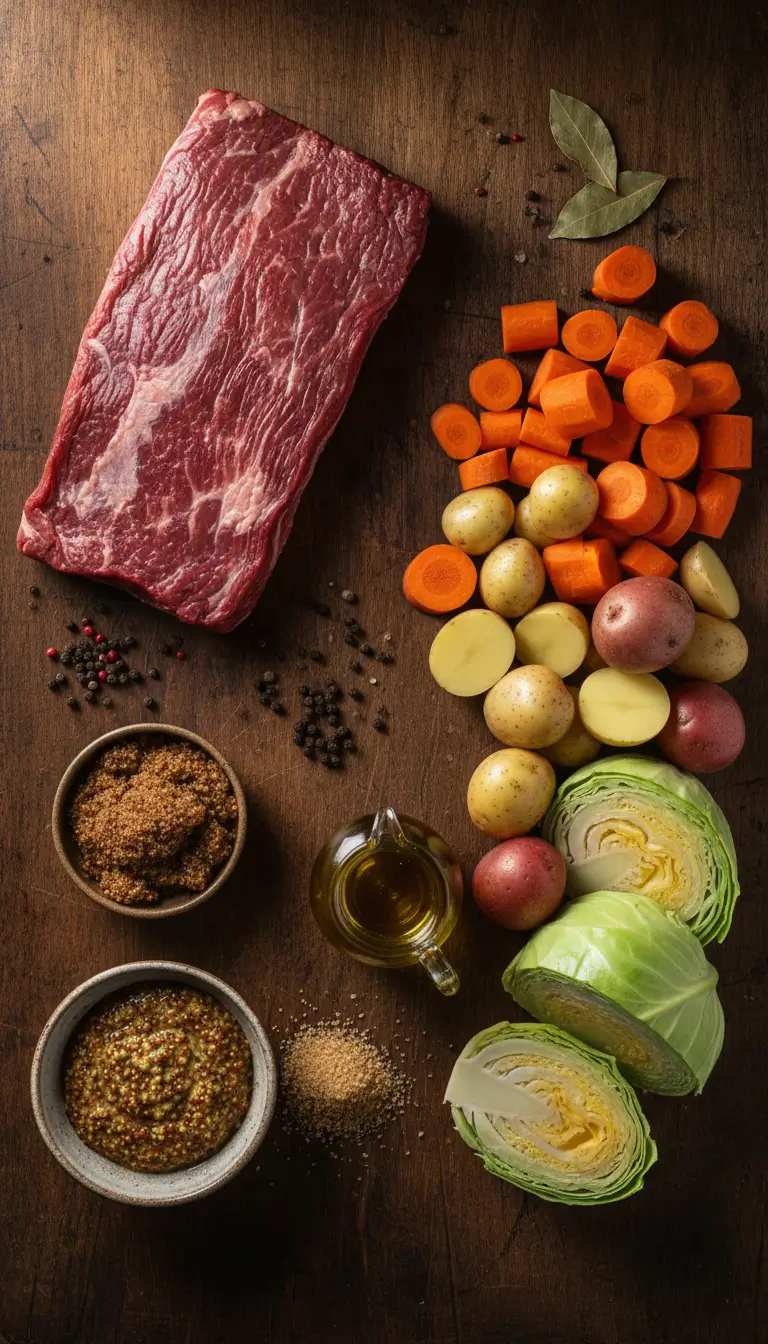
- 1 (3-4 pound) flat-cut corned beef brisket (with its included spice packet)
- 1 tablespoon whole black peppercorns
- 2 bay leaves
- 1 large head of green cabbage, cut into 8 wedges (core intact to hold them together)
- 1.5 pounds baby potatoes (Yukon Gold or red bliss work perfectly)
- 4 large carrots, peeled and cut into 2-inch chunks
- 2 tablespoons olive oil
- 2 tablespoons whole-grain mustard (adds a tangy, textured glaze)
- 2 tablespoons brown sugar (promotes caramelization and balances saltiness)
- 1 teaspoon freshly cracked black pepper
Pantry Alternatives
Don’t let a missing ingredient stop you. This recipe is wonderfully adaptable.
- No Baby Potatoes? Use larger Yukon Golds or russets, chopped into 1.5-inch cubes.
- Out of Whole-Grain Mustard? Dijon mustard is a fine substitute, though the texture will be smoother.
- Brown Sugar Swap: An equal amount of pure maple syrup or honey will work for glazing.
- Vegetable Variations: Add parsnips, turnips, or even whole peeled shallots to the roasting pan for more vegetable variety.
- Spice Packet Lost? Combine 1 tablespoon pickling spice with an extra bay leaf and a few extra peppercorns.
Flavor Twists
Once you’ve mastered the classic, feel free to play with these delicious variations. Each one takes the dish in a fun new direction.
- Stout & Honey Glaze: Mix 2 tablespoons of Irish stout with 1 tablespoon honey and brush it over the beef during the last 15 minutes of roasting.
- Herb-Crusted: After scoring the fat cap, press a mixture of chopped fresh thyme, rosemary, and cracked pepper into the grooves before roasting.
- Spicy Sweet: Add 1 teaspoon of smoked paprika and a pinch of red pepper flakes to the brown sugar and mustard glaze.
- Root Vegetable Medley: Swap half the potatoes for other hearty roots like chopped sweet potato, celery root, or rutabaga.
Let’s Get Cooking
Follow these simple steps for a foolproof, spectacular result. Remember, the initial boil is crucial for tenderizing the meat before we blast it with high heat.
Step 1: The Initial Simmer
Preheat your oven to 375°F (190°C). Place the corned beef in a large pot or Dutch oven and cover it with cold water by about an inch. Add the spice packet, peppercorns, and bay leaves.
Bring to a boil over high heat, then immediately reduce to a gentle simmer. Cover and let it cook for 2 to 2.5 hours, until the beef is fork-tender. This step is what ensures your final roast is succulent, not tough.
Step 2: Prep the Pan & Vegetables
While the beef simmers, prepare your sheet pan. Line a large, rimmed baking sheet with parchment paper or foil for easy cleanup. In a large bowl, toss the cabbage wedges, potatoes, and carrots with the olive oil and a good pinch of salt.
Arrange the vegetables in a single layer on the prepared pan, giving them a little space to roast properly. The cabbage will caramelize beautifully where it touches the hot pan.
Step 3: Glaze and Score the Beef
Carefully remove the tender corned beef from the pot and place it on a cutting board. Discard the cooking liquid. Pat the beef very dry with paper towels—this is key for crispiness.
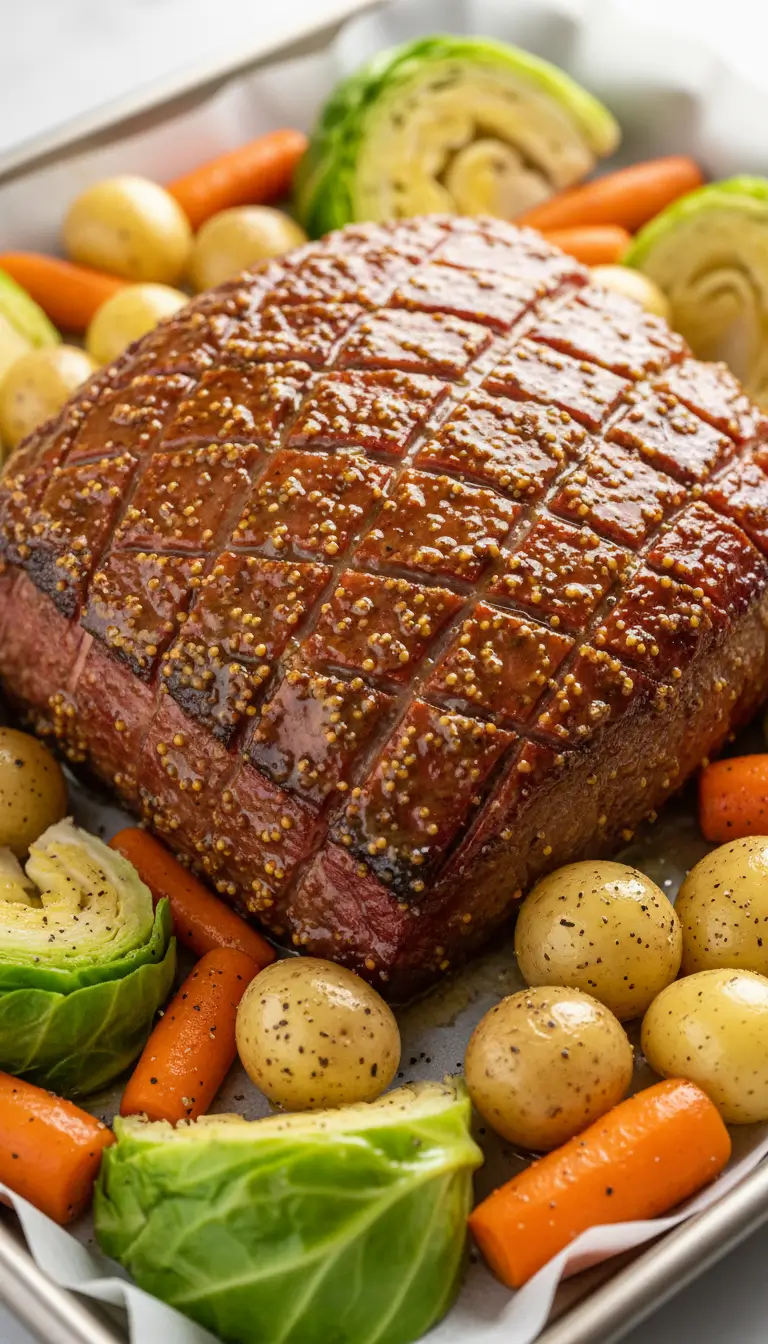
In a small bowl, mix the whole-grain mustard and brown sugar. Using a sharp knife, score the fat cap on the beef in a crosshatch pattern. Brush the entire mustard-sugar glaze generously over the beef, getting it into the scored grooves.
Step 4: The Roast
Nestle the glazed corned beef, fat-side up, right in the center of the vegetables on the sheet pan. Sprinkle the cracked black pepper over everything.
Roast in the preheated oven for 25-35 minutes. You’re looking for the vegetables to be tender and charred at the edges and, most importantly, for the top of the corned beef to become deeply browned, crispy, and caramelized.
Step 5: Rest and Serve
Remove the pan from the oven. Transfer the crispy corned beef to a clean cutting board and let it rest for 10 minutes. This allows the juices to redistribute, ensuring every slice is moist.
While it rests, you can give the vegetables a final toss on the pan. Slice the beef thinly against the grain for the most tender bite, and serve immediately with the roasted vegetables and any pan juices.
Chef’s Tips
- Dry the Beef Thoroughly: The single most important step for crispiness is patting the boiled brisket completely dry before glazing and roasting. Any surface moisture will steam, not sear.
- Don’t Crowd the Pan: If your sheet pan looks too full, use two. Overcrowding steams the vegetables and prevents them from getting those delicious caramelized edges.
- Check for Tenderness After Boiling: The beef should be easily pierced with a fork before it goes in the oven. If it’s still resistant, simmer for another 15-20 minutes.
- Slice Against the Grain: Identify the direction of the muscle fibers and slice perpendicular to them. This cuts the fibers short, making each piece melt-in-your-mouth tender.
Best Sides
This dish is a hearty meal all on its own, but a few simple additions can make it a true feast. A loaf of crusty bread is non-negotiable for soaking up the incredible juices on the plate.
For a lighter contrast, a simple green salad with a sharp vinaigrette cuts through the richness beautifully. If you’re a fan of classic beef dinners, you’ll also love our ultimate Beef Stew on a cozy night.
And for another show-stopping, company-worthy roast, the method for our Roast Beef Tenderloin is a game-changer. If you enjoy the low-and-slow approach, our French Onion Pot Roast and Slow Cooker Pot Roast are must-tries. The rich, oniony gravy from our Slow Cooker Pulled Beef Onion Gravy would also be fantastic drizzled over the leftovers.
Thanks for stopping by! I hope this dish brings joy to your table.
Why is the initial simmering step crucial before roasting the corned beef?
The initial simmer for 2 to 2.5 hours is crucial because it ensures the corned beef becomes fork-tender and succulent. This step tenderizes the meat, preventing it from being tough when it is later blasted with high heat in the oven to create the crispy crust.
What is the most important tip for achieving a crispy crust on the corned beef?
The single most important tip is to pat the boiled corned beef completely dry with paper towels before applying the glaze and roasting. Any surface moisture will steam instead of sear, preventing the formation of a crispy, caramelized bark.
What can I use if I don’t have the spice packet that came with the corned beef?
If the spice packet is lost, you can combine 1 tablespoon of pickling spice with an extra bay leaf and a few extra peppercorns as a substitute to add to the simmering water.
Can I make ingredient substitutions in this recipe?
Yes, the recipe is very adaptable. For example, you can use chopped large potatoes instead of baby potatoes, Dijon mustard instead of whole-grain, or honey/maple syrup instead of brown sugar. You can also add other root vegetables like parsnips, turnips, or sweet potatoes.
Crispy Oven Roasted Corned Beef and Cabbage
Ingredients
Equipment
Method
- Preheat oven to 375°F (190°C).
- Place corned beef in a large pot and cover with cold water by 1 inch. Add the spice packet, peppercorns, and bay leaves.
- Bring to a boil, then reduce to a gentle simmer. Cover and cook for 2 to 2.5 hours, until fork-tender.
- While beef simmers, line a large rimmed baking sheet with parchment paper or foil.
- In a large bowl, toss cabbage wedges, potatoes, and carrots with olive oil and a pinch of salt. Arrange in a single layer on the prepared pan.
- Remove the tender corned beef from the pot and place on a cutting board. Discard cooking liquid. Pat the beef completely dry with paper towels.
- In a small bowl, mix the whole-grain mustard and brown sugar.
- Score the fat cap of the beef in a crosshatch pattern with a sharp knife.
- Brush the mustard-sugar glaze generously all over the beef, getting it into the scored grooves.
- Nestle the glazed corned beef, fat-side up, in the center of the vegetables on the sheet pan. Sprinkle cracked black pepper over everything.
- Roast for 25-35 minutes, until vegetables are tender and charred at the edges and the beef top is deeply browned, crispy, and caramelized.
- Remove pan from oven. Transfer beef to a clean cutting board and let rest for 10 minutes.
- Give the vegetables a final toss on the pan. Slice the beef thinly against the grain and serve immediately with the roasted vegetables and pan juices.