It’s a bread that defies the usual rules, born from a clever bit of kitchen chemistry rather than the slow patience of yeast. This is Irish soda bread, a humble, honest loaf that comes together with a stir and a hope, its signature cross cut deep into the dough like a baker’s blessing.
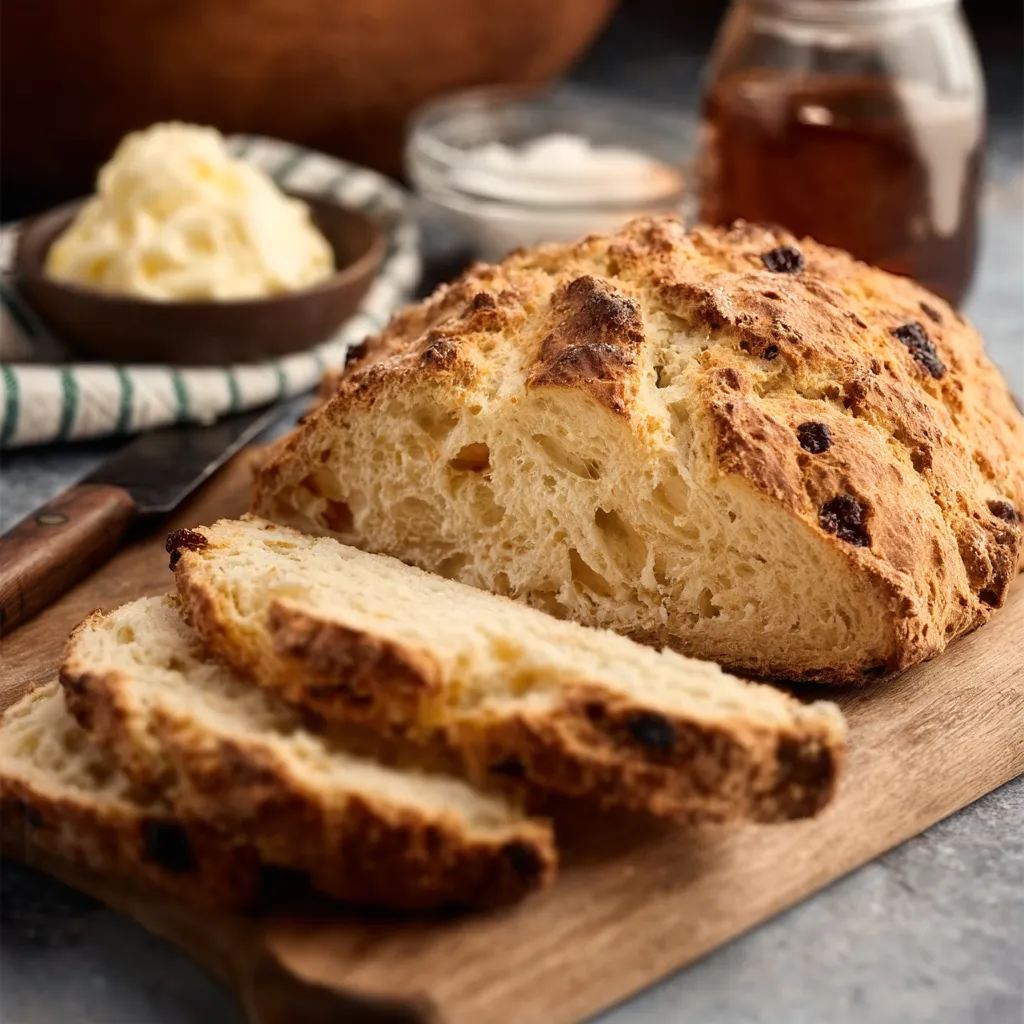
What emerges from your oven is something truly special: a craggy, domed round with a crust that shatters delicately under the knife. Inside, the crumb is tender, slightly sweet, and impossibly crumbly in the best way, perfect for slathering with good butter or dunking into a hearty stew. This isn’t just bread; it’s a warm, edible hug.
Why This Irish Soda Bread Works
- No Yeast, No Wait: The reaction between baking soda and buttermilk creates all the lift you need, meaning you can go from bowl to table in about an hour.
- Forgiving Simplicity: This recipe is nearly impossible to mess up. It celebrates a light hand and embraces a rustic, craggy appearance.
- Perfect Texture Balance: We achieve that ideal contrast of a crisp, flour-dusted crust with a soft, tender, and slightly sweet interior that crumbles just right.
Gather Your Supplies
You likely have most of these ingredients in your pantry right now. The beauty of this bread is in its straightforward, wholesome components that come together to create something much greater than the sum of its parts.
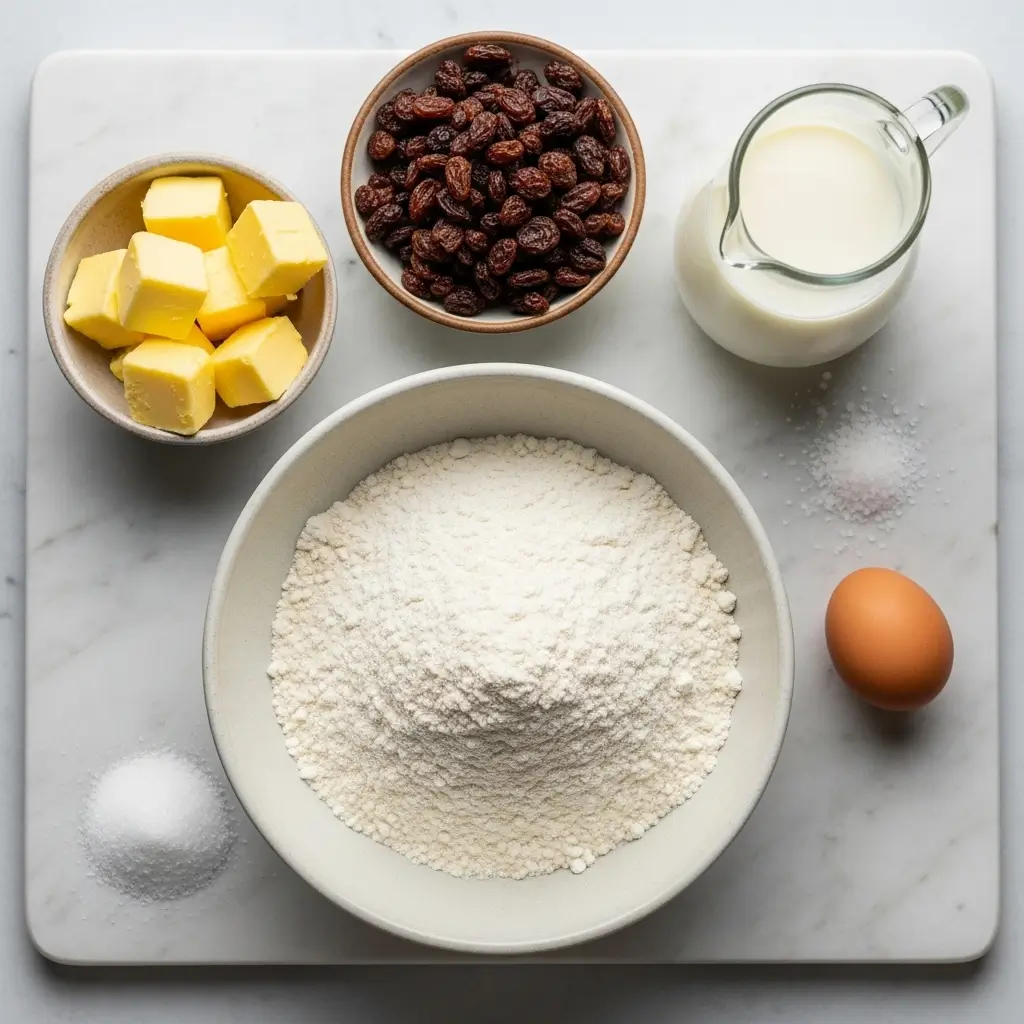
- All-Purpose Flour: (The sturdy foundation that provides structure).
- Granulated Sugar: (A touch for balance and a hint of sweetness to complement the tang).
- Baking Soda: (The essential leavener that reacts with the acid in the buttermilk).
- Salt: (Crucial for enhancing all the other flavors in the bread).
- Cold Unsalted Butter: (Cut in for pockets of fat that create tenderness and flakiness).
- Raisins or Currants: (The classic addition for little bursts of chewy sweetness).
- Buttermilk: (The acidic liquid that activates the baking soda and adds signature tang and moisture).
- An Egg: (Helps with richness, color, and binding the dough).
Pantry Alternatives
Don’t let a missing ingredient stop you. This recipe is wonderfully adaptable.
- No Buttermilk? Make your own by adding 1 tablespoon of white vinegar or lemon juice to a liquid measuring cup, then filling it to the 1 ¾ cup line with regular milk. Let it sit for 5 minutes to curdle.
- Out of Raisins? Use dried cranberries, chopped dried apricots, or even a mix of seeds for a savory twist.
- Dairy-Free? Use a plant-based milk + acid alternative for the buttermilk and cold vegan butter. The results are still excellent.
- Want a Whole-Grain Boost? Substitute up to 1 cup of the all-purpose flour with whole wheat flour for a nuttier flavor and heartier texture.
Make It Your Own
Once you’ve mastered the classic, the canvas is yours to paint. Here are a few delightful ways to personalize your loaf.
- Caraway & Orange: Add 1-2 tablespoons of caraway seeds and the zest of one orange to the dry ingredients for a traditional, aromatic flavor combination.
- Cheese & Herb Savory Loaf: Omit the sugar and raisins. Stir in 1 cup of sharp shredded cheddar and 2 tablespoons of chopped fresh herbs like chives or rosemary.
- Double Chocolate Chip: For a breakfast treat, replace the raisins with dark chocolate chips and add 2 tablespoons of cocoa powder to the dry ingredients.
- Seeded Brown Bread: Add a handful of mixed seeds (sunflower, pumpkin, flax) to the dough and sprinkle more on top before baking for extra crunch and nutrition.
Let’s Get Cooking
The process is as satisfying as the result. Remember, a light touch is your best friend here.
1. Prep and Combine Dry Ingredients
Preheat your oven to 375°F (190°C). Line a baking sheet with parchment paper. In a large mixing bowl, whisk together the flour, sugar, baking soda, and salt thoroughly.
This ensures the leavener is evenly distributed, which is key for a consistent rise. No one wants a pocket of baking soda in their bite!
2. Cut in the Butter
Add the cold, cubed butter to the flour mixture. Using a pastry cutter, two forks, or your fingertips, work the butter into the flour until the mixture resembles coarse crumbs with some pea-sized bits of butter remaining.
Those little butter pieces will melt in the oven, creating steam pockets that contribute to a tender, flaky crumb. This technique is similar to what you’d do for scones or biscuits.
3. Add the Raisins and Wet Ingredients
Toss the raisins in the flour-butter mixture to coat them. This helps prevent them from sinking to the bottom during baking.
In a separate bowl or large measuring jug, whisk the buttermilk and egg together until smooth. Create a well in the center of your dry ingredients and pour the wet mixture in.
4. Mix the Dough
Using a sturdy wooden spoon or a fork, stir the mixture from the center outward, just until a shaggy, sticky dough forms and no dry flour remains.
It will look rough and messy—that’s perfect! Over-mixing is the enemy of tender soda bread, as it develops gluten and can make the bread tough.
5. Shape and Score
Turn the dough out onto a lightly floured surface. With floured hands, gently knead it 3-4 times, just enough to bring it into a cohesive ball. Don’t overwork it.
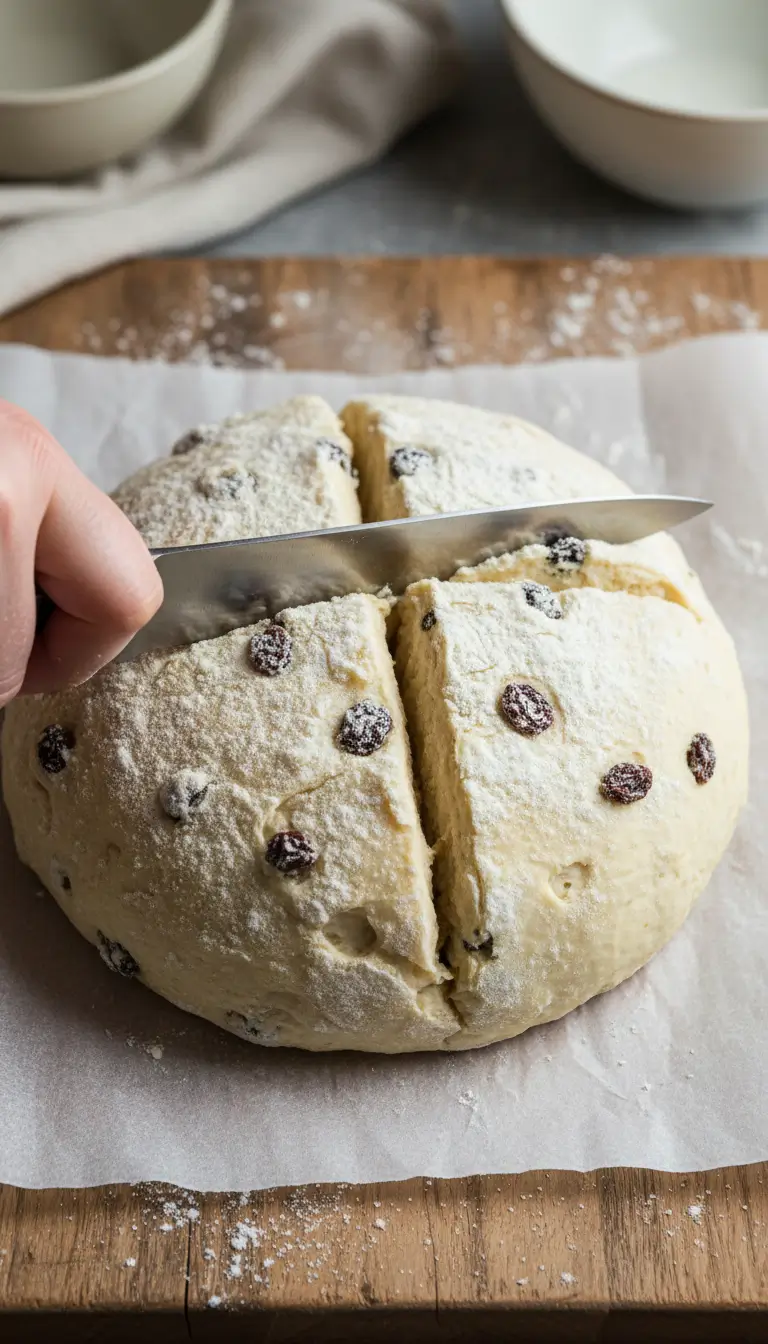
Place the ball on your prepared baking sheet. Pat it gently into a 7-inch round. Using a sharp, floured knife, cut a deep “X” into the top, going almost all the way through to the edges.
6. Bake to Perfection
Bake for 45-55 minutes, or until the bread is deeply golden brown and sounds hollow when you tap the bottom. The deep score allows the heat to penetrate the thickest part of the dough, ensuring it bakes through evenly.
If you’re unsure, an instant-read thermometer inserted into the center should read 190°F (88°C). Transfer the loaf to a wire rack and let it cool for at least 30 minutes before slicing.
Chef’s Tips
- Handle with Care: The less you handle the dough, the better. Think “gentle gathering,” not vigorous kneading. A sticky, lumpy dough is a good dough here.
- Score Deeply: Don’t be shy with your “X”. It should be at least ½-inch deep. This isn’t just decorative; it’s functional, helping the center bake properly and giving the loaf its classic look.
- The Hollow Sound Test: The most reliable sign of doneness is that hollow thump when you lift the loaf and tap its bottom. The crust will be firm and deeply colored.
- Cool Completely: I know it’s hard to wait, but slicing into warm soda bread can make it gummy. Letting it cool sets the crumb for the perfect crumbly texture.
What to Serve with Irish Soda Bread
This bread is a versatile companion. Its slight sweetness and tang make it a friend to both savory and sweet dishes.
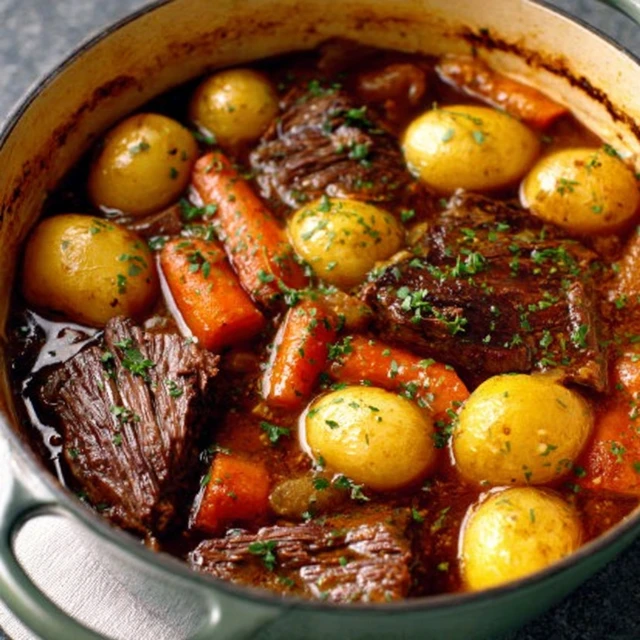
For a traditional Irish spread, serve thick slices alongside a rich, steaming bowl of lamb or beef stew. It’s absolutely meant for soaking up those delicious juices.
At breakfast or tea time, slather it with high-quality salted butter, clotted cream, or your favorite fruit jam. A cup of strong tea is its perfect partner.
It also makes a wonderful addition to a soup and salad lunch, or simply enjoyed as a snack on its own. If you love bread baskets, this is a stunning homemade alternative to Garlic Butter Rolls or Garlic Rolls.
For another no-yeast bread adventure that’s equally rewarding, you might enjoy trying your hand at Homemade Everything Bagels or the surprisingly simple Cottage Cheese Bagels.
I hope this recipe becomes a trusted, comforting staple in your kitchen, just as it is in mine. Did you change any ingredients? Let me know in the comments how you made this recipe your own!
What is the key chemical reaction that makes Irish soda bread rise without yeast?
The lift in Irish soda bread comes from the reaction between baking soda (the leavener) and the acid in the buttermilk. This creates carbon dioxide bubbles, allowing the bread to rise quickly without the need for yeast or a long wait.
I don’t have buttermilk. What is a simple substitute I can make at home?
You can easily make a buttermilk substitute by adding 1 tablespoon of white vinegar or lemon juice to a liquid measuring cup, then filling it to the 1 ¾ cup line with regular milk. Let the mixture sit for about 5 minutes to curdle before using it in the recipe.
Why is it important to cut a deep ‘X’ into the top of the soda bread dough before baking?
Scoring a deep ‘X’ (at least ½-inch deep) is not just decorative; it is functional. The cut allows heat to penetrate the thickest part of the dough, ensuring the center bakes through evenly and giving the loaf its classic, craggy appearance as it expands in the oven.
What are some easy variations I can make to the classic sweet Irish soda bread recipe?
The article suggests several variations: 1) For a traditional flavor, add caraway seeds and orange zest. 2) For a savory loaf, omit sugar and raisins, and add shredded cheddar and fresh herbs. 3) For a sweet treat, add dark chocolate chips and cocoa powder. 4) For a nutritious twist, add mixed seeds like sunflower or pumpkin to the dough.

Classic Irish Soda Bread: Sweet and Crumbly
Ingredients
Equipment
Method
- Preheat oven to 375°F (190°C). Line a baking sheet with parchment paper.
- In a large bowl, whisk together the flour, sugar, baking soda, and salt until thoroughly combined.
- Add the cold, cubed butter to the flour mixture. Use a pastry cutter, two forks, or your fingertips to work the butter in until the mixture resembles coarse crumbs with some pea-sized bits remaining.
- Toss the raisins in the flour-butter mixture to coat them.
- In a separate bowl or jug, whisk the buttermilk and egg together until smooth.
- Make a well in the center of the dry ingredients. Pour the wet mixture into the well.
- Using a wooden spoon or fork, stir from the center outward just until a shaggy, sticky dough forms and no dry flour remains. Do not overmix.
- Turn the dough out onto a lightly floured surface. With floured hands, gently knead it 3-4 times just to bring it into a cohesive ball.
- Place the ball on the prepared baking sheet. Pat it gently into a 7-inch round.
- Using a sharp, floured knife, cut a deep ‘X’ into the top of the dough, about 1/2-inch deep, almost to the edges.
- Bake for 45-55 minutes, until the loaf is deeply golden brown and sounds hollow when tapped on the bottom. An instant-read thermometer inserted into the center should read 190°F (88°C).
- Transfer the loaf to a wire rack and let it cool completely, for at least 30 minutes, before slicing.