Certain meals whisper secrets of comfort, and this canned salmon pasta shouts them from the rooftops. It’s the dish you make when the day has won, when the fridge looks bleak, and when your soul needs a hug in a bowl. This isn’t just about mixing fish into noodles; it’s a small, brilliant act of kitchen alchemy, transforming the humble and the on-hand into something that feels genuinely special, a testament to the power of a well-stocked pantry.
Forget any preconceived notions about canned fish, because we are about to create a dish that is unapologetically creamy, bright with lemon, fragrant with garlic, and packed with savory, flaky salmon. Each bite is a perfect harmony of textures and tastes—the tender pasta coated in a silky, emulsified sauce that clings beautifully, punctuated by fresh herbs and the rich depth of the salmon. This is your new weeknight hero, your emergency dinner plan, and your secret weapon for a meal that tastes like it took hours, not minutes.
The Canned Salmon Pasta Difference
- Creaminess Without Heavy Cream: We leverage the magic of starchy pasta water, emulsified with a little butter and olive oil, to create a luxuriously silky sauce that coats every single noodle without weighing it down.
- Flavor Layering Technique: This recipe isn’t just about combining ingredients. We carefully build layers of flavor by blooming garlic and herbs in fat, then deglazing with lemon and pasta water to create a deeply aromatic base before the salmon is even introduced.
- Pantry Powerhouse Perfected: It proves that pantry staples can create a truly elegant and satisfying meal. The result is a dish that feels thoughtful and gourmet, yet comes together with minimal effort and planning.
The Building Blocks
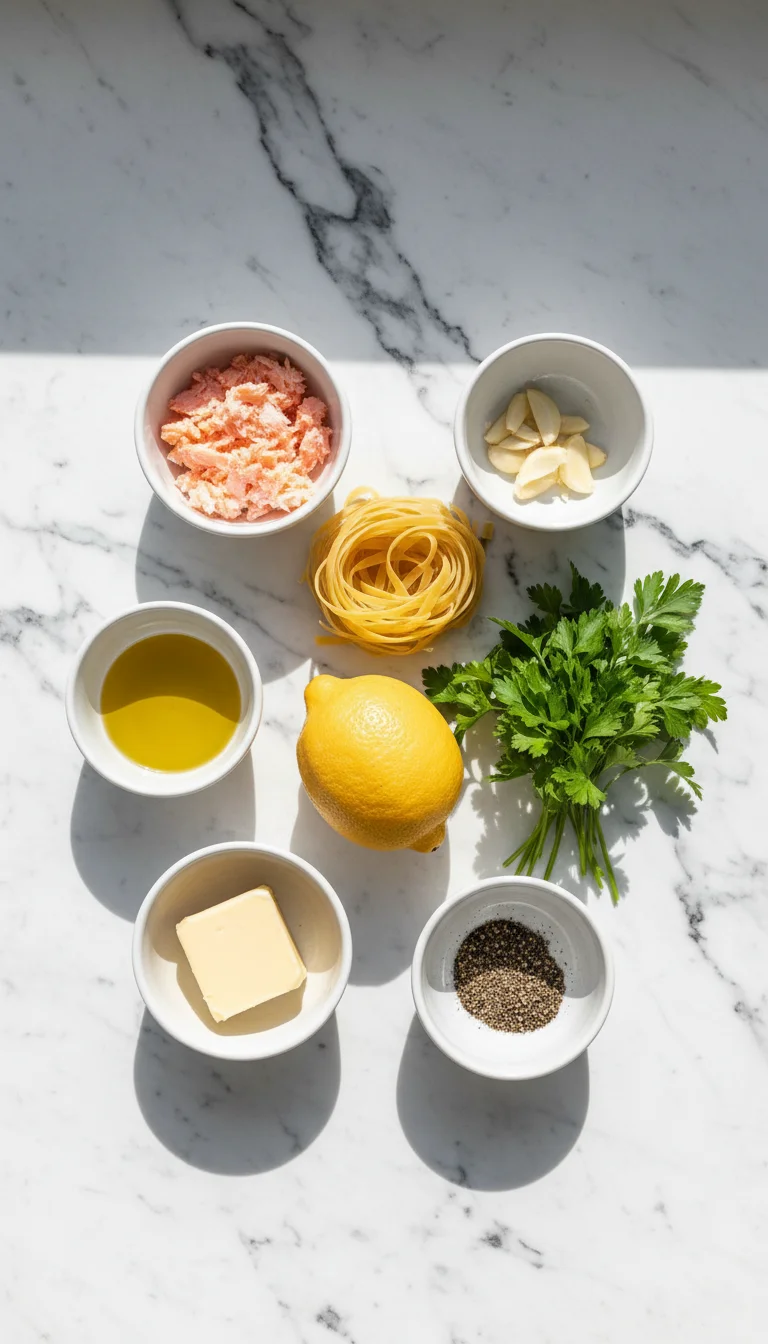
The beauty of this recipe lies in its simplicity, but using quality ingredients is what elevates it from good to unforgettable. Think of this list as your roadmap to a perfect bowl of pasta every single time.
- Pasta: 12 ounces (340g) of a long pasta like spaghetti, linguine, or fettuccine. (The Why: Long strands are perfect for twirling and catching the light, creamy sauce. A quality bronze-die pasta will have a rougher texture that helps the sauce cling even better.)
- Canned Salmon: Two 5-ounce (142g) cans of high-quality wild-caught salmon, packed in water or olive oil, drained. (The Why: Quality is key here. Wild-caught salmon has a firmer texture and richer flavor that stands up beautifully in the sauce. Don’t skimp!)
- Extra Virgin Olive Oil: 2 tablespoons. (The Why: This forms the flavorful base of our sauce and helps sauté the aromatics without burning.)
- Unsalted Butter: 2 tablespoons. (The Why: Butter adds a rich, velvety mouthfeel and helps create a stable emulsion for the sauce.)
- Garlic: 4 cloves, thinly sliced. (The Why: Sliced garlic, rather than minced, infuses the oil with a sweet, mellow flavor without the risk of burning and becoming bitter.)
- Lemon: 1 large lemon, for both zest and juice. (The Why: This is non-negotiable. The acidity from the juice and the bright fragrance from the zest cut through the richness of the salmon and butter, lifting the entire dish.)
- Reserved Pasta Water: About 1 cup. (The Why: This is the liquid gold of pasta making! The starch in the water is the magic ingredient that helps the oil, butter, and lemon juice emulsify into a creamy, cohesive sauce.)
- Fresh Parsley: 1/2 cup, finely chopped, plus more for garnish. (The Why: Fresh herbs add a necessary burst of freshness and color that brightens up the entire flavor profile.)
- Salt and Black Pepper: To taste.
Swaps & Alternatives
Don’t have everything on hand? No problem. This recipe is wonderfully flexible.- For the Salmon: If you’re out of canned salmon, a good quality canned tuna (packed in olive oil) works as a fantastic substitute. For a different vibe, you could even flake in leftover cooked salmon from another meal, like from a Baked Salmon With Lemony Orzo night.
- For the Pasta: Any pasta shape will work! Penne, fusilli, or rotini are great because their nooks and crannies trap the sauce. For a gluten-free option, use your favorite GF pasta, but be aware you may need a little less pasta water.
- For the Herbs: Fresh dill is a classic pairing with salmon and can be used in place of, or in addition to, the parsley. A tablespoon of chopped chives would also be lovely.
- Dairy-Free Option: You can easily make this dairy-free by omitting the butter and using an extra tablespoon or two of high-quality olive oil. The sauce will still be delicious.
Gourmet Variations
Ready to take this pantry hero to the next level? These simple additions can make your dish feel even more special and tailored to your tastes.First, consider adding a briny, salty pop with a tablespoon of drained capers. Toss them in with the garlic to let them sizzle and crisp up slightly. They are a classic and perfect partner for salmon.
For a touch of heat, add 1/4 to 1/2 teaspoon of red pepper flakes along with the garlic. This subtle warmth in the background contrasts beautifully with the creamy sauce and bright lemon. If you enjoy salmon with a kick, you’ll appreciate this little addition, much like the heat in a Spicy Salmon Sushi Bake.
To add some greens and extra nutrients, wilt a few large handfuls of fresh spinach into the sauce right before you add the pasta. It will cook down in seconds and adds beautiful color and a mild, earthy flavor.
Finally, for an incredibly rich and nutty depth of flavor, try browning the butter. Melt the butter in the pan first over medium heat, letting it foam and then subside until golden-brown specks appear and it smells nutty. Proceed with the recipe from there, adding the olive oil and garlic.
How to Make Canned Salmon Pasta
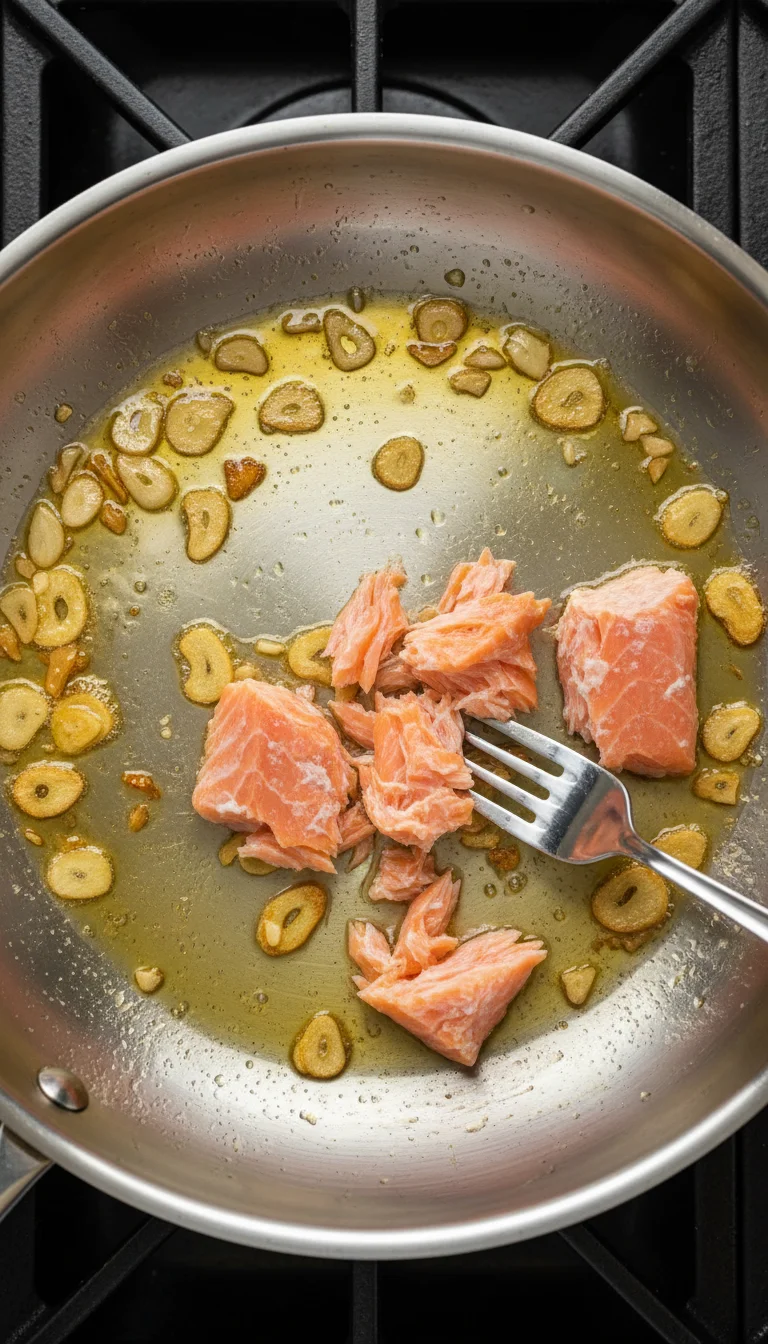
1. Cook the Pasta Perfectly
Bring a large pot of heavily salted water to a rolling boil. It should taste like the sea! Add your pasta and cook according to package directions until it’s al dente—tender with a slight bite. Before you drain it, use a mug or heatproof measuring cup to reserve at least 1.5 cups of the starchy cooking water. This is your secret weapon for the sauce. Drain the pasta and set it aside.2. Awaken the Aromatics
While the pasta is cooking, place a large skillet or Dutch oven over medium heat. Add the olive oil and butter. Once the butter is melted and foaming, add the thinly sliced garlic. Cook, stirring frequently, for about 1-2 minutes until the garlic is fragrant and just beginning to turn a pale golden color. Be careful not to let it burn, or it will become bitter.3. Create the Silky Sauce
This is where the magic happens. Pour about 3/4 cup of your reserved hot pasta water into the skillet with the garlic. It will sizzle and steam—this is good! Let it bubble for a minute, scraping up any delicious bits from the bottom of the pan. Squeeze in the juice of half the lemon and add the lemon zest. This simple combination of fat, starch, and acid is the foundation of your incredible sauce, reminiscent of the satisfying creaminess in a dish like Marry Me Shrimp Pasta.4. Flake and Fold the Salmon
Gently flake the drained canned salmon into the skillet using a fork. You want to leave some nice, chunky pieces for texture. Stir it gently into the sauce and let it warm through for just a minute. The salmon is already cooked, so our only goal here is to heat it and let it absorb the flavors of the sauce. Season generously with salt and freshly cracked black pepper.5. Marry the Pasta and Sauce
Add the drained pasta directly to the skillet with the salmon sauce. Add the chopped fresh parsley. Using tongs, toss everything together vigorously for about a minute. This step is crucial—the tossing action helps the starch from the pasta and the water emulsify with the fats, creating that glossy, creamy sauce that coats every strand. If it looks a little dry, add another splash of the reserved pasta water until it reaches your desired consistency. Taste and adjust seasoning, adding more salt, pepper, or a squeeze of lemon juice if needed.Avoid These Pitfalls
- Overcooking the Salmon: Remember, the canned salmon is fully cooked. If you add it too early or cook it for too long, it will break down into a mushy texture. Add it at the very end just to warm it through.
- Forgetting the Pasta Water: Draining your pasta in a colander and letting all that starchy water go down the drain is the biggest mistake you can make. This water is the key ingredient that transforms a few simple elements into a truly creamy sauce.
- Skimping on Lemon: The richness of the salmon and butter needs a bright, acidic counterpoint. Both the lemon juice and zest are essential for cutting through the fat and making the flavors pop. If your pasta tastes flat, it probably needs more lemon.
Complete the Menu
This Canned Salmon Pasta is a hearty and satisfying meal all on its own, but a few simple sides can turn it into a full-fledged feast. The goal is to complement the rich, creamy pasta with something fresh and crisp.A simple green salad is the perfect partner. Think arugula or mixed greens tossed in a light vinaigrette made with lemon juice, olive oil, and a touch of Dijon mustard. The peppery bite of the arugula and the acidity of the dressing will cleanse the palate between bites of rich pasta.
For something a little heartier, you can’t go wrong with a side of crusty garlic bread. It’s perfect for sopping up any delicious sauce left at the bottom of the bowl.
When it comes to wine, a crisp, dry white wine is the ideal pairing. A Sauvignon Blanc, with its grassy and citrusy notes, will beautifully complement the lemon in the sauce. A Pinot Grigio or an unoaked Chardonnay would also be excellent choices.
This dish is a fantastic alternative when you want a creamy pasta but are looking for something different from the usual chicken or cheese-based sauces. It holds its own against classics like Spinach Artichoke Chicken Alfredo or even a traditional Spaghetti Carbonara in terms of pure comfort. And if you’re a fan of easy, comforting dishes using canned fish, you’ll definitely love its cousin, the classic Creamy Tuna Noodle Casserole.
Did you change any ingredients? Let me know in the comments how you made this recipe your own
How does this salmon pasta get so creamy without using heavy cream?
The creaminess is achieved by using the starchy water the pasta was cooked in. This reserved pasta water emulsifies with butter and olive oil, creating a luxuriously silky sauce that coats the noodles without the need for heavy cream.
What are the most common mistakes to avoid when making this dish?
The main mistakes to avoid are overcooking the canned salmon, which can make it mushy; forgetting to reserve the starchy pasta water, which is key to the creamy sauce; and not using enough lemon, which is essential for balancing the richness of the salmon and butter.
Can I substitute the salmon or pasta in this recipe?
Yes, the recipe is very flexible. You can use high-quality canned tuna or leftover cooked salmon instead of canned salmon. Any pasta shape, including penne or fusilli, will work well. For a gluten-free option, use your favorite GF pasta, noting you may need less pasta water.
What are some ways to add extra flavor to this pasta?
To enhance the flavor, you can add a tablespoon of drained capers or 1/4 to 1/2 teaspoon of red pepper flakes along with the garlic. For extra richness, you can brown the butter before adding the other ingredients. Wilting in a few handfuls of fresh spinach is also a great way to add nutrients and color.
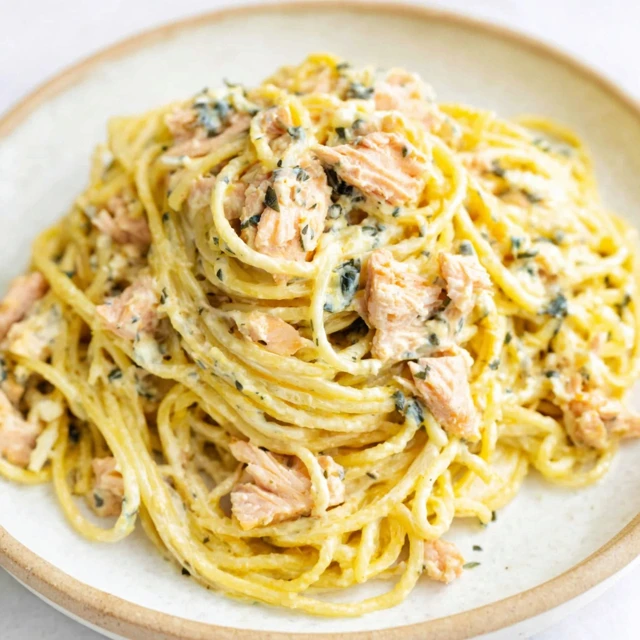
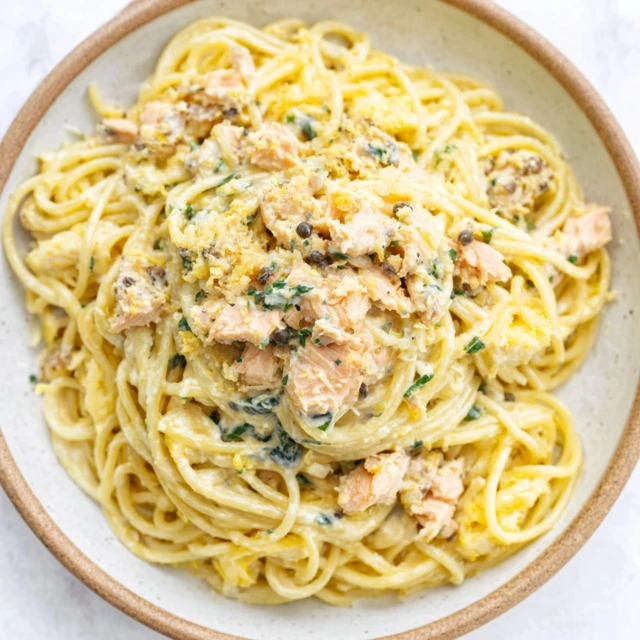
Pantry Hero Canned Salmon Pasta
Ingredients
Equipment
Method
- Bring a large pot of heavily salted water to a boil. Add the pasta and cook according to package directions until al dente. Before draining, reserve at least 1.5 cups of the starchy cooking water.
- While the pasta cooks, heat the olive oil and butter in a large skillet over medium heat. Once the butter is melted, add the sliced garlic and cook, stirring, for 1-2 minutes until fragrant and lightly golden. Do not let it burn.
- Carefully pour about 3/4 cup of the hot reserved pasta water into the skillet. Let it simmer for a minute, then stir in the lemon zest and the juice of half the lemon.
- Gently flake the drained salmon into the sauce with a fork, leaving some larger pieces for texture. Stir to warm through for about one minute. Season generously with salt and pepper.
- Add the drained pasta and the chopped parsley to the skillet. Using tongs, toss everything together vigorously for about a minute until the sauce becomes creamy and coats the pasta. If the sauce is too thick, add another splash of reserved pasta water until it reaches your desired consistency.
- Taste and adjust seasoning as needed, adding more salt, pepper, or a squeeze of lemon juice. Serve immediately, garnished with extra fresh parsley.
Notes
Substitutions: Good quality canned tuna can be used instead of salmon. Any pasta shape will work. Fresh dill is an excellent substitute for parsley. To make this dairy-free, omit the butter and use an extra tablespoon of olive oil.
Pro-Tips: The starchy pasta water is essential for creating the creamy sauce, so don’t forget to reserve it. The salmon is already cooked; only warm it through to prevent it from becoming mushy. Be generous with the lemon, as its acidity is key to brightening the dish.
Serving Suggestions: Pairs wonderfully with a simple arugula salad with a lemon vinaigrette and a side of crusty garlic bread. A crisp white wine like Sauvignon Blanc or Pinot Grigio is an ideal beverage pairing.