The Secrets of Salmon Sorcery: Unlocking the Science
The magic of perfectly roasted salmon lies in understanding a few key scientific principles. First, *protein denaturation*. As salmon heats, its proteins unfold and coagulate. Overcooking pushes this process too far, squeezing out moisture and resulting in a dry, rubbery texture. Aiming for an internal temperature around 125-130°F (52-54°C) for medium-rare, or slightly higher for those who prefer it more well-done, is crucial to prevent this. Secondly, *heat transfer*. The oven’s heat cooks the salmon from the outside in. Using a lower oven temperature (around 275-325°F or 135-163°C) allows for more even cooking, minimizing the temperature gradient between the surface and the center. This means less risk of the exterior becoming overcooked before the interior reaches the desired doneness. Thirdly, *moisture retention*. Salmon is naturally rich in omega-3 fatty acids, which contribute to its characteristic flavor and texture. But it’s equally important to create a barrier on the surface that helps to keep it moist. A simple marinade or a coating of oil can help to create this barrier.The Ultimate Oven Roasted Salmon Recipe
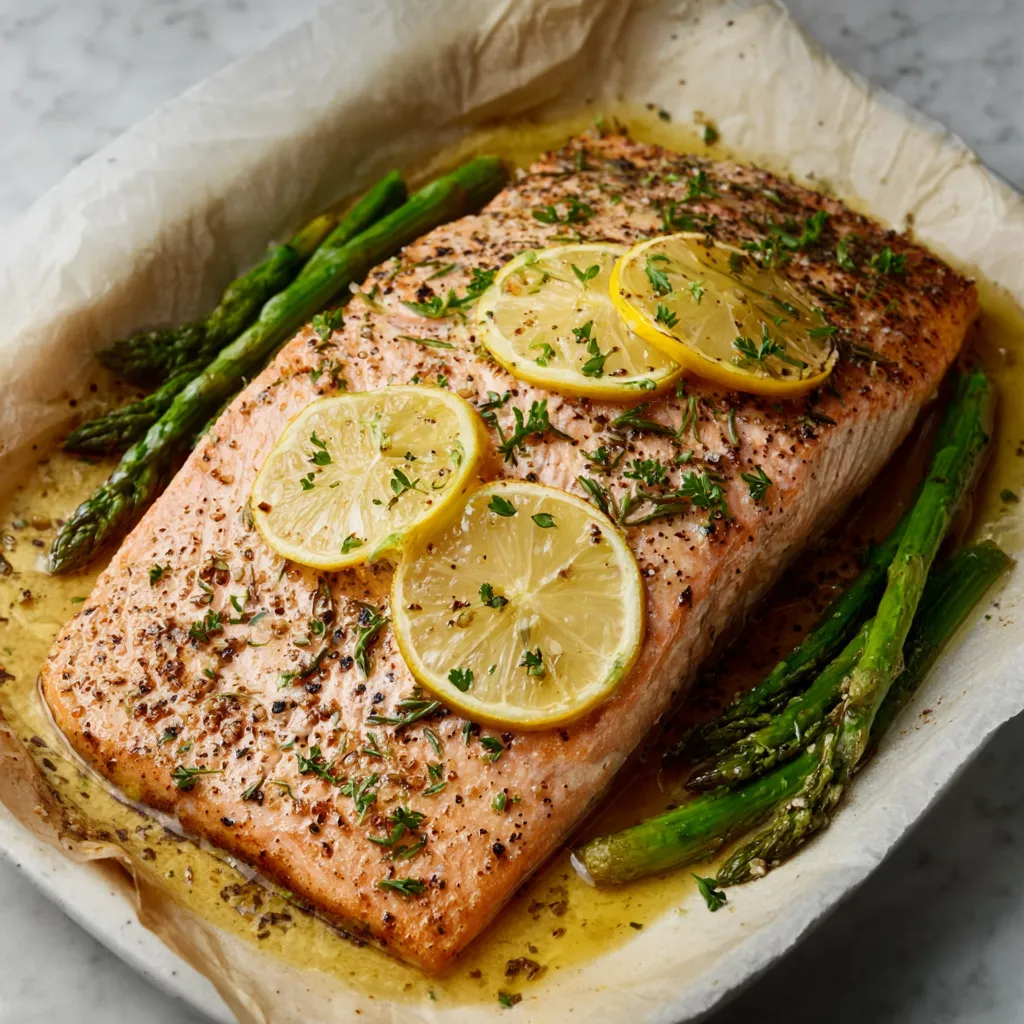 This recipe is the culmination of countless experiments, failures, and ultimately, triumphs. It’s designed to deliver consistently moist, flavorful, and perfectly cooked salmon every time.
Ingredients
- 1.5 – 2 lbs salmon fillet, skin on or off (I prefer skin on for extra flavor and moisture)
- 2 tablespoons olive oil (or avocado oil)
- 1 tablespoon lemon juice
- 1 teaspoon garlic powder
- 1/2 teaspoon onion powder
- 1/2 teaspoon paprika
- 1/4 teaspoon salt (or to taste)
- 1/4 teaspoon black pepper (or to taste)
- Optional: Fresh herbs (dill, parsley, thyme), lemon slices for garnish
Instructions
1. Prepare the Salmon: Pat the salmon fillet dry with paper towels. This helps ensure a good sear (if skin-on) and better absorption of the marinade. 2. Make the Marinade: In a small bowl, whisk together the olive oil, lemon juice, garlic powder, onion powder, paprika, salt, and pepper. 3. Marinate the Salmon: Place the salmon fillet in a baking dish lined with parchment paper or foil (for easy cleanup). Pour the marinade over the salmon, ensuring it’s evenly coated. Let it marinate for at least 15 minutes, or up to 30 minutes in the refrigerator. *Do not marinate for longer than 30 minutes, as the acid in the lemon juice can start to “cook” the salmon.* 4. Preheat the Oven: Preheat your oven to 275°F (135°C). *Yes, you read that right. Low and slow is the key.* 5. Roast the Salmon: Place the baking dish in the preheated oven and roast for 20-30 minutes, or until the internal temperature reaches 125-130°F (52-54°C) for medium-rare, or your desired level of doneness. Use an instant-read thermometer to check the temperature at the thickest part of the fillet. 6. Broil (Optional): If you want a slightly crispier top, broil the salmon for 1-2 minutes at the end of cooking, watching carefully to prevent burning. 7. Rest and Serve: Remove the salmon from the oven and let it rest for a few minutes before serving. Garnish with fresh herbs and lemon slices, if desired. Serve immediately.Serving Suggestions
- Serve with roasted vegetables, such as asparagus, broccoli, or Brussels sprouts.
- Pair with quinoa, rice, or couscous.
- Flake the salmon and add it to salads or pasta dishes.
- Use it in place of tuna in your favorite Spicy Salmon Sushi Bake.
- Alternatively, you could use it as a topper for Salmon Sushi Bake, or Salmon Sushi Bake, or even Salmon Sushi Bake.
- Enjoy it as a healthy and delicious main course!
My Deep Dive into the Delicious Depths of Salmon
My journey to mastering oven-roasted salmon was a winding road paved with dry, overcooked disappointments. Like many of you, I initially thought high heat was the key to a quick and easy dinner. My first few attempts were a disaster: the outside would be charred, while the inside remained stubbornly undercooked, or worse, equally dry. Then, I had an “Aha!” moment after reading about sous vide cooking. If low and slow works for steak, why not salmon?The High-Heat Hysteria
Initially, I subscribed to the conventional wisdom: blast the salmon at 400°F (200°C) and hope for the best. The results were consistently disappointing. The edges would become crispy and dry, while the center was either raw or just barely cooked through. I experimented with different cooking times, but nothing seemed to work consistently. I even tried wrapping the salmon in foil, but that just steamed it, resulting in a bland, mushy texture.The Low-and-Slow Revelation
Inspired by the principles of sous vide, I decided to try a drastically lower oven temperature. I started with 250°F (120°C) and gradually increased it to 275°F (135°C). The difference was remarkable. The salmon cooked much more evenly, retaining its moisture and developing a delicate, flaky texture. The key was patience. It took longer to cook, but the results were well worth the wait.The Marinade Matters
I also experimented with different marinades and seasonings. Initially, I was hesitant to use lemon juice, fearing it would “cook” the salmon. However, I discovered that a brief marinade (no more than 30 minutes) actually enhanced the flavor and helped to tenderize the flesh. The combination of olive oil, lemon juice, garlic powder, onion powder, and paprika proved to be the perfect balance of flavors. The simple marinade helps keep the fish moist too, just like it does for Garlic Butter Chicken Bites and Garlic Butter Chicken.Skin On vs. Skin Off: The Great Debate
I’ve cooked salmon both ways, and while skin-off yields a slightly cleaner presentation, leaving the skin on contributes significantly to flavor and moisture. When cooked skin-side down, the skin crisps up beautifully, acting as a barrier that prevents the salmon from drying out. It’s also delicious to eat!The Foolproof Finale: The Ultimate Technique Unveiled
After countless trials and errors, I’ve distilled the perfect oven-roasted salmon technique into these simple steps:- Pat the salmon fillet dry with paper towels.
- Marinate the salmon for 15-30 minutes in a simple marinade of olive oil, lemon juice, garlic powder, onion powder, paprika, salt, and pepper.
- Preheat your oven to 275°F (135°C).
- Roast the salmon for 20-30 minutes, or until the internal temperature reaches 125-130°F (52-54°C).
- Broil for 1-2 minutes at the end of cooking for a crispier top (optional).
- Rest for a few minutes before serving.
Why is it important to pat the salmon dry before marinating it?
Patting the salmon dry with paper towels helps ensure a good sear if cooking skin-on, and it also improves the absorption of the marinade.
Why is the oven temperature so low (275°F/135°C) compared to other salmon recipes?
Using a lower oven temperature allows for more even cooking, minimizing the temperature difference between the surface and the center of the salmon. This reduces the risk of the exterior becoming overcooked before the interior reaches the desired doneness.
Why should I not marinate the salmon for longer than 30 minutes?
You shouldn’t marinate the salmon for longer than 30 minutes because the acid in the lemon juice can start to “cook” the salmon, which is not desired.
Is it better to roast salmon with the skin on or off, and why?
While skin-off yields a cleaner presentation, leaving the skin on contributes significantly to flavor and moisture. When cooked skin-side down, the skin crisps up beautifully, acting as a barrier that prevents the salmon from drying out. The skin is also delicious to eat.
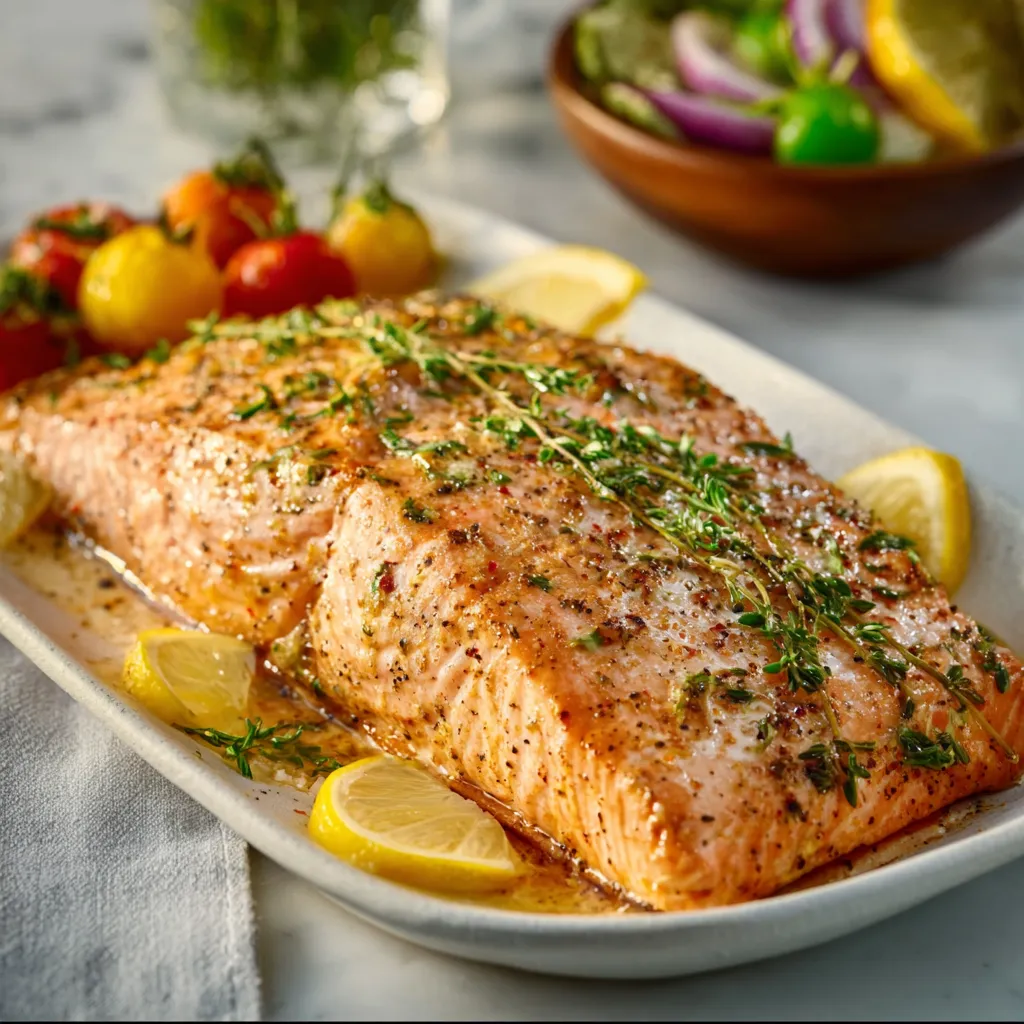
Oven Roasted Salmon
Ingredients
Equipment
Method
- Preheat the oven to 275°F (135°C).
- Pat the salmon fillet dry with paper towels.
- In a small bowl, whisk together the olive oil, lemon juice, garlic powder, onion powder, paprika, salt, and pepper.
- Place the salmon fillet in a baking dish lined with parchment paper or foil.
- Pour the marinade over the salmon, ensuring it’s evenly coated. Let it marinate for at least 15 minutes, or up to 30 minutes in the refrigerator.
- Place the baking dish in the preheated oven and roast for 20-30 minutes, or until the internal temperature reaches 125-130°F (52-54°C) for medium-rare, or your desired level of doneness. Use an instant-read thermometer to check the temperature at the thickest part of the fillet.
- If you want a slightly crispier top, broil the salmon for 1-2 minutes at the end of cooking, watching carefully to prevent burning. (Optional)
- Remove the salmon from the oven and let it rest for a few minutes before serving.
- Garnish with fresh herbs and lemon slices, if desired. Serve immediately.