Ingredients
Equipment
Method
- Cook the Orzo: Bring a large pot of generously salted water to a boil. Add the orzo and cook according to package directions until al dente. Before draining, reserve 1 cup of the starchy pasta water. Drain the orzo and set aside.
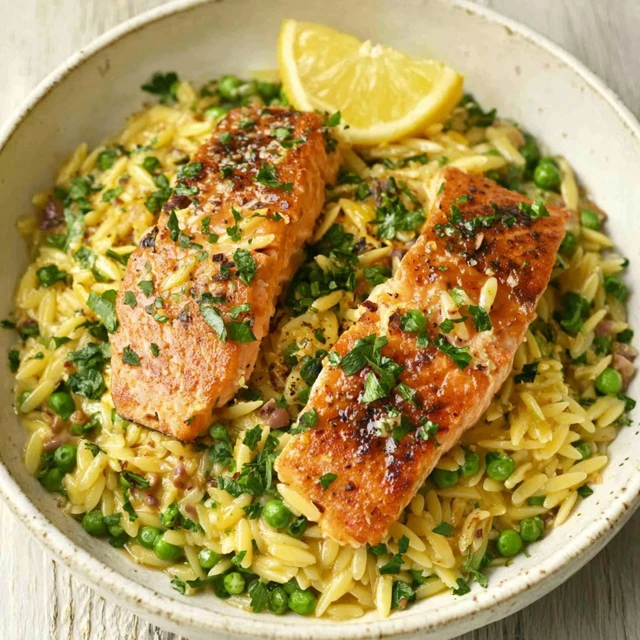
- Sear the Salmon: While the orzo cooks, pat the salmon fillets completely dry and season both sides generously with salt and pepper. Heat olive oil and butter in a large skillet over medium-high heat. Once foaming, place salmon in the pan and sear for 4-5 minutes per side, until a golden crust forms and the fish is just cooked through. Remove salmon to a plate and set aside.
- Build the Sauce Base: Reduce the heat in the skillet to medium. Add the minced garlic and sauté for about 30 seconds until fragrant, being careful not to burn it. Pour in the chicken broth to deglaze the pan, using a wooden spoon to scrape up any flavorful browned bits from the bottom. Let it simmer for 1-2 minutes to reduce slightly.
- Make it Creamy: Stir in the heavy cream and bring the sauce to a gentle simmer, allowing it to thicken for a couple of minutes. Reduce the heat to low, then stir in the freshly grated Parmesan cheese until it has completely melted and the sauce is smooth.
- Wilt the Greens: Add the fresh spinach to the skillet. Stir gently into the warm sauce; it will wilt down in about a minute.
- Combine and Finish: Add the cooked orzo to the skillet, stirring to coat every grain. If the sauce seems too thick, add a splash of the reserved pasta water until it reaches your desired consistency. Turn off the heat completely. Stir in the fresh lemon juice and lemon zest. Taste and adjust seasoning with more salt and pepper if needed. Gently flake the cooked salmon into large chunks and fold into the orzo, or simply place the whole fillets on top. Garnish with fresh parsley or dill and serve immediately.
Notes
Expert Tips & Variations:
* **Perfect Salmon:** For the best results, avoid overcooking the salmon. It will continue to cook from residual heat when added back to the pasta. Pulling it from the skillet when it's slightly underdone in the center is ideal.
* **Fresh Lemon is Key:** Do not substitute with bottled lemon juice. The bright, clean flavor from fresh zest and juice is essential to cut through the richness of the cream sauce.
* **Control Your Heat:** When adding the cream and cheese, maintain a low, gentle heat. Boiling a cream sauce can cause it to separate or become grainy.
* **Ingredient Swaps:** You can substitute salmon with seared shrimp, cod, or thinly sliced chicken. For a lighter sauce, use half-and-half (do not boil). Kale or frozen peas can replace spinach.
* **Flavor Variations:** For a savory boost, add chopped sun-dried tomatoes with the garlic. For a briny, Mediterranean twist, add a tablespoon of capers and use fresh dill. For a touch of heat, add a pinch of red pepper flakes with the garlic.
* **Fresh Lemon is Key:** Do not substitute with bottled lemon juice. The bright, clean flavor from fresh zest and juice is essential to cut through the richness of the cream sauce.
* **Control Your Heat:** When adding the cream and cheese, maintain a low, gentle heat. Boiling a cream sauce can cause it to separate or become grainy.
* **Ingredient Swaps:** You can substitute salmon with seared shrimp, cod, or thinly sliced chicken. For a lighter sauce, use half-and-half (do not boil). Kale or frozen peas can replace spinach.
* **Flavor Variations:** For a savory boost, add chopped sun-dried tomatoes with the garlic. For a briny, Mediterranean twist, add a tablespoon of capers and use fresh dill. For a touch of heat, add a pinch of red pepper flakes with the garlic.