Ingredients
Equipment
Method
- Pat the chuck roast completely dry with paper towels and season generously on all sides with kosher salt and black pepper.
- Heat olive oil in a large Dutch oven over medium-high heat. Once shimmering, sear the roast for 4-5 minutes per side until a deep, golden-brown crust forms. Transfer the seared roast to the slow cooker.
- Reduce heat to medium. Add the chopped onion, carrots, and celery to the same pot and sauté for 5-7 minutes, until softened, scraping up browned bits from the bottom.
- Add the smashed garlic and tomato paste. Cook for 1 minute, stirring constantly, until fragrant.
- Pour in the red wine to deglaze the pot, scraping the bottom with a wooden spoon to release all flavorful bits. Simmer until the wine has reduced by half, about 3-4 minutes.
- Stir in the beef broth, Worcestershire sauce, fresh thyme, rosemary, and bay leaves. Bring the mixture to a gentle simmer.
- Carefully pour the hot liquid and vegetable mixture over the roast in the slow cooker. The liquid should come about halfway up the roast.
- Cover and cook on low for 8-10 hours or on high for 4-5 hours, until the meat is fork-tender.
- About 2-3 hours before the cooking time is complete, add the chopped potatoes to the slow cooker, nestling them into the liquid.
- Once cooked, carefully transfer the roast and large vegetables to a platter and tent with foil to keep warm. Let the meat rest for 10-15 minutes.
- Strain the remaining liquid from the slow cooker into a saucepan, discarding herb stems and bay leaves. Bring to a simmer over medium heat.
- In a small bowl, whisk together the cornstarch and cold water to create a slurry. Slowly whisk the slurry into the simmering liquid until it thickens into a gravy. Season with salt and pepper to taste.
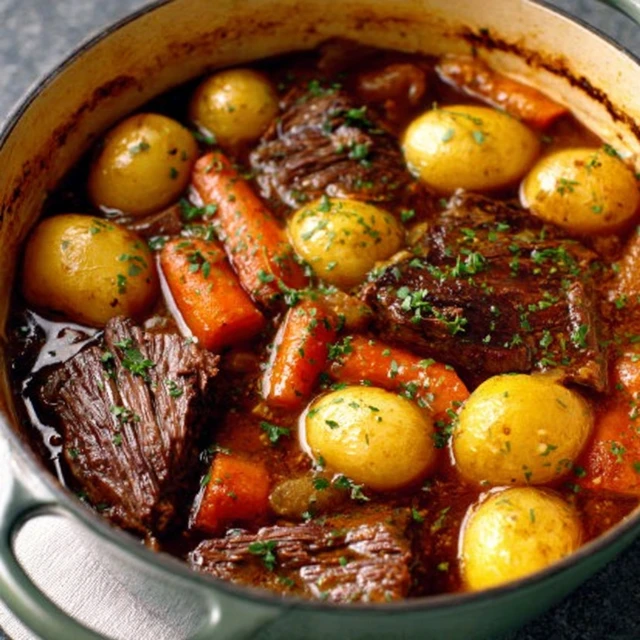
- Serve the pot roast shredded or sliced, with the vegetables and potatoes, smothered in the homemade gravy.
Notes
Expert Tips & Variations:
- Searing is Crucial: Do not skip searing the meat. The brown crust (fond) created in the pan is the foundation of the recipe's deep flavor.
- Low and Slow is Best: While a high setting works, cooking on low allows the connective tissues to break down more gently, resulting in exceptionally tender meat.
- Let it Rest: Resting the meat for 10-15 minutes before shredding or slicing allows the juices to redistribute, ensuring a moist and flavorful result.
- Variations: For a French Onion twist, add caramelized onions. For a deeper flavor, swap the red wine for a dark stout or porter. Add 1 cup of sliced cremini mushrooms with the onions for an earthier taste.
- Substitutions: If you don't have red wine, use an equal amount of beef broth plus 1 tablespoon of red wine vinegar. All-purpose flour can be used instead of cornstarch for the gravy slurry.
- Leftovers: Leftover pot roast is excellent for making sandwiches, tacos, or a classic Shepherd's Pie the next day.
- Searing is Crucial: Do not skip searing the meat. The brown crust (fond) created in the pan is the foundation of the recipe's deep flavor.
- Low and Slow is Best: While a high setting works, cooking on low allows the connective tissues to break down more gently, resulting in exceptionally tender meat.
- Let it Rest: Resting the meat for 10-15 minutes before shredding or slicing allows the juices to redistribute, ensuring a moist and flavorful result.
- Variations: For a French Onion twist, add caramelized onions. For a deeper flavor, swap the red wine for a dark stout or porter. Add 1 cup of sliced cremini mushrooms with the onions for an earthier taste.
- Substitutions: If you don't have red wine, use an equal amount of beef broth plus 1 tablespoon of red wine vinegar. All-purpose flour can be used instead of cornstarch for the gravy slurry.
- Leftovers: Leftover pot roast is excellent for making sandwiches, tacos, or a classic Shepherd's Pie the next day.