Ingredients
Equipment
Method
- Pound the chicken or pork cutlets to an even 1/2 inch thickness between two sheets of plastic wrap using a meat mallet or rolling pin.
- Season the cutlets generously with salt and pepper.
- Set up a breading station with three shallow dishes: one with flour, one with whisked eggs and water, and one with panko breadcrumbs.
- Dredge each cutlet in the flour, shaking off any excess.
- Dip the floured cutlet into the egg mixture, ensuring it's fully coated and letting any excess drip off.
- Dredge the cutlet in the panko breadcrumbs, pressing gently to make sure they adhere, creating an even coating.
- Repeat the breading process for all cutlets.
- For deep-frying: Heat 2-3 inches of oil to 350°F (175°C) in a large pot or deep fryer. Carefully lower the breaded cutlets into the hot oil, being careful not to overcrowd. Fry for 3-4 minutes per side, until golden brown and cooked through. Chicken should reach an internal temperature of 165°F (74°C), and pork should reach 145°F (63°C).
- For pan-frying: Heat 1/4 inch of oil in a large skillet over medium-high heat. Carefully place the breaded cutlets in the skillet. Fry for 4-5 minutes per side, until golden brown and cooked through, ensuring the safe internal temperature is reached.
- Remove the cutlets from the oil and place them on a wire rack to drain.
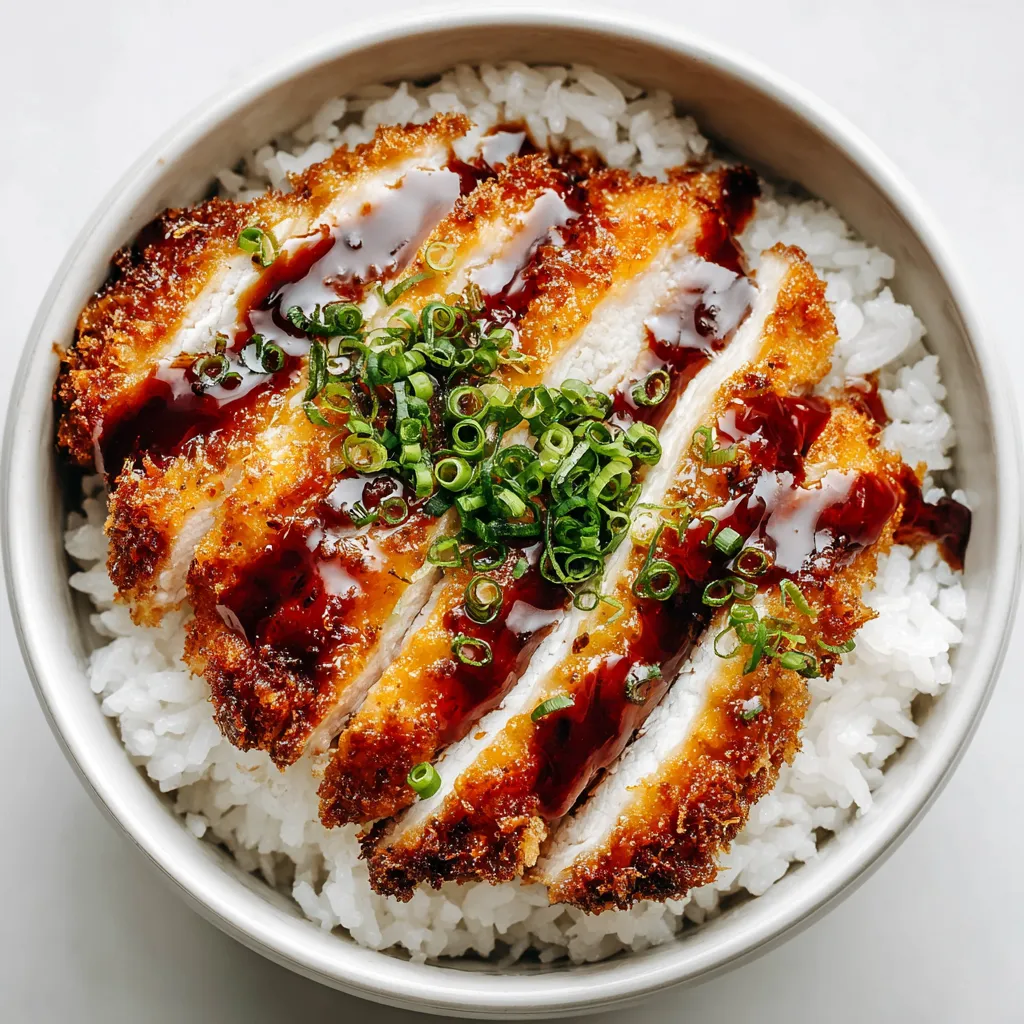
- Place a generous scoop of cooked rice in the bottom of each bowl.
- Top the rice with a mound of shredded cabbage.
- Slice the katsu cutlets into strips and arrange them on top of the cabbage.
- Drizzle generously with katsu sauce.
- Garnish with green onions, sesame seeds, Japanese mayo, and nori seaweed flakes (if using).
- For homemade Katsu Sauce: Combine ketchup, Worcestershire sauce, oyster sauce, soy sauce, sugar, Dijon mustard, and ground ginger in a small saucepan. Bring to a simmer over medium heat, stirring constantly. Cook for about 2-3 minutes, or until slightly thickened. Let cool before using. Store in an airtight container in the refrigerator.
Notes
Pounding the cutlets is crucial for even cooking. For an extra crispy crust, double bread the cutlets. Avoid overcrowding the pan when frying to maintain oil temperature. Use a meat thermometer to ensure the meat is cooked to a safe internal temperature. Let the katsu rest on a wire rack after frying to allow the juices to redistribute. Leftover katsu can be stored in the refrigerator for up to 3 days and reheated in the oven or skillet. Katsu can also be made with shrimp, tofu, or vegetables. Add cayenne pepper or sriracha to the katsu sauce for a spicy kick.