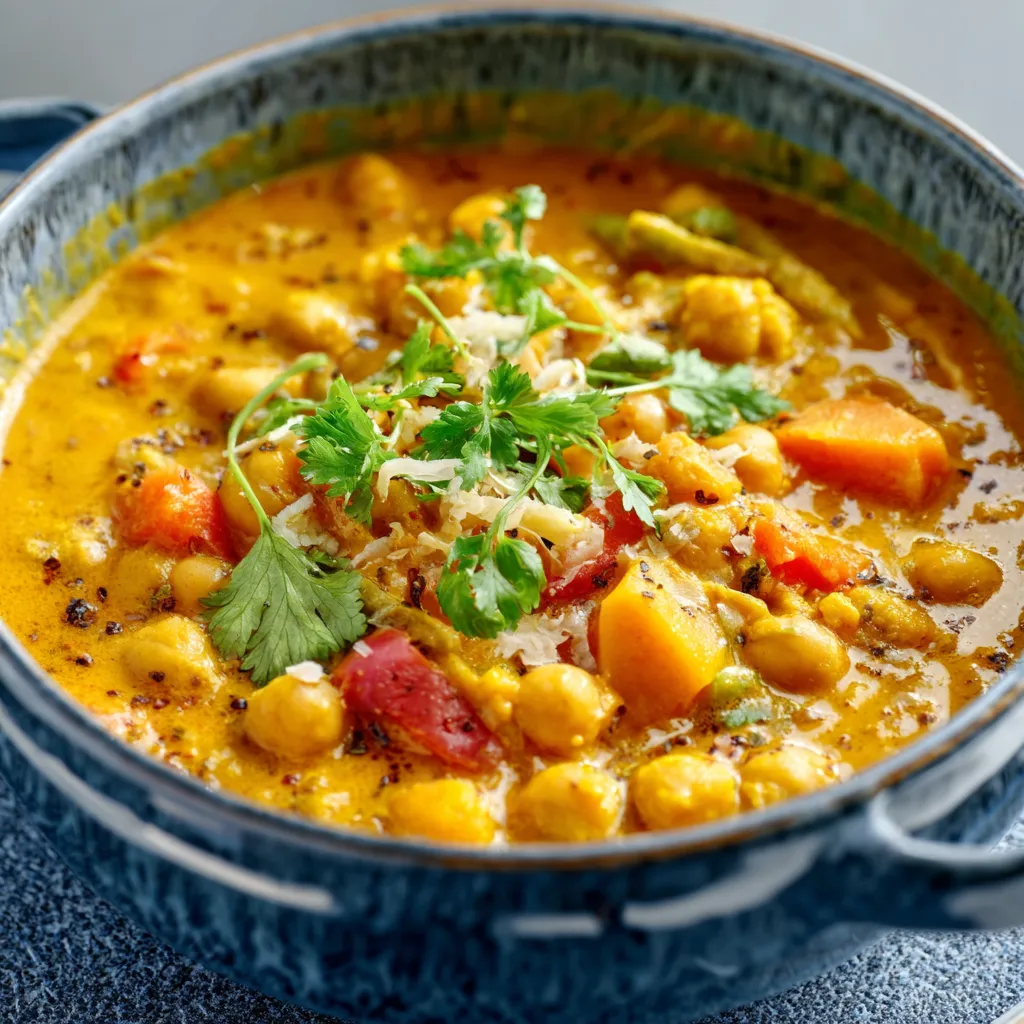
Ingredients
Equipment
Method
- Heat oil in a large pot over medium heat. Add the diced onion and cook for 5-7 minutes until soft and translucent.
- Add the minced garlic and ginger and cook for 1 minute until fragrant.
- Push onions to the side. Add tomato paste to the center of the pot and let it cook for 30 seconds. Add cumin, coriander, turmeric, and garam masala to the tomato paste and stir constantly for 60 seconds to toast the spices.
- Add the drained chickpeas and chopped hardy vegetables (carrots, cauliflower, bell peppers). Stir to coat everything in the spice mixture.
- Pour in the diced tomatoes and vegetable broth. Stir well, scraping up any browned bits from the bottom of the pot. Bring to a lively simmer.
- Reduce heat to maintain a gentle bubble, cover the pot, and simmer for 15-20 minutes, or until the vegetables are just tender.
- Uncover the pot and stir in the coconut milk. Simmer uncovered for 5-10 minutes to allow the sauce to thicken slightly.
- Stir in the fresh spinach or kale and cook until just wilted, about 2 minutes. Remove the pot from the heat.
- Stir in the fresh lemon juice and most of the chopped cilantro. Taste and adjust seasoning with salt, pepper, or more garam masala as needed.
- Let the curry rest for 10-15 minutes before serving to allow flavors to meld. Serve over rice or with naan, garnished with remaining cilantro.
Notes
For best flavor, don't skip toasting the spices and tomato paste. The curry thickens as it sits; add a splash of broth or water when reheating if desired. Store in an airtight container in the refrigerator for up to 4 days or freeze for up to 3 months. For a Thai twist, substitute curry paste for the dry spices. Add 1/2 cup red lentils with the broth for a thicker, heartier sauce. For heat, add a diced fresh chili with the onions or a pinch of cayenne with the spices.