Ingredients
Equipment
Method
- In a small bowl, combine paprika, garlic powder, onion powder, dried oregano, dried thyme, cayenne pepper, black pepper, and salt. Mix well.
- Pat the salmon fillets dry with paper towels.
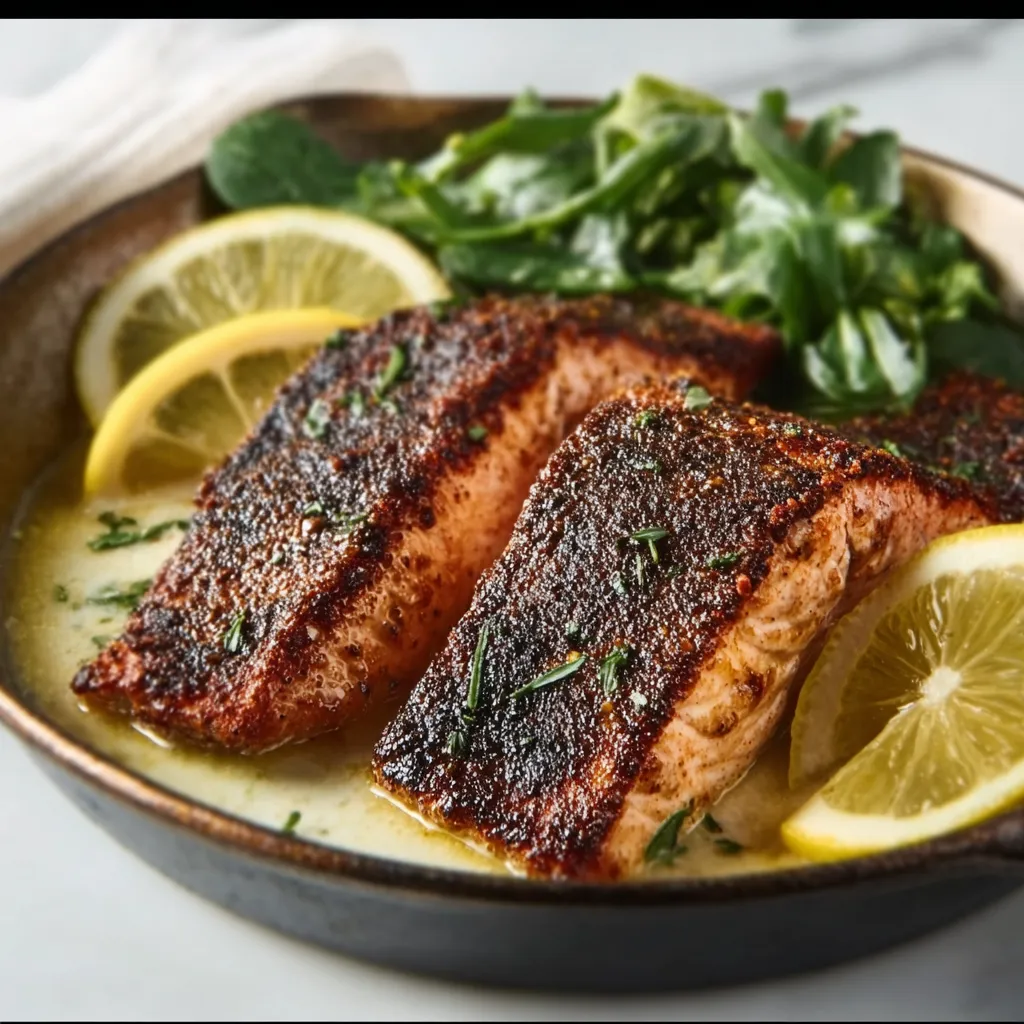
- Generously sprinkle the blackened seasoning all over both sides of the salmon fillets, pressing it gently to adhere.
- Heat the olive oil or butter in a large, heavy-bottomed skillet over medium-high heat.
- Carefully place the salmon fillets in the hot skillet, making sure not to overcrowd the pan. Cook in batches if necessary.
- Cook for 4-5 minutes per side, or until the salmon is cooked through and flakes easily with a fork.
- Remove the salmon from the skillet and serve immediately with lemon wedges.
Notes
Adjust the amount of cayenne pepper to your liking for desired spice level. Store any extra blackened seasoning in an airtight container in a cool, dark place for up to 6 months. To prevent sticking, ensure the pan is hot enough before adding the salmon and avoid moving it until a crust forms. If the seasoning burns before the salmon is cooked, reduce the heat slightly. Use a meat thermometer to ensure the salmon reaches an internal temperature of 145°F to avoid overcooking.