Unlocking the Secrets: The Science of Thai Red Curry Noodle Soup
The magic of Thai red curry lies in its complex interplay of flavors: the heat of chili peppers, the aromatic depth of galangal, lemongrass, and kaffir lime leaves, and the umami richness of fish sauce and shrimp paste. Translating this intricate balance into a soup requires understanding how these components interact and how to coax the maximum flavor from each. The base of the soup—typically coconut milk—acts as a solvent for these flavors, distributing them evenly and adding a creamy texture that complements the noodles. The critical element is the red curry paste itself. High-quality paste, either homemade or store-bought, is paramount. The paste’s oil-soluble flavors bloom when sautéed in fat, releasing their aromatic compounds and intensifying the overall taste. Furthermore, the acidity provided by lime juice or tamarind paste brightens the curry, preventing it from becoming heavy or one-dimensional. Finally, the noodles act as the perfect vehicle, absorbing the flavorful broth and providing a satisfying textural contrast.The Holy Grail: Thai Red Curry Noodle Soup Recipe
Ingredients:
- 1 tablespoon coconut oil
- 2 tablespoons Thai red curry paste (high quality)
- 1 (13.5 ounce) can coconut milk (full-fat preferred)
- 4 cups chicken broth
- 1 tablespoon fish sauce
- 1 tablespoon soy sauce
- 1 tablespoon brown sugar
- 1 teaspoon lime juice (plus more to taste)
- 8 ounces rice noodles (thin or wide, your preference)
- 1 pound boneless, skinless chicken thighs, cut into bite-sized pieces
- 1 red bell pepper, thinly sliced
- 1 carrot, thinly sliced
- 1 cup sliced mushrooms
- 1/2 cup chopped cilantro, for garnish
- 1/4 cup chopped green onions, for garnish
- Lime wedges, for serving
Instructions:
- Sauté the Curry Paste: In a large pot or Dutch oven, heat the coconut oil over medium heat. Add the Thai red curry paste and sauté for 1-2 minutes, stirring constantly, until fragrant. This step is crucial for blooming the spices and releasing their flavor.
- Build the Broth: Pour in the coconut milk and chicken broth. Stir well to combine. Add the fish sauce, soy sauce, and brown sugar. Bring to a simmer.
- Cook the Chicken: Add the chicken pieces to the simmering broth. Cook for 8-10 minutes, or until the chicken is cooked through.
- Add the Vegetables: Add the sliced red bell pepper, carrot, and mushrooms to the pot. Cook for another 5-7 minutes, or until the vegetables are tender-crisp.
- Cook the Noodles: Add the rice noodles to the pot. Cook according to package directions, usually 3-5 minutes, or until the noodles are tender. Be careful not to overcook them.
- Adjust Seasoning: Stir in the lime juice. Taste and adjust seasoning as needed. You may want to add more fish sauce for saltiness, brown sugar for sweetness, or lime juice for acidity.
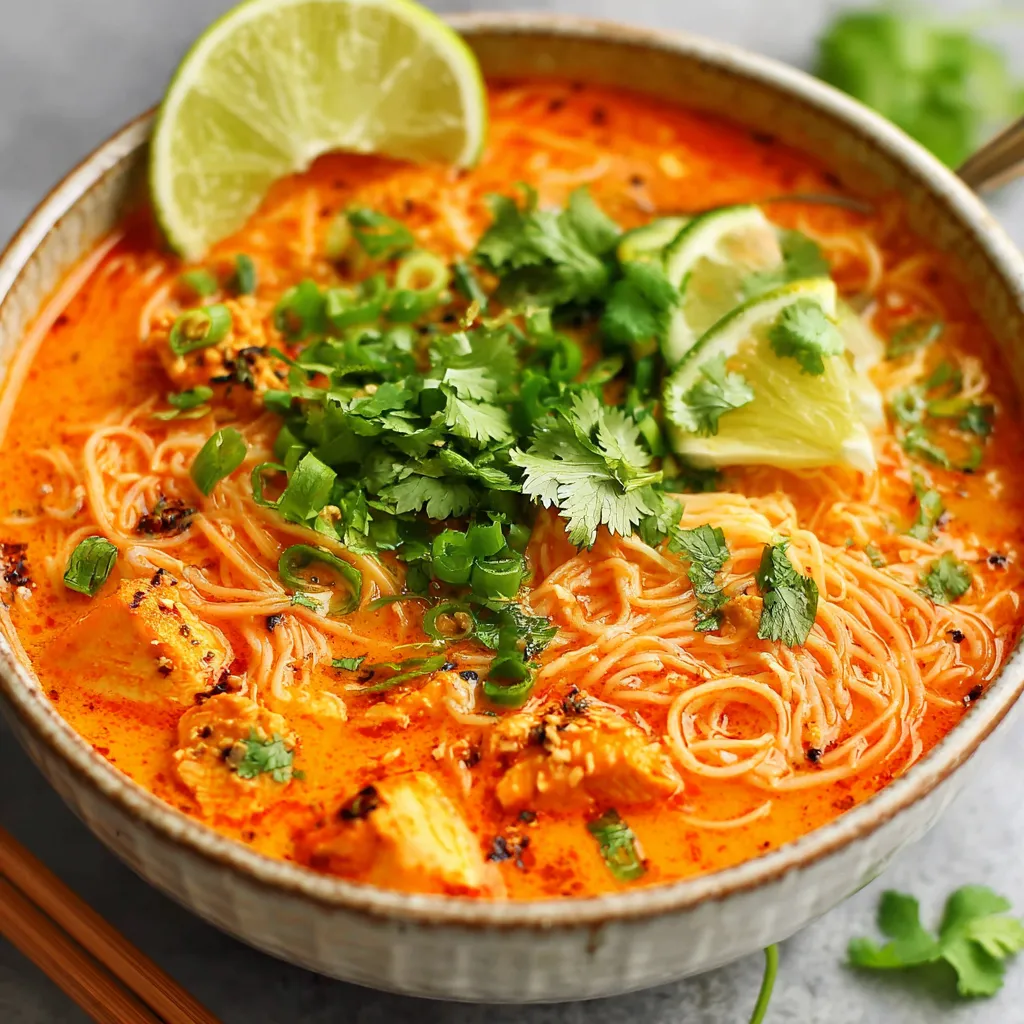
- Serve: Ladle the soup into bowls. Garnish with chopped cilantro and green onions. Serve with lime wedges on the side.
My Culinary Odyssey: The Investigation of the Perfect Noodle Soup
The Initial Stumbles: A Broth Too Bland
My first few attempts were a disaster. I rushed the process, figuring I could just throw everything into a pot and simmer it. The result was a watery, bland soup that tasted faintly of coconut milk and disappointment. Like many of you, I initially thought that simply adding more curry paste would solve the problem. I was wrong. It just made the soup overly spicy without adding any depth of flavor. I even tried variations using other types of protein, but they all seemed to lack something compared to traditional Thai flavors. It was nothing like the Thai Chicken Soup I knew and loved.The “Aha!” Moment: Blooming the Curry Paste
Then, I had an “Aha!” moment. I remembered reading about the importance of blooming spices in Indian cooking, like in a Butter Chicken Recipe. It dawned on me that the same principle likely applied to Thai red curry paste. I needed to unlock the flavors by sautéing the paste in oil before adding the liquids.Experimenting with Coconut Milk: Full-Fat vs. Lite
Next, I experimented with different types of coconut milk. I tried lite coconut milk, hoping to save on calories, but the result was noticeably thinner and less flavorful. Full-fat coconut milk provided the richness and creaminess that the soup needed. It was a game-changer.The Fish Sauce Revelation: Umami Unleashed
The final key to unlocking the flavor was fish sauce. I had initially been hesitant to use it, fearing it would make the soup too fishy. However, I discovered that a small amount of high-quality fish sauce added an incredible depth of umami that balanced the sweetness and spice. I even tried using soy sauce, like in the Marry Me Chicken Soup, but the fish sauce brought the curry to life.Noodle Nuances: Rice Noodles are Key
Finally, after a few more attempts, I understood the impact of the noodles. I tried various types, and rice noodles consistently came out on top. The rice noodles held the sauce beautifully and also provided a wonderfully delicate bite. I also experimented with other chicken-based soup recipes like Chicken Tortellini Soup, Lemon Chicken Orzo Soup, and Creamy Chicken Noodle Soup, but none of them provided the distinct flavor profile I was aiming for.The Foolproof Formula: Mastering Thai Red Curry Noodle Soup
Here’s the step-by-step method that guarantees perfect Thai Red Curry Noodle Soup every time:- Bloom the Curry Paste: Sauté the Thai red curry paste in coconut oil for 1-2 minutes until fragrant. This unlocks the essential flavors.
- Use Full-Fat Coconut Milk: Opt for full-fat coconut milk for maximum richness and creaminess.
- Don’t Skimp on Fish Sauce: Add fish sauce judiciously for a savory umami boost.
- Choose Rice Noodles: Rice noodles are the ideal choice for their texture and ability to absorb the flavorful broth.
- Adjust Seasoning to Taste: Taste and adjust the seasoning with lime juice, fish sauce, and brown sugar to achieve the perfect balance of sweet, salty, sour, and spicy.
Why is it important to sauté the Thai red curry paste before adding the other ingredients?
Sautéing the Thai red curry paste in coconut oil for 1-2 minutes, until fragrant, is crucial for blooming the spices and releasing their flavor, unlocking the essential aromatic compounds and intensifying the overall taste.
What kind of coconut milk is recommended for this Thai Red Curry Noodle Soup and why?
Full-fat coconut milk is recommended because it provides the richness and creaminess that the soup needs. Lite coconut milk results in a thinner and less flavorful soup.
What type of noodles are best to use in this soup?
Rice noodles are the ideal choice for their texture and ability to absorb the flavorful broth.
What is the purpose of adding fish sauce to the soup?
A small amount of high-quality fish sauce adds an incredible depth of umami that balances the sweetness and spice of the Thai Red Curry Noodle Soup.
Easy Thai Red Curry Noodle Soup
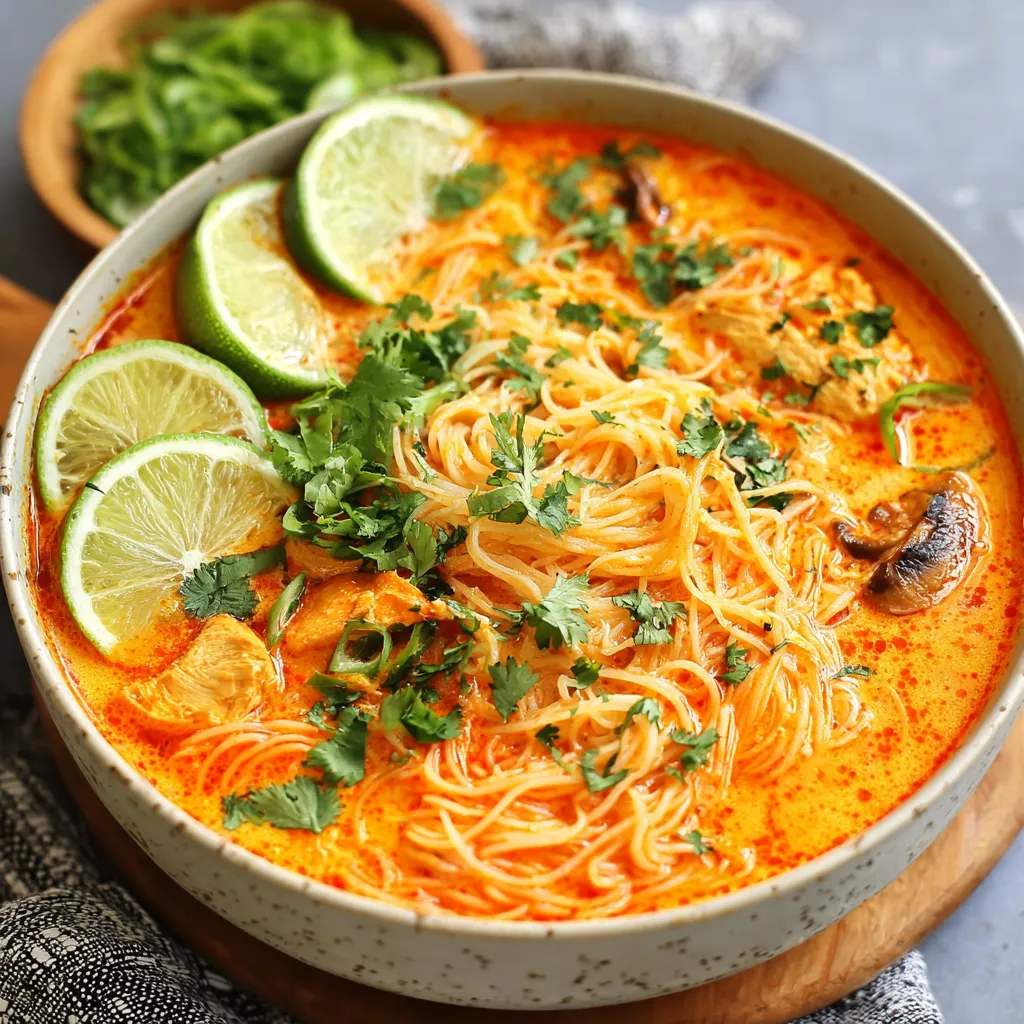
This recipe transforms the vibrant flavors of Thai red curry into a comforting noodle soup, perfect for a quick weeknight meal or an impressive dish for company. Sautéing the curry paste in coconut oil unlocks its essential flavors, while full-fat coconut milk and fish sauce create a rich and umami-packed broth.
Ingredients
Equipment
Method
- Sauté the Curry Paste: In a large pot or Dutch oven, heat the coconut oil over medium heat. Add the Thai red curry paste and sauté for 1-2 minutes, stirring constantly, until fragrant.
- Build the Broth: Pour in the coconut milk and chicken broth. Stir well to combine. Add the fish sauce, soy sauce, and brown sugar. Bring to a simmer.
- Cook the Chicken: Add the chicken pieces to the simmering broth. Cook for 8-10 minutes, or until the chicken is cooked through.
- Add the Vegetables: Add the sliced red bell pepper, carrot, and mushrooms to the pot. Cook for another 5-7 minutes, or until the vegetables are tender-crisp.
- Cook the Noodles: Add the rice noodles to the pot. Cook according to package directions, usually 3-5 minutes, or until the noodles are tender. Be careful not to overcook them.
- Adjust Seasoning: Stir in the lime juice. Taste and adjust seasoning as needed. You may want to add more fish sauce for saltiness, brown sugar for sweetness, or lime juice for acidity.
- Serve: Ladle the soup into bowls. Garnish with chopped cilantro and green onions. Serve with lime wedges on the side.
Notes
For a spicier soup, add a pinch of red pepper flakes or a finely chopped chili pepper along with the curry paste. Store leftovers in an airtight container in the refrigerator for up to 3 days. To reheat, gently simmer on the stovetop or microwave until heated through. Adjust seasoning as needed after reheating. You can also substitute tofu for chicken to make it vegetarian.