The Alchemy of the Perfect Pull Apart
The magic of a truly exceptional Cheesy Pull Apart Christmas Bread lies in understanding the interplay of several key scientific principles. First, and perhaps most importantly, is gluten development. Gluten, formed from the proteins gliadin and glutenin in wheat flour, provides the structure that allows the bread to rise and hold its shape. Overworking the dough leads to tough, dense bread, while underworking it results in a flat, shapeless mess. The ideal is a balance: enough gluten development to create a sturdy structure, but not so much that the bread becomes chewy. Next, consider yeast activity. Yeast consumes sugars in the dough and produces carbon dioxide, which inflates the dough and gives it its airy texture. Temperature is crucial here; too cold and the yeast will be sluggish, too hot and it will die. A warm, but not hot, environment is ideal for proofing. Furthermore, the type of yeast matters. Instant yeast can be added directly to the dry ingredients, while active dry yeast needs to be proofed in warm water first. Finally, the cheese. Different cheeses melt differently, and the amount of moisture they contain can significantly impact the final product. A drier cheese, like mozzarella, will melt smoothly and evenly, while a high-moisture cheese might make the bread soggy. The addition of butter is also crucial as it provides a rich flavour and helps to keep the bread soft and pull-apart-able. This is different from a Garlic Rolls where the butter is more for flavour than structural support.The Recipe: A Festive Cheesy Delight
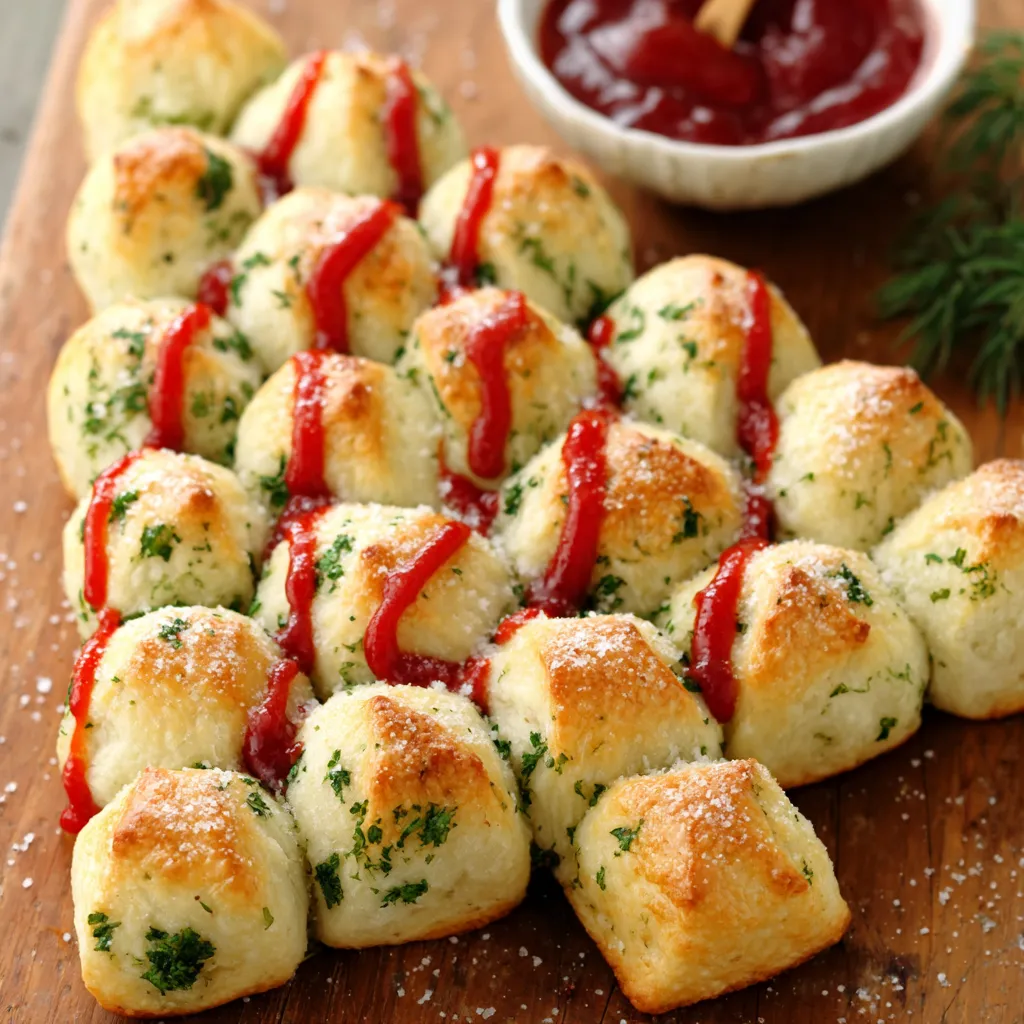
Ingredients:
- For the Dough:
- 3 1/2 cups (420g) all-purpose flour, plus more for dusting
- 1 packet (2 1/4 teaspoons) instant yeast
- 1 teaspoon salt
- 1 1/4 cups (300ml) warm milk (about 110°F/43°C)
- 1/4 cup (50g) granulated sugar
- 1/4 cup (57g) unsalted butter, melted
- 1 large egg
- For the Filling:
- 1/2 cup (113g) unsalted butter, softened
- 4 cloves garlic, minced
- 1 teaspoon dried Italian herbs
- 1/2 teaspoon salt
- 1/4 teaspoon black pepper
- 2 cups (226g) shredded mozzarella cheese
- 1 cup (113g) shredded cheddar cheese
- 1/4 cup chopped fresh parsley, for garnish (optional)
Instructions:
- Make the Dough: In a large bowl, whisk together the flour, yeast, and salt. In a separate bowl, combine the warm milk, sugar, melted butter, and egg. Pour the wet ingredients into the dry ingredients and mix until a shaggy dough forms.
- Knead the Dough: Turn the dough out onto a lightly floured surface and knead for 5-7 minutes, or until smooth and elastic. Alternatively, use a stand mixer with a dough hook on medium speed for 5-7 minutes.
- First Proof: Place the dough in a lightly oiled bowl, turning to coat. Cover with plastic wrap and let rise in a warm place for 1-1.5 hours, or until doubled in size.
- Prepare the Filling: In a small bowl, combine the softened butter, minced garlic, Italian herbs, salt, and pepper.
- Assemble the Bread: Punch down the risen dough and turn it out onto a lightly floured surface. Roll the dough into a large rectangle, about 12×18 inches. Spread the garlic butter mixture evenly over the dough. Sprinkle with the mozzarella and cheddar cheeses.
- Cut and Stack: Using a pizza cutter or sharp knife, cut the dough into 6-8 long strips. Stack the strips on top of each other.
- Cut into Squares: Cut the stacked strips into 2-inch squares.
- Arrange in Pan: Grease a 9-inch springform pan or bundt pan. Arrange the dough squares vertically in the pan, creating a spiral or circular pattern.
- Second Proof: Cover the pan with plastic wrap and let rise in a warm place for 30-45 minutes, or until puffy.
- Bake: Preheat oven to 375°F (190°C). Bake for 25-30 minutes, or until golden brown and the cheese is melted and bubbly.
- Cool and Serve: Let the bread cool in the pan for 10 minutes before releasing it from the springform pan. Garnish with fresh parsley, if desired. Serve warm and enjoy!
My Quest for the Perfect Pull Apart: A Culinary Detective Story
The Doughy Disasters: Initial Failures
My first few attempts were a disaster, frankly. The dough was either too dense and chewy, or it was a sticky, unmanageable mess. Like many of you, I initially thought the problem was the yeast. I experimented with different proofing times, different temperatures, even different brands of yeast. But the results were always inconsistent. Sometimes it rose beautifully, sometimes it didn’t rise at all. I even considered making a sweet version like Christmas Eggnog Bread but knew the savoury version was what I wanted.The Gluten Revelation: An “Aha!” Moment
Then, I had an “Aha!” moment. I realized I was overthinking the yeast and overlooking the gluten. I was either over-kneading the dough, creating a tough, rubbery texture, or I wasn’t kneading it enough, resulting in a bread that lacked structure. I started experimenting with different kneading techniques, paying close attention to the feel of the dough. I found that a slightly longer, gentler kneading process yielded a much more tender and elastic dough.Cheese Conundrums: Melting Mayhem
The cheese also presented its own challenges. My first few loaves were swimming in grease, and the cheese was either burned or hadn’t melted properly. I realized that the type of cheese I was using was the culprit. I switched from a high-moisture mozzarella to a drier, part-skim version, and the problem was solved. The cheese melted beautifully, creating that perfect, gooey, cheesy pull-apart effect we all crave. The butter ratio was also important. Too little and the layers were dry, too much and the whole thing was greasy. I found the sweet spot through trial and error, and it was worth it! This is where you have to be careful when making Garlic Butter Rolls because it is easy to overdo the butter.The Garlic Butter Breakthrough: Flavour Fireworks
Finally, the garlic butter. It needed to be potent, flavourful, and evenly distributed. I experimented with different amounts of garlic, different types of herbs, and different methods of application. I found that mincing the garlic very finely and combining it with softened butter, Italian herbs, salt, and pepper created the perfect flavour profile. Spreading it evenly over the dough before adding the cheese ensured that every bite was bursting with flavour.The Foolproof Technique: Mastering the Pull Apart
- Gentle Kneading: Knead the dough gently but thoroughly for 5-7 minutes, until smooth and elastic. Avoid over-kneading.
- Warm Proofing: Proof the dough in a warm (but not hot) place, ideally around 75-80°F (24-27°C), for 1-1.5 hours, or until doubled in size.
- Quality Cheese: Use a drier, part-skim mozzarella cheese for optimal melting and to prevent a greasy bread.
- Even Butter Distribution: Spread the garlic butter mixture evenly over the dough to ensure every bite is flavourful.
- Vertical Arrangement: Arrange the dough squares vertically in the pan to create a visually appealing and structurally sound pull-apart bread.
- Second Rise: Allow the assembled bread to rise for 30-45 minutes before baking for a light, airy texture.
- Golden Bake: Bake at 375°F (190°C) for 25-30 minutes, or until golden brown and the cheese is melted and bubbly.
Why is the type of cheese important for Cheesy Pull Apart Christmas Bread?
Different cheeses melt differently, and their moisture content can significantly impact the final product. A drier cheese, like mozzarella, will melt smoothly and evenly, while a high-moisture cheese might make the bread soggy.
What is the ideal temperature range for proofing the dough?
The ideal temperature for proofing the dough is warm, but not hot. The article states a warm place around 75-80°F (24-27°C) is best for proofing.
How long should I knead the dough for the best results?
Knead the dough gently but thoroughly for 5-7 minutes, until smooth and elastic. Avoid over-kneading.
What are the key ingredients for the garlic butter filling?
The garlic butter filling consists of softened butter, minced garlic, Italian herbs, salt, and pepper.
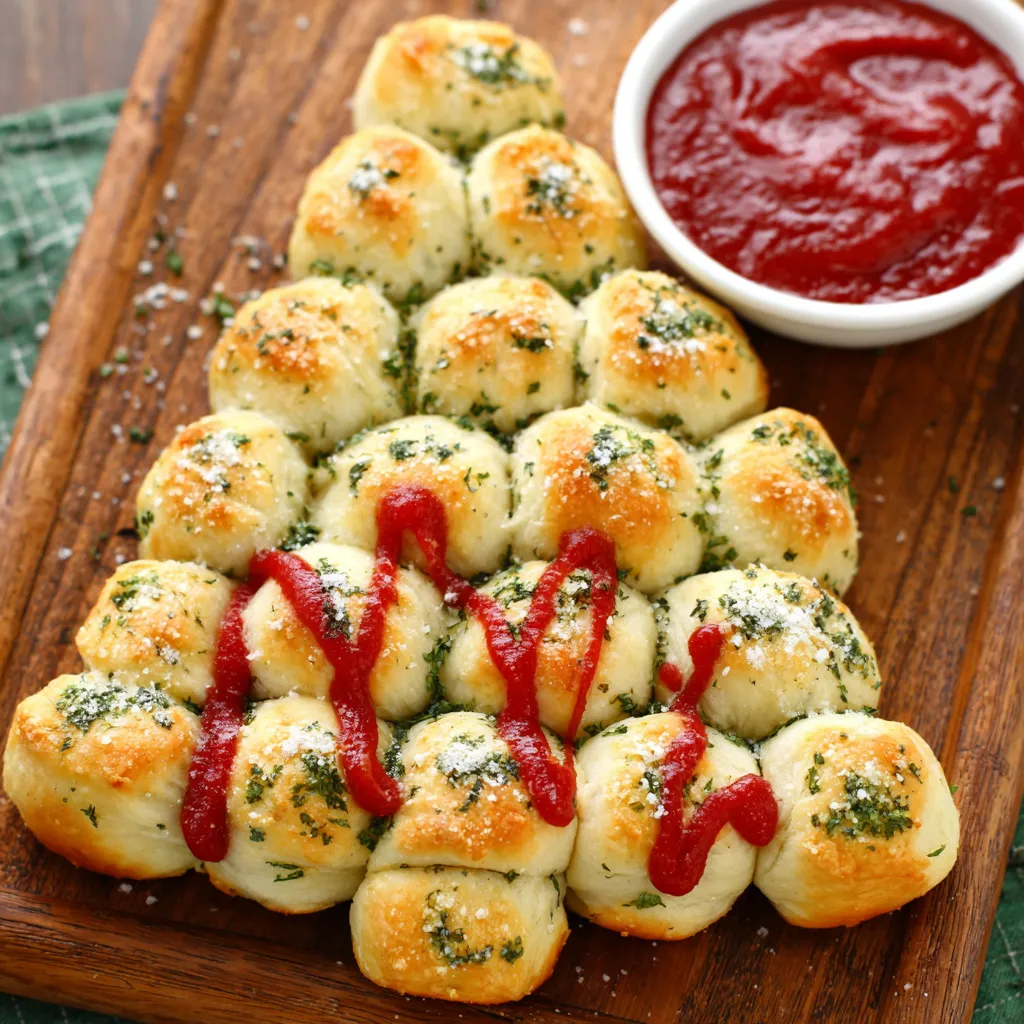
Perfect Cheesy Pull Apart Christmas Bread
This festive Cheesy Pull Apart Christmas Bread is a show-stopping centerpiece for any holiday gathering. Layers of buttery garlic goodness and melted cheese create an irresistible pull-apart experience that’s sure to impress your guests.
Ingredients
Equipment
Method
- Make the Dough: In a large bowl, whisk together the flour, yeast, and salt. In a separate bowl, combine the warm milk, sugar, melted butter, and egg. Pour the wet ingredients into the dry ingredients and mix until a shaggy dough forms.
- Knead the Dough: Turn the dough out onto a lightly floured surface and knead for 5-7 minutes, or until smooth and elastic. Alternatively, use a stand mixer with a dough hook on medium speed for 5-7 minutes.
- First Proof: Place the dough in a lightly oiled bowl, turning to coat. Cover with plastic wrap and let rise in a warm place for 1-1.5 hours, or until doubled in size.
- Prepare the Filling: In a small bowl, combine the softened butter, minced garlic, Italian herbs, salt, and pepper.
- Assemble the Bread: Punch down the risen dough and turn it out onto a lightly floured surface. Roll the dough into a large rectangle, about 12×18 inches. Spread the garlic butter mixture evenly over the dough. Sprinkle with the mozzarella and cheddar cheeses.
- Cut and Stack: Using a pizza cutter or sharp knife, cut the dough into 6-8 long strips. Stack the strips on top of each other.
- Cut into Squares: Cut the stacked strips into 2-inch squares.
- Arrange in Pan: Grease a 9-inch springform pan or bundt pan. Arrange the dough squares vertically in the pan, creating a spiral or circular pattern.
- Second Proof: Cover the pan with plastic wrap and let rise in a warm place for 30-45 minutes, or until puffy.
- Bake: Preheat oven to 375°F (190°C). Bake for 25-30 minutes, or until golden brown and the cheese is melted and bubbly.
- Cool and Serve: Let the bread cool in the pan for 10 minutes before releasing it from the springform pan. Garnish with fresh parsley, if desired. Serve warm and enjoy!
Notes
For best results, use a drier, part-skim mozzarella cheese. Ensure the butter is softened for the filling. You can substitute different cheeses based on your preference. Store leftovers in an airtight container at room temperature for up to 2 days. Reheat in the oven or microwave before serving. For a richer flavor, brush the baked bread with melted butter and garlic.