The Alchemy of Tenderness: Decoding the Braise
At its heart, braising is a method of cooking tough cuts of meat using both dry and moist heat. This dual approach is crucial for breaking down collagen, the connective tissue that makes these cuts chewy. First, searing the meat at high heat creates the Maillard reaction, a chemical process responsible for the rich, complex flavors and appealing brown crust we all crave. This step isn’t just about aesthetics; those browned bits, called fond, become the foundation of our sauce’s flavor. Then comes the magic: submersion in liquid (in this case, red wine and beef broth) and slow cooking at a low temperature. The liquid provides the moisture needed to hydrolyze the collagen, transforming it into gelatin. Gelatin is what gives braised meats their signature tenderness and contributes to the luscious, silky texture of the sauce. Think of it like this: collagen is a tight coil, and gelatin is that coil unwound. The longer you braise, the more collagen converts to gelatin, resulting in a more tender and flavorful result. The type of red wine used also contributes significantly to the flavor profile. Look for wines with good acidity and tannin structure like Cabernet Sauvignon, Merlot, or Chianti. The acidity helps to tenderize the meat, and the tannins add complexity and depth to the sauce.The Grand Recipe: Braised Beef Short Ribs in Red Wine Sauce
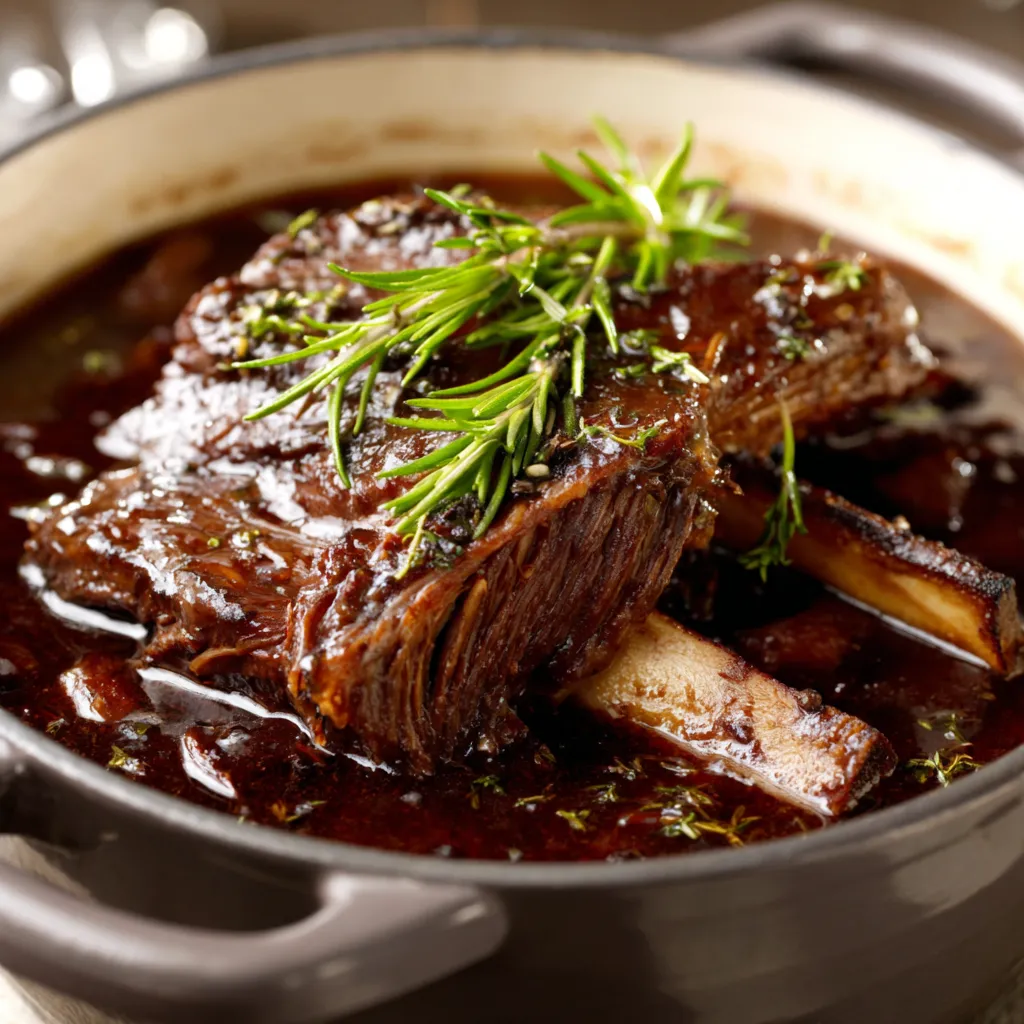 This recipe is my tried-and-true method for achieving perfectly braised beef short ribs.
Ingredients:
- 3 lbs bone-in beef short ribs
- 2 tablespoons olive oil
- 1 large onion, chopped
- 2 carrots, chopped
- 2 celery stalks, chopped
- 4 cloves garlic, minced
- 1 (750ml) bottle dry red wine (Cabernet Sauvignon or Merlot recommended)
- 4 cups beef broth
- 2 tablespoons tomato paste
- 1 tablespoon Worcestershire sauce
- 2 sprigs fresh rosemary
- 2 sprigs fresh thyme
- 1 bay leaf
- Salt and freshly ground black pepper, to taste
- 2 tablespoons butter
- 2 tablespoons all-purpose flour
- Fresh parsley, chopped, for garnish
Instructions:
- Sear the Short Ribs: Pat the short ribs dry with paper towels and season generously with salt and pepper. Heat the olive oil in a large, heavy-bottomed Dutch oven over medium-high heat. Sear the short ribs in batches on all sides until deeply browned, about 3-4 minutes per side. Remove the short ribs from the Dutch oven and set aside.
- Sauté the Vegetables: Add the onion, carrots, and celery to the Dutch oven and cook over medium heat until softened and lightly browned, about 8-10 minutes. Add the garlic and cook for 1 minute more until fragrant.
- Deglaze the Pot: Pour in the red wine and bring to a simmer, scraping up any browned bits from the bottom of the pot. This fond is where a lot of flavor resides!
- Add Remaining Ingredients: Stir in the beef broth, tomato paste, Worcestershire sauce, rosemary, thyme, and bay leaf. Bring to a simmer.
- Braise the Short Ribs: Return the short ribs to the Dutch oven, making sure they are mostly submerged in the liquid. Bring the liquid back to a simmer, then cover the Dutch oven tightly and transfer it to a preheated oven at 325°F (160°C). Braise for 3-3.5 hours, or until the short ribs are fork-tender.
- Make the Sauce: Remove the short ribs from the Dutch oven and set aside. Strain the braising liquid through a fine-mesh sieve into a saucepan. Discard the solids. In a small bowl, whisk together the butter and flour to form a roux. Bring the strained braising liquid to a simmer over medium heat. Whisk in the roux and cook, stirring constantly, until the sauce has thickened to your desired consistency, about 5-7 minutes. Season with salt and pepper to taste.
- Serve: Return the short ribs to the sauce and heat through. Serve the braised beef short ribs over mashed potatoes, polenta, or creamy risotto. Garnish with fresh parsley.
My Journey to Rib Nirvana: The Braising Chronicles
My first few attempts were a disaster. The meat was either tough and chewy, or it fell apart into dry, stringy pieces. The sauce was often thin and watery, lacking that deep, rich flavor I was aiming for. But I didn’t give up. I became obsessed with understanding the nuances of braising.The Early Struggles: A Meaty Mishap
Like many of you, I initially thought that braising was just about throwing everything into a pot and letting it simmer for a few hours. My first few batches proved me wrong. The short ribs came out tough and flavorless. I realized I was skipping crucial steps like properly searing the meat and deglazing the pot. These steps, I learned, are essential for developing a rich, complex flavor. I also wasn’t salting the meat early enough, resulting in less flavorful short ribs.The Wine Revelation: Not All Grapes Are Created Equal
Then, I had an “Aha!” moment when I started experimenting with different types of red wine. I had previously just grabbed whatever bottle was cheapest at the store. I soon discovered that using a quality wine with good acidity and tannins made a huge difference in the final flavor. A good Cabernet Sauvignon or Merlot truly elevates the dish. Using a wine with insufficient body resulted in a flat, uninspired sauce. I would now consider pairing it with Slow Cooker Pot Roast or even French Onion RoastThe Temperature Tussle: Low and Slow is the Way to Go
Another critical learning was the importance of maintaining a consistent, low temperature during the braising process. Initially, I was impatient and tried to speed things up by increasing the oven temperature. This resulted in tough, dry short ribs. I realized that slow and steady wins the race when it comes to braising. The lower temperature allows the collagen to break down gradually, resulting in incredibly tender and juicy meat. I also learned the importance of a tight-fitting lid on the Dutch oven to prevent the liquid from evaporating too quickly.The Roux Redemption: Mastering the Sauce
Finally, I struggled with achieving the perfect sauce consistency. My early attempts resulted in thin, watery sauces that lacked body. I experimented with different thickening agents and ultimately found that a classic butter and flour roux was the most reliable method. The key is to cook the roux properly to eliminate the raw flour taste and to whisk it in gradually to avoid lumps. Now, I can consistently create a rich, velvety sauce that perfectly complements the tender short ribs. While I was experimenting, I considered comparing it to Beef Stew or Beef And Broccoli, but the red wine sauce of the short ribs sets it apart.The Ultimate Braising Blueprint: The Foolproof Method
After numerous experiments and delicious (and not-so-delicious) batches, I’ve distilled the process down to a few key steps. Follow these, and you’ll be well on your way to braising beef short ribs perfection.- Choose the Right Cut: Opt for bone-in beef short ribs for maximum flavor and richness. The bone adds depth to the braising liquid.
- Sear Like a Pro: Don’t skip the searing step! Sear the short ribs in batches until deeply browned on all sides. This is where the Maillard reaction works its magic, creating those complex, savory flavors.
- Deglaze with Purpose: Use a good quality red wine to deglaze the pot, scraping up all those flavorful browned bits (fond) from the bottom.
- Low and Slow is the Key: Braise the short ribs in a Dutch oven at 325°F (160°C) for 3-3.5 hours, or until fork-tender. Be patient!
- Strain for Success: Strain the braising liquid through a fine-mesh sieve to remove any solids and create a smooth, refined sauce.
- Roux Rules: Use a butter and flour roux to thicken the sauce to your desired consistency. Cook the roux properly to eliminate the raw flour taste.
- Season with Confidence: Don’t be afraid to season the short ribs and sauce generously with salt and pepper. Taste and adjust as needed.
- Rest and Reheat: For even more tenderness, let the short ribs rest in the braising liquid after cooking and then reheat them before serving.
What makes braising the key to tender short ribs?
Braising uses both dry and moist heat to break down collagen in the meat, transforming it into gelatin. This makes the meat tender and the sauce silky.
Why is searing the short ribs so important?
Searing the short ribs creates the Maillard reaction, which develops rich, complex flavors and an appealing brown crust. The browned bits, called fond, become the foundation of the sauce’s flavor.
What type of red wine is best for braising short ribs?
Wines with good acidity and tannin structure, like Cabernet Sauvignon, Merlot, or Chianti, are recommended. The acidity helps to tenderize the meat, and the tannins add complexity to the sauce.
What temperature should I braise the short ribs at, and for how long?
Braise the short ribs in a Dutch oven at 325°F (160°C) for 3-3.5 hours, or until they are fork-tender. Maintaining a consistent, low temperature is key to allowing the collagen to break down gradually.
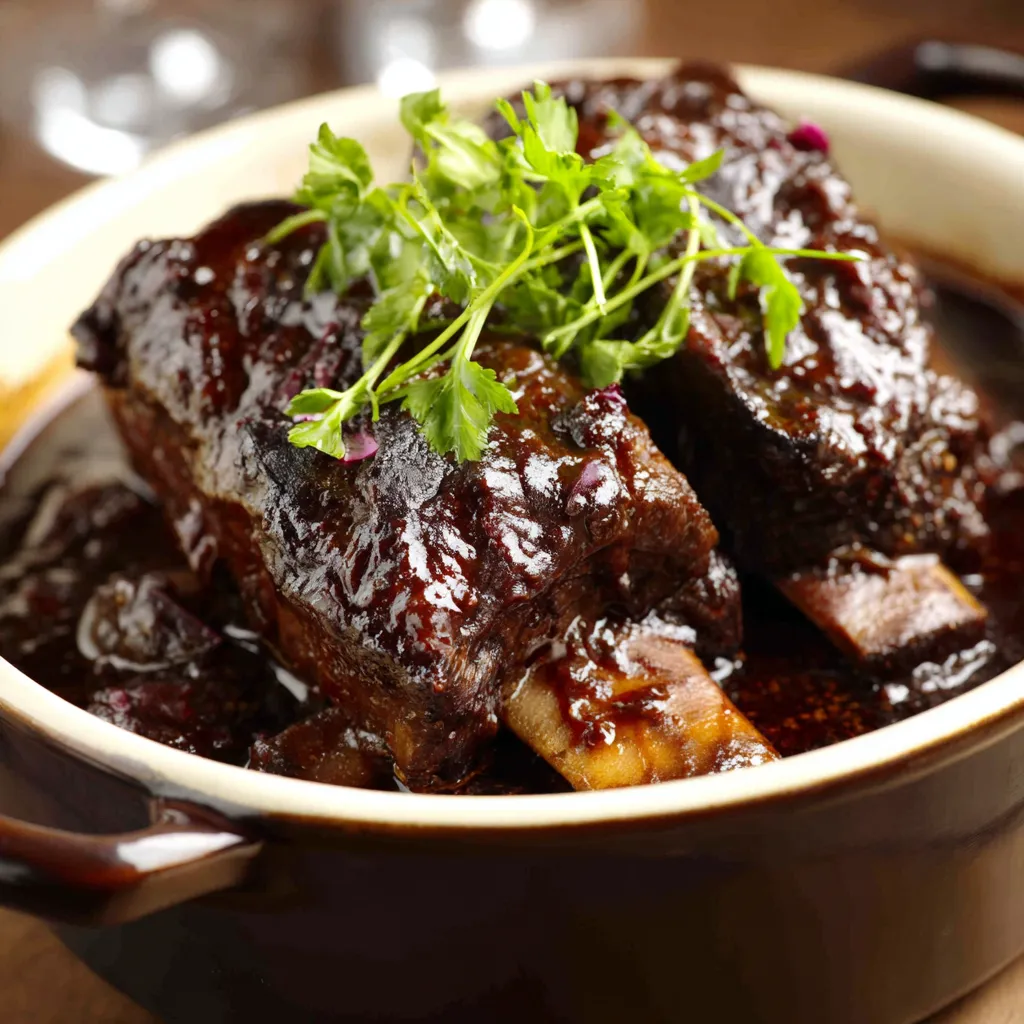
Braised Beef Short Ribs Perfect
Achieve melt-in-your-mouth tenderness and deeply savory flavor with these braised beef short ribs. This recipe combines searing, slow braising in red wine and beef broth, and a classic roux-thickened sauce for a restaurant-quality dish that’s surprisingly achievable at home.
Ingredients
Equipment
Method
- Sear the Short Ribs: Pat the short ribs dry with paper towels and season generously with salt and pepper. Heat the olive oil in a large, heavy-bottomed Dutch oven over medium-high heat. Sear the short ribs in batches on all sides until deeply browned, about 3-4 minutes per side. Remove the short ribs from the Dutch oven and set aside.
- Sauté the Vegetables: Add the onion, carrots, and celery to the Dutch oven and cook over medium heat until softened and lightly browned, about 8-10 minutes. Add the garlic and cook for 1 minute more until fragrant.
- Deglaze the Pot: Pour in the red wine and bring to a simmer, scraping up any browned bits from the bottom of the pot.
- Add Remaining Ingredients: Stir in the beef broth, tomato paste, Worcestershire sauce, rosemary, thyme, and bay leaf. Bring to a simmer.
- Braise the Short Ribs: Return the short ribs to the Dutch oven, making sure they are mostly submerged in the liquid. Bring the liquid back to a simmer, then cover the Dutch oven tightly and transfer it to a preheated oven at 325°F (160°C). Braise for 3-3.5 hours, or until the short ribs are fork-tender.
- Make the Sauce: Remove the short ribs from the Dutch oven and set aside. Strain the braising liquid through a fine-mesh sieve into a saucepan. Discard the solids. In a small bowl, whisk together the butter and flour to form a roux. Bring the strained braising liquid to a simmer over medium heat. Whisk in the roux and cook, stirring constantly, until the sauce has thickened to your desired consistency, about 5-7 minutes. Season with salt and pepper to taste.
- Serve: Return the short ribs to the sauce and heat through. Serve the braised beef short ribs over mashed potatoes, polenta, or creamy risotto. Garnish with fresh parsley.
Notes
For even more tenderness, let the short ribs rest in the braising liquid after cooking and then reheat them before serving. Experiment with adding mushrooms or different herbs. Short ribs can be stored in an airtight container in the refrigerator for up to 3 days. The sauce can be made ahead of time and stored separately. Reheat gently before serving.