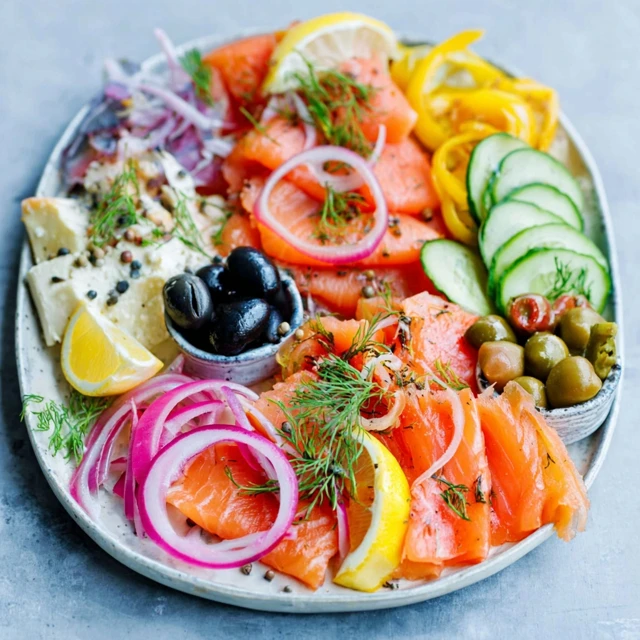
My greatest kitchen triumphs are often born from a specific kind of lazy genius, a moment where the craving for a complex dish collides with the desire for absolute simplicity. This deconstructed salmon sushi bake is the poster child for that beautiful intersection. It’s the answer to the question, “What if we could have all the glorious, creamy, savory flavors of a perfect salmon roll without the delicate, sometimes frustrating, art of rolling?” It’s a casserole, a dip, and a communal feast all in one, designed for scooping, sharing, and savoring with zero fuss.
What you get is a warm, seasoned sushi rice base, a ridiculously creamy and flavorful salmon topping, and the freedom to customize each bite with your favorite garnishes. It’s a symphony of textures and temperatures—the hot, rich bake against the cool, crisp cucumber and salty nori. This isn’t just a recipe; it’s an experience, a fun and interactive way to enjoy sushi flavors that will have everyone reaching for another scoop.
Why This Deconstructed Salmon Sushi Bake Works
- Crowd-Pleasing Flavor: The combination of creamy salmon, savory Kewpie mayo, a hint of sriracha, and umami-rich furikake is universally adored. It hits all the right notes for a truly satisfying meal.
- Effortless Preparation: Forget bamboo mats and precise rolling techniques. This dish is all about layering simple components in a baking dish. It’s a “set it and forget it” approach to sushi night.
- Incredibly Versatile: This recipe is a fantastic starting point. You can easily swap proteins, add different mix-ins, or create a topping bar for guests to build their own perfect bite. It’s perfect for parties!
Gather Your Supplies
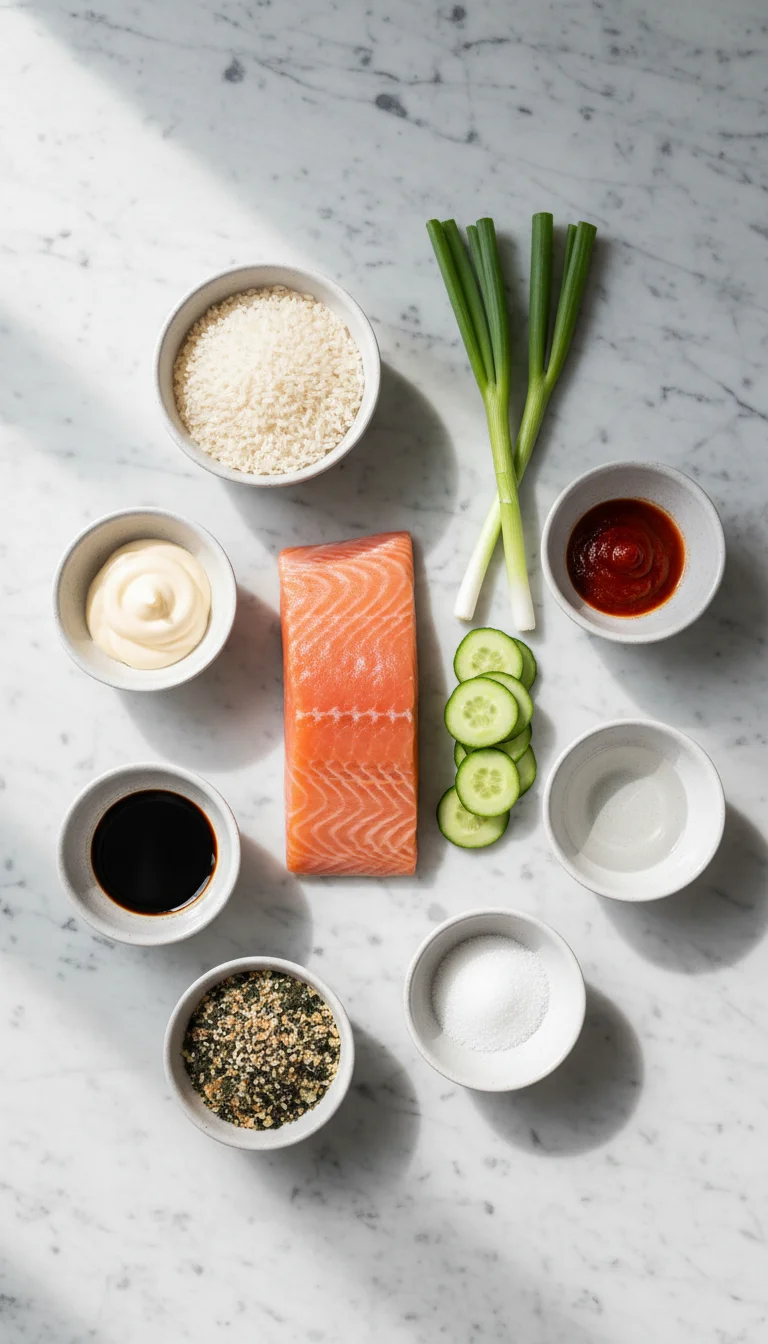
- Salmon Fillet: About 1 pound, skinless. You can use fresh or previously frozen.
- Olive Oil: Just a touch for baking the salmon.
- Salt and Black Pepper: To season the salmon.
- Uncooked Short-Grain Rice: (Crucial for that sticky, authentic sushi rice texture). This is often labeled as “sushi rice.”
- Water: For cooking the rice.
- Rice Vinegar: (The non-negotiable ingredient for seasoning sushi rice). It provides that signature tang.
- Granulated Sugar: To balance the acidity of the vinegar.
- Salt: For the rice seasoning mixture.
- Kewpie Mayonnaise: (This Japanese mayo is the secret weapon). It’s richer, creamier, and made with only egg yolks for a superior flavor and texture compared to American mayo.
- Sriracha: For a gentle, warm heat. Adjust to your personal spice preference.
- Soy Sauce: For a salty, umami depth in the salmon mixture.
- Masago or Tobiko (Flying Fish Roe): (Optional, but highly recommended for texture). These little orange pearls add a wonderful pop and a subtle briny flavor.
- Furikake Seasoning: (This Japanese rice seasoning is a game-changer). It’s a blend of toasted sesame seeds, nori, salt, and sugar that adds immense flavor and texture.
- For Serving: Roasted seaweed snacks (nori), sliced avocado, sliced cucumber, scallions, and extra sriracha or soy sauce.
Ingredient Swaps
Don’t have everything on hand? No problem! This recipe is wonderfully flexible.- Salmon: Feel free to use cooked shrimp, imitation crab meat (or a mix!), or even spicy tuna. For a similar vibe, our California Roll Sushi Bowls use imitation crab beautifully.
- Kewpie Mayo: If you can’t find it, you can use regular full-fat mayonnaise. To mimic the flavor, try adding a tiny splash of rice vinegar and a pinch of sugar to it.
- Short-Grain Rice: In a pinch, you can use Calrose or another medium-grain rice. Avoid long-grain rice like jasmine or basmati, as it won’t have the necessary sticky texture.
- Sriracha: Any chili-garlic sauce or your favorite hot sauce will work to add that kick of heat.
- Furikake: If you can’t find it, you can make a simple version by mixing toasted sesame seeds with crumbled nori sheets.
Make It Your Own
One of the best parts of this deconstructed bake is how easy it is to customize. Think of this recipe as a canvas for your favorite sushi-inspired flavors.Add a Cream Cheese Layer
For a “Philadelphia Roll” twist, spread a thin layer of softened cream cheese over the rice before adding the salmon mixture. The cream cheese will get warm and melty in the oven, adding another layer of decadent creaminess.Incorporate More Seafood
Mix in a cup of chopped imitation crab meat or cooked baby shrimp with the salmon mixture. This adds more texture and flavor complexity, pushing it closer to a seafood dynamite-style bake.Go for a Teriyaki Glaze
If you’re not a fan of the creamy, spicy profile, you can easily pivot. Instead of the mayo and sriracha mixture, flake the cooked salmon and toss it with a generous amount of teriyaki sauce. Our recipe for Baked Teriyaki Salmon would be a perfect starting point for the fish. Sprinkle with sesame seeds and scallions before baking.Try a Different Deconstructed Dish
If you fall in love with the easy, layered concept of this meal, you have to try a Deconstructed Spring Roll Salad next. It captures all the fresh, vibrant flavors of a spring roll in a simple, toss-together bowl.How to Make Deconstructed Salmon Sushi Bake
Step 1: Cook the Salmon
First, preheat your oven to 400°F (200°C). Place the salmon fillet on a baking sheet lined with parchment paper. Drizzle it with a little olive oil and season generously with salt and pepper.Bake for 12-15 minutes, or until the salmon is cooked through and flakes easily with a fork. The exact time will depend on the thickness of your fillet. Once cooked, set it aside to cool slightly. For a different flavor profile, you could even use leftover Bang Bang Salmon Bites, just chop them up!
Step 2: Prepare the Sushi Rice
While the salmon is baking, it’s time to make the heart of the dish: the rice. Rinse your short-grain rice under cold water until the water runs clear. This removes excess starch and prevents the rice from becoming gummy.Cook the rice according to your package directions or in a rice cooker. While it’s cooking, prepare the seasoning. In a small bowl, whisk together the rice vinegar, sugar, and salt until the sugar and salt have completely dissolved. You can gently warm it in the microwave for 15-20 seconds to help it dissolve faster.
Once the rice is cooked, transfer it to a large, non-metallic bowl. Pour the vinegar mixture over the hot rice and gently fold it in using a rice paddle or spatula. Be careful not to mash the grains. Let the rice cool slightly.
Step 3: Make the Creamy Salmon Topping
Once the salmon is cool enough to handle, use two forks to flake it into bite-sized pieces in a medium bowl. Discard any tough, dark parts.Add the Kewpie mayonnaise, sriracha, and soy sauce to the flaked salmon. If you’re using masago or tobiko, add it now. Gently mix everything together until the salmon is evenly coated in the creamy, spicy sauce. Taste and adjust the seasoning if needed—add more sriracha for heat or a touch more soy sauce for saltiness.
Step 4: Assemble and Bake
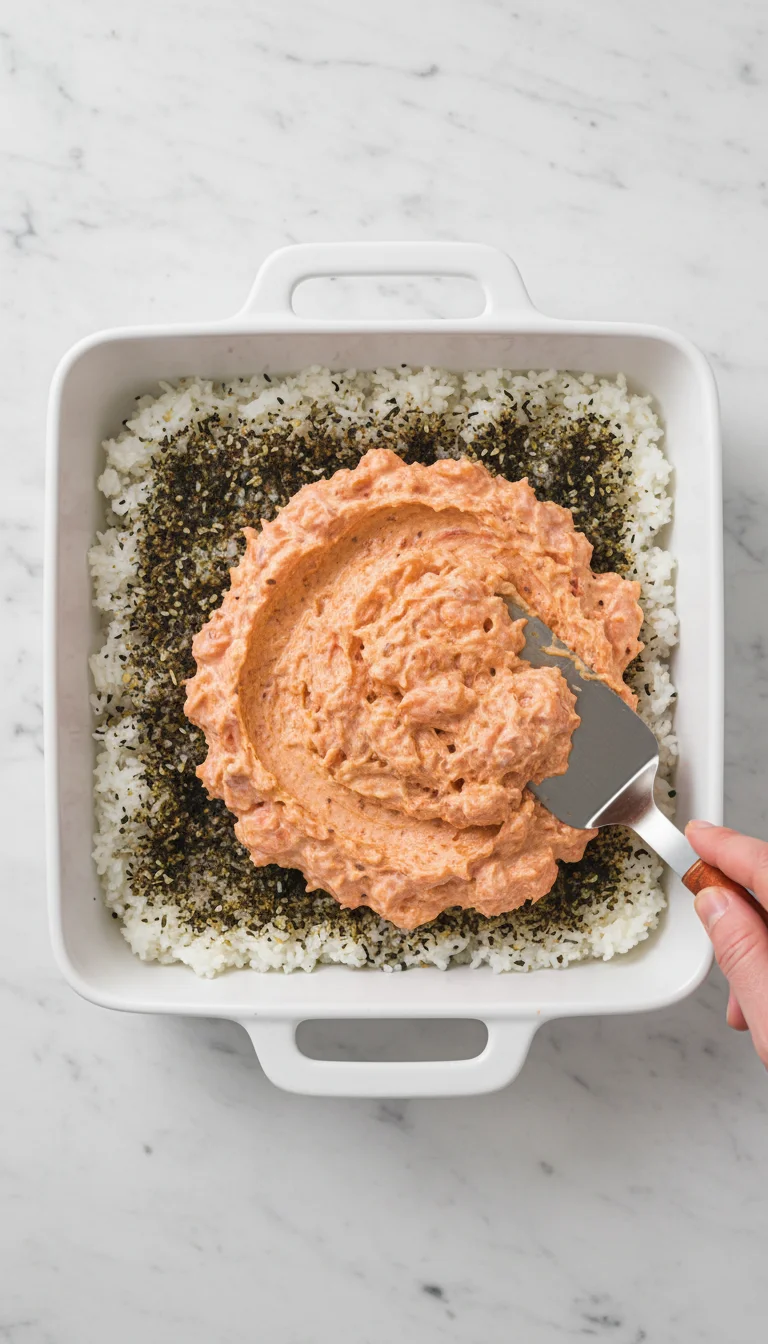
Grab an 8×8 inch baking dish or a similar-sized casserole dish. Press the seasoned sushi rice into the bottom of the dish in an even layer. Use the back of a wet spoon or spatula to prevent sticking.Sprinkle a generous, even layer of furikake seasoning over the rice. This adds a crucial layer of flavor between the rice and the salmon.
Carefully spread the creamy salmon mixture over the furikake-topped rice, extending it all the way to the edges. Sprinkle another layer of furikake on top of the salmon for good measure.
Bake in the preheated 400°F (200°C) oven for 10-12 minutes, or until the top is lightly golden and the bake is heated through. For a more browned and bubbly top, you can switch the oven to broil for the last 1-2 minutes, but watch it very closely to prevent burning!
Expert Tips for Success
- Don’t Overcook the Salmon: The salmon gets cooked twice (once on its own, and again in the bake). Slightly undercooking it the first time ensures it remains tender and moist in the final dish.
- Season the Rice While It’s Hot: The hot rice grains will absorb the vinegar seasoning much more effectively than cold rice. This is key to achieving authentic sushi rice flavor.
- Use Kewpie If You Can: I can’t stress this enough! The flavor and creaminess of Japanese Kewpie mayonnaise are unmatched and truly elevate this dish from good to unforgettable.
- Let It Rest Briefly: After taking it out of the oven, let the sushi bake rest for a few minutes. This allows it to set up slightly, making it a bit easier to scoop and serve.
Serving Suggestions
The best way to serve this deconstructed salmon sushi bake is family-style, placing the hot dish in the center of the table with an array of accompaniments. It’s an interactive and fun meal.The classic way to eat it is by scooping a portion onto a small sheet of roasted seaweed (nori) and eating it like a little taco. The crisp, salty nori is the perfect vessel.
Set out small bowls of toppings so everyone can customize their own bites. Excellent choices include:
- Thinly sliced avocado or a simple guacamole
- Julienned cucumber for a cool, fresh crunch
- Finely chopped scallions or chives
- Extra drizzles of sriracha, soy sauce, or eel sauce
- Pickled ginger to cleanse the palate between bites
This dish is a complete meal on its own, but if you’re looking to build a larger Japanese-inspired feast, it pairs wonderfully with a light miso soup, a simple edamame appetizer, or even alongside other mains like our Japanese Chicken Katsu Bowls. For a spicier version of this very dish, be sure to check out the Spicy Salmon Sushi Bake recipe.
Did you change any ingredients? Let me know in the comments how you made this recipe your own
What makes this sushi bake ‘deconstructed’ and easy to prepare?
This dish is called ‘deconstructed’ because it offers all the flavors of a classic salmon sushi roll without the difficult and precise art of rolling. Preparation is effortless as it simply involves layering the components—seasoned rice and a creamy salmon topping—in a baking dish, similar to a casserole.
What are the most important ingredients, and are there any substitutes?
The key ingredients for authentic flavor are short-grain sushi rice and Kewpie mayonnaise. If you can’t find sushi rice, you can use Calrose or another medium-grain rice, but avoid long-grain varieties. For Kewpie mayo, regular full-fat mayonnaise can be used; to mimic the flavor, try adding a splash of rice vinegar and a pinch of sugar to it.
How do you serve and eat the salmon sushi bake?
The salmon sushi bake is best served family-style, placed in the center of the table with various toppings. The classic way to eat it is by scooping a portion onto a small sheet of roasted seaweed (nori) and eating it like a taco. Recommended toppings include sliced avocado, cucumber, scallions, and extra sauces.
Can I customize this recipe with different flavors or ingredients?
Yes, the recipe is highly customizable. For a ‘Philadelphia Roll’ twist, add a layer of softened cream cheese over the rice. You can also mix in other seafood like imitation crab or cooked shrimp with the salmon. For a non-spicy, non-creamy version, you can replace the mayo mixture with a teriyaki glaze on the salmon.
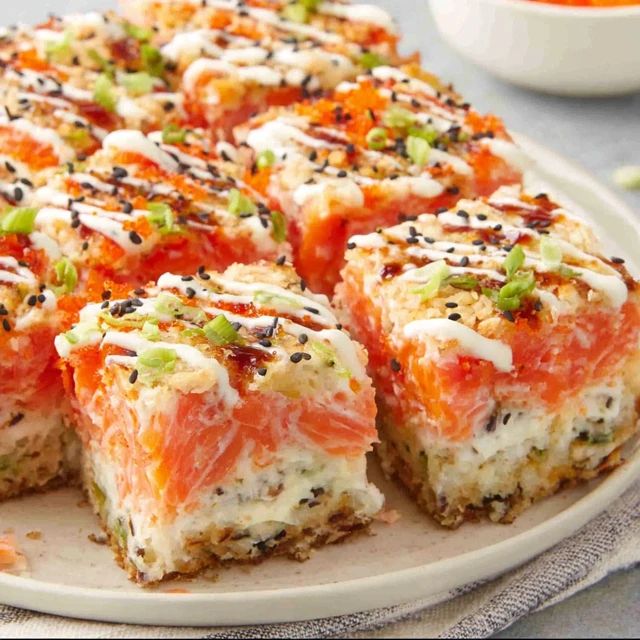
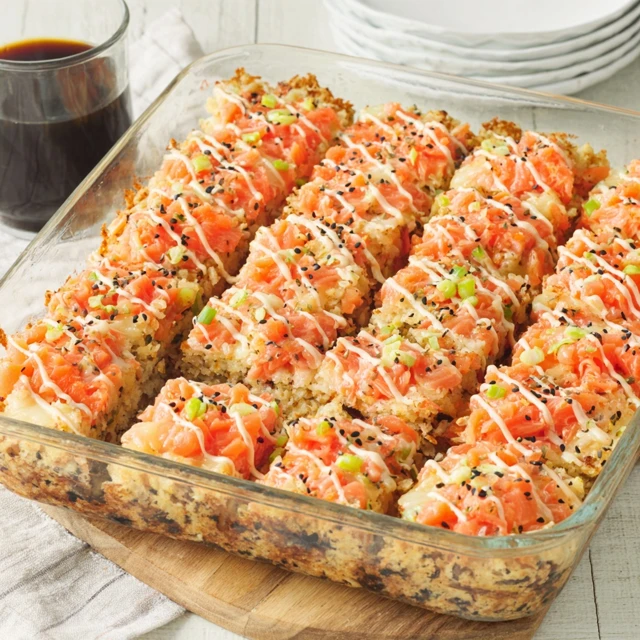
Game Changing Deconstructed Salmon Sushi Bake
Ingredients
Equipment
Method
- Preheat your oven to 400°F (200°C). Line a baking sheet with parchment paper. Place the salmon fillet on the sheet, drizzle with olive oil, and season with salt and pepper. Bake for 12-15 minutes, until cooked through and easily flaked. Set aside to cool slightly.
- While the salmon bakes, rinse the sushi rice under cold water until the water runs clear. Cook the rice with water according to package directions or in a rice cooker. In a small bowl, whisk together the rice vinegar, sugar, and 1 tsp of salt until dissolved (you can warm it for 15 seconds in the microwave to help). Once the rice is cooked, transfer it to a large non-metallic bowl, pour the vinegar mixture over it, and gently fold to combine. Let it cool slightly.
- Once the salmon is cool enough to handle, use two forks to flake it into bite-sized pieces in a medium bowl. Add the Kewpie mayonnaise, sriracha, soy sauce, and optional masago/tobiko. Gently mix until the salmon is evenly coated. Taste and adjust seasoning if needed.
- Press the seasoned sushi rice into an even layer in an 8×8 inch baking dish. Sprinkle a generous, even layer of furikake over the rice. Carefully spread the creamy salmon mixture over the top, reaching the edges. Sprinkle the remaining furikake over the salmon.
- Bake in the preheated 400°F (200°C) oven for 10-12 minutes, until heated through and lightly golden on top. For a browner top, you can broil for 1-2 minutes, watching carefully to prevent burning. Let it rest for a few minutes before serving.
- Serve warm, scooping portions onto roasted seaweed snacks. Garnish with sliced avocado, cucumber, and scallions.
Notes
– **Season Rice While Hot:** For best flavor absorption, mix the vinegar seasoning into the rice while it is still hot.
– **Don’t Overcook Salmon:** The salmon is cooked twice, so slightly undercooking it initially will keep it moist in the final bake.
– **Kewpie is Key:** Japanese Kewpie mayonnaise provides a superior rich and creamy flavor that truly elevates the dish. If unavailable, use regular full-fat mayo with a tiny splash of rice vinegar and a pinch of sugar.
– **Protein Swaps:** You can substitute the salmon with cooked shrimp, imitation crab meat, or spicy tuna.
– **Philadelphia Roll Twist:** For extra creaminess, spread a thin layer of softened cream cheese over the rice before adding the salmon topping.
– **Storage:** Leftovers can be stored in an airtight container in the refrigerator for up to 2 days. Reheat in the oven or microwave.