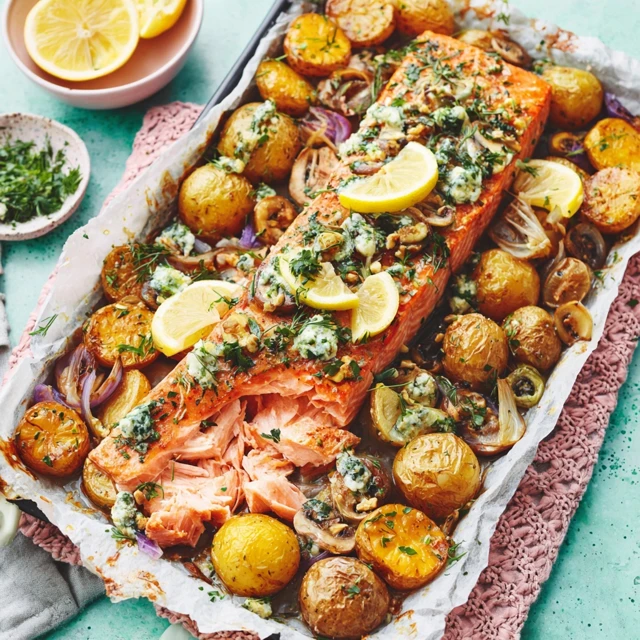
Cooking salmon and potatoes on the same pan often feels like a kitchen riddle, a timing puzzle where one ingredient is always ready before the other. The potatoes demand a long, hot roast to become tender and crisp, while the delicate salmon requires just a brief visit to the oven to remain moist and flaky. For years, I saw home cooks either endure undercooked potatoes or suffer through dry, chalky salmon, believing a perfect outcome for both was impossible in one go. But the solution, my dear, is not in a complicated technique or a fancy gadget; it’s in a simple, time-tested sequence.
This method guarantees that your potatoes emerge from the oven with gloriously browned, crispy edges and fluffy interiors, right at the exact moment your salmon is perfectly cooked—so tender it flakes with the gentle nudge of a fork. It’s a complete, harmonious meal on a single pan, smelling of fresh dill, zesty lemon, and the comforting aroma of roasted potatoes. This isn’t just a recipe; it’s the answer to that weeknight riddle.
Why This Method Works
- The Potato Head Start: Potatoes take much longer to cook than salmon. By giving them a 20-minute head start in the hot oven, we ensure they are well on their way to being perfectly tender and crisp by the time the fish is done.
- A Hot Pan is Key: Placing your potatoes on a preheated sheet pan instantly begins the searing process, creating a far better crust than starting on a cold surface. It’s a small step with a big impact on texture.
- Protecting the Salmon: We add the salmon only for the final 12-15 minutes of cooking. This short burst of heat is all it needs to cook through without drying out, preserving its delicate, buttery texture.
What You’ll Need

- Salmon Fillets: (About 1.5 lbs, cut into 4 equal portions. Ask your fishmonger for center-cut fillets, as they have a more uniform thickness and will cook more evenly.)
- Baby Potatoes: (1.5 lbs, Yukon Gold or red potatoes work beautifully. Their waxy texture helps them hold their shape, and their thin skins mean no peeling is required.)
- Olive Oil: (A good quality extra virgin olive oil for tossing the potatoes and making the glaze. It adds a lovely, fruity note.)
- Dijon Mustard: (This is the secret to a glaze that sticks. It acts as an emulsifier, binding the oil and lemon juice together so it clings to the fish.)
- Honey or Maple Syrup: (Just a touch for balance, to counteract the acidity of the lemon and mustard. It also helps with beautiful caramelization.)
- Garlic: (Freshly minced, always. The flavor is far superior to the jarred kind.)
- Fresh Dill: (The classic partner for salmon. Its bright, slightly anise-like flavor is simply perfect here.)
- Lemon: (You’ll use both the zest and the juice for a layered, bright citrus flavor that cuts through the richness of the salmon.)
- Salt and Black Pepper: (To season every layer properly.)
Simple Swaps
A good recipe is a flexible one. If your pantry looks a little different, don’t fret.- For the Potatoes: You can easily use sweet potatoes, just be sure to cut them into a similar 1-inch dice. Fingerling potatoes, halved lengthwise, are also a wonderful choice.
- For the Salmon: If salmon isn’t available, this method works well with other sturdy fish like Arctic char or steelhead trout.
- For the Herbs: No dill? Fresh parsley will lend a clean, green flavor, or you could use chopped chives for a mild oniony note.
- Add More Greens: Feel free to toss some asparagus spears or green beans onto the pan during the last 10 minutes of cooking with the salmon. You can find more ideas in this Sheet Pan Salmon And Vegetables guide.
Tried & True Variations
Once you’ve mastered the basic technique, you can start playing with the flavors. This recipe is a wonderful canvas for your creativity.One of my favorite ways to change things up is with a Sheet Pan Lemon Garlic Butter Salmon approach, where you melt butter with garlic and lemon to pour over the fish instead of the mustard glaze.
For a spicier version, add a half teaspoon of red pepper flakes to the potatoes before roasting and a small squeeze of sriracha into the salmon glaze. It adds a lovely warmth that builds with each bite.
You can also lean into a Mediterranean profile by adding a handful of Kalamata olives and some halved cherry tomatoes to the pan with the salmon. Once it’s out of the oven, crumble some feta cheese over the top.
And remember, the sheet pan method is wonderfully versatile. If you’re not in the mood for fish, this same potato-first technique works beautifully for a Sheet Pan Chicken & Veggies dinner.
The Time-Tested Method

1. Prepare the Pan and Potatoes
First things first, position one oven rack in the center of your oven and preheat it to 400°F (200°C). Place your sheet pan in the oven while it preheats. A hot pan is the first step to crispy potatoes.While the oven heats, prepare your potatoes. Scrub them clean and pat them thoroughly dry. Cut them into uniform, 1-inch pieces. This uniformity is crucial for even cooking. In a large bowl, toss the potatoes with a generous drizzle of olive oil, salt, and pepper until they are all lightly coated.
2. Roast the Potatoes First
Carefully remove the hot sheet pan from the oven. Immediately pour the seasoned potatoes onto the pan and spread them into a single, even layer. Don’t let them pile up! Giving them space allows them to roast, not steam.Place the pan back in the oven and roast for 20 minutes. This is their head start. During this time, they will begin to soften and their edges will just start to turn golden. Getting this step right is the foundation for a great dish, much like in my classic Parmesan Roasted Potatoes.
3. Prepare the Salmon Glaze
While the potatoes are roasting, you have the perfect amount of time to prepare the salmon. In a small bowl, whisk together the Dijon mustard, honey, minced garlic, lemon juice, lemon zest, and a tablespoon of olive oil. Season it with a pinch of salt and pepper.Pat your salmon fillets completely dry with a paper towel. This is a step many people skip, but it’s so important for helping the glaze adhere and for developing a lovely texture on the surface of the fish. Season both sides of the fillets with salt and pepper.
4. Add the Salmon to the Pan
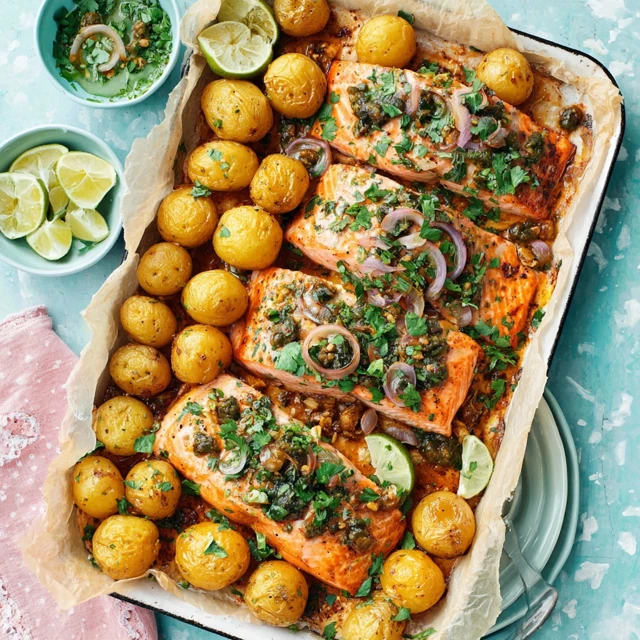
After the potatoes have roasted for 20 minutes, carefully remove the pan from the oven. Use a spatula to push the potatoes to the sides of the pan, creating four open spaces in the center.Place the salmon fillets, skin-side down, in the cleared spaces. Spoon the prepared Dijon glaze evenly over the top of each fillet. Now your entire meal is on one pan, ready for its final bake. This technique is a cornerstone of so many simple salmon dinners, from Blackened Salmon to Tuscan Salmon.
5. Bake Until Perfect
Return the sheet pan to the oven and bake for another 12-15 minutes. The exact time will depend on the thickness of your salmon fillets. You’ll know it’s done when the salmon is opaque and flakes easily with a fork.The potatoes should now be perfectly tender on the inside and beautifully browned and crispy on the outside, finishing their cooking at the same time as the fish.
6. Garnish and Rest
Remove the pan from the oven. Sprinkle everything generously with fresh, chopped dill and an extra squeeze of lemon juice if you like. This final burst of freshness really brings all the flavors to life.Let the salmon rest on the pan for just a minute or two before serving. This allows the juices to redistribute, ensuring the most succulent bite.
Notes from My Kitchen
Over the years, I’ve learned a few little things that make all the difference between a good sheet pan dinner and a great one.- Don’t Crowd the Pan: This is the most common mistake. If you pile too many ingredients onto one pan, they will steam in their own moisture instead of roasting. Use a large, heavy-duty rimmed baking sheet, and if needed, use two pans.
- Pat the Salmon Dry: I mentioned it before, but it bears repeating. A dry surface is essential for any seasoning or glaze to stick properly and for the fish to cook, not steam.
- Potato Size Matters: Cutting your potatoes into small, uniform pieces is the key to them cooking through in time. If your pieces are too large, they will still be hard when the salmon is done.
- Check for Doneness with a Fork: The best way to check if salmon is cooked is to gently press a fork into the thickest part. If it flakes apart easily, it’s ready. If it’s still translucent and resists flaking, it needs another minute or two.
Perfect Pairings
Because this meal already includes a protein and a starch, you don’t need much else to complete the table. A simple side is all it takes to make it a truly complete and satisfying dinner.A crisp green salad with a light lemon vinaigrette is the perfect counterpoint to the richness of the salmon. The fresh, acidic notes cleanse the palate beautifully.
If you want to add more green vegetables, simple steamed or blanched asparagus with a squeeze of lemon is a wonderful companion. You could also serve this with a dollop of plain Greek yogurt or a simple tzatziki sauce on the side for a cool, creamy element.
Did you change any ingredients? Let me know in the comments how you made this recipe your own
Why do the potatoes need a head start before adding the salmon?
Potatoes take much longer to cook than salmon. By giving them a 20-minute head start in the oven, you ensure they become tender and crispy at the same time the salmon is perfectly cooked, which only needs 12-15 minutes.
How do I know when the salmon is perfectly cooked?
You can tell the salmon is done by gently pressing a fork into the thickest part of the fillet. If it is opaque and flakes apart easily, it’s ready. If it’s still translucent and resists flaking, it needs another minute or two.
What is the secret to getting crispy potatoes with this recipe?
The key to crispy potatoes is to place them on a preheated sheet pan, which immediately starts the searing process. It’s also important to spread them in a single, even layer and avoid crowding the pan, as this allows them to roast instead of steam.
Can I substitute the salmon or potatoes in this recipe?
Yes, the recipe is very flexible. You can swap salmon for other sturdy fish like Arctic char or steelhead trout. For potatoes, you can use sweet potatoes cut into 1-inch dice or halved fingerling potatoes.
Flawless Sheet Pan Baked Salmon with Potatoes
Ingredients
Equipment
Method
- Position an oven rack in the center and preheat to 400°F (200°C). Place the sheet pan in the oven to preheat while you prepare the ingredients.
- In a large bowl, toss the cut potatoes with 2 tablespoons of olive oil, salt, and pepper until evenly coated.
- Carefully remove the hot sheet pan from the oven. Spread the seasoned potatoes in a single, even layer. Return to the oven and roast for 20 minutes.
- While the potatoes are roasting, prepare the salmon glaze. In a small bowl, whisk together the Dijon mustard, honey, minced garlic, lemon juice, lemon zest, and the remaining 1 tablespoon of olive oil. Season with a pinch of salt and pepper.
- Pat the salmon fillets completely dry with a paper towel and season both sides with salt and pepper.
- After the potatoes have roasted for 20 minutes, carefully remove the pan from the oven. Use a spatula to push the potatoes to the sides, creating space in the center.
- Place the salmon fillets, skin-side down, in the cleared spaces on the pan. Spoon the prepared Dijon glaze evenly over the top of each fillet.
- Return the sheet pan to the oven and bake for another 12-15 minutes, or until the salmon is opaque and flakes easily with a fork.
- Remove the pan from the oven. Sprinkle everything generously with fresh, chopped dill and an extra squeeze of lemon juice, if desired.
- Let the salmon and potatoes rest on the pan for a minute or two before serving to allow the juices to redistribute.