Chopped cabbage and shredded chicken sound so simple, almost mundane, until they meet the electric current of a proper Vietnamese dressing. This isn’t just a salad; it’s a culinary event where textures and tastes collide in the most spectacular way. It’s the kind of dish that wakes up your palate, a riot of crunchy, soft, savory, sweet, sour, and spicy that somehow creates perfect, vibrant harmony.
Forget heavy, mayonnaise-laden salads that weigh you down. This Vietnamese Chicken Salad, known as Gỏi Gà, is pure energy in a bowl. We’re talking about incredibly tender poached chicken, a rainbow of crisp vegetables, handfuls of fresh, fragrant herbs, and a dressing so good you’ll want to drink it. It’s a meal that feels both indulgent and incredibly light, leaving you satisfied, refreshed, and already planning the next time you’ll make it.
The Vietnamese Chicken Salad Difference
- Perfectly Balanced Dressing: The soul of this salad is the Nuoc Cham dressing. It masterfully hits every single flavor note—salty fish sauce, bright lime, sweet sugar, and fiery chili—for a result that is complex and utterly addictive.
- A Symphony of Textures: This isn’t a one-note dish. You get the satisfying crunch from cabbage and peanuts, the tender bite of poached chicken, the crispness of carrots, and the soft freshness of herbs all in one mouthful.
- Moisture-Locked Chicken: We skip the dry, baked chicken breast and instead gently poach it. This simple technique locks in moisture, resulting in silky, succulent shreds of chicken that absorb the dressing beautifully.
The Building Blocks
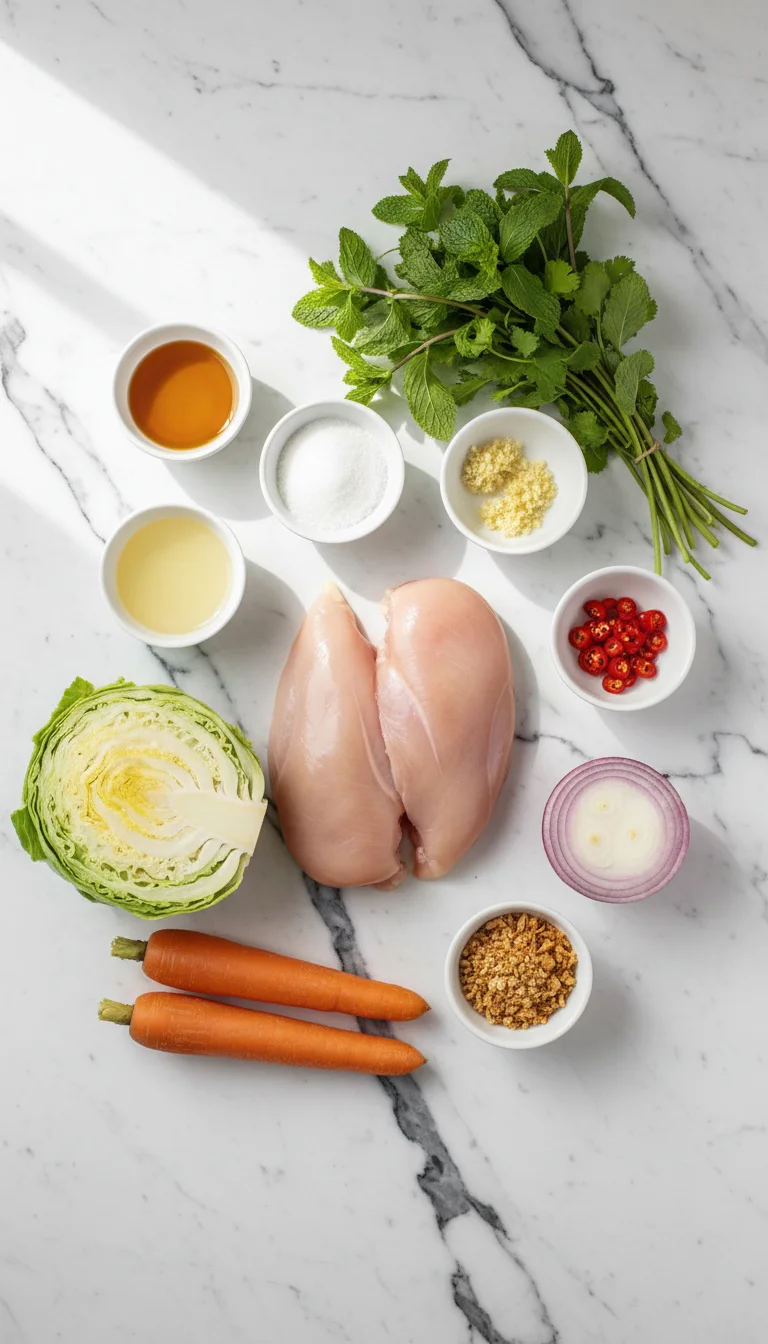
The magic of this salad lies in using fresh, vibrant components. Each ingredient plays a crucial role, so try to get the best quality you can find. The combination is what creates the signature “zing” that makes this dish so memorable.
- Chicken: 2 boneless, skinless chicken breasts (about 1 lb). (Poaching is key for the most tender, shreddable texture.)
- Cabbage: ½ a medium head of green or savoy cabbage, very thinly sliced. (This provides the main crunchy, durable base that won’t wilt immediately.)
- Carrots: 2 medium carrots, julienned or grated.
- Red Onion: ½ a small red onion, sliced paper-thin. (Soaking it in cold water tames its sharp bite while keeping the crunch.)
- Fresh Herbs: 1 cup fresh cilantro, roughly chopped, and 1 cup fresh mint leaves. (These are non-negotiable; they provide the essential aromatic freshness.)
- Fish Sauce: ¼ cup. (This is the umami backbone of the dressing; look for brands like Red Boat or Three Crabs for the best flavor.)
- Lime Juice: ¼ cup, freshly squeezed. (For that bright, acidic kick. Please don’t use the bottled kind!)
- Sugar: 3 tablespoons, granulated or palm sugar. (To perfectly balance the saltiness and sourness.)
- Water: 3 tablespoons, warm.
- Garlic: 2 cloves, minced.
- Thai Chili: 1-2, thinly sliced (optional, but recommended for a kick).
- Roasted Peanuts: ½ cup, coarsely chopped for garnish.
- Fried Shallots: ¼ cup, for garnish. (Adds a final layer of savory, crispy goodness.)
Swaps & Alternatives
Don’t have everything on hand? No problem. This salad is wonderfully adaptable. Here are a few simple swaps you can make in a pinch.
- For the Chicken: Leftover rotisserie chicken is a fantastic time-saver. You can also use poached shrimp or even crispy fried tofu for a vegetarian version. The shredded chicken method is also a great base for our Asian Chicken Lettuce Wraps.
- For the Cabbage: If you prefer a softer texture, Napa cabbage works well. A pre-packaged bag of broccoli slaw or coleslaw mix can also work as a shortcut.
- For the Peanuts: Toasted cashews, almonds, or even sunflower seeds can provide that necessary crunch if you have a peanut allergy.
- For the Sugar: You can easily substitute honey or maple syrup. If using a liquid sweetener, you may need to add a little less water to the dressing.
- For the Lime Juice: While fresh lime is best, unseasoned rice vinegar can provide the necessary acidity in a pinch.
Level Up This Recipe
Once you’ve mastered the classic version, you can start playing around to make it your own. These simple additions can transform the salad into something truly spectacular.
A fantastic way to add a sweet and tangy element is with fruit. Thinly sliced green mango, tart green apple, or even segments of pomelo or grapefruit add a juicy burst that complements the dressing beautifully.
To make this a more substantial, all-in-one meal, consider adding noodles. Cooked and chilled rice vermicelli noodles tossed in with the rest of the ingredients turn this into a hearty and satisfying noodle salad, much like the concept behind our popular Deconstructed Spring Roll Salad.
For those who love a deeper, more complex heat, a drizzle of toasted chili oil or a spoonful of sambal oelek in the dressing works wonders. It adds a smoky dimension that goes beyond the fresh heat of the Thai chili.
Finally, don’t be afraid to expand your herb garden. Adding a handful of fresh Thai basil or Vietnamese coriander (Rau Ram) introduces another layer of aromatic complexity that is incredibly authentic and delicious.
How to Make Vietnamese Chicken Salad
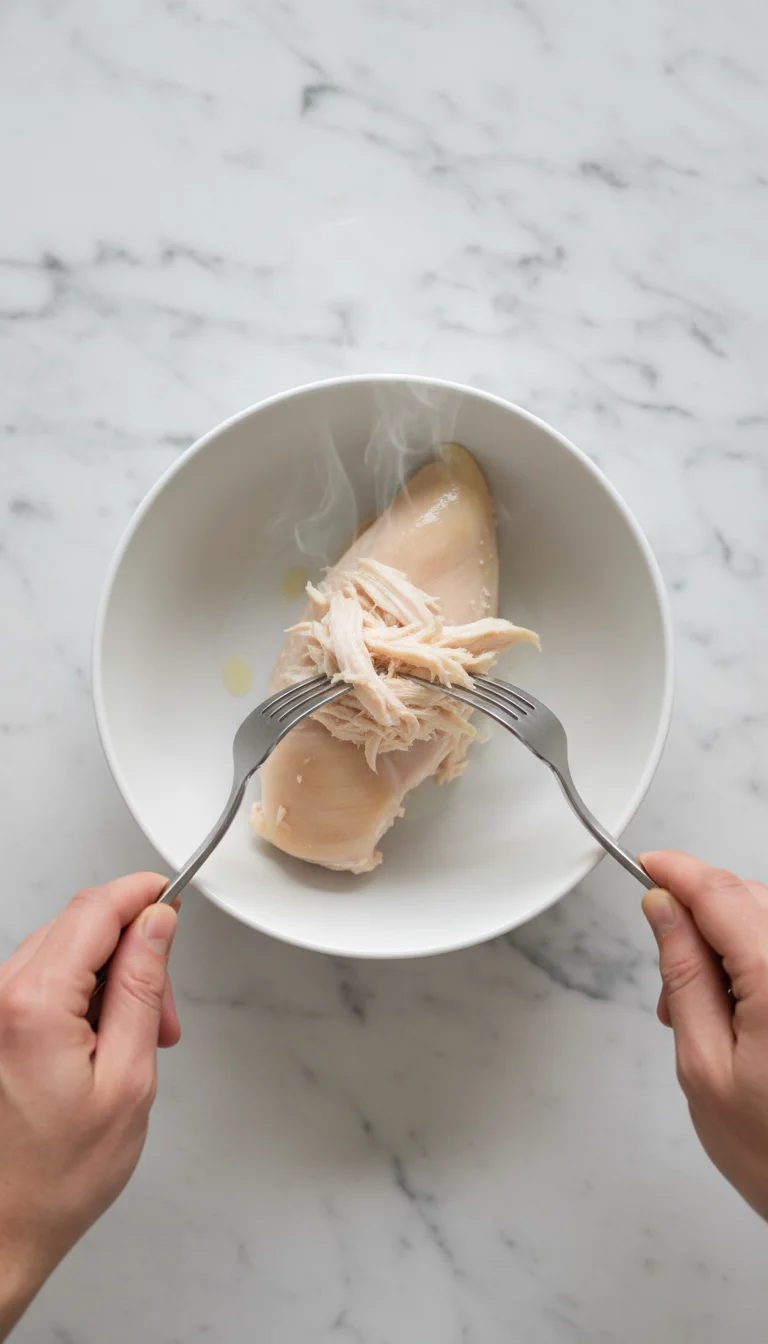
The process is straightforward and broken down into three main parts: preparing the chicken, prepping the vegetables and dressing, and bringing it all together. Don’t rush the prep work—thinly slicing the vegetables is key to the final texture.
1. Gently Poach the Chicken
Place the chicken breasts in a saucepan and add just enough cold water to cover them. You can add a few slices of ginger and a smashed scallion to the water for extra flavor. Bring the water to a gentle simmer over medium heat—do not let it come to a rolling boil. Once it simmers, reduce the heat to low, cover the pot, and cook for 10-15 minutes, or until the chicken is cooked through.
Remove the chicken from the water and let it cool completely on a cutting board. Once cool enough to handle, use two forks or your fingers to shred it into bite-sized pieces. This gentle poaching method ensures the chicken is succulent and not at all dry.
2. Prepare the Vibrant Vegetables
While the chicken is poaching and cooling, this is the perfect time to prep your vegetables. Use a mandoline or a very sharp knife to slice the cabbage and red onion as thinly as possible. For an extra crisp onion with less bite, place the thin slices in a bowl of ice water for about 10 minutes, then drain thoroughly.
Use a julienne peeler or a box grater for the carrots to get thin, even strips. Roughly chop your cilantro and pick the mint leaves from their stems. Having all your components ready to go makes assembly a breeze. The crispness of these veggies is reminiscent of what makes our Asian Cucumber Salad so refreshing.
3. Whisk Together the Nuoc Cham Dressing
This dressing is the heart of the salad. In a small bowl, combine the warm water and sugar, whisking until the sugar is completely dissolved. This is a crucial first step to ensure your dressing isn’t grainy.
Once the sugar is dissolved, add the fish sauce, fresh lime juice, minced garlic, and sliced Thai chili. Whisk everything together. Give it a taste—it should be a powerful explosion of salty, sweet, sour, and spicy. You can adjust it to your preference, adding more lime for tartness, sugar for sweetness, or chili for heat.
4. Assemble the Salad
In a very large bowl, combine the shredded cabbage, julienned carrots, and thinly sliced red onion. Add the cooled, shredded chicken and the fresh cilantro and mint. Gently toss everything together with your hands or a pair of tongs to distribute all the ingredients evenly.
At this stage, the salad can be covered and refrigerated for a few hours if you’re prepping ahead. Keep the dressing and the garnishes separate until you are ready to serve.
5. Dress, Toss, and Garnish
Do not dress the salad until the moment you are ready to eat. Pour about three-quarters of the dressing over the salad and toss thoroughly to coat everything. Give it a taste and add more dressing if needed.
Transfer the salad to a large platter or individual bowls. Garnish generously with the chopped roasted peanuts and crispy fried shallots. These final toppings are essential for the final crunch and savory flavor. Serve immediately and enjoy the incredible freshness.
Avoid These Pitfalls
- Dressing Too Early: The number one mistake! The salt and acid in the dressing will immediately start to draw water out of the cabbage, turning your vibrant, crunchy salad into a soggy, wilted mess. Only dress it right before it hits the table.
- Boiling the Chicken: A rolling boil will agitate the muscle fibers in the chicken, making it tough and rubbery. A gentle, bare simmer is the secret to tender, juicy, and easily shreddable meat.
- Skimping on Herbs: In Vietnamese cooking, herbs are not a garnish; they are a main ingredient. The bright, cooling flavor of mint and the fresh punch of cilantro are absolutely essential to balancing the dish. Use them generously!
Perfect Pairings
This Vietnamese Chicken Salad is a complete and satisfying meal all on its own, perfect for a light lunch or dinner. The balance of protein, vegetables, and healthy fats makes it incredibly fulfilling.
However, if you’re looking to build a larger feast, it pairs beautifully with other Vietnamese or Southeast Asian dishes. Serve it alongside some crispy spring rolls or our delightful Fresh Vegetable Spring Rolls with a peanut dipping sauce for a fantastic textural contrast.
For a heartier meal, you could serve smaller portions of the salad as a starter for a main course like a fragrant curry or a bowl of our Slow Cooker Thai Coconut Chicken Soup. The salad’s bright, acidic notes cut through richer dishes wonderfully. It also works well as a side dish for grilled meats or fish, offering a refreshing counterpoint. And if you have leftover chicken, it’s a great starting point for a Sweet Chili Chicken Bowl the next day.
Did you change any ingredients? Let me know in the comments how you made this recipe your own
What is the secret to getting tender, moist chicken for this salad?
The key is to gently poach the chicken breasts in water that is at a bare simmer, not a rolling boil. This simple technique locks in moisture, resulting in silky, succulent chicken that shreds beautifully and isn’t tough or rubbery.
Can I make this Vietnamese chicken salad vegetarian or use other proteins?
Yes, this salad is very adaptable. For a vegetarian version, you can substitute the chicken with crispy fried tofu. Other great alternatives include using poached shrimp or, for a convenient shortcut, leftover rotisserie chicken.
When is the best time to add the dressing to the salad?
You should only add the dressing and toss the salad right before you are ready to serve it. Adding the dressing too early will cause the salt and acid to draw moisture out of the cabbage, making your crunchy salad soggy and wilted.
What makes the Nuoc Cham dressing so special?
The Nuoc Cham dressing is the soul of the salad because it perfectly balances every flavor note. It combines salty fish sauce, bright lime juice, sweet sugar, and fiery chili to create a complex, vibrant, and addictive taste that gives the salad its signature ‘zing’.
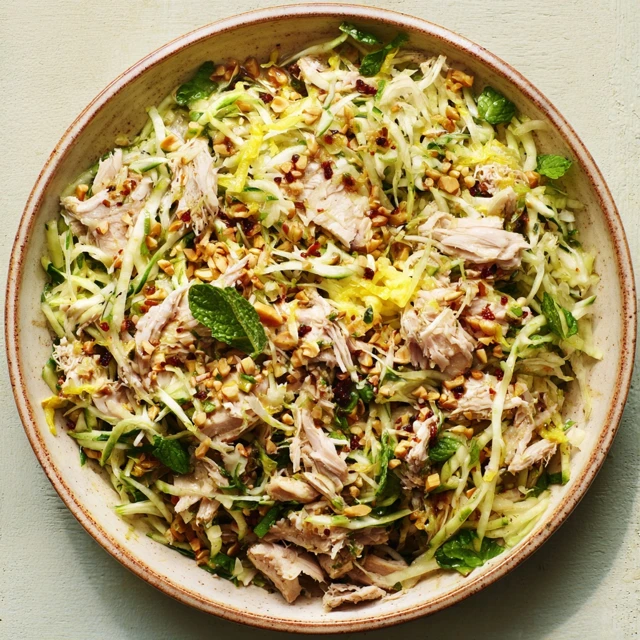
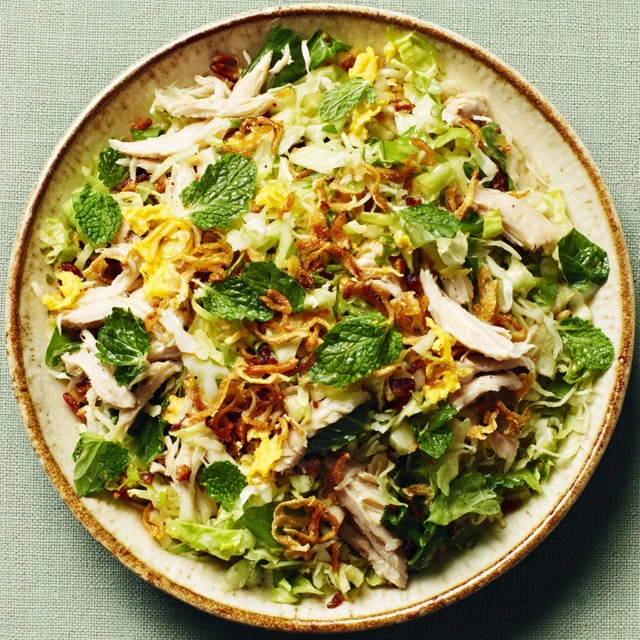
Vietnamese Chicken Salad with Zing (Gỏi Gà)
Ingredients
Equipment
Method
- Gently Poach the Chicken: Place chicken breasts in a saucepan. Optional: add a few slices of ginger and a smashed scallion. Add enough cold water to cover. Bring to a gentle simmer over medium heat—do not let it boil. Once simmering, reduce heat to low, cover, and cook for 10-15 minutes until the chicken is cooked through.
- Cool and Shred Chicken: Remove the chicken from the poaching water and let it cool completely on a cutting board. Once cool enough to handle, use two forks or your fingers to shred it into bite-sized pieces.
- Prepare the Vegetables: While the chicken is cooking and cooling, thinly slice the cabbage and red onion. For a milder onion flavor, soak the slices in a bowl of ice water for 10 minutes, then drain well. Julienned or grate the carrots. Roughly chop the cilantro and pick the mint leaves from their stems.
- Whisk the Nuoc Cham Dressing: In a small bowl, combine the warm water and sugar. Whisk until the sugar is completely dissolved. Add the fish sauce, fresh lime juice, minced garlic, and sliced Thai chili. Whisk everything together. Taste and adjust for your preferred balance of salty, sweet, sour, and spicy.
- Assemble the Salad Base: In a very large bowl, combine the shredded cabbage, julienned carrots, sliced red onion, cooled shredded chicken, fresh cilantro, and mint. Gently toss to distribute all ingredients evenly. (This can be done a few hours ahead; cover and refrigerate).
- Dress, Garnish, and Serve: Just before serving, pour about three-quarters of the dressing over the salad and toss thoroughly to coat everything. Add more dressing if needed. Transfer the salad to a large platter, garnish generously with the chopped roasted peanuts and crispy fried shallots, and serve immediately.
Notes
– Do not dress the salad until you are ready to serve to prevent it from becoming soggy.
– Poach the chicken at a gentle simmer, never a rolling boil, to ensure it stays tender and juicy.
– Be generous with fresh herbs like cilantro and mint; they are key to the salad’s authentic flavor. Variations & Substitutions:
– Protein: Leftover rotisserie chicken, poached shrimp, or crispy fried tofu can be used instead of poached chicken.
– Vegetables: Napa cabbage or a pre-packaged coleslaw mix can be substituted for green cabbage.
– Nuts: Toasted cashews or almonds can replace peanuts.
– Dressing: Honey or maple syrup can be used instead of sugar. Unseasoned rice vinegar can stand in for lime juice in a pinch. Level Up Your Salad:
– Add fruit like thinly sliced green mango or grapefruit for a sweet-tart element.
– Toss in cooked and chilled rice vermicelli noodles to make it a heartier meal.
– For extra heat and complexity, add a drizzle of chili oil or a spoonful of sambal oelek to the dressing.