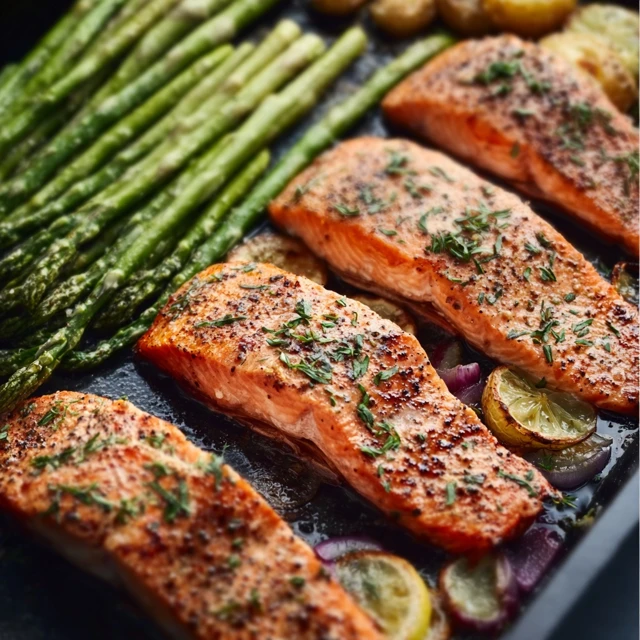
Some meals feel like a perfectly choreographed dance, where every element moves in sync to create a stunning final performance. This sheet pan salmon and asparagus is exactly that—a culinary ballet where the tender, flaky salmon and the crisp-tender asparagus share the stage, cooking to perfection in the exact same amount of time. There’s no awkward waiting, no juggling multiple pans; just a simple, elegant routine that ends in a standing ovation from your taste buds.
The result is a dinner that tastes like it took hours of careful planning, but secretly came together with minimal effort and even less cleanup. We’re talking rich, buttery salmon with a sweet and tangy glaze that caramelizes beautifully under the heat, paired with vibrant green asparagus spears that are roasted just enough to be tender yet still have a satisfying snap. It’s the kind of healthy, effortless, and ridiculously delicious meal that will make you feel like a kitchen genius on any given weeknight.
Why This Sheet Pan Salmon and Asparagus Works
- Effortless Cleanup: Everything cooks on a single sheet pan lined with parchment paper, which means you can practically toss the mess away. It’s the ultimate weeknight win.
- Perfectly Timed: The salmon fillets and asparagus spears are chosen to cook in the same amount of time at the same temperature, eliminating any guesswork.
- Healthy & Flavorful: Packed with omega-3s, vitamins, and protein, this meal is as nutritious as it is delicious. The simple glaze elevates every single bite.
Gather Your Supplies

- Salmon Fillets: You’ll want about four 6-ounce fillets, preferably skin-on or skinless, depending on your preference. Look for pieces that are relatively uniform in thickness.
- Asparagus: One large bunch, with the tough, woody ends trimmed off. Thicker spears work best here as they won’t overcook.
- Olive Oil: A good quality extra-virgin olive oil is used to coat the asparagus and is a base for our glaze.
- Dijon Mustard: (This is the secret emulsifier!) It helps bind the oil and lemon juice together for a smooth, cohesive glaze that clings to the salmon.
- Honey: (For that perfect caramelization). It adds a touch of sweetness to balance the tangy mustard and lemon, and it helps the top of the salmon get beautifully browned.
- Garlic: Freshly minced garlic provides a pungent, aromatic depth that is essential to the flavor profile.
- Lemon: You’ll use both the juice for the glaze and fresh slices for roasting, which infuse the entire dish with a bright, clean citrus note.
- Salt & Black Pepper: To season everything and make the flavors pop.
- Fresh Dill or Parsley: Optional, for a fresh, herbaceous garnish at the end.
Pantry Alternatives
Don’t have everything on hand? No problem. This recipe is wonderfully flexible.- For the Salmon: You can easily swap salmon for other sturdy fish fillets like cod, halibut, or arctic char. Just be mindful that cooking times may vary slightly depending on the thickness.
- For the Asparagus: If asparagus isn’t in season, green beans, broccoli florets, or sliced bell peppers are fantastic substitutes. They roast beautifully alongside the salmon.
- For the Honey: Maple syrup is a perfect one-to-one substitute for honey and adds a lovely, slightly different sweetness.
- For the Dijon: If you’re out of Dijon, a grainy brown mustard will also work, adding a bit more texture and a slightly different tang.
- For the Herbs: No fresh dill or parsley? A sprinkle of dried oregano or thyme in the glaze before baking adds a wonderful earthy note.
Make It Your Own
Once you’ve mastered the basic recipe, feel free to get creative and add your own signature touch. A one-pan meal is a perfect canvas for experimentation.For a more robust vegetable medley, consider adding some cherry tomatoes or thinly sliced zucchini to the pan with the asparagus. This adds more color, texture, and nutrients, turning it into a complete Sheet Pan Salmon And Vegetables dinner.
If you love a bit of heat, add a pinch of red pepper flakes or a dash of sriracha to the honey-mustard glaze. The subtle spice plays beautifully against the sweetness of the honey and the richness of the salmon.
For an extra layer of savory flavor, wrap a few of your asparagus spears in prosciutto before roasting. This is a great trick borrowed from my Asparagus Wrapped In Prosciutto recipe, and it adds a salty, crispy element that is absolutely irresistible.
You can also change the entire flavor profile. Try a bold, smoky rub like the one used in this Blackened Salmon for a completely different experience.
The Method

Step 1: Prepare the Pan and Veggies
First things first, preheat your oven to 400°F (200°C). Line a large, rimmed baking sheet with parchment paper for the easiest cleanup imaginable. This is a non-negotiable step in my kitchen!Place your trimmed asparagus spears on one side of the prepared baking sheet. Drizzle them with about a tablespoon of olive oil, then sprinkle generously with salt and pepper. Use your hands to toss everything together right on the pan, ensuring each spear is lightly coated.
Step 2: Make the Glaze
In a small bowl, whisk together the remaining olive oil, Dijon mustard, honey, minced garlic, and the juice of half a lemon. Season it with a pinch of salt and pepper. Keep whisking until the glaze is smooth and well combined. This simple sauce is the heart of the recipe, similar to the one in my popular Garlic Butter Salmon.Step 3: Prepare the Salmon
Pat your salmon fillets completely dry with a paper towel. This is a crucial step for getting a nice sear on the outside and preventing the fish from steaming. Arrange the fillets on the other side of the baking sheet, leaving a little space between each one.Step 4: Glaze and Roast
Spoon the honey-mustard glaze evenly over the top of each salmon fillet. Use the back of the spoon to spread it out, covering the entire surface. Thinly slice the remaining lemon half and place one or two slices on top of each piece of salmon.Now, slide the entire sheet pan into the preheated oven. Bake for 12-15 minutes. The exact time will depend on the thickness of your salmon fillets.
Step 5: Check for Doneness and Serve
You’ll know the salmon is done when it flakes easily with a fork at its thickest point or reaches an internal temperature of 145°F. The asparagus should be bright green and tender-crisp. If you like, you can switch the oven to broil for the last 1-2 minutes to get a little extra caramelization on top of the salmon, but watch it closely!Remove the pan from the oven. Garnish with fresh dill or parsley, and serve immediately.
Expert Tips for Success
- Don’t Crowd the Pan: Use a large enough baking sheet to ensure the salmon and asparagus have space. Overcrowding will cause the ingredients to steam instead of roast, preventing them from getting that delicious color and texture.
- Pat the Salmon Dry: I mentioned it before, but it’s worth repeating! A dry surface is key to a perfectly cooked fillet. Moisture is the enemy of a good sear.
- Uniform Thickness is Key: Try to select salmon fillets that are similar in thickness to ensure they all cook evenly. If one piece is much thicker, it will need more time than the others.
Complete the Meal
This sheet pan salmon and asparagus is a fantastic, well-rounded meal all on its own, but it also pairs beautifully with a few simple sides to make it even more substantial.A bed of fluffy quinoa or brown rice is perfect for soaking up any extra glaze from the pan. For a lower-carb option, cauliflower rice or a simple side salad with a light vinaigrette works wonderfully.
If you’re a fan of sheet pan cooking, this recipe is a great gateway to other one-pan wonders. The technique is easily adaptable, whether you’re making Sheet Pan Lemon Garlic Butter Salmon for a different flavor twist or even venturing into a hearty Sheet Pan Chicken & Veggies. The principle of easy prep and minimal cleanup remains the same.
For a more elegant presentation, serve the salmon and asparagus over a swirl of creamy polenta or next to some roasted baby potatoes, which you can cook on a separate pan while the salmon is in the oven.
If you tried this recipe and loved it, please leave a 5-star rating below. It helps us so much
How can I tell when the salmon is perfectly cooked?
The salmon is done when it flakes easily with a fork at its thickest point or reaches an internal temperature of 145°F. The asparagus should be tender but still have a slight crispness. For extra browning, you can broil it for the final 1-2 minutes, but be sure to watch it closely.
Can I use other vegetables besides asparagus for this recipe?
Yes, this recipe is very flexible. If asparagus isn’t in season or you prefer something else, you can easily substitute it with green beans, broccoli florets, or sliced bell peppers. These vegetables roast well and cook in a similar amount of time as the salmon.
What can I use as a substitute for honey in the glaze?
Maple syrup is a perfect one-to-one substitute for honey in the glaze. It will provide a similar sweetness and help the top of the salmon caramelize beautifully in the oven.
What is the key to preventing the salmon and vegetables from becoming soggy?
The most important tip is to not overcrowd your baking sheet. Giving the salmon and asparagus enough space allows hot air to circulate, which roasts the ingredients and gives them a delicious color and texture. Overcrowding will trap moisture and cause the food to steam instead of roast.
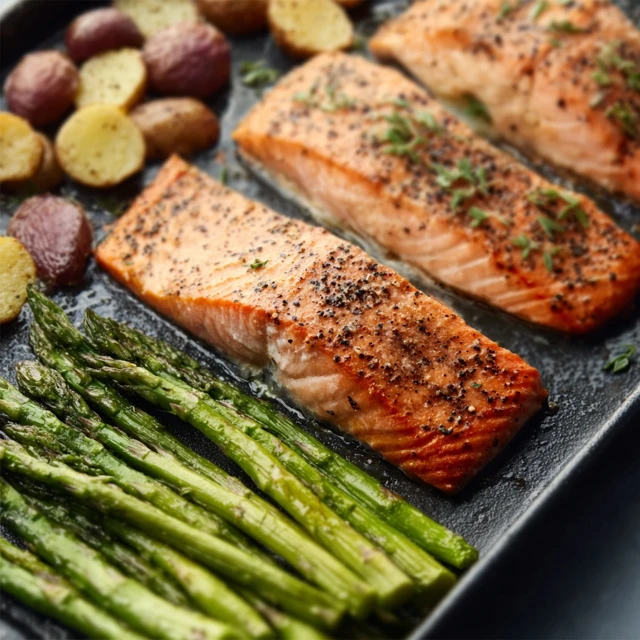
Foolproof Sheet Pan Salmon and Asparagus
Ingredients
Equipment
Method
- Preheat your oven to 400°F (200°C). Line a large, rimmed baking sheet with parchment paper.
- Place the trimmed asparagus on one side of the baking sheet. Drizzle with 1 tablespoon of olive oil, season generously with salt and pepper, and toss to coat.
- In a small bowl, whisk together the remaining 2 tablespoons of olive oil, Dijon mustard, honey, minced garlic, and the juice of half a lemon. Season with a pinch of salt and pepper and whisk until the glaze is smooth.
- Pat the salmon fillets completely dry with a paper towel and arrange them on the other side of the baking sheet.
- Spoon the honey-mustard glaze evenly over the top of each salmon fillet, spreading to cover the surface. Place one or two lemon slices on top of each fillet.
- Bake for 12-15 minutes, depending on the thickness of the salmon. The fish is done when it flakes easily with a fork or reaches an internal temperature of 145°F.
- For extra browning, you can switch the oven to broil for the last 1-2 minutes, watching very closely to prevent burning.
- Remove from the oven, garnish with fresh dill or parsley if desired, and serve immediately.