Corned beef, in its humble boiled state, is a promise of comfort, but it rarely dreams of grandeur. This recipe is about answering that quiet dream with a sticky, sweet, and sharply elegant glaze that transforms the familiar into the spectacular.
The result is a centerpiece that crackles with a lacquered crust, giving way to meat so tender it parts with a sigh. It’s the kind of dish that turns a simple supper into a small, delicious event.
Why This Method Works
- Bold Wisdom 1: Simmer First, Glaze Last: Boiling the corned beef in its seasoning packet ensures it becomes fork-tender all the way through. Applying the glaze only at the end prevents the sugars from burning and turning bitter during the long cook.
- Bold Wisdom 2: The Power of a Hot Oven Blast: A final stint under a high broiler isn’t just for color. It rapidly caramelizes the honey and mustard, creating that irresistible, slightly crisp shell that seals in the juices.
- Bold Wisdom 3: Resting is Non-Negotiable: Letting the meat rest after its oven adventure allows the frantic juices to settle back into the fibers. This means every slice is moist and holds together beautifully, instead of crumbling on the board.
Gather Your Ingredients
The beauty here lies in the alchemy of a few simple things. Starting with a quality piece of meat and fresh pantry staples makes all the difference.
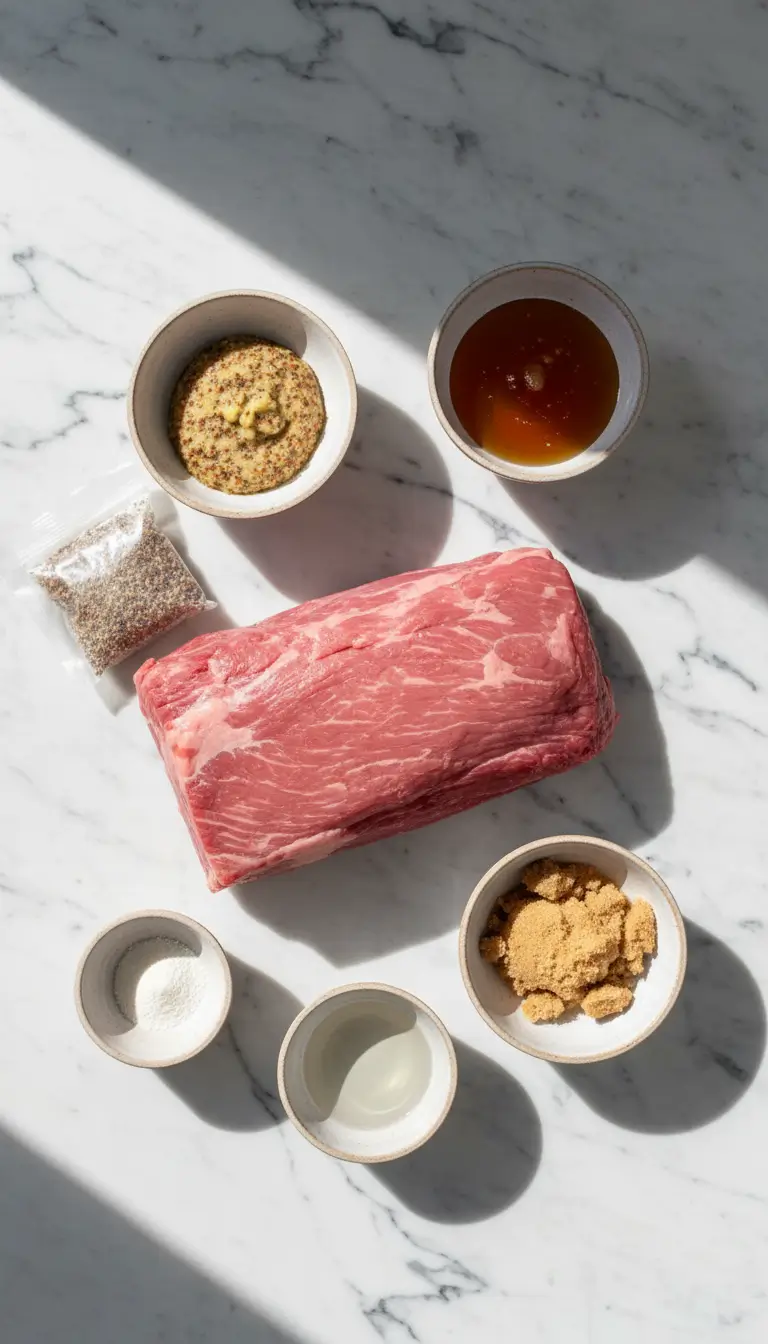
- 1 (3 to 4 pound) flat-cut corned beef brisket, with its seasoning packet
- Water, as needed
- 1/2 cup whole grain mustard (Its texture provides little pops of sharp flavor)
- 1/3 cup honey (Use a mild, runny honey for easy glazing)
- 3 tablespoons brown sugar (Deepens the caramel notes)
- 2 tablespoons apple cider vinegar (The essential acidic balance to cut the richness)
- 1 teaspoon garlic powder
Pantry Substitutions
- No whole grain mustard? Use Dijon for a smoother, still-sharp glaze.
- Out of apple cider vinegar? A tablespoon of fresh orange or pineapple juice adds a nice fruity acidity.
- For a deeper, more complex sweetness, replace the brown sugar with an equal amount of pure maple syrup.
- If you only have yellow mustard, use 1/4 cup and add an extra tablespoon of honey to soften its punch.
Kitchen Experiments
Once you’ve mastered the classic, the door to variation swings wide open. Each twist offers a new personality for your table.
For a smoky-sweet profile, add a teaspoon of smoked paprika to the glaze. A tablespoon of bourbon or whiskey whisked into the glaze introduces a wonderful grown-up warmth. For a tangier, more barbecue-like finish, substitute the honey with an equal measure of orange marmalade.
You can even apply this glazing principle to other methods. Try it on a Crispy Oven Roasted Corned Beef And Cabbage for double the texture, or add it in the final hour of a Slow Cooker Corned Beef And Cabbage for effortless flavor.
The Time-Tested Method
This process is wonderfully straightforward, divided into two acts: the tenderizing simmer and the glorious glazing. Just follow the steps, and you cannot go wrong.
1. The Simmering Foundation
Place the corned beef brisket fat-side up in a large Dutch oven or heavy pot. Tuck the seasoning packet around it. Cover the meat completely with cold water.
Bring it to a boil over high heat, then immediately reduce to the gentlest possible simmer. Cover and let it cook quietly for about 2.5 to 3 hours, until the meat is very tender when pierced with a fork.
2. Prepare Your Glaze
While the beef simmers, whisk together the whole grain mustard, honey, brown sugar, apple cider vinegar, and garlic powder in a small bowl. This is your magic potion. Let it sit so the flavors can marry.
3. The Glazing Transformation
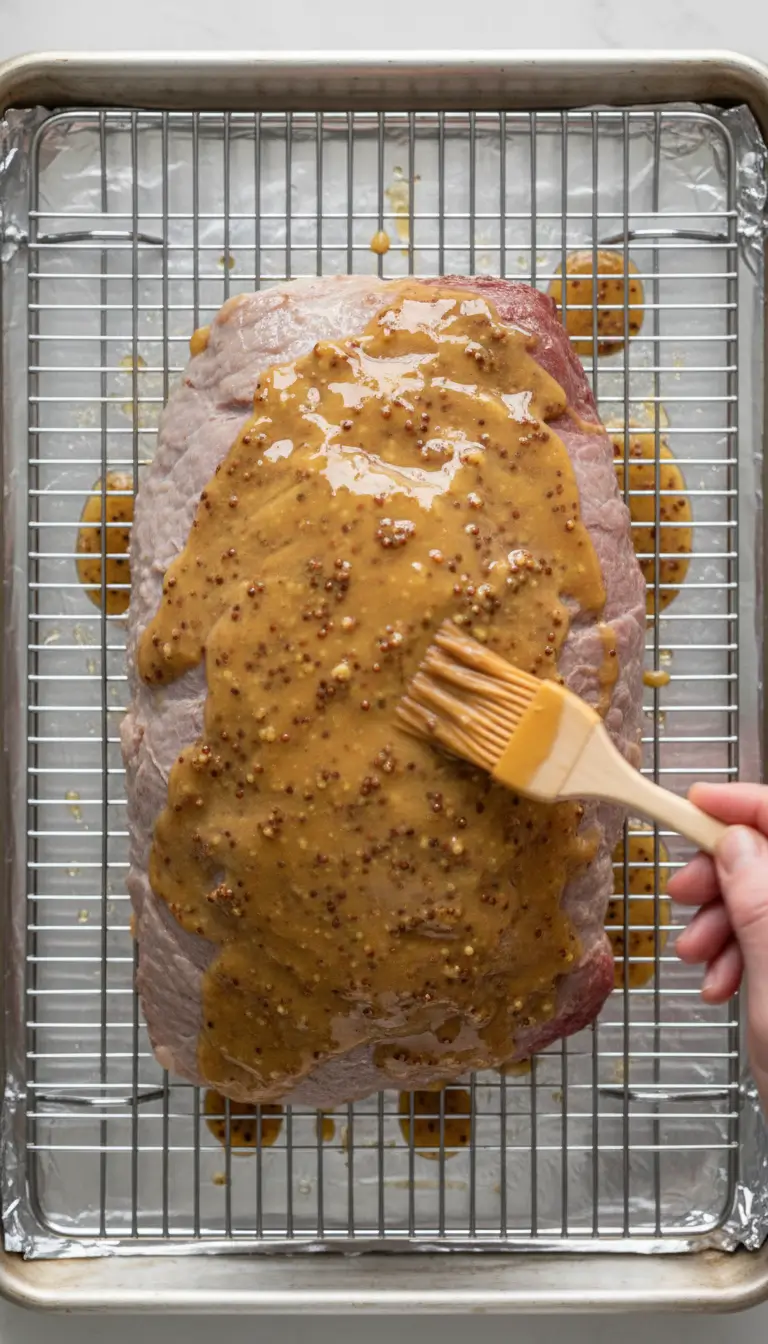
Preheat your oven to 375°F (190°C). Carefully remove the tender corned beef from the cooking liquid and place it on a rack set inside a foil-lined baking sheet. Discard the cooking liquid.
Using a pastry brush, lavishly coat the entire surface of the meat with a thick layer of your honey mustard glaze. Reserve about a third of the glaze for a second coat.
4. Bake and Caramelize
Bake for 20 minutes. Remove from the oven and brush on the remaining glaze. For the final, transformative touch, turn your oven to broil.
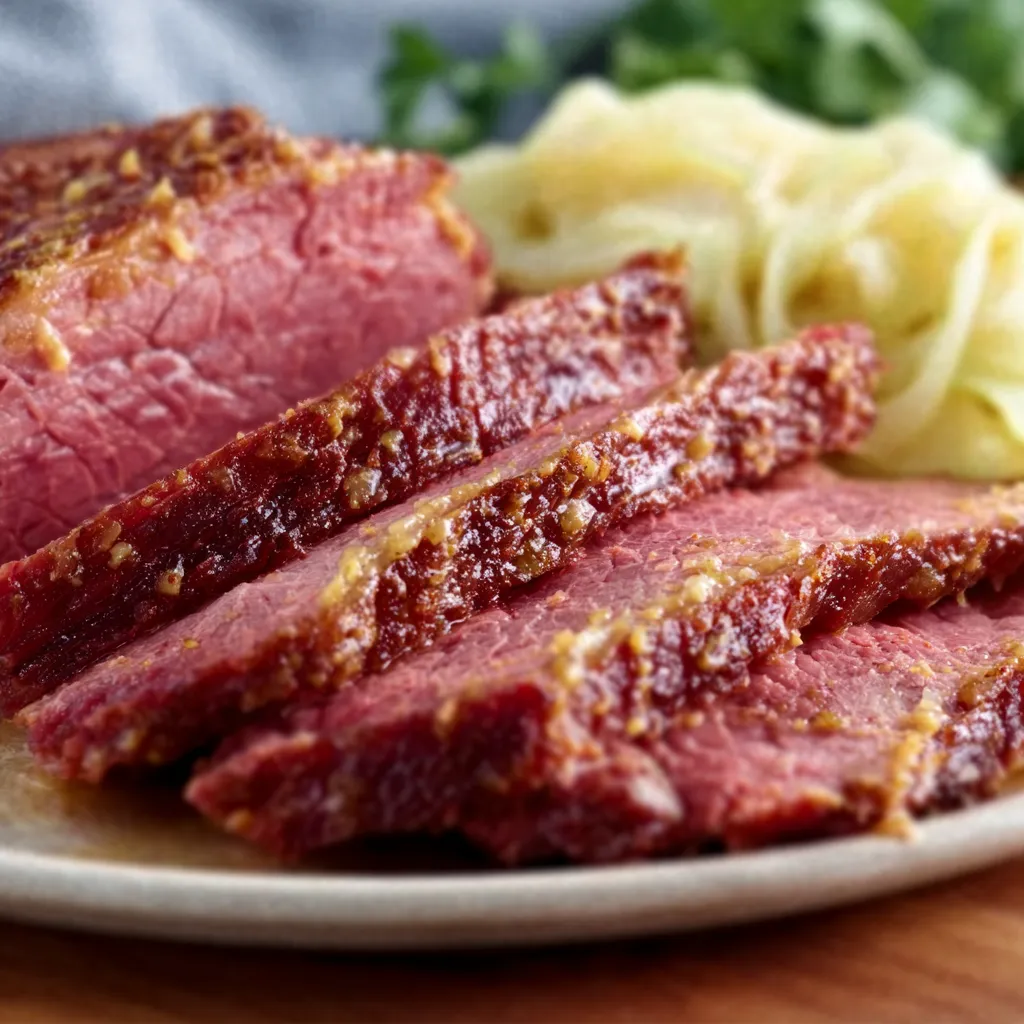
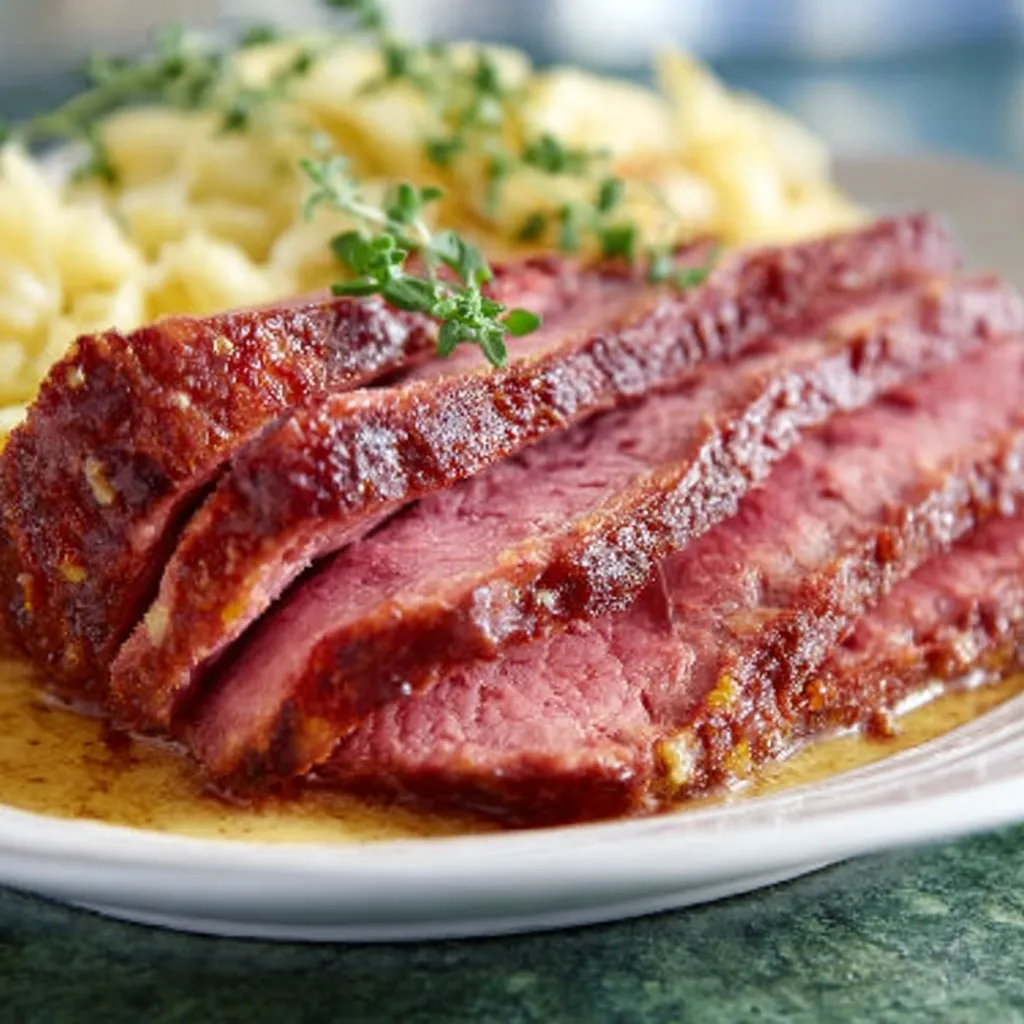
Return the pan to the oven, watching closely, for 3-5 minutes until the glaze is bubbly, deeply caramelized, and irresistible. Let the glazed corned beef rest for a full 15 minutes before slicing thinly against the grain.
My Kitchen Notes
- Patience with the Simmer: A rolling boil will make the meat tough and stringy. A bare whisper of bubbles is what you want for that fall-apart texture.
- Watch the Broiler Like a Hawk: Sugar burns in an instant. Stay by the oven door during the final broiling step. The moment it looks perfectly dark and sticky, it’s done.
- Slice Against the Grain: Find the direction of the muscle fibers and cut perpendicular to them. This shortens the fibers, guaranteeing each bite is tender, not chewy.
- Save the Leftover Glaze: Any extra glaze can be gently warmed and served on the side for dipping. It’s also marvelous brushed onto roasted carrots or potatoes.
Complete the Table
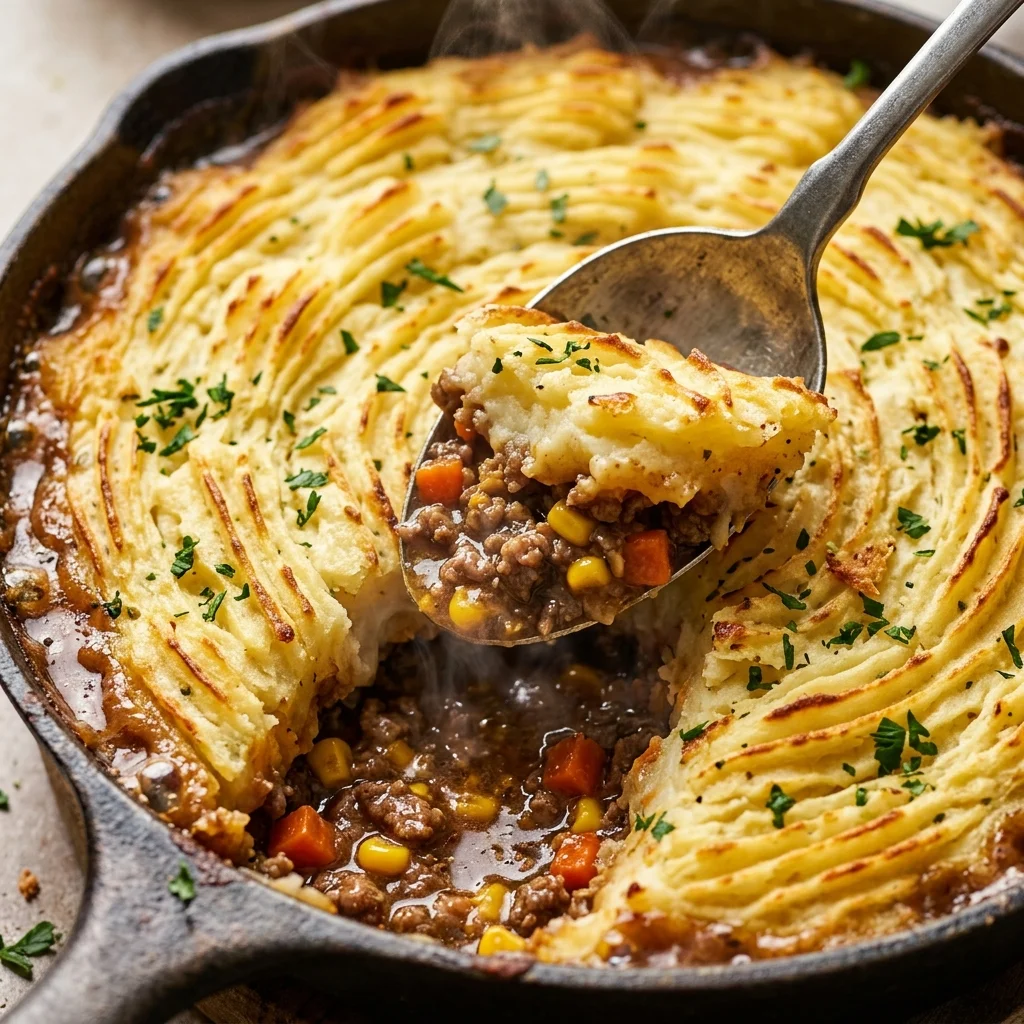
This glazed beauty deserves companions that complement its robust flavor. Creamy, buttery mashed potatoes are a classic and perfect choice for soaking up any extra glaze.
Simply roasted carrots or parsnips echo the sweetness. For a traditional touch, you can’t go wrong with steamed cabbage or braised greens.
If you love this glazed approach, you might also enjoy our Ultimate Maple Honey Mustard Glazed Ham for your holiday table. And for other corned beef inspirations, explore our Ultimate Brown Sugar Glazed Corned Beef or the foundational techniques in our Ultimate Oven Roasted Corned Beef.
First time making Honey Mustard Glazed Corned Beef? I hope this guide made it easy. Let me know how it turned out!
Why is it important to simmer the corned beef first and only apply the glaze at the end?
Simmering the corned beef first ensures it becomes fork-tender all the way through. Applying the honey mustard glaze only at the end prevents the sugars in the glaze from burning and turning bitter during the long cooking process.
What is the purpose of the final step under the broiler?
The final stint under a high broiler rapidly caramelizes the honey and mustard in the glaze. This creates an irresistible, slightly crisp, and lacquered crust that seals in the meat’s juices.
What are some pantry substitutions if I don’t have whole grain mustard or apple cider vinegar?
If you don’t have whole grain mustard, you can use Dijon mustard for a smoother glaze. If you’re out of apple cider vinegar, a tablespoon of fresh orange or pineapple juice can provide the necessary fruity acidity.
How can I adapt this recipe for a slow cooker or to create a different flavor profile?
You can add the glaze in the final hour of cooking a Slow Cooker Corned Beef. For flavor variations, add a teaspoon of smoked paprika for a smoky-sweet profile, a tablespoon of bourbon for warmth, or substitute the honey with orange marmalade for a tangier, barbecue-like finish.
Honey Mustard Glazed Corned Beef
Ingredients
Equipment
Method
- Place the corned beef brisket fat-side up in a large Dutch oven. Add the seasoning packet. Cover the meat completely with cold water.
- Bring the water to a boil over high heat, then immediately reduce to a very gentle simmer. Cover the pot and simmer for 2.5 to 3 hours, until the meat is fork-tender.
- While the beef simmers, prepare the glaze. In a small bowl, whisk together the whole grain mustard, honey, brown sugar, apple cider vinegar, and garlic powder. Set aside.
- Preheat the oven to 375°F (190°C). Line a baking sheet with aluminum foil and place an oven-safe rack on top.
- Carefully remove the cooked corned beef from the cooking liquid and place it on the prepared rack. Discard the cooking liquid.
- Using a pastry brush, generously coat the entire surface of the meat with a thick layer of the honey mustard glaze. Reserve about one-third of the glaze for a second coat.
- Bake the glazed corned beef for 20 minutes.
- Remove the beef from the oven and brush on the remaining glaze.
- Turn the oven to broil. Return the pan to the oven and broil for 3 to 5 minutes, watching closely, until the glaze is bubbly and deeply caramelized.
- Remove the corned beef from the oven and let it rest for 15 minutes. Slice thinly against the grain before serving.