There is a dish that exists in the space between a promise and a memory, where the scent of rendered pork fat and toasted pepper hangs in the air like a ghost of a Roman trattoria. Spaghetti Carbonara is not just a meal; it’s a culinary dare, a test of confidence where a few humble ingredients either coalesce into silk or scramble into regret. It asks for your trust, and in return, it offers a lesson in edible physics.
Get it right, and you’ll be rewarded with a plate of pure, unadulterated luxury. The pasta will be cloaked in a sauce that is neither cream nor cheese, but a magical, golden emulsion—a creamy, peppery, salty hug that clings to every strand. It’s rich without being heavy, sophisticated in its simplicity, and ready in the time it takes to boil water. This is the ultimate version, the one that respects the tradition while giving you the foolproof roadmap to nail it every single time.
Why This Spaghetti Carbonara Works
- No Cream, No Regrets: Authenticity and texture win here. The sauce is an emulsion of egg, cheese, and pasta water, creating a luxurious silkiness that cream can never replicate.
- Foolproof Tempering Method: We use a tried-and-true technique to gently cook the eggs without scrambling, ensuring a perfectly smooth, velvety sauce every time.
- Balanced Salty & Savory: The combination of guanciale and Pecorino Romano provides a deep, complex saltiness that Parmesan alone can’t achieve, perfectly cut by the heat of black pepper.
What You’ll Need
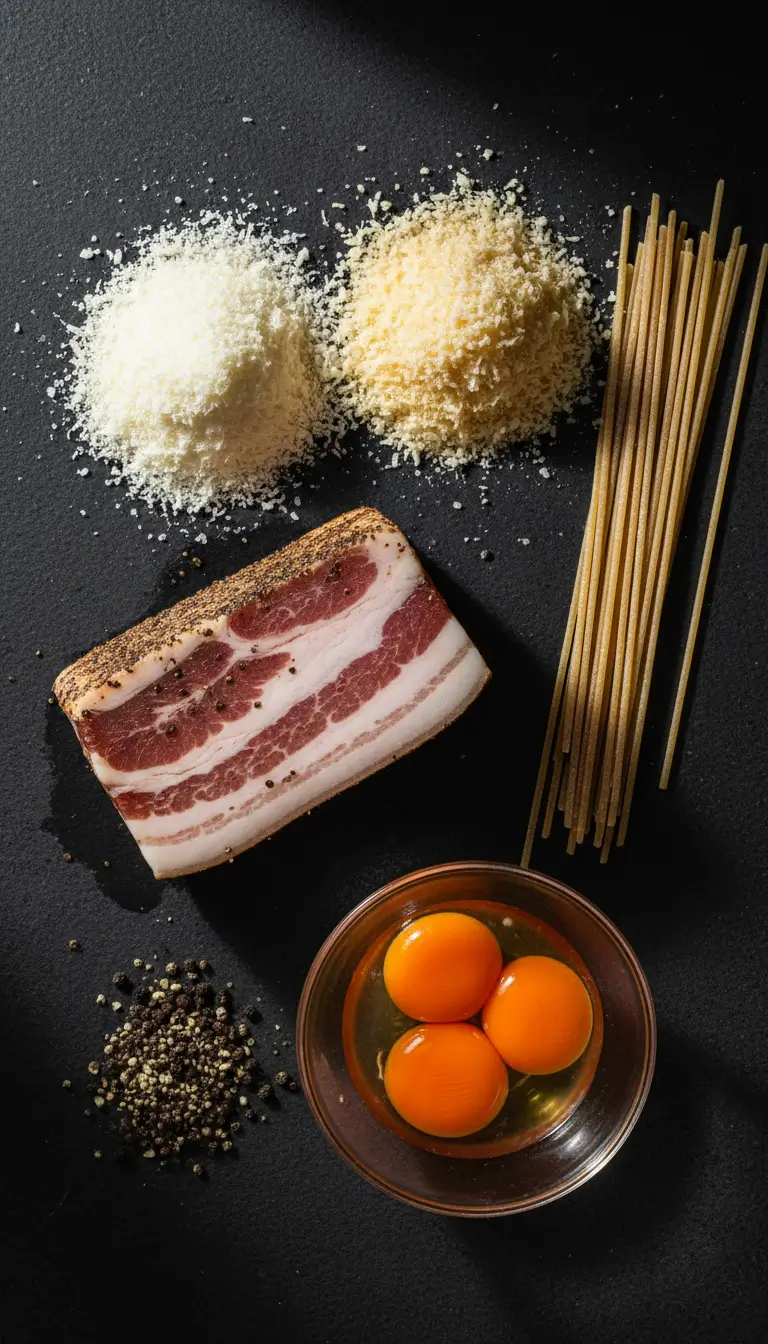
The beauty of this recipe lies in its short, powerful ingredient list. Every single one plays a critical role, so quality is non-negotiable. Here’s what to gather before you start.
- 1 lb (450g) Spaghetti: (The classic choice; its rough surface holds the sauce beautifully).
- 8 oz (225g) Guanciale: (Cured pork cheek; this is the traditional fat that renders into liquid gold and provides unmatched flavor. Pancetta is a fine substitute).
- 3 large Eggs: (They are the base of the sauce; fresh, room-temperature eggs blend more smoothly).
- 2 oz (about 1 cup) Pecorino Romano cheese, finely grated: (The salty, tangy backbone of the sauce. Do not use pre-grated).
- 1 oz (about ½ cup) Parmigiano-Reggiano cheese, finely grated: (Adds a nutty, umami depth to balance the Pecorino).
- 1 ½ tsp freshly cracked Black Pepper: (Not just seasoning; it’s a main flavor component. Freshly crack it for the best aroma).
- Reserved Pasta Water: (Your magic potion; the starchy, salty water is essential for creating the emulsion).
Ingredient Swaps
While tradition is key, life happens. Here are some acceptable swaps if you’re in a pinch.
- Guanciale: The best substitute is diced pancetta. In a real pinch, thick-cut bacon can work, but it will impart a smokier, sweeter flavor.
- Pecorino Romano: If it’s too sharp for you, you can use all Parmigiano-Reggiano. The flavor will be milder and nuttier.
- Spaghetti: Any long, sturdy pasta works. Try bucatini (my favorite), rigatoni, or fettuccine.
- Eggs: For an even richer, more stable sauce, use 2 whole eggs and 2 additional egg yolks.
Make It Your Own
Once you’ve mastered the classic, feel free to play. These twists can add a fun new dimension to your carbonara night.
- Spring Pea Carbonara: Add a cup of fresh or frozen peas to the pasta in the last minute of cooking for a sweet, colorful pop.
- Mushroom & Herb: Sauté sliced wild mushrooms with the guanciale and finish with a sprinkle of fresh thyme or chives.
- Spicy Kick: Add a generous pinch of red pepper flakes to the black pepper for a warming heat.
- Lemon Zest: A little finely grated lemon zest mixed with the cheeses can brighten the entire dish beautifully.
Let’s Get Cooking
Ready to create some magic? Follow these steps closely, and you’ll have a restaurant-quality dish on your table in under 30 minutes.
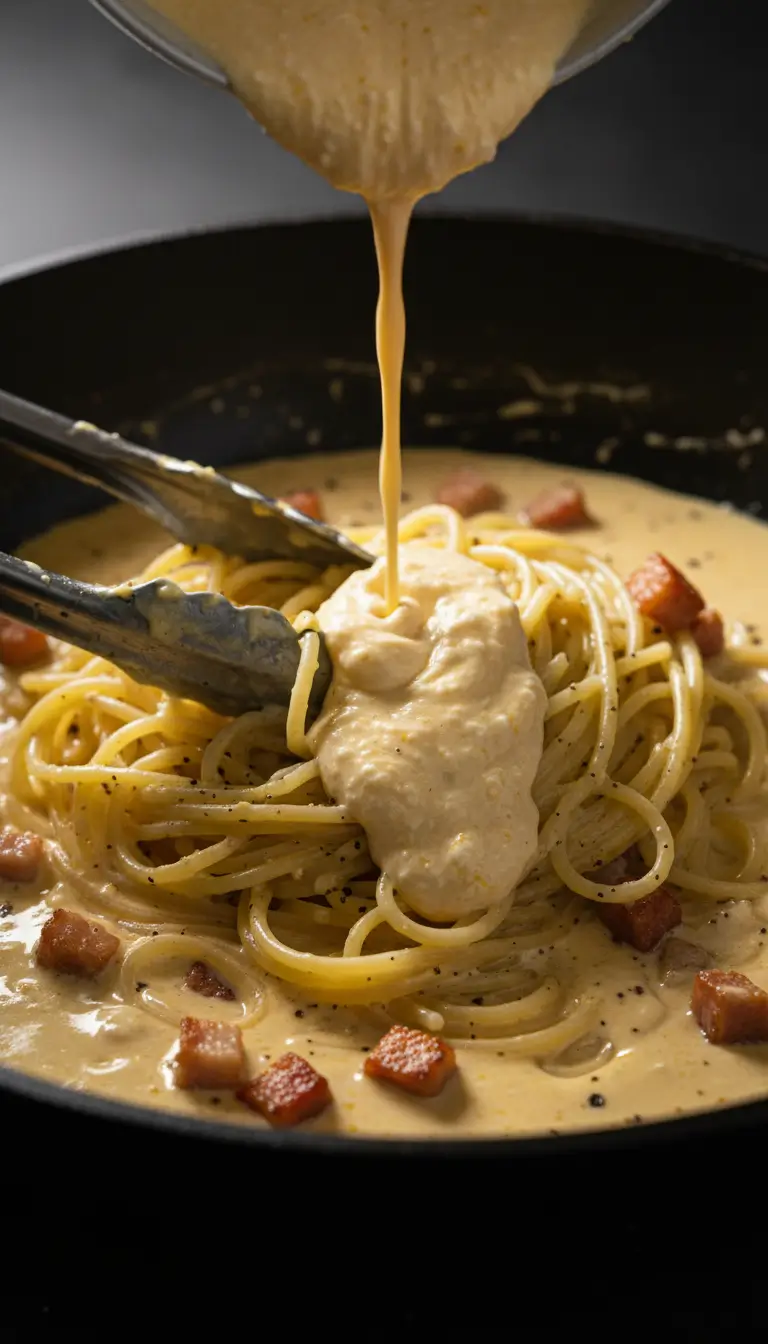
1. Prep is Everything
Bring a large pot of well-salted water to a boil. While it heats, cut your guanciale into ½-inch thick strips or small cubes. Grate both cheeses finely and mix them together in a bowl. Crack your eggs into a separate, medium-sized bowl.
2. Build the Flavor Base
Add the eggs to the cheese mixture along with all of the freshly cracked black pepper. Whisk it vigorously until it becomes a thick, grainy paste. This is your sauce base. Set it aside near the stove.
3. Cook the Pork
In a large, cold skillet or Dutch oven, add the diced guanciale. Turn the heat to medium. Cook, stirring occasionally, until the fat has rendered and the pieces are golden brown and crispy. This should take about 10-12 minutes. Turn off the heat.
4. Cook the Pasta
Once your water is at a rolling boil, add the spaghetti and cook according to package directions for *al dente*. About 2 minutes before the pasta is done, carefully scoop out about 1 ½ cups of the starchy pasta water. You will need it.
5. The Critical Tempering
Take about ½ cup of the hot pasta water and, while whisking constantly, slowly drizzle it into the bowl with the egg and cheese mixture. This gently raises the temperature of the eggs without cooking them, preventing scrambling later.
6. Combine & Emulsify
Using tongs, transfer the cooked spaghetti directly into the skillet with the guanciale and its rendered fat. Toss vigorously to coat every strand in the glorious fat. Remove the skillet from any heat source entirely.
7. Create the Sauce
Working quickly, pour the tempered egg and cheese mixture over the hot pasta. Toss, toss, toss! Add more reserved pasta water, a splash at a time, until the sauce becomes glossy, creamy, and coats the pasta luxuriously. The residual heat will cook the sauce to perfection.
8. The Final Touch
Serve immediately in warm bowls. Finish with an extra crack of black pepper and a light snowstorm of the remaining grated cheese. Waiting is not an option—this dish is at its peak the moment it’s made.
Chef’s Tips
- No Heat When Adding Eggs: The skillet must be off the burner when you add the egg mixture. Residual heat is all you need. This is the cardinal rule to avoid scrambled eggs.
- Warm Your Serving Bowls: Run them under hot water and dry them quickly. A cold bowl will cause the creamy sauce to seize up and thicken too much on contact.
- Reserve More Water Than You Think: It’s easier to have extra starchy water and not need it all than to need more and not have it. It’s the key to adjusting the sauce consistency.
How to Serve
Spaghetti Carbonara is a rich, star-of-the-show kind of dish. You don’t need much alongside it, just something to cut through the richness.
A simple, bitter green salad with a bright lemon vinaigrette is the perfect companion. A side of roasted asparagus or sautéed garlicky spinach also works wonderfully. For a true Roman feast, start with some marinated olives and artichokes.
And if you love this pasta, you’ll adore exploring other classics. For a richer, baked pasta night, my Lasagna With Ground Beef or incredibly easy Baked Ziti are always crowd-pleasers. If you’re craving a different kind of saucy spaghetti, my hearty Spaghetti With Meat Sauce is a family staple. And for more creamy, cheesy pasta inspiration, check out my Pasta Carbonara for a slightly different take, or the lighter, brighter Garlic Lemon Pasta. For a protein-packed version, the Chicken Carbonara is a delicious twist.
Thanks for stopping by! I hope this dish brings joy to your table.

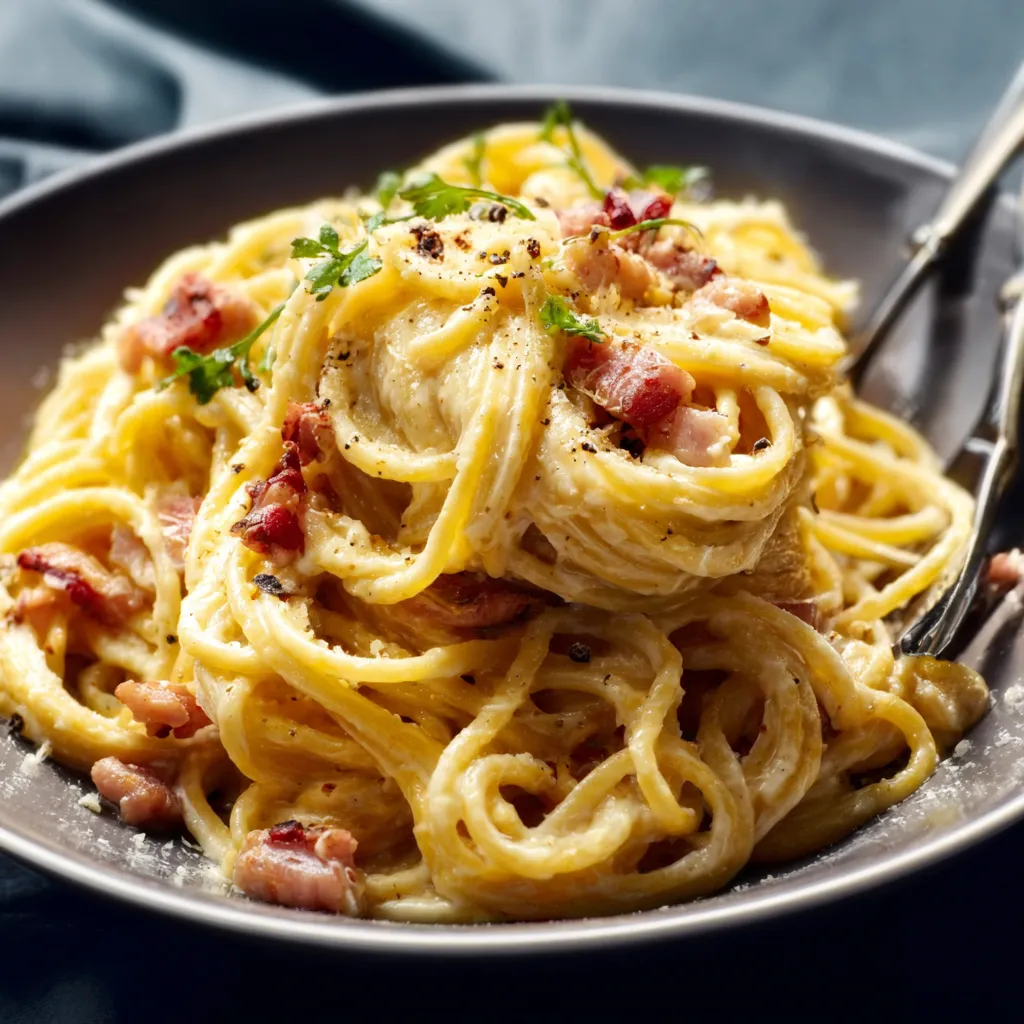
Ultimate Spaghetti Carbonara
Ingredients
Equipment
Method
- Bring a large pot of well-salted water to a boil.
- While water heats, dice the guanciale. Finely grate both cheeses and mix them together in a bowl.
- In a separate medium bowl, whisk the eggs. Add the mixed cheeses and all the black pepper, whisking vigorously until a thick, grainy paste forms. Set aside near the stove.
- Place diced guanciale in a large, cold skillet. Turn heat to medium and cook, stirring occasionally, until fat renders and pieces are golden and crispy, about 10-12 minutes. Turn off the heat.
- Cook the spaghetti in the boiling water according to package directions for al dente. About 2 minutes before it’s done, carefully scoop out about 1 1/2 cups of the starchy pasta water.
- Temper the egg mixture: While whisking constantly, slowly drizzle about 1/2 cup of the hot pasta water into the egg and cheese mixture.
- Using tongs, transfer the cooked spaghetti directly into the skillet with the guanciale and its fat. Toss vigorously to coat the pasta. Ensure the skillet is completely off any heat source.
- Working quickly, pour the tempered egg and cheese mixture over the hot pasta. Toss continuously and vigorously.
- Add more reserved pasta water, a splash at a time, while tossing until the sauce becomes glossy, creamy, and clings to the pasta.
- Serve immediately in warmed bowls, topped with an extra crack of black pepper and a sprinkle of the remaining grated cheese.