There’s a certain kind of dinner that doesn’t just fill your plate, but quiets the entire room. This is that dinner. It’s the one where forks slow down, eyes close for a second, and someone inevitably asks, “Can you make this again next week?” It’s not just a meal; it’s a culinary ceasefire.
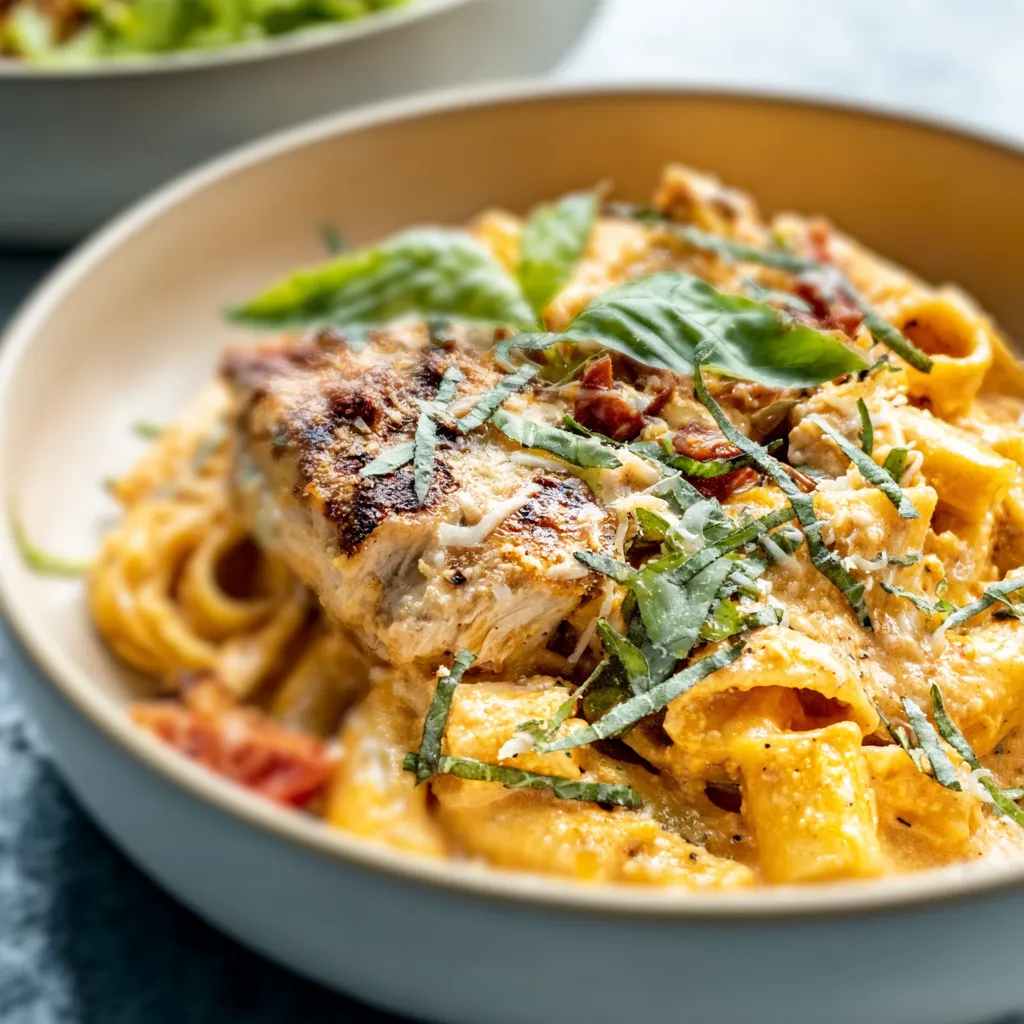
This Creamy Tomato Basil Chicken Alfredo is that dish. It takes the classic, sometimes one-note Alfredo and gives it a vibrant soul with sweet, sun-ripened tomatoes and the fresh, peppery kiss of basil. The result is a silky, blush-colored sauce that clings perfectly to every strand of fettuccine, wrapped around tender, golden bites of chicken. It’s luxurious enough for a date night and straightforward enough for a Tuesday.
Why This Recipe Works
- Bold Reason 1 (Flavor Harmony): We build the sauce in layers, starting with the savory fond from the chicken, which creates a deep, complex base that a simple cream sauce lacks.
- Bold Reason 2 (Perfect Texture): A combination of heavy cream and freshly grated Parmesan creates a sauce that is luxuriously creamy without being overly heavy or greasy.
- Bold Reason 3 (Freshness Balance): Adding fresh basil at two different stages—cooked into the sauce and stirred in at the end—gives you both an infused flavor and a bright, aromatic finish.
Key Ingredients for Success
Great food starts with great ingredients. While this recipe is forgiving, using quality components makes the difference between a good pasta and a memorable one. Each one plays a specific role in the final symphony of flavor and texture.
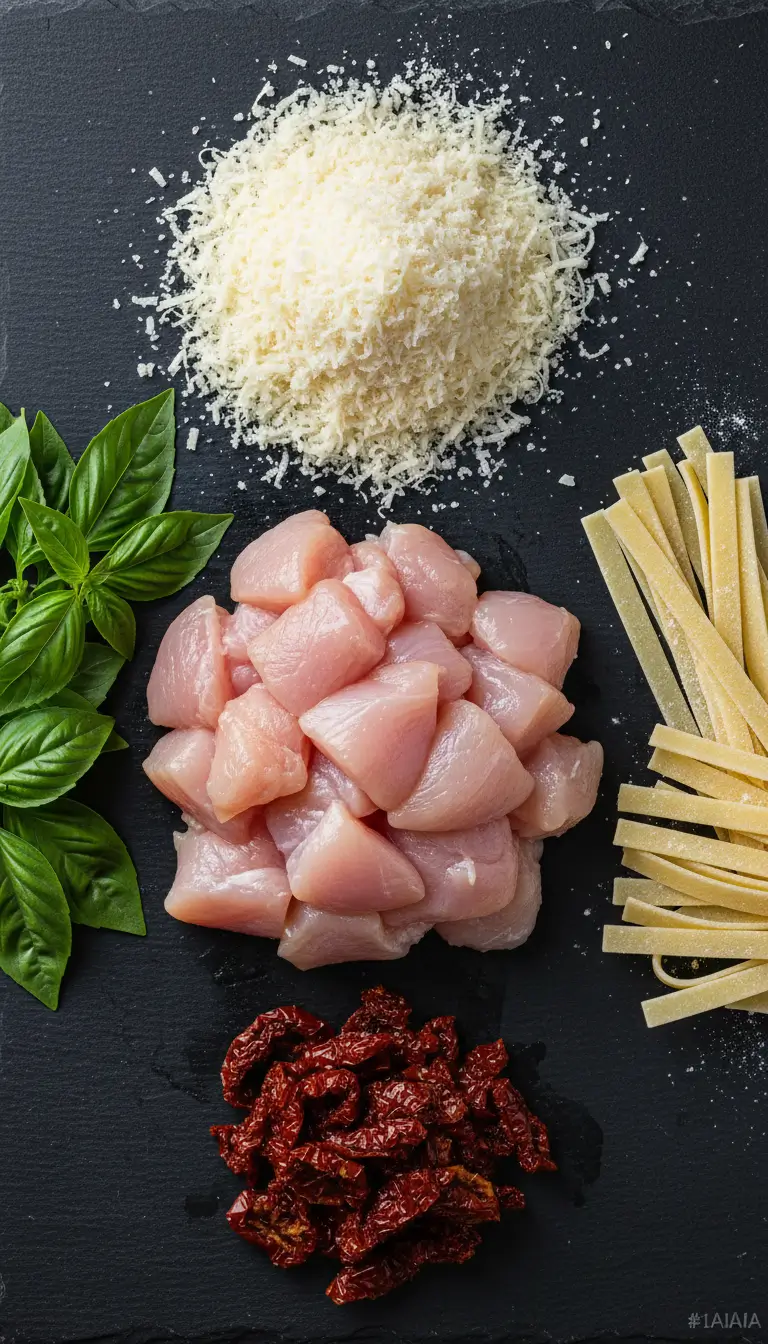
- Boneless, skinless chicken breasts or thighs: Thighs are my personal pick for more flavor and juiciness, but breasts work beautifully. Cut them into even pieces for uniform cooking.
- Kosher salt & freshly ground black pepper: (Crucial for seasoning every layer, from the chicken to the sauce itself.)
- Olive oil & unsalted butter: We use both for sautéing. The oil has a higher smoke point, while the butter adds irreplaceable richness.
- Fresh garlic: Minced finely so it melts into the sauce. Please, no jarred stuff here.
- Sun-dried tomatoes: (Their concentrated, tangy sweetness is the secret weapon that elevates this beyond a basic tomato cream sauce.) Chop them finely.
- Heavy cream (double cream): (This is non-negotiable for the proper, luscious body of the sauce. Lower-fat alternatives will not thicken or coat the pasta the same way.)
- Freshly grated Parmesan cheese: (The pre-grated stuff contains anti-caking agents that can make your sauce grainy and less creamy. A block of Parmigiano-Reggiano or Grana Padano is worth it.)
- Fresh basil: You’ll need a good handful. We’ll chiffonade some for garnish and stir the rest in whole.
- Fettuccine pasta: The broad, flat noodles are perfect for holding onto the creamy sauce. A good quality dried fettuccine works perfectly.
Pantry Substitutions
- Heavy Cream: In a pinch, you can use half-and-half, but be gentle when simmering. To help it thicken, create a quick slurry with 1 teaspoon of cornstarch mixed with a tablespoon of cold cream before adding it in.
- Sun-Dried Tomatoes: If you only have the ones packed in oil, that’s fine! Just pat them dry before chopping. You can also use 2-3 tablespoons of high-quality tomato paste for a different, but still delicious, depth.
- Fresh Basil: While fresh is ideal, in the winter you can use 2 teaspoons of dried basil added with the garlic. Stir in a handful of fresh baby spinach at the end for color and a fresh element.
- Chicken: This is a fantastic way to use up leftover roasted or grilled chicken. Simply shred or chop it and add it to the sauce at the end to warm through.
Creative Add-ins
Once you’ve mastered the base recipe, make it your own. These twists can take the dish in exciting new directions without complicating it.
Try adding a pinch of red pepper flakes with the garlic for a subtle, warming heat. For an earthy, luxurious note, stir in a handful of chopped, rehydrated wild mushrooms. A splash of dry white wine, like a Pinot Grigio, deglazed after the chicken is removed, adds wonderful acidity. For a richer, nuttier flavor, swap half the Parmesan for freshly grated Pecorino Romano cheese.
Step-by-Step Instructions
This dish comes together in about the time it takes to boil your pasta water. The key is organization—have all your ingredients prepped and ready to go before you turn on the stove. It’s a smooth, flowing process from there.
1. Prep and Cook the Chicken
Start by bringing a large pot of generously salted water to a boil for your pasta. While it heats, pat your chicken pieces very dry with paper towels. This is essential for getting a good sear.
Season them well with salt and pepper. In a large skillet or Dutch oven, heat the olive oil and butter over medium-high heat. Add the chicken in a single layer, working in batches if needed to avoid crowding.
2. Build the Flavor Foundation
Cook the chicken until golden brown and cooked through, about 5-7 minutes. Remove it to a plate and set aside. Don’t wipe out the pan! Those browned bits are pure flavor gold.
Reduce the heat to medium. Add the minced garlic and chopped sun-dried tomatoes to the same pan. Sauté for just about 60 seconds until the garlic is fragrant. You want it golden, not brown.
3. Create the Creamy Sauce
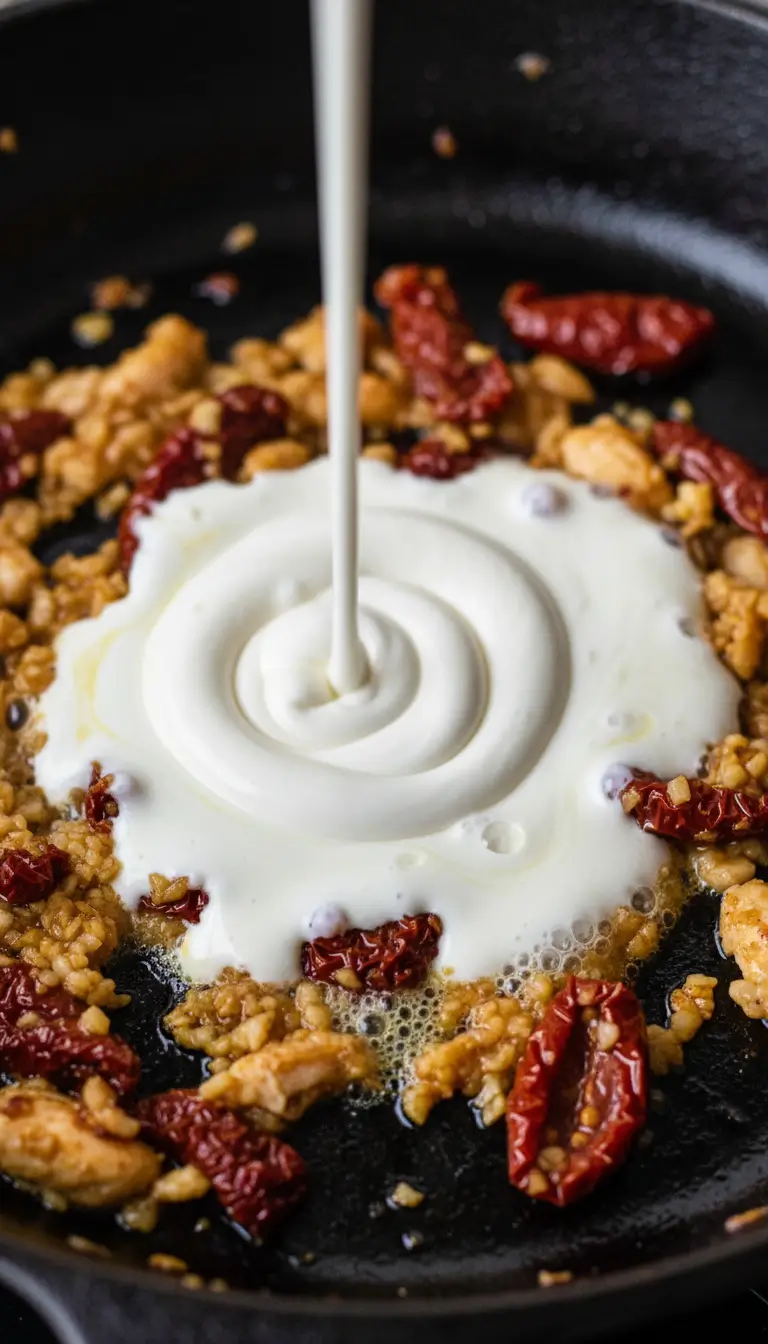
Pour in the heavy cream, and use a wooden spoon to scrape up all the delicious fond from the bottom of the pan. Let the cream come to a very gentle simmer—just a few bubbles around the edges.
Reduce the heat to low. Gradually sprinkle in the freshly grated Parmesan cheese, stirring constantly until it’s completely melted and the sauce is smooth. Let it simmer gently for 2-3 minutes to thicken slightly.
4. Combine and Finish with Freshness
By now, your pasta water should be boiling. Cook the fettuccine according to package directions for *al dente*. Reserve about a cup of the starchy pasta water before draining.
Add the cooked chicken and any accumulated juices back into the creamy tomato sauce. Toss to combine. Add the drained pasta directly to the skillet.
5. The Final Toss and Serve
Toss everything together, adding splashes of the reserved pasta water as needed to loosen the sauce to a silky, clinging consistency. The starch in the water helps the sauce emulsify and stick to the noodles.
Remove the skillet from the heat. Stir in the fresh basil leaves, letting the residual heat wilt them gently. Taste and adjust seasoning with more salt or pepper if needed.
Common Mistakes to Avoid
- Using Pre-Grated Parmesan: The cellulose powder prevents it from melting smoothly, leading to a grainy, separated sauce. A microplane and a block of cheese are your best friends here.
- Boiling the Cream Sauce: A vigorous boil can cause the cream to separate or the cheese to become oily. Keep it at a gentle simmer after adding the dairy.
- Skipping the Pasta Water: That cloudy water is liquid gold. It’s seasoned, starchy, and the essential tool for creating a restaurant-quality sauce that coats every noodle perfectly.
Perfect Pairings
This rich and creamy pasta begs for something crisp and fresh on the side. A simple arugula salad with a sharp lemon vinaigrette cuts through the richness beautifully. For a vegetable side, roasted asparagus or broccolini with a squeeze of lemon are fantastic choices.
When it comes to bread, a warm, crusty baguette is non-negotiable for mopping up every last bit of sauce. For a drink pairing, a glass of crisp Italian Pinot Grigio or a light-bodied Chardonnay complements the dish without overpowering it.
This keeps beautifully in the fridge. Tried meal prepping it? Tell us how it went!
What is the key to preventing a grainy Alfredo sauce in this recipe?
Use freshly grated Parmesan cheese from a block. Pre-grated cheese contains anti-caking agents like cellulose powder, which prevent it from melting smoothly and can make the sauce grainy and separated.
Can I use half-and-half instead of heavy cream for a lighter version?
Yes, you can use half-and-half in a pinch, but be gentle when simmering. To help it thicken properly, create a slurry with 1 teaspoon of cornstarch mixed with a tablespoon of cold cream before adding it to the sauce.
What is the purpose of reserving pasta water when making this dish?
The starchy pasta water is essential for creating a silky, restaurant-quality sauce. Adding splashes of it when tossing the pasta helps loosen the sauce to the perfect clinging consistency and helps it emulsify and stick to the noodles.
What are some creative add-ins to customize this Creamy Tomato Basil Chicken Alfredo?
You can add a pinch of red pepper flakes for heat, chopped rehydrated wild mushrooms for an earthy note, a splash of dry white wine like Pinot Grigio for acidity, or swap half the Parmesan for Pecorino Romano for a richer, nuttier flavor.
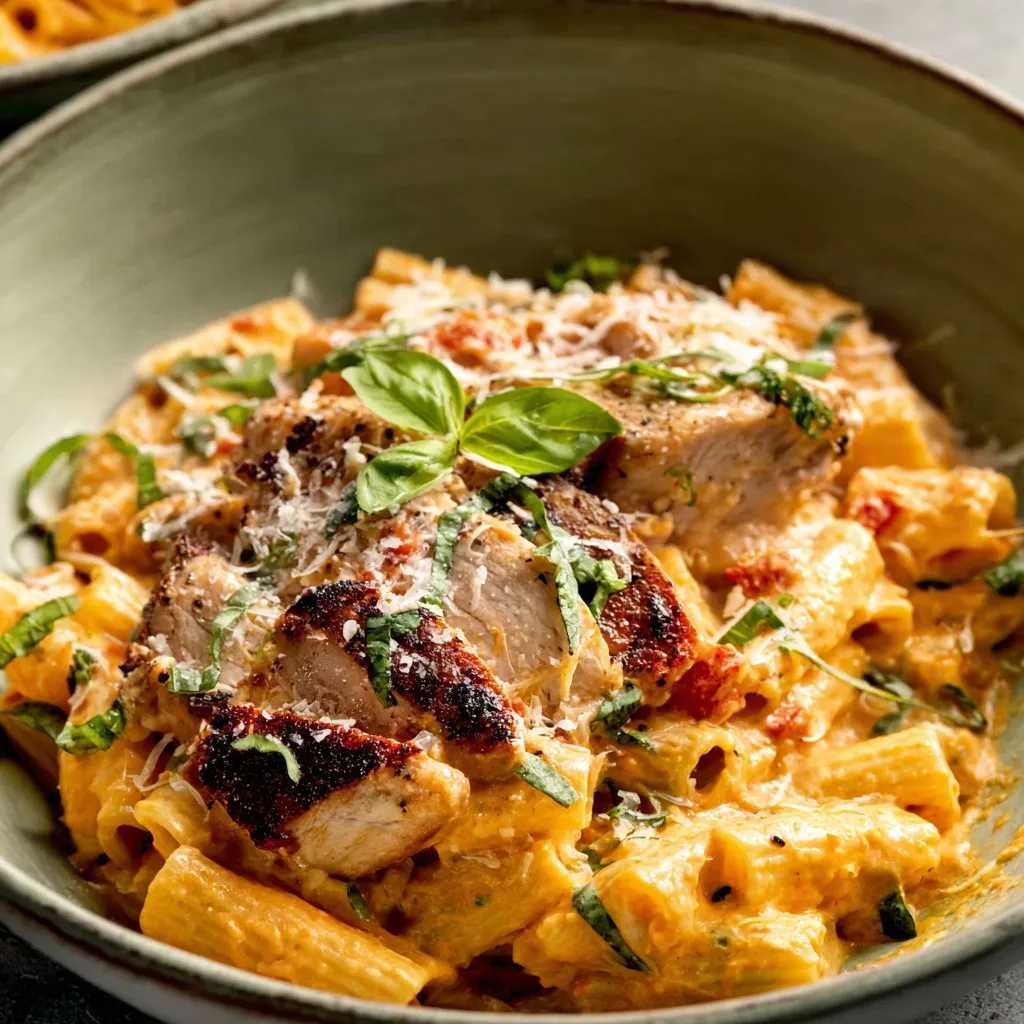
Creamy Tomato Basil Chicken Alfredo
Ingredients
Equipment
Method
- Bring a large pot of generously salted water to a boil for the pasta.
- Pat the chicken pieces dry with paper towels and season generously with salt and pepper.
- In a large skillet or Dutch oven over medium-high heat, heat the olive oil and butter.
- Add the chicken in a single layer (cook in batches if needed) and cook for 5-7 minutes until golden brown and cooked through. Transfer to a plate and set aside.
- Reduce heat to medium. In the same pan, add the minced garlic and chopped sun-dried tomatoes. Sauté for about 60 seconds until fragrant.
- Pour in the heavy cream, scraping the bottom of the pan with a wooden spoon to incorporate the browned bits (fond). Bring to a gentle simmer.
- Reduce heat to low. Gradually sprinkle in the grated Parmesan cheese, stirring constantly until completely melted and the sauce is smooth. Let it simmer gently for 2-3 minutes to thicken slightly.
- While the sauce simmers, cook the fettuccine in the boiling water according to package directions until al dente. Reserve 1 cup of the starchy pasta water before draining.
- Add the cooked chicken and any accumulated juices back into the sauce. Stir to combine.
- Add the drained pasta directly to the skillet with the sauce. Toss everything together, adding splashes of the reserved pasta water as needed until the sauce is silky and clings to the noodles.
- Remove the skillet from the heat. Stir in the fresh basil leaves until just wilted by the residual heat.
- Taste and adjust seasoning with additional salt and pepper if needed. Serve immediately, garnished with extra basil.