Some recipes are about dazzling technique or exotic ingredients, but this one is about quiet, steadfast comfort. A Traditional New England Boiled Dinner is a humble pot of sustenance, where a tough cut of meat and sturdy roots surrender to time and gentle heat, emerging transformed.
What you get is a plate of profound simplicity: meat so tender it yields to a fork, vegetables steeped in savory, salty broth, and a harmony of flavors that speaks of resourcefulness and home. It’s a testament to how patience and basic ingredients can create something deeply satisfying.
Why This Method Works
- Start in Cold Water: Placing your corned beef in a cold pot and bringing it up slowly draws out excess salt gently and results in a more tender texture.
- Simmer, Never Boil: A bare shudder in the liquid is what you want. A rolling boil will make the meat tough and the vegetables mushy.
- Respect the Vegetable Timeline: Adding all the vegetables at once is a common mistake. We add them in stages so each one is perfectly cooked, not disintegrated.
Gather Your Ingredients
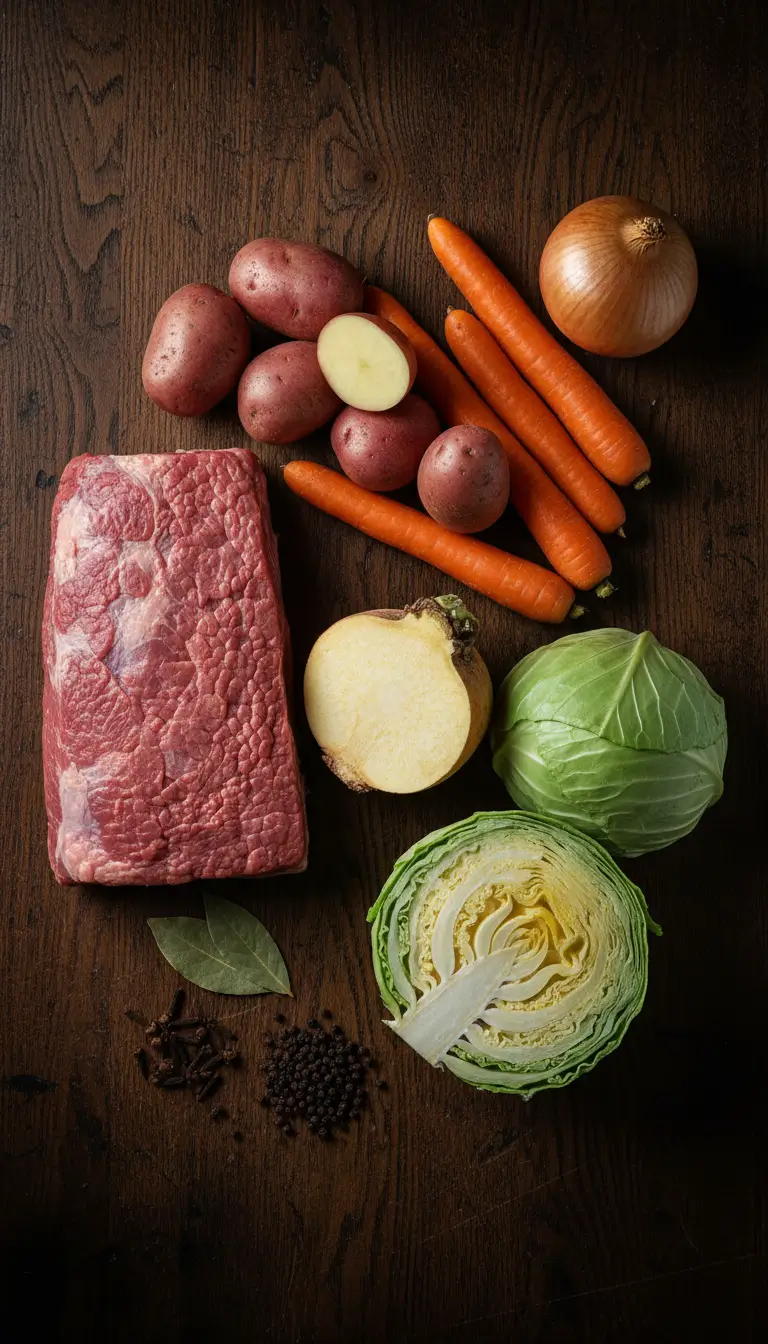
The beauty here is in the quality of a few simple things. There’s nowhere to hide, so choose a well-marbled piece of meat and fresh, firm vegetables for the best result.
- 3 to 4 pounds corned beef brisket: (With its spice packet, if included. This is the flavorful, salty heart of the dish.)
- 1 large yellow onion: (Peeled and quartered. It will melt into the broth, providing a sweet backbone.)
- 4 whole cloves: (Or 1/2 teaspoon ground. They add a warm, deep note that’s classic to the broth.)
- 2 bay leaves: (For an herby, aromatic layer.)
- 1 tablespoon whole black peppercorns: (They infuse better than ground pepper.)
- 1 pound small red or yellow potatoes: (Halved if larger than a golf ball. Their skins hold up beautifully.)
- 4 large carrots: (Peeled and cut into 2-inch chunks. They bring sweetness and color.)
- 1 medium rutabaga or turnip: (Peeled and cut into 1-inch chunks. This earthy root is non-negotiable for authenticity.)
- 1 small green cabbage: (Cut into 6 to 8 wedges, core intact to hold the leaves together.)
Pantry Substitutions
- No corned beef? A plain beef brisket simmered with extra salt, peppercorns, and a few extra pickling spices will work in a pinch.
- Rutabaga can be swapped entirely for turnip, or use parsnips for a different sweet note.
- Red potatoes are ideal, but Yukon Golds will also hold their shape well.
- If you dislike cloves, simply omit them. The spice packet from the corned beef provides the primary flavor.
Kitchen Experiments
Once you’ve mastered the classic, feel free to play. The pot is forgiving.
Try adding a few peeled and quartered beets during the last hour of cooking for a stunning ruby-red broth and vegetables. For a richer flavor, replace a cup of the water with a dark beer or apple cider. Some families swear by adding a few links of smoked sausage during the last 20 minutes. And for a different green, swap the cabbage for wedges of kale added at the very end.
The Time-Tested Method
Don’t let the simmering time intimidate you. This is largely hands-off cooking, a gift to the busy cook. The most important tool is your patience.
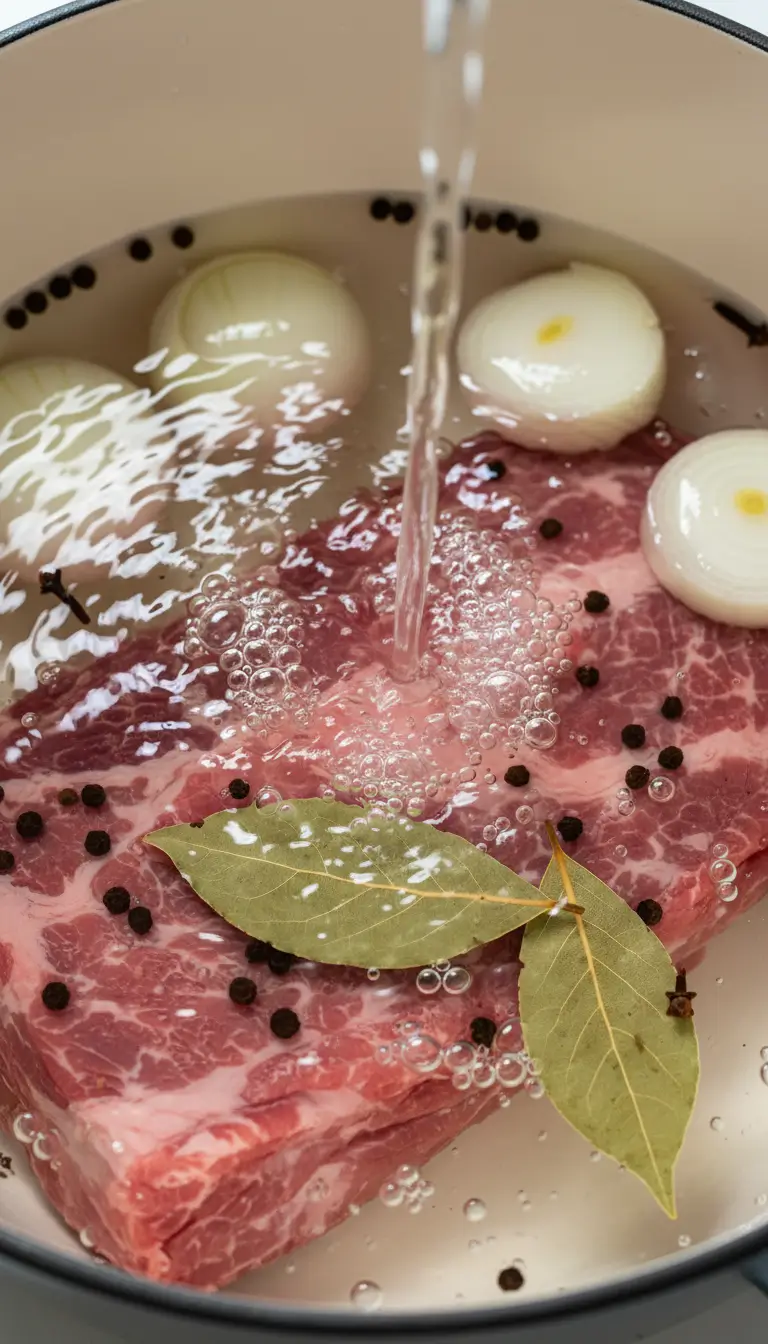
1. Start Your Meat Gently
Place the corned beef brisket in your largest pot or Dutch oven. Tuck the onion quarters, cloves, bay leaves, and peppercorns around it. Cover everything completely with cold water.
This is crucial. Starting cold ensures the meat relaxes and releases salt slowly. Bring it to a boil over high heat, then immediately reduce to the lowest possible simmer.
2. The Long, Slow Simmer
Partially cover the pot. Let the meat simmer gently—a few small bubbles should occasionally break the surface—for about 3 hours. Skim off any foam that rises in the first 30 minutes.
The meat is ready when a fork inserts and twists with very little resistance. It will still be firm, but not tough. This long cook is what breaks down the connective tissue into succulence.
3. Introduce the Roots
Carefully remove the corned beef to a platter and tent it with foil. Add the potatoes, carrots, and rutabaga to the simmering broth. Increase the heat to return to a simmer, then reduce and cook for 20 minutes.
The vegetables will start to flavor the broth while the meat rests. This staging is the secret to vegetables with integrity.
4. Add the Cabbage & Finale
Nestle the cabbage wedges into the pot among the other vegetables. Simmer for another 15-20 minutes, until the cabbage is tender but still has a bit of bite and the potatoes are cooked through.
Meanwhile, slice the corned beef against the grain. This short rest makes it much easier to slice neatly.
My Kitchen Notes
- Test for Doneness Early: All briskets are different. Start checking the meat with a fork at the 2.5-hour mark. It should be tender but not falling apart.
- Mind the Salt: Corned beef varies in saltiness. Taste the broth after adding the vegetables. If it’s too salty, you can add a peeled, quartered potato to absorb some salt, then discard it before serving.
- Keep the Core Intact: Leaving the core attached to your cabbage wedges is the best trick to prevent them from falling apart into a million leaves in the pot.
- Don’t Rush the Rest: Letting the meat rest for 15-20 minutes before slicing is not just for roasts. It allows the juices to redistribute, ensuring moist slices.
Complete the Table
This is a complete meal in a bowl, but a few accompaniments elevate it. Serve it in shallow bowls with plenty of broth ladled over.
A grainy mustard or sharp horseradish sauce on the side is essential for cutting through the richness. A loaf of dense, crusty rye bread or Irish soda bread is perfect for sopping up the pot liquor. For a bright contrast, a simple salad of bitter greens with a tart vinaigrette is lovely.
Thanks for stopping by! I hope this dish brings joy to your table.
Why is it important to start cooking the corned beef in cold water?
Starting the corned beef in a cold pot and bringing it up slowly gently draws out excess salt and results in a more tender texture, as opposed to a tough one.
What is a common mistake when adding vegetables to a boiled dinner, and how do you avoid it?
A common mistake is adding all the vegetables at once, which can lead to some being overcooked and mushy. The article advises adding them in stages according to their cooking times to ensure each vegetable is perfectly cooked.
What can I use if I don’t have corned beef for this recipe?
You can use a plain beef brisket simmered with extra salt, whole black peppercorns, and a few extra pickling spices as a substitute for corned beef.
How can I prevent cabbage wedges from falling apart during cooking?
To prevent cabbage wedges from falling apart, cut the cabbage into wedges but leave the core intact. The core helps hold the leaves together during the simmering process.
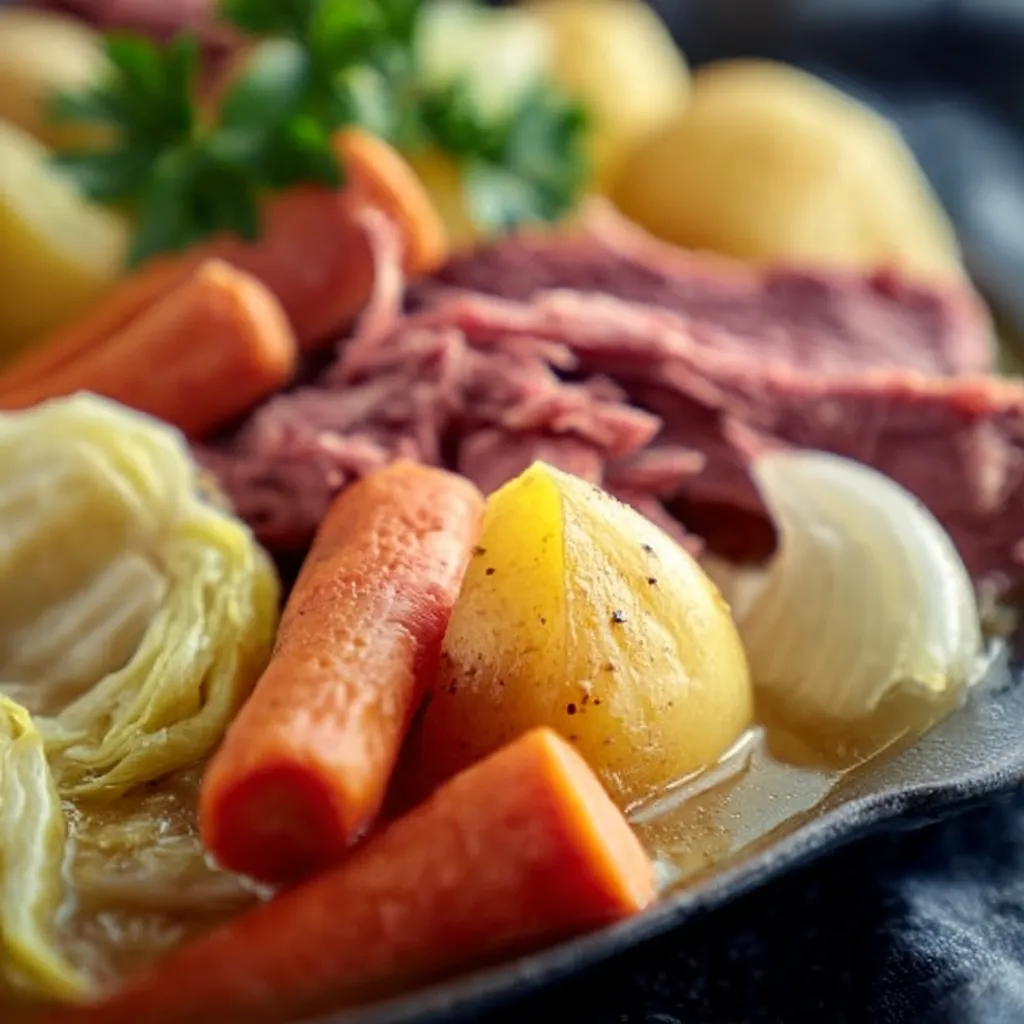
Traditional New England Boiled Dinner
Ingredients
Equipment
Method
- Place the corned beef brisket in a large pot or Dutch oven. Add the quartered onion, cloves, bay leaves, and peppercorns around it. Cover completely with cold water.
- Bring the pot to a boil over high heat, then immediately reduce the heat to the lowest possible setting to maintain a gentle simmer. Partially cover the pot.
- Simmer the meat gently for about 3 hours, skimming off any foam that rises in the first 30 minutes. The meat is done when a fork inserts and twists with little resistance.
- Carefully remove the corned beef to a platter, tent it with foil, and let it rest.
- Add the potatoes, carrots, and rutabaga (or turnip) to the simmering broth. Increase heat to return to a simmer, then reduce and cook for 20 minutes.
- Nestle the cabbage wedges into the pot among the other vegetables. Simmer for an additional 15-20 minutes, until the cabbage is tender but still has some bite and the potatoes are cooked through.
- While the vegetables finish cooking, slice the rested corned beef against the grain.
- Serve the sliced corned beef with the vegetables and plenty of the hot broth ladled over.