How do you achieve the ultimate, melt-in-your-mouth, cheesy scalloped potatoes that aren’t a watery, separated mess, but a creamy, comforting, and utterly irresistible Potato Gratin masterpiece?
The Alchemy of Creamy: Unveiling the Secrets
The magic of perfect cheesy scalloped potatoes lies in understanding the delicate dance between starch, liquid, and heat. Potatoes, especially starchy varieties like Russets, release starch when heated in liquid. This starch, when properly managed, thickens the sauce, creating that luscious, creamy texture we crave. However, too much starch, or uneven heating, can lead to a gummy, gluey disaster. The cheese adds another layer of complexity. Different cheeses melt and behave differently, and the wrong cheese can lead to a grainy or oily sauce. Finally, the liquid-to-potato ratio is crucial. Too much liquid, and you’re left with a watery mess; too little, and the potatoes won’t cook through properly. Mastering these elements is the key to unlocking the perfect cheesy scalloped potatoes, a true Comfort Food.
The Recipe for Euphoria: Cheesy Scalloped Potatoes
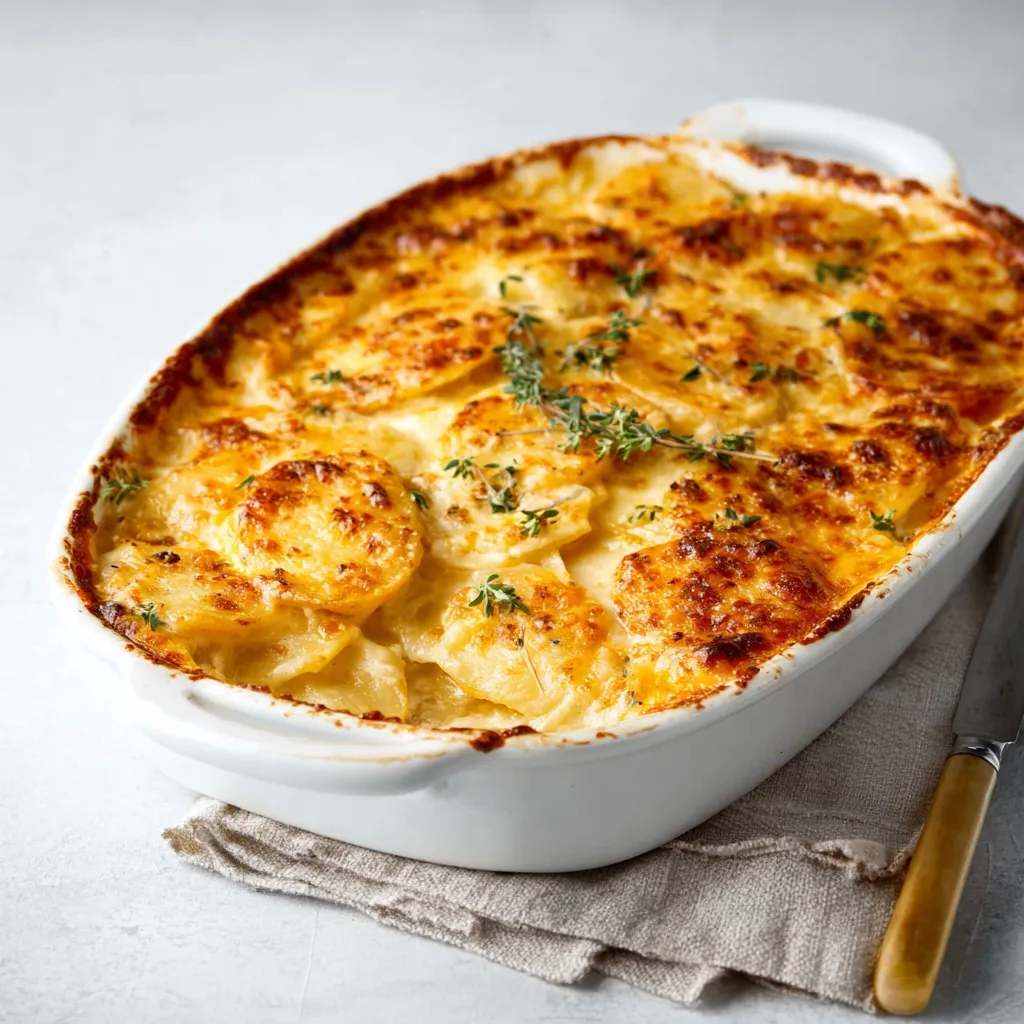
Ingredients:
- 3 pounds Russet potatoes, peeled and thinly sliced (about 1/8 inch thick)
- 4 tablespoons unsalted butter
- 1 medium yellow onion, thinly sliced
- 2 cloves garlic, minced
- 1/4 cup all-purpose flour
- 3 cups whole milk
- 1 cup heavy cream
- 1 teaspoon salt
- 1/2 teaspoon black pepper
- 1/4 teaspoon nutmeg
- 2 cups shredded sharp cheddar cheese, divided
- 1/2 cup grated Parmesan cheese
Instructions:
- Prepare the Potatoes: Preheat oven to 375°F (190°C). Grease a 9×13 inch baking dish. Place the potato slices in a bowl of cold water to prevent browning and remove excess starch.
- Sauté Aromatics: In a large saucepan, melt butter over medium heat. Add onion and cook until softened, about 5-7 minutes. Add garlic and cook for 1 minute more, until fragrant.
- Make the Roux: Whisk in flour and cook for 1-2 minutes, stirring constantly, until a smooth paste forms (a roux).
- Create the Sauce: Gradually whisk in milk and cream, ensuring no lumps form. Bring to a simmer, stirring constantly.
- Thicken and Season: Reduce heat to low and simmer for 5-7 minutes, or until the sauce has thickened slightly. Stir in salt, pepper, and nutmeg.
- Assemble the Potatoes: Drain the potato slices and pat them dry. Add 1 1/2 cups of shredded cheddar cheese to the sauce, stirring until melted and smooth.
- Layer and Bake: Arrange half of the potato slices in the prepared baking dish. Pour half of the cheese sauce over the potatoes. Repeat layers with the remaining potatoes and sauce.
- Top and Bake: Sprinkle the remaining 1/2 cup of cheddar cheese and Parmesan cheese evenly over the top.
- Bake: Cover the baking dish with aluminum foil and bake for 45 minutes.
- Uncover and Brown: Remove the foil and bake for an additional 15-20 minutes, or until the potatoes are tender and the cheese is melted and golden brown.
- Rest: Let stand for 10-15 minutes before serving. This allows the sauce to thicken further.
My Cheesy Odyssey: Trials, Tribulations, and Triumphs
The Watery Wilderness: A Starch-Filled Struggle
My first few attempts at cheesy scalloped potatoes were a disaster. Like many of you, I initially thought it was just about throwing potatoes, cheese, and cream into a dish and hoping for the best. The result? A watery, separated mess with bland, undercooked potatoes. The sauce was thin and flavorless, and the whole thing was just…sad. I realized I needed to understand the role of starch in this dish. I tried rinsing the potatoes, but that seemed to strip away too much starch, resulting in a thin, almost watery sauce. I considered using cornstarch as a thickener, but that felt like cheating. I knew there had to be a better way to harness the natural thickening power of the potatoes themselves, especially since it’s a dish so perfect for an Easter Dinner or Thanksgiving feast.
The Roux Revelation: A Culinary Cornerstone
Then, I had an “Aha!” moment. I remembered learning about roux in culinary school – the classic French technique of cooking flour and butter together to thicken sauces. Could this be the answer? I experimented with making a roux before adding the milk and cream. The difference was remarkable! The sauce thickened beautifully, clinging to the potatoes and creating a creamy, luscious texture. However, I still faced another challenge: cheese separation. The cheese would often become grainy and oily, not the smooth, melty goodness I was after.
The Cheese Conundrum: A Matter of Meltability
The cheese issue sent me down a rabbit hole of research. I learned that different cheeses have different fat and moisture contents, which affect how they melt. High-moisture cheeses like mozzarella tend to separate more easily, while aged cheeses like cheddar and Parmesan melt more smoothly. I also discovered that adding a small amount of acid, like lemon juice or vinegar, can help stabilize the cheese sauce. In the end, I found that a combination of sharp cheddar and Parmesan, with careful temperature control, yielded the best results. I also experimented with different cheeses like Gruyere, which is often used in Potatoes Au Gratin. The nutty flavour it imparts is divine!
Slicing Strategies: Thickness Matters
Another critical factor I overlooked in my initial attempts was the thickness of the potato slices. Too thick, and they wouldn’t cook through evenly; too thin, and they’d become mushy. After much trial and error, I found that 1/8 inch slices were the sweet spot – thin enough to cook quickly and evenly, but thick enough to retain some texture. A mandoline slicer made this process much easier and more consistent. This also made me think of other variations, like the Sweet Potato Scalloped Casserole, where the natural sweetness of the potato pairs perfectly with a similar creamy sauce.
The Foolproof Formula: Mastering Cheesy Scalloped Potatoes
After countless iterations and a kitchen full of potato peelings, I’ve finally cracked the code for perfect cheesy scalloped potatoes. Here’s the foolproof method:
- Slice Strategically: Aim for 1/8-inch thick potato slices for even cooking. A mandoline is your friend.
- Rinse (but not too much!): Briefly rinse the potato slices to remove excess starch, but don’t overdo it. You need some starch for thickening.
- Master the Roux: A properly made roux is the foundation of a creamy, stable sauce. Cook the flour and butter until smooth and fragrant.
- Temperature Control: Simmer the sauce gently to prevent scorching and cheese separation.
- Cheese Selection: Use a combination of sharp cheddar and Parmesan for optimal flavor and meltability.
- Even Distribution: Layer the potatoes and sauce evenly to ensure consistent cooking and flavor throughout the dish.
- Bake Covered, Then Uncovered: Covering the dish with foil for the first part of baking helps the potatoes cook through evenly. Removing the foil allows the cheese to melt and brown beautifully.
- Rest Before Serving: Let the dish rest for 10-15 minutes before serving to allow the sauce to thicken further and the flavors to meld.
This recipe can be easily adapted. For example, if you enjoy the taste of onions, consider a French Onion Potatoes Au Gratin. Or, for a simpler flavour profile, a Parmesan Scalloped Potatoes is a fantastic option. You could even serve with a side of Duchess Potatoes Recipe for a truly decadent meal.
Why did my scalloped potatoes turn out watery and separated?
Watery scalloped potatoes are often caused by an improper balance of starch, liquid, and heat. Too much liquid, uneven heating, or insufficient starch management from the potatoes can lead to this issue. The article suggests rinsing the potatoes briefly to remove *excess* starch, but not too much, as some starch is needed to thicken the sauce. Also, the liquid-to-potato ratio is crucial.
What is the purpose of making a roux in this recipe?
A roux, made from cooking butter and flour together, is used to thicken the sauce. It helps to create a creamy, luscious texture that clings to the potatoes, preventing the sauce from being thin and watery.
What is the best way to slice the potatoes for even cooking?
The article recommends slicing the potatoes to 1/8 inch thickness. This ensures they cook quickly and evenly without becoming mushy. A mandoline slicer can help achieve consistent thickness.
What kind of cheese is best to use and why?
The article recommends using a combination of sharp cheddar and Parmesan cheese. Sharp cheddar provides optimal flavor, while Parmesan melts smoothly. Using a combination helps to achieve a good balance of taste and texture. Different cheeses have different fat and moisture contents, which affect how they melt. Aged cheeses like cheddar and Parmesan melt more smoothly than high-moisture cheeses.
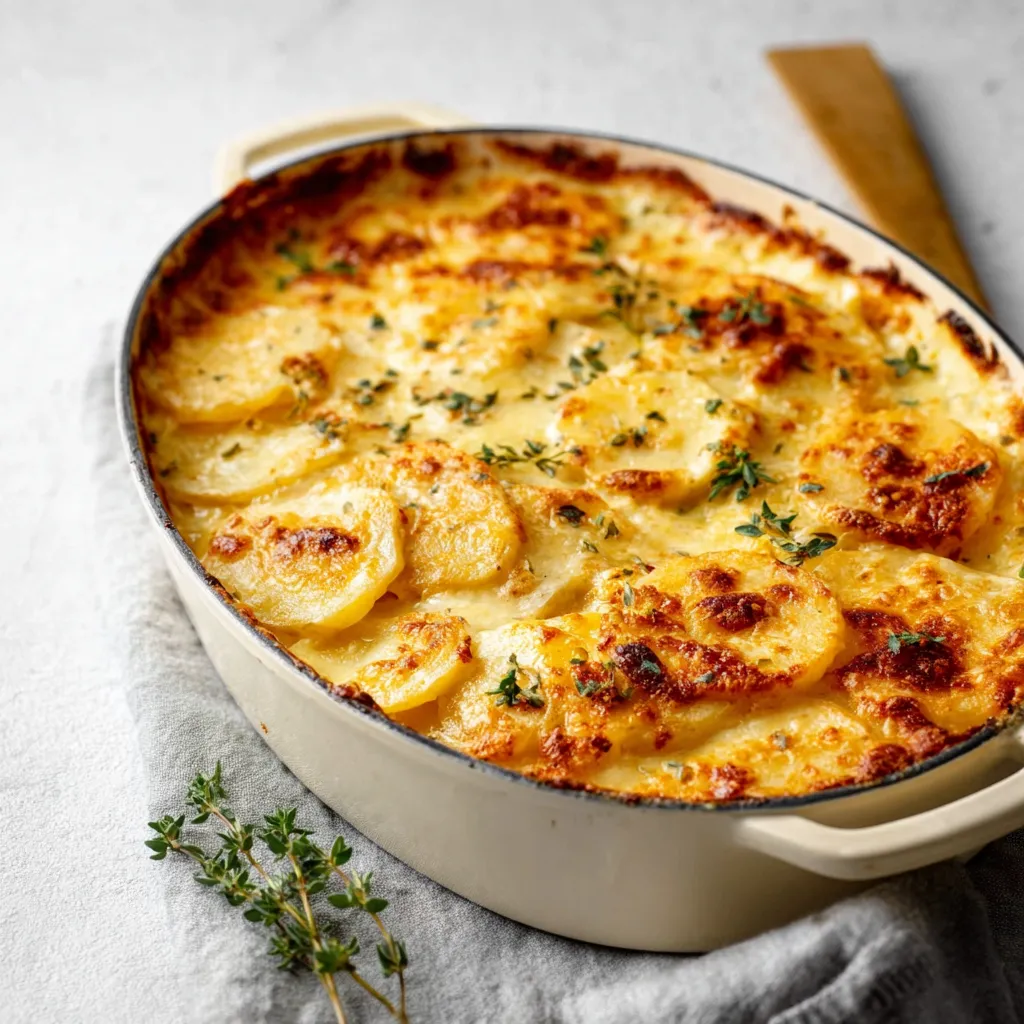
Best Cheesy Scalloped Potatoes Ever
Ingredients
Equipment
Method
- Preheat oven to 375°F (190°C). Grease a 9×13 inch baking dish.
- Place the potato slices in a bowl of cold water to prevent browning and remove excess starch.
- In a large saucepan, melt butter over medium heat.
- Add onion and cook until softened, about 5-7 minutes.
- Add garlic and cook for 1 minute more, until fragrant.
- Whisk in flour and cook for 1-2 minutes, stirring constantly, until a smooth paste forms (a roux).
- Gradually whisk in milk and cream, ensuring no lumps form. Bring to a simmer, stirring constantly.
- Reduce heat to low and simmer for 5-7 minutes, or until the sauce has thickened slightly.
- Stir in salt, pepper, and nutmeg.
- Drain the potato slices and pat them dry.
- Add 1 1/2 cups of shredded cheddar cheese to the sauce, stirring until melted and smooth.
- Arrange half of the potato slices in the prepared baking dish.
- Pour half of the cheese sauce over the potatoes.
- Repeat layers with the remaining potatoes and sauce.
- Sprinkle the remaining 1/2 cup of cheddar cheese and Parmesan cheese evenly over the top.
- Cover the baking dish with aluminum foil and bake for 45 minutes.
- Remove the foil and bake for an additional 15-20 minutes, or until the potatoes are tender and the cheese is melted and golden brown.
- Let stand for 10-15 minutes before serving. This allows the sauce to thicken further.