Unveiling the Wellington’s Secrets: A Scientific Approach
The key to a successful Beef Wellington lies in controlling moisture and achieving perfect doneness of the beef. The main challenges are preventing a soggy bottom crust and ensuring the beef is cooked to your desired level without overcooking the pastry. Let’s break down the science:- The Duxelles Dilemma: Duxelles, the finely chopped mushroom mixture, acts as a barrier between the beef and the pastry. Mushrooms are mostly water, so proper preparation is essential. Sautéing them thoroughly until they release their moisture and then allowing them to cool completely is crucial. Think of it like this: you’re pre-emptively wringing out a sponge before using it!
- The Crêpe Conundrum: Some recipes call for crêpes to further protect the pastry. These provide an additional waterproof layer. The thinner the crêpe, the better; we’re aiming for a flexible shield, not a bulky blanket.
- The Puff Pastry Puzzle: Puff pastry relies on layers of butter and dough to create its flaky texture. Moisture is the enemy. A hot oven is crucial to rapidly steam the water within the butter, creating the lift. A low oven will result in a soggy, dense pastry.
- Maillard Reaction Matters: Searing the beef before encasing it not only adds flavor but also creates a protective crust that helps to retain moisture. This browning process, known as the Maillard reaction, is a chemical reaction between amino acids and reducing sugars that gives browned food its distinctive flavor.
- Temperature is King: Using a reliable meat thermometer is non-negotiable. Knowing the internal temperature of the beef is the only way to ensure it’s cooked to your liking. Carryover cooking will continue to raise the temperature after you remove the Wellington from the oven, so pull it out a few degrees before your target temperature.
The Definitive Beef Wellington Recipe
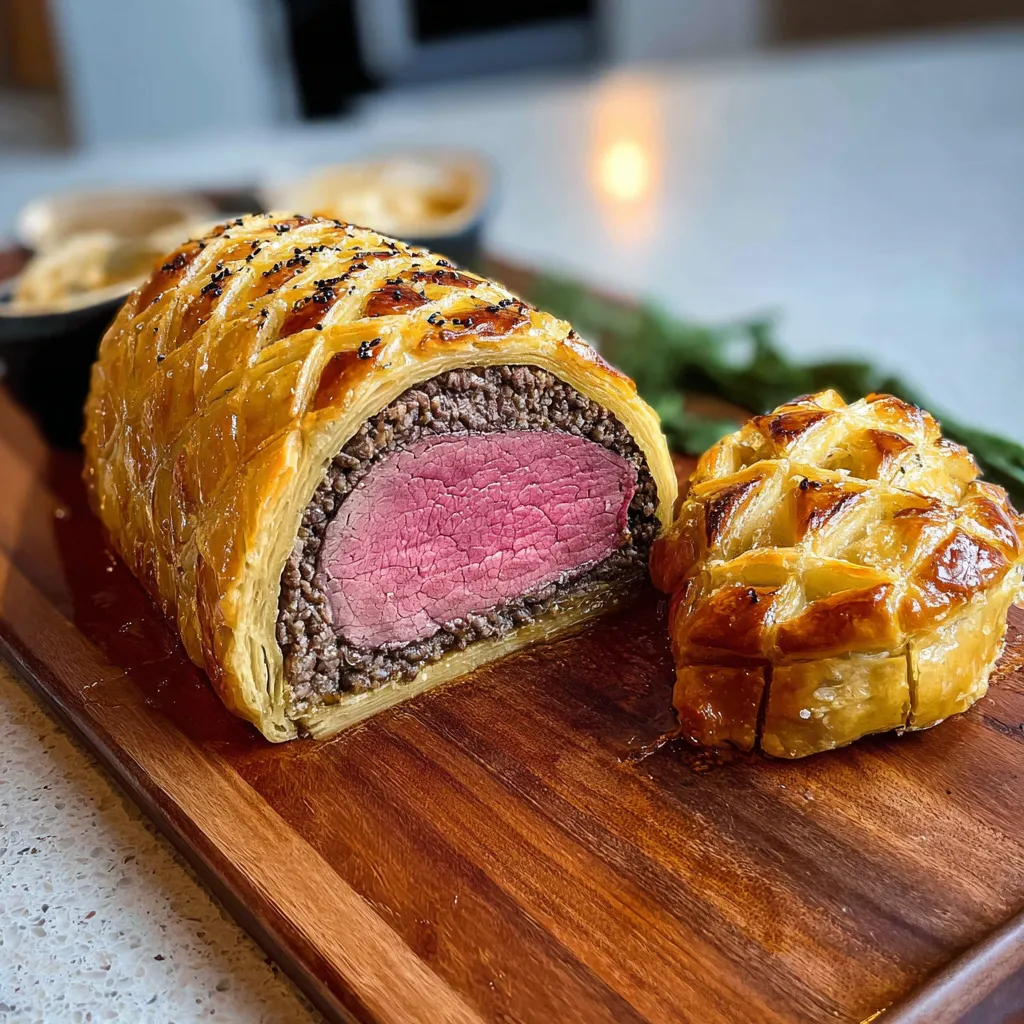 Okay, enough theory! Let’s get to the recipe that incorporates all this knowledge. This recipe is designed to minimize sogginess and maximize flavor.
Ingredients
- For the Beef:
- 2 lb Beef Tenderloin Roast, center-cut
- 2 tbsp Olive Oil
- Salt and freshly ground Black Pepper
- For the Duxelles:
- 1 lb Cremini Mushrooms, finely chopped
- 2 Shallots, finely chopped
- 2 cloves Garlic, minced
- 2 tbsp Butter
- 2 tbsp Dry Sherry or Madeira Wine
- 1 tbsp Fresh Thyme leaves
- Salt and Pepper to taste
- For the Crêpes (optional, but recommended):
- 1 cup All-Purpose Flour
- 1 1/4 cups Milk
- 2 large Eggs
- 2 tbsp Melted Butter
- Pinch of Salt
- For the Assembly:
- 1 sheet Puff Pastry, thawed
- 4 tbsp Dijon Mustard
- 1 large Egg, beaten (for egg wash)
Crêpe Preparation (If Using)
- In a blender, combine flour, milk, eggs, melted butter, and salt. Blend until smooth.
- Heat a lightly oiled griddle or crêpe pan over medium heat.
- Pour about 1/4 cup of batter onto the hot pan, tilting to spread evenly.
- Cook for 1-2 minutes per side, or until lightly golden.
- Stack the crêpes and set aside to cool.
Duxelles Preparation
- In a large skillet, melt butter over medium heat. Add shallots and garlic and cook until softened, about 3 minutes.
- Add chopped mushrooms and cook, stirring frequently, until all moisture has evaporated and the mushrooms are browned, about 15-20 minutes. This is crucial!
- Deglaze the pan with sherry or Madeira wine, scraping up any browned bits from the bottom.
- Stir in thyme, season with salt and pepper to taste.
- Remove from heat and let cool completely.
Beef Preparation
- Preheat oven to 425°F (220°C).
- Pat the beef tenderloin dry with paper towels. Season generously with salt and pepper.
- Heat olive oil in a large oven-safe skillet over high heat. Sear the beef on all sides until deeply browned, about 2-3 minutes per side.
- Remove the beef from the skillet and let it cool slightly.
Assembly
- Spread Dijon mustard evenly over the seared beef.
- Lay out plastic wrap on a clean surface. Arrange the cooled crêpes (if using) in a slightly overlapping pattern to create a sheet large enough to wrap the beef.
- Spread the cooled duxelles evenly over the crêpes.
- Place the mustard-coated beef on top of the duxelles. Use the plastic wrap to tightly roll the duxelles around the beef, forming a log. Twist the ends of the plastic wrap to secure it.
- Refrigerate the wrapped beef for at least 30 minutes (or up to overnight) to allow it to firm up.
- On a lightly floured surface, roll out the puff pastry to a rectangle large enough to encase the beef.
- Remove the beef from the refrigerator and unwrap it.
- Place the beef in the center of the puff pastry. Fold the pastry over the beef, trimming any excess. Crimp the edges to seal tightly.
- Place the Wellington seam-side down on a baking sheet lined with parchment paper.
- Brush the entire Wellington with egg wash.
- Use a sharp knife to score the top of the pastry in a decorative pattern. This allows steam to escape.
Baking
- Bake in the preheated oven for 30-40 minutes, or until the pastry is golden brown and the internal temperature of the beef reaches your desired doneness (125°F/52°C for rare, 130°F/54°C for medium-rare, 135°F/57°C for medium).
- Remove from the oven and let rest for at least 10 minutes before slicing and serving. This is crucial for allowing the juices to redistribute.
Wellington’s Wobbles: My Culinary Journey
My first few attempts were a disaster, I won’t lie. Soggy bottoms, uneven cooking – the whole nine yards. Then, I had an “Aha!” moment when I realized the critical importance of completely drying out the duxelles. Like many of you, I initially thought, “Mushrooms? They’re not *that* wet.” Wrong!The Soggy Saga: Round One
My initial attempt was plagued by a damp puff pastry base. I hadn’t properly sautéed the mushrooms, and the moisture seeped into the pastry, creating a gummy mess. The beef, while flavorful, was surrounded by a soggy, unappetizing crust. It was a culinary crime scene. It certainly didn’t resemble anything like a Slow Cooker Pot Roast.The Crêpe Crusade: A Layer of Defense
Next, I tried adding crêpes, thinking they’d be the silver bullet. While they did offer some protection, they weren’t thin enough, resulting in a slightly dense and chewy layer between the duxelles and the pastry. The beef was closer to medium than my desired medium-rare. I thought this would be easier than making a Beef Stroganoff, I was wrong.The Maillard Miracle: Searing Success
Then came the revelation of the Maillard reaction. I had been searing the beef, but not aggressively enough. By ensuring a deep, even sear on all sides, I not only amplified the flavor but also created a crucial moisture barrier.Temperature Triumph: Thermometer to the Rescue
Finally, investing in a high-quality meat thermometer was a game-changer. I realized I was relying too much on guesswork and visual cues. The thermometer allowed me to precisely monitor the internal temperature of the beef, ensuring perfect doneness every time. It really is the dinner magic ultimate, as I’ve found out when cooking Juicy Steak With Creamy Garlic Sauce Dinner Magic Ultimate.The Wellington Warrior’s Guide: A Foolproof Method
So, after all the trials and tribulations, here’s the definitive, foolproof method for achieving Beef Wellington perfection:- Master the Duxelles: Sauté the mushrooms until *completely* dry. No moisture allowed! Cool completely before assembly.
- Crêpe Control (Optional): If using crêpes, make them paper-thin. They should be a barrier, not a bulky layer.
- Sear Like a Pro: Get a deep, even sear on the beef to lock in moisture and boost flavor.
- Chill Out: Refrigerate the wrapped beef before encasing it in pastry. This helps it firm up and prevents the pastry from getting soggy.
- Temperature is Truth: Use a reliable meat thermometer to monitor the internal temperature of the beef.
- Rest is Best: Let the Wellington rest for at least 10 minutes after baking. This allows the juices to redistribute, resulting in a more tender and flavorful roast.
- Hot Oven: Ensure your oven is at the correct temperature to get the perfect flaky texture of the puff pastry.
What is the biggest challenge in making Beef Wellington and how can it be avoided?
The biggest challenge is preventing a soggy bottom crust. This can be avoided by thoroughly sautéing the mushrooms for the duxelles to remove all moisture, using thin crêpes as a barrier (optional), searing the beef properly, chilling the wrapped beef before baking, and ensuring a hot oven.
Why is searing the beef so important for a successful Beef Wellington?
Searing the beef is crucial because it not only adds flavor through the Maillard reaction but also creates a protective crust that helps to retain moisture, preventing the puff pastry from becoming soggy.
Why is it important to let the Beef Wellington rest after baking?
Resting the Beef Wellington for at least 10 minutes after baking allows the juices to redistribute throughout the roast, resulting in a more tender and flavorful final product.
Is using a meat thermometer necessary for making Beef Wellington?
Yes, using a reliable meat thermometer is essential. It’s the only way to accurately monitor the internal temperature of the beef and ensure it’s cooked to your desired level of doneness.
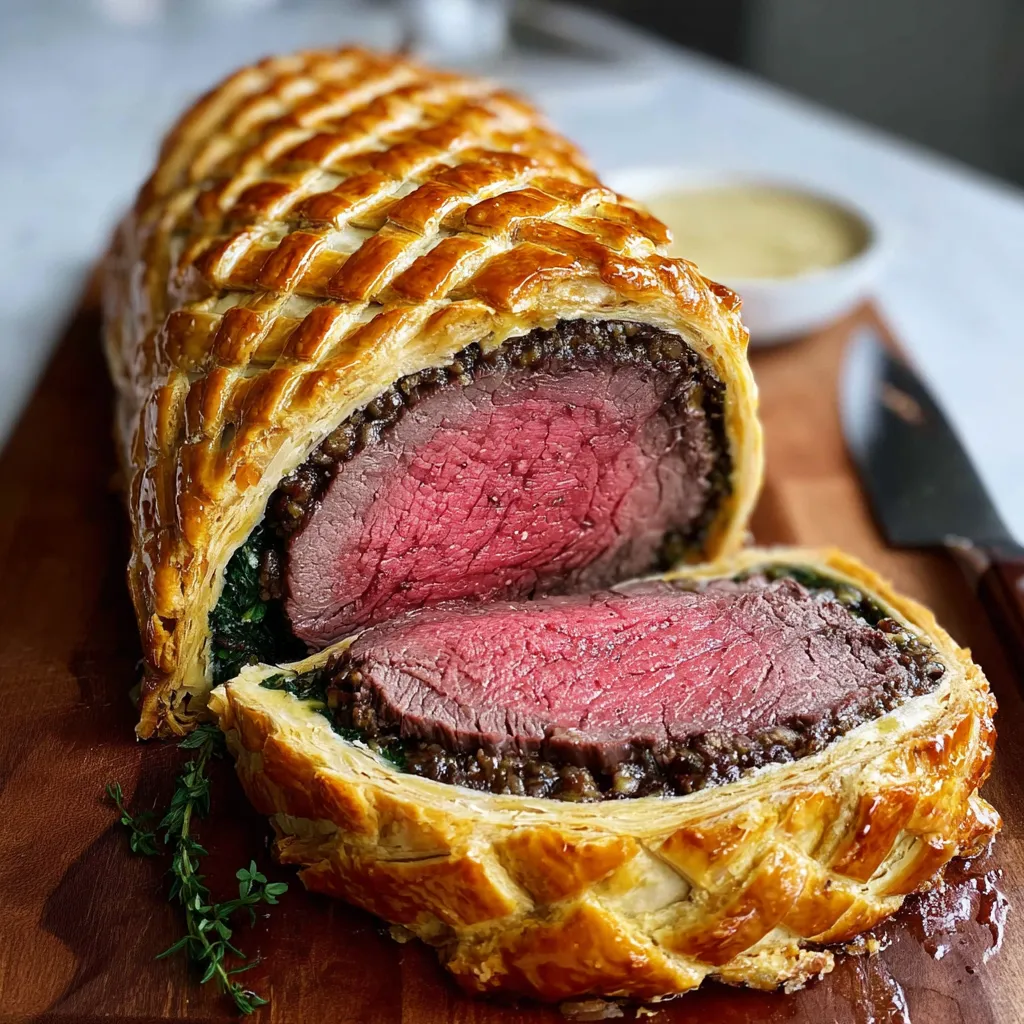
Ultimate Beef Wellington
Ingredients
Equipment
Method
- **Crêpe Preparation (If Using):** In a blender, combine flour, milk, eggs, melted butter, and salt. Blend until smooth. Heat a lightly oiled griddle or crêpe pan over medium heat. Pour about 1/4 cup of batter onto the hot pan, tilting to spread evenly. Cook for 1-2 minutes per side, or until lightly golden. Stack the crêpes and set aside to cool.
- **Duxelles Preparation:** In a large skillet, melt butter over medium heat. Add shallots and garlic and cook until softened, about 3 minutes. Add chopped mushrooms and cook, stirring frequently, until all moisture has evaporated and the mushrooms are browned, about 15-20 minutes. Deglaze the pan with sherry or Madeira wine, scraping up any browned bits from the bottom. Stir in thyme, season with salt and pepper to taste. Remove from heat and let cool completely.
- **Beef Preparation:** Preheat oven to 425°F (220°C). Pat the beef tenderloin dry with paper towels. Season generously with salt and pepper. Heat olive oil in a large oven-safe skillet over high heat. Sear the beef on all sides until deeply browned, about 2-3 minutes per side. Remove the beef from the skillet and let it cool slightly.
- **Assembly:** Spread Dijon mustard evenly over the seared beef. Lay out plastic wrap on a clean surface. Arrange the cooled crêpes (if using) in a slightly overlapping pattern to create a sheet large enough to wrap the beef. Spread the cooled duxelles evenly over the crêpes. Place the mustard-coated beef on top of the duxelles. Use the plastic wrap to tightly roll the duxelles around the beef, forming a log. Twist the ends of the plastic wrap to secure it. Refrigerate the wrapped beef for at least 30 minutes (or up to overnight) to allow it to firm up. On a lightly floured surface, roll out the puff pastry to a rectangle large enough to encase the beef. Remove the beef from the refrigerator and unwrap it. Place the beef in the center of the puff pastry. Fold the pastry over the beef, trimming any excess. Crimp the edges to seal tightly. Place the Wellington seam-side down on a baking sheet lined with parchment paper. Brush the entire Wellington with egg wash. Use a sharp knife to score the top of the pastry in a decorative pattern. This allows steam to escape.
- **Baking:** Bake in the preheated oven for 30-40 minutes, or until the pastry is golden brown and the internal temperature of the beef reaches your desired doneness (125°F/52°C for rare, 130°F/54°C for medium-rare, 135°F/57°C for medium). Remove from the oven and let rest for at least 10 minutes before slicing and serving.