Unlocking the Alchemist’s Secrets: The Science of Cheesy Perfection
The key to truly understanding baked mac and cheese lies in the science of cheese sauces and how they react to heat. At its core, a cheese sauce is an emulsion – a stable mixture of fat and water. Cheese contains both, but the proteins within the cheese act as emulsifiers, keeping everything nicely blended. However, too much heat or agitation can break that emulsion, causing the fat to separate (resulting in a greasy texture) and the proteins to clump together (leading to graininess). The type of cheese you use matters immensely. Sharp cheddar, for example, has a lower moisture content and higher fat content compared to mild cheddar. This makes it more prone to separation when heated intensely. Adding a little bit of sodium citrate (a food-grade emulsifying salt) can help maintain a smooth sauce even with sharper cheeses. The choice of starch is equally important. Flour, a common thickening agent, needs to be cooked thoroughly to avoid a pasty taste. Cornstarch, on the other hand, requires careful temperature control to prevent it from becoming gummy. Using a combination of both can provide a balanced texture. Also, consider the pasta itself. The starch released from the pasta during cooking contributes to the sauce’s overall thickness and creaminess. Finally, baking introduces another layer of complexity. The oven’s dry heat can exacerbate moisture loss, leading to a dry mac and cheese. Proper hydration and a protective topping are crucial for maintaining a creamy interior.The Holy Grail: The Ultimate Baked Mac and Cheese Recipe
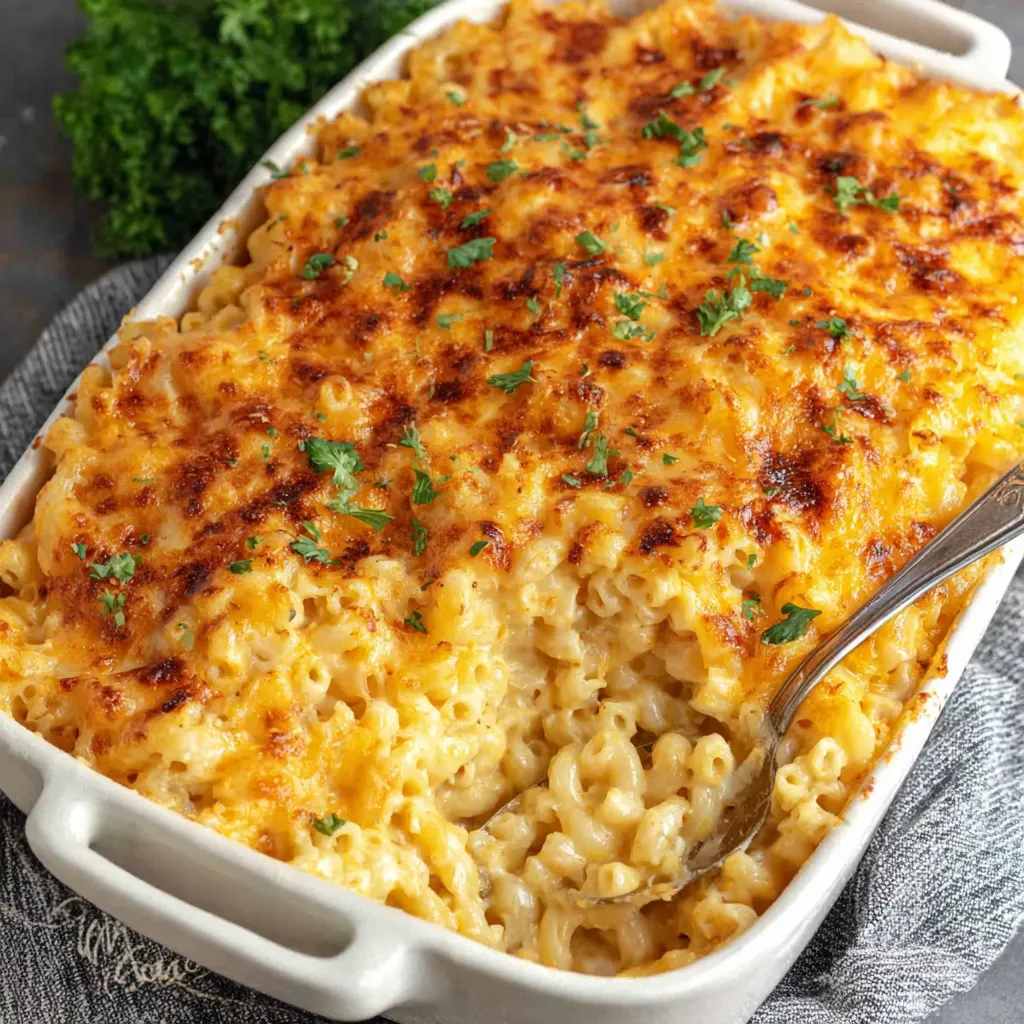 This recipe is the culmination of countless experiments and failures. It’s designed to be foolproof, yielding a consistently creamy, flavorful, and perfectly textured baked mac and cheese every time.
Ingredients:
- 1 pound elbow macaroni
- 6 tablespoons butter
- 1/2 cup all-purpose flour
- 4 cups milk
- 1 teaspoon salt
- 1/2 teaspoon black pepper
- 1/4 teaspoon nutmeg
- 1/4 teaspoon garlic powder
- 4 cups (16 ounces) shredded sharp cheddar cheese
- 2 cups (8 ounces) shredded Gruyere cheese
- 1/2 cup grated Parmesan cheese, divided
- 1/4 cup breadcrumbs
- 2 tablespoons melted butter, for topping
Instructions:
- Preheat oven to 350°F (175°C). Grease a 9×13 inch baking dish.
- Cook macaroni according to package directions, but cook it 1-2 minutes *less* than the recommended time. Drain well and set aside. This slight undercooking prevents mushiness after baking.
- While the pasta is cooking, prepare the cheese sauce. In a large saucepan, melt butter over medium heat. Whisk in flour until smooth. Cook for 1-2 minutes, stirring constantly, to cook out the raw flour taste.
- Gradually whisk in milk until smooth. Bring to a simmer, stirring constantly. Reduce heat to low and simmer for 5-7 minutes, or until the sauce has thickened slightly.
- Remove from heat and stir in salt, pepper, nutmeg, and garlic powder.
- Add cheddar cheese and Gruyere cheese, a handful at a time, stirring until melted and smooth after each addition. Stir in the cooked macaroni.
- Pour the mac and cheese into the prepared baking dish.
- In a small bowl, combine breadcrumbs, melted butter, and 1/4 cup Parmesan cheese. Sprinkle evenly over the mac and cheese.
- Bake for 20-25 minutes, or until golden brown and bubbly. Let stand for 10 minutes before serving.
My Quest for Cheesy Perfection: A Culinary Investigation
My journey to create the ultimate baked mac and cheese was paved with good intentions and, initially, disastrous results. Like many of you, I initially thought it was a simple matter of boiling pasta, melting cheese, and baking it. Oh, how wrong I was.The Early Disasters: Dry, Grainy, and Bland
My first few attempts were a disaster. The mac and cheese was either dry and crumbly, grainy and separated, or utterly flavorless. I used pre-shredded cheese, which I now know contains cellulose that inhibits melting. I also overcooked the pasta, resulting in a mushy mess after baking. The cheese sauce was often too thick or too thin, never achieving that perfect creamy consistency. I considered giving up and just sticking to Mac And Cheese on the stovetop.The Flour Fiasco: Mastering the Roux
One of my biggest hurdles was mastering the roux – the butter and flour base of the cheese sauce. I often rushed this step, resulting in a pasty taste that lingered in the finished dish. Then, I had an “Aha!” moment when I realized the importance of cooking the flour thoroughly. Now, I patiently whisk the butter and flour together for 1-2 minutes, ensuring that the raw flour taste is completely gone.The Cheese Revelation: Freshly Grated is Key
Another major breakthrough came when I switched to freshly grated cheese. The difference in meltability and flavor was astounding. Pre-shredded cheese contains cellulose, which prevents it from melting smoothly. Freshly grated cheese, on the other hand, melts beautifully, creating a silky, luscious sauce. I also experimented with different cheese combinations. While cheddar is a classic, I found that adding Gruyere elevated the flavor and added a wonderful nutty complexity. If you want to use other cheeses, try adding some pepper jack or even make a Buffalo Chicken Mac And CheeseThe Baking Conundrum: Preventing Dryness
Finally, I tackled the issue of dryness. I tried various techniques, including adding more milk to the sauce and covering the baking dish with foil. While these methods helped, they didn’t completely solve the problem. Then, I had another epiphany: undercooking the pasta slightly. By cooking the macaroni 1-2 minutes less than the package directions, it finishes cooking in the oven, absorbing some of the sauce and preventing it from drying out. The addition of a breadcrumb topping with melted butter also creates a protective barrier, sealing in moisture and adding a delightful textural contrast. Maybe for my next mac and cheese adventure I will try a Garlic Shrimp Mac And Cheese.The Foolproof Formula: Mastering the Technique
After countless trials and errors, I’ve distilled the process into a simple, foolproof technique that guarantees perfect baked mac and cheese every time.- Cook the Pasta Imperfectly: Undercook the macaroni by 1-2 minutes to prevent mushiness and ensure it absorbs the sauce during baking.
- Master the Roux: Cook the butter and flour mixture for 1-2 minutes to eliminate the raw flour taste. Patience is key!
- Freshly Grate Your Cheese: Avoid pre-shredded cheese, as it contains cellulose that inhibits melting.
- Don’t Overbake: Bake until golden brown and bubbly, but don’t overbake it, or it will dry out.
- Let it Rest: Allow the mac and cheese to stand for 10 minutes before serving. This allows the sauce to thicken slightly and the flavors to meld.
Why is freshly grated cheese recommended over pre-shredded cheese for baked mac and cheese?
Pre-shredded cheese contains cellulose, which inhibits melting and prevents it from creating a smooth, luscious sauce. Freshly grated cheese melts better.
What is the purpose of undercooking the macaroni slightly before baking?
Undercooking the macaroni by 1-2 minutes prevents it from becoming mushy during baking. It also allows the pasta to absorb some of the sauce while in the oven, preventing dryness.
Why is it important to cook the butter and flour mixture (roux) for 1-2 minutes?
Cooking the butter and flour mixture for 1-2 minutes eliminates the raw flour taste, which is crucial for a good cheese sauce.
What causes mac and cheese to become dry when baked, and how can it be prevented?
The oven’s dry heat can cause moisture loss, leading to dryness. This can be prevented by undercooking the pasta, adding a breadcrumb topping with melted butter to seal in moisture, and not overbaking.
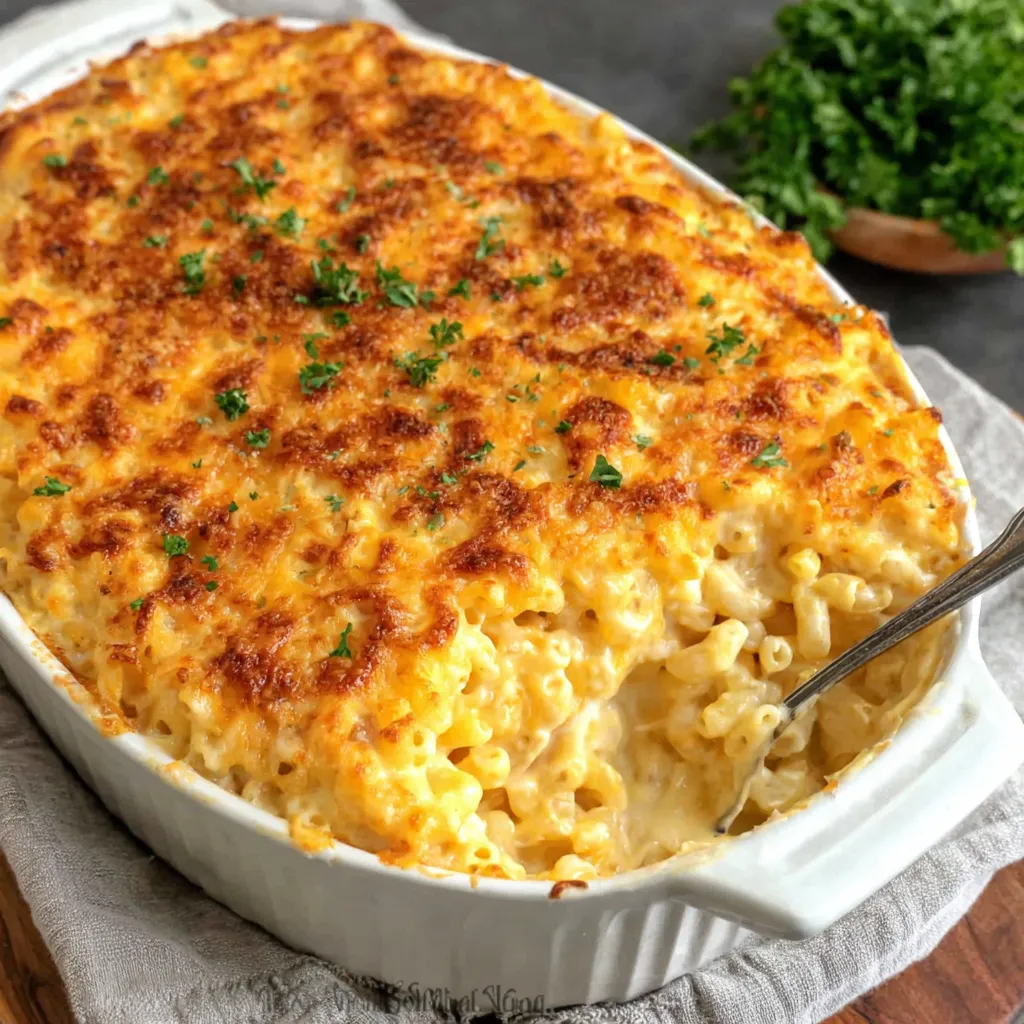
ULTIMATE BAKED MAC AND CHEESE
This Ultimate Baked Mac and Cheese recipe promises a consistently creamy, flavorful, and perfectly textured dish every time. Mastering the roux, using freshly grated cheese, and undercooking the pasta slightly are key to preventing dryness and achieving cheesy perfection.
Ingredients
Equipment
Method
- Preheat oven to 350°F (175°C). Grease a 9×13 inch baking dish.
- Cook macaroni according to package directions, but cook it 1-2 minutes less than the recommended time. Drain well and set aside.
- While the pasta is cooking, prepare the cheese sauce. In a large saucepan, melt butter over medium heat. Whisk in flour until smooth. Cook for 1-2 minutes, stirring constantly, to cook out the raw flour taste.
- Gradually whisk in milk until smooth. Bring to a simmer, stirring constantly. Reduce heat to low and simmer for 5-7 minutes, or until the sauce has thickened slightly.
- Remove from heat and stir in salt, pepper, nutmeg, and garlic powder.
- Add cheddar cheese and Gruyere cheese, a handful at a time, stirring until melted and smooth after each addition. Stir in the cooked macaroni.
- Pour the mac and cheese into the prepared baking dish.
- In a small bowl, combine breadcrumbs, melted butter, and 1/4 cup Parmesan cheese. Sprinkle evenly over the mac and cheese.
- Bake for 20-25 minutes, or until golden brown and bubbly. Let stand for 10 minutes before serving.
Notes
For best results, use freshly grated cheese instead of pre-shredded cheese. Undercooking the pasta is crucial to prevent a mushy texture after baking. You can experiment with different cheese combinations, such as pepper jack for a spicy kick. Store leftovers in an airtight container in the refrigerator for up to 3 days. Reheat in the oven or microwave.