Unlocking the Secrets: The Science Behind the Sauce
The magic of spaghetti with meat sauce lies in the interplay of a few key scientific principles. First, consider the Maillard reaction. This chemical reaction between amino acids and reducing sugars, accelerated by heat, is responsible for the browning and development of complex flavors in the meat. Secondly, the slow simmering process allows for the breakdown of collagen in the meat, resulting in a tender, melt-in-your-mouth texture. Finally, the acidity of the tomatoes needs to be balanced with sweetness to create a harmonious flavor profile. Understanding these principles is the first step towards spaghetti sauce perfection.The Ultimate Spaghetti with Meat Sauce Recipe
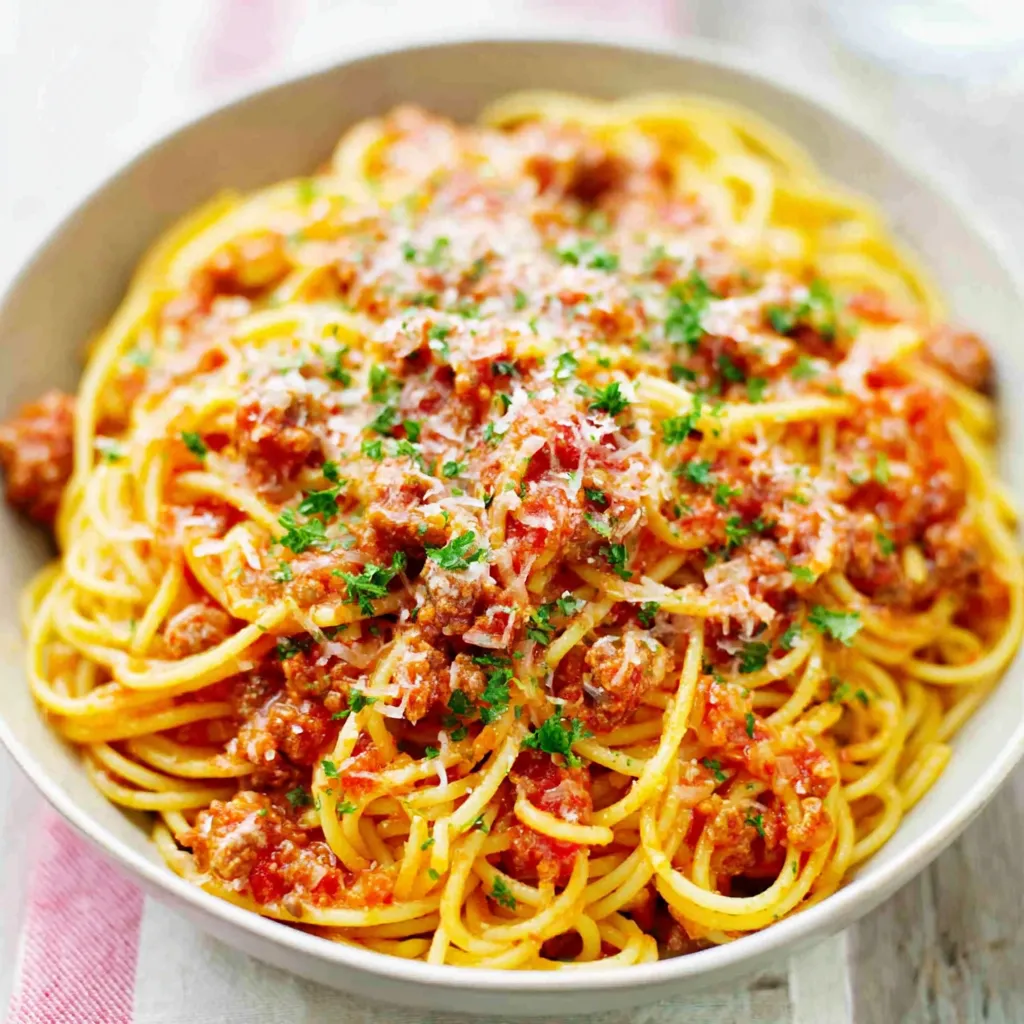 Here’s my go-to recipe, honed through years of experimentation and taste-testing:
Ingredients:
- 1 pound spaghetti
- 1 tablespoon olive oil
- 1 pound ground beef (80/20 blend)
- 1/2 pound ground pork
- 1 large onion, finely chopped
- 2 cloves garlic, minced
- 1 carrot, finely diced
- 1 celery stalk, finely diced
- 1 teaspoon dried oregano
- 1/2 teaspoon dried basil
- 1/4 teaspoon red pepper flakes (optional)
- 1 (28 ounce) can crushed tomatoes
- 1 (15 ounce) can tomato sauce
- 1 (6 ounce) can tomato paste
- 1/2 cup dry red wine (optional)
- 1/4 cup chopped fresh parsley
- 1 tablespoon balsamic vinegar
- 1 teaspoon sugar
- Salt and freshly ground black pepper to taste
- Grated Parmesan cheese, for serving
Instructions:
- Cook spaghetti according to package directions. Drain and set aside.
- In a large pot or Dutch oven, heat olive oil over medium-high heat. Add ground beef and ground pork and cook, breaking it up with a spoon, until browned. Drain off any excess grease.
- Add onion, garlic, carrot, and celery to the pot and cook until softened, about 5-7 minutes.
- Stir in oregano, basil, and red pepper flakes (if using). Cook for 1 minute more.
- Pour in crushed tomatoes, tomato sauce, tomato paste, and red wine (if using). Stir well to combine.
- Bring to a simmer, then reduce heat to low, cover, and simmer for at least 1 hour, or up to 3 hours, stirring occasionally. The longer it simmers, the more the flavors will meld.
- Stir in parsley, balsamic vinegar, and sugar. Season with salt and pepper to taste.
- Serve sauce over spaghetti and top with grated Parmesan cheese.
My Culinary Odyssey: The Spaghetti Sauce Investigation
My journey to creating the ultimate spaghetti with meat sauce was paved with both triumphs and tribulations. My first few attempts were a disaster – bland, watery, and frankly, disappointing. Like many of you, I initially thought that throwing some ground beef and a jar of sauce together was all it took. Boy, was I wrong!The Bland Beginnings: A Sauce Without Soul
Initially, I relied solely on jarred sauces and pre-ground beef. The result was always…meh. The sauce lacked depth, and the meat was often dry and flavorless. I realized that the quality of the ingredients mattered immensely. That’s when I started experimenting with different types of ground meat.The Meat Matters: Blending for Balance
Then, I had an “Aha!” moment when I tried combining ground beef and ground pork. The pork added richness and moisture that the beef alone couldn’t provide. The 80/20 blend of ground beef is crucial, as it gives the meat enough fat to render and contribute to the sauce’s flavor without making it greasy. I also experimented with Pork Meatballs And Mash, and noticed the similar savory notes that pork brought to a dish.The Simmering Secret: Time is Flavor
Another key turning point was understanding the importance of simmering the sauce for an extended period. I used to rush the process, eager to eat. But I discovered that the longer the sauce simmers, the more the flavors meld and deepen. The low and slow approach also helps to tenderize the meat, creating a more luxurious texture. Much like in a well-prepared Beef Stroganoff, the low simmer is key.The Acid Test: Balancing the Tomatoes
The acidity of the tomatoes was another challenge. Some batches were too tart, while others were too sweet. I learned that adding a touch of sugar and balsamic vinegar could help balance the flavors. The balsamic vinegar also adds a subtle complexity that elevates the sauce to another level. Even the Pasta E Fagioli Soup benefits from careful acid control.The Freshness Factor: Herbs and Aromatics
Finally, I realized that fresh herbs and aromatics were essential for adding brightness and depth to the sauce. Using fresh parsley and mincing the garlic right before adding it to the pot made a huge difference. The addition of finely diced carrots and celery, a mirepoix, provides a subtle sweetness and vegetal note that complements the other flavors. This technique is also essential for Garlic Beef Pasta and Garlic Butter Bowtie Beef Pasta to achieve delicious results.The Foolproof Method: A Step-by-Step Guide to Spaghetti Sauce Success
Based on my extensive experiments, here’s a step-by-step guide to creating the ultimate spaghetti with meat sauce:- Brown the Meat: Use a combination of ground beef (80/20 blend) and ground pork for optimal flavor and texture. Brown the meat thoroughly and drain off any excess grease.
- Sauté the Aromatics: Sauté finely chopped onion, garlic, carrot, and celery until softened. This creates a flavorful base for the sauce.
- Bloom the Spices: Add dried oregano, basil, and red pepper flakes (if using) and cook for one minute to release their aromas.
- Incorporate the Tomatoes: Add crushed tomatoes, tomato sauce, and tomato paste. Stir well to combine.
- Simmer Low and Slow: Bring the sauce to a simmer, then reduce the heat to low, cover, and simmer for at least one hour, or up to three hours. Stir occasionally to prevent sticking.
- Balance the Flavors: Stir in fresh parsley, balsamic vinegar, and sugar. Season with salt and pepper to taste.
- Serve and Enjoy: Serve the sauce over cooked spaghetti and top with grated Parmesan cheese.
What is the key to achieving the best flavor in spaghetti with meat sauce?
The key to great spaghetti with meat sauce lies in understanding the Maillard reaction for browning the meat, slow simmering to break down collagen, and balancing the acidity of the tomatoes with sweetness.
Why does the recipe call for both ground beef and ground pork?
Combining ground beef and ground pork adds richness and moisture to the sauce that beef alone cannot provide. An 80/20 blend of ground beef is suggested, allowing fat to contribute to the flavor without making the sauce greasy.
How long should I simmer the sauce for the best results?
Simmer the sauce for at least 1 hour, or up to 3 hours. The longer it simmers, the more the flavors meld and deepen, and the meat becomes more tender.
What’s the purpose of adding sugar and balsamic vinegar to the sauce?
Sugar and balsamic vinegar help to balance the acidity of the tomatoes. The balsamic vinegar also adds a subtle complexity that elevates the sauce’s flavor.
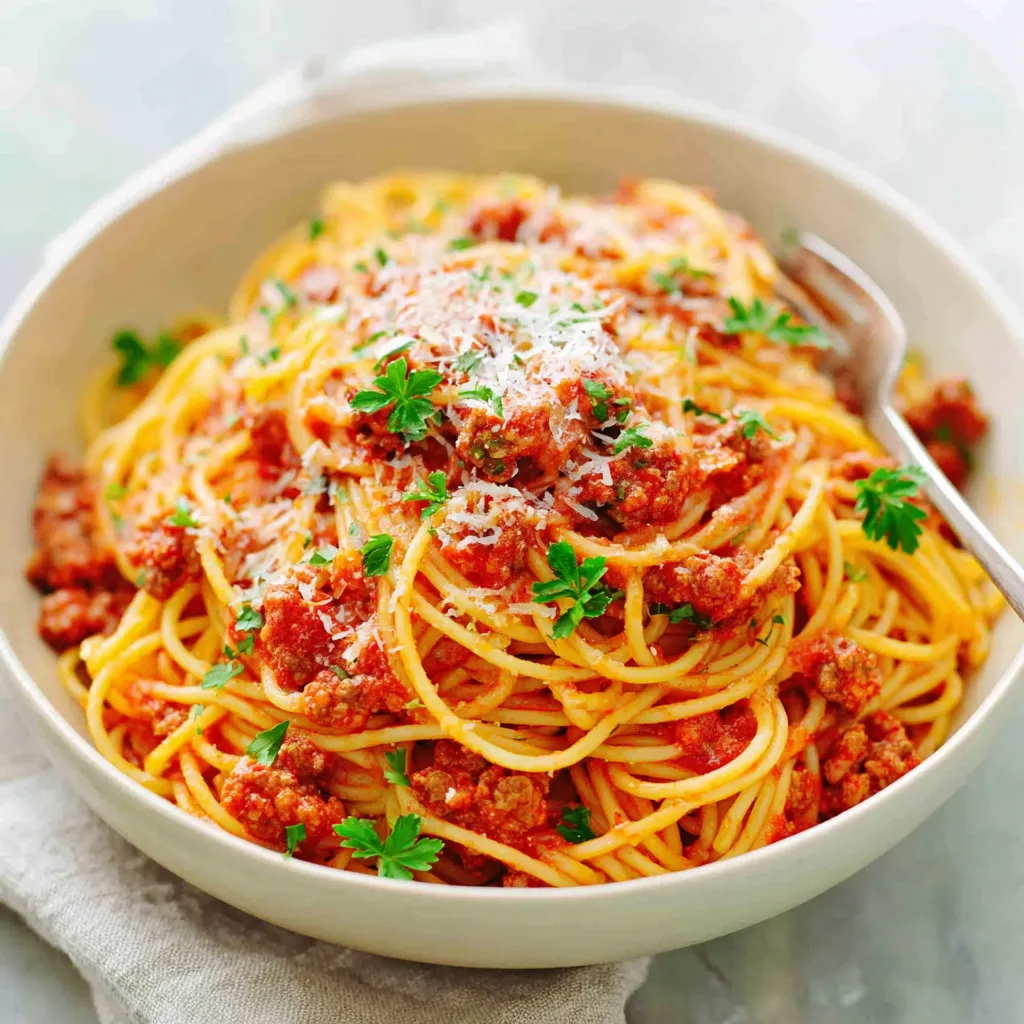
Best Spaghetti with Meat Sauce
This spaghetti with meat sauce recipe is a culmination of careful experimentation, focusing on browning the meat properly, slow simmering for depth of flavor, and balancing the acidity of the tomatoes. The combination of ground beef and pork, along with a long simmering time, creates a rich and unforgettable sauce.
Ingredients
Equipment
Method
- Cook spaghetti according to package directions. Drain and set aside.
- In a large pot or Dutch oven, heat olive oil over medium-high heat. Add ground beef and ground pork and cook, breaking it up with a spoon, until browned. Drain off any excess grease.
- Add onion, garlic, carrot, and celery to the pot and cook until softened, about 5-7 minutes.
- Stir in oregano, basil, and red pepper flakes (if using). Cook for 1 minute more.
- Pour in crushed tomatoes, tomato sauce, tomato paste, and red wine (if using). Stir well to combine.
- Bring to a simmer, then reduce heat to low, cover, and simmer for at least 1 hour, or up to 3 hours, stirring occasionally. The longer it simmers, the more the flavors will meld.
- Stir in parsley, balsamic vinegar, and sugar. Season with salt and pepper to taste.
- Serve sauce over spaghetti and top with grated Parmesan cheese.
Notes
For best results, use high-quality ingredients. Simmering the sauce for a longer period intensifies the flavor. Leftover sauce can be stored in the refrigerator for up to 3 days or frozen for up to 2 months. For a spicier sauce, add more red pepper flakes. For a vegetarian option, use lentils or other plant-based protein instead of meat.