The Effervescence Equation: Baking with Bubbly
The fundamental challenge with incorporating champagne into cupcakes lies in preserving its signature qualities during the baking process. Alcohol, the main flavor carrier, evaporates at relatively low temperatures. Furthermore, the delicate bubbles, crucial for the light texture we associate with champagne, are easily lost when mixed into a batter. Therefore, the key to truly infusing that champagne essence rests on a few scientific principles: (1) Using a champagne reduction to concentrate the flavor before adding it to the batter. This ensures that even after some alcohol evaporates, a stronger, more discernible champagne flavor remains. (2) Incorporating the champagne in a way that minimizes gluten development. Overmixing will lead to a tough cupcake, masking the subtle champagne notes. (3) Understanding the impact of acidity. Champagne is naturally acidic, which can affect the rise and texture of the cupcake. Adjusting the leavening agents (baking powder and baking soda) is crucial for achieving the perfect balance. Think of it like balancing a chemical equation; the right proportions are vital for a successful reaction, resulting in a light, flavorful cupcake that truly captures the spirit of pink champagne. And finally, (4) Consider a champagne-infused frosting as the *pièce de résistance*. Because it doesn’t undergo baking, the frosting can maintain more of the champagne’s original characteristics.The Recipe: Pink Champagne Cupcake Perfection
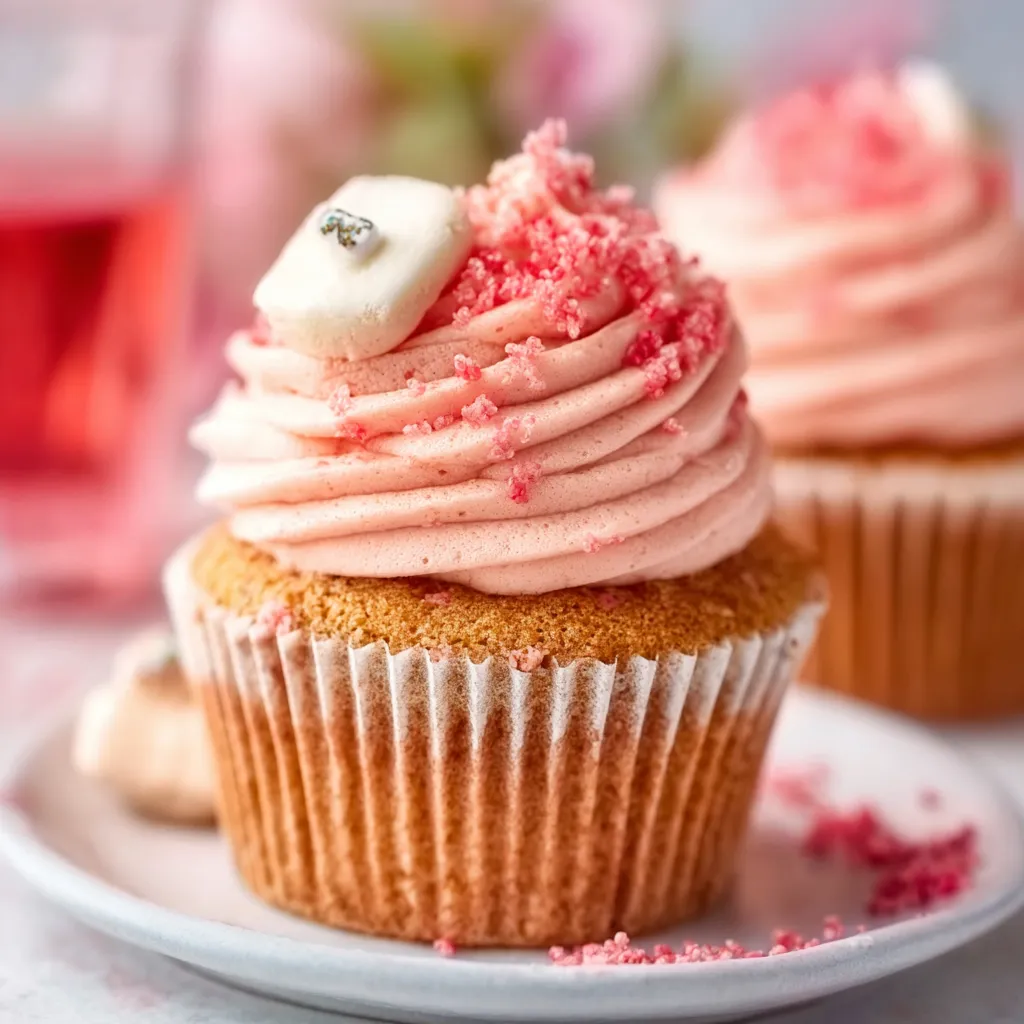 Here’s my tried-and-true recipe for creating truly decadent Pink Champagne Cupcakes:
Ingredients
#### For the Champagne Reduction:- 1 cup Pink Champagne (Brut or Extra Brut recommended)
- 1 1/2 cups all-purpose flour
- 1 1/2 teaspoons baking powder
- 1/4 teaspoon baking soda
- 1/4 teaspoon salt
- 1/2 cup (1 stick) unsalted butter, softened
- 1 cup granulated sugar
- 2 large eggs
- 1 teaspoon vanilla extract
- 1/2 cup milk
- 1/4 cup Champagne Reduction (cooled)
- Pink food coloring (gel is preferred), optional
- 1 cup (2 sticks) unsalted butter, softened
- 3-4 cups powdered sugar
- 1/4 cup Pink Champagne (Brut or Extra Brut recommended)
- 1 teaspoon vanilla extract
Instructions
#### Making the Champagne Reduction:- In a small saucepan, bring the champagne to a simmer over medium heat.
- Reduce the heat to low and simmer gently for about 15-20 minutes, or until the champagne has reduced to about 1/4 cup. It should be slightly syrupy.
- Remove from heat and let cool completely.
- Preheat oven to 350°F (175°C). Line a 12-cup muffin tin with cupcake liners.
- In a medium bowl, whisk together the flour, baking powder, baking soda, and salt.
- In a large bowl, cream together the softened butter and granulated sugar until light and fluffy.
- Beat in the eggs one at a time, then stir in the vanilla extract.
- Gradually add the dry ingredients to the wet ingredients, alternating with the milk, beginning and ending with the dry ingredients. Mix until just combined. Do not overmix.
- Stir in the cooled champagne reduction. Add pink food coloring, if desired, until you reach your desired shade of pink.
- Fill the cupcake liners about 2/3 full.
- Bake for 18-20 minutes, or until a toothpick inserted into the center comes out clean.
- Let the cupcakes cool in the muffin tin for a few minutes before transferring them to a wire rack to cool completely.
- In a large bowl, beat the softened butter until light and fluffy.
- Gradually add the powdered sugar, one cup at a time, beating well after each addition.
- Pour in the champagne and vanilla extract, and beat until smooth and creamy. Add more powdered sugar if the frosting is too thin, or more champagne if it’s too thick.
- Once the cupcakes are completely cooled, frost them generously with the champagne buttercream frosting.
- Garnish with sprinkles, edible glitter, or fresh berries, if desired.
My Champagne Cupcake Odyssey: A Culinary Detective Story
The Bubbly Beginning: Initial Attempts and Abject Failure
My first few attempts were a disaster. Like many of you, I initially thought simply adding champagne to a standard vanilla cupcake recipe would do the trick. Wrong! The cupcakes tasted vaguely of… well, nothing. The champagne flavor was completely lost in the baking process, leaving behind a slightly denser, less flavorful cupcake than I would have liked. I even tried using expensive vintage champagne, hoping that a higher quality base would translate into a more pronounced flavor. Nope. Total waste of good bubbly. I learned quickly that subtlety doesn’t cut it when baking with champagne. It needs a boost. Similar to when I tried to make Japanese Cotton Cheesecake Cupcakes for the first time, it took me several tries to get it right.The Reduction Revelation: Concentrating the Magic
Then, I had an “Aha!” moment. The key, I realized, was concentration. I started experimenting with reducing the champagne before adding it to the batter. This intensified the flavor, creating a more potent base that could withstand the heat of the oven. This was a significant improvement. The cupcakes finally had a hint of champagne, but the texture was still off. They were a little too dense, a little too chewy. I realized the acidity of the champagne was affecting the gluten development.Leavening Lessons: Balancing the Equation
This led me down a rabbit hole of leavening agents. I learned that baking powder and baking soda react differently to acidic ingredients. After several trials, I found that a combination of both, slightly adjusted from a standard recipe, provided the perfect rise and texture. The cupcakes were now light and airy, with a delicate crumb that melted in your mouth. It was similar to when I perfected my Sticky Toffee Pudding, and had to find the correct ratio of baking soda to sweetness, so that it wouldn’t be too bitter.Frosting Finesse: The Unbaked Truth
Finally, I turned my attention to the frosting. While the cupcakes themselves had improved dramatically, I wanted to amplify the champagne flavor even further. The solution? A champagne-infused buttercream. By adding a generous splash of champagne directly to the frosting, I was able to deliver a burst of bubbly flavor that perfectly complemented the subtle champagne notes in the cupcake. This was where the party *really* started. I had a similar learning curve when I created my Christmas Tree Cake Truffles; figuring out that the frosting was just as important as the cake.Color Considerations: Pink Power
The last piece of the puzzle was the color. While the champagne itself imparts a slight rosy hue, I wanted a more vibrant pink. I experimented with various food colorings, eventually settling on a gel-based pink food coloring. The gel provides a more concentrated color without adding excess liquid to the batter, which is crucial for maintaining the perfect texture.The Foolproof Formula: Your Champagne Cupcake Cheat Sheet
Here’s the definitive, step-by-step method for creating perfect Pink Champagne Cupcakes every time:- Reduce, Reduce, Reduce: Always reduce your champagne before adding it to the batter. This concentrates the flavor and prevents it from getting lost in the baking process.
- Mind the Mix: Avoid overmixing the batter. Overmixing develops gluten, leading to tough, dense cupcakes. Mix until just combined.
- Leavening Balance: Use a combination of baking powder and baking soda, adjusting the amounts to account for the acidity of the champagne.
- Embrace the Frosting: Don’t skimp on the champagne in the buttercream frosting. This is your chance to really let that bubbly flavor shine.
- Pink Perfection: Use gel-based food coloring for a vibrant pink hue without adding excess liquid to the batter.
- Cool Completely: Ensure the cupcakes are completely cooled before frosting. This will prevent the frosting from melting and sliding off.
Why is it important to reduce the champagne before adding it to the cupcake batter?
Reducing the champagne concentrates its flavor, preventing it from being lost during the baking process.
How does the acidity of champagne affect the cupcake recipe, and how should I adjust for it?
Champagne’s acidity can affect the rise and texture of the cupcake. Adjust the leavening agents (baking powder and baking soda) to balance the acidity and achieve the perfect rise and texture.
Why is it crucial to avoid overmixing the cupcake batter when making Pink Champagne Cupcakes?
Overmixing the batter develops gluten, leading to tough, dense cupcakes, which can mask the subtle champagne flavor.
What type of food coloring is recommended to achieve a vibrant pink color without affecting the batter’s consistency?
Gel-based pink food coloring is recommended because it provides a concentrated color without adding excess liquid to the batter.
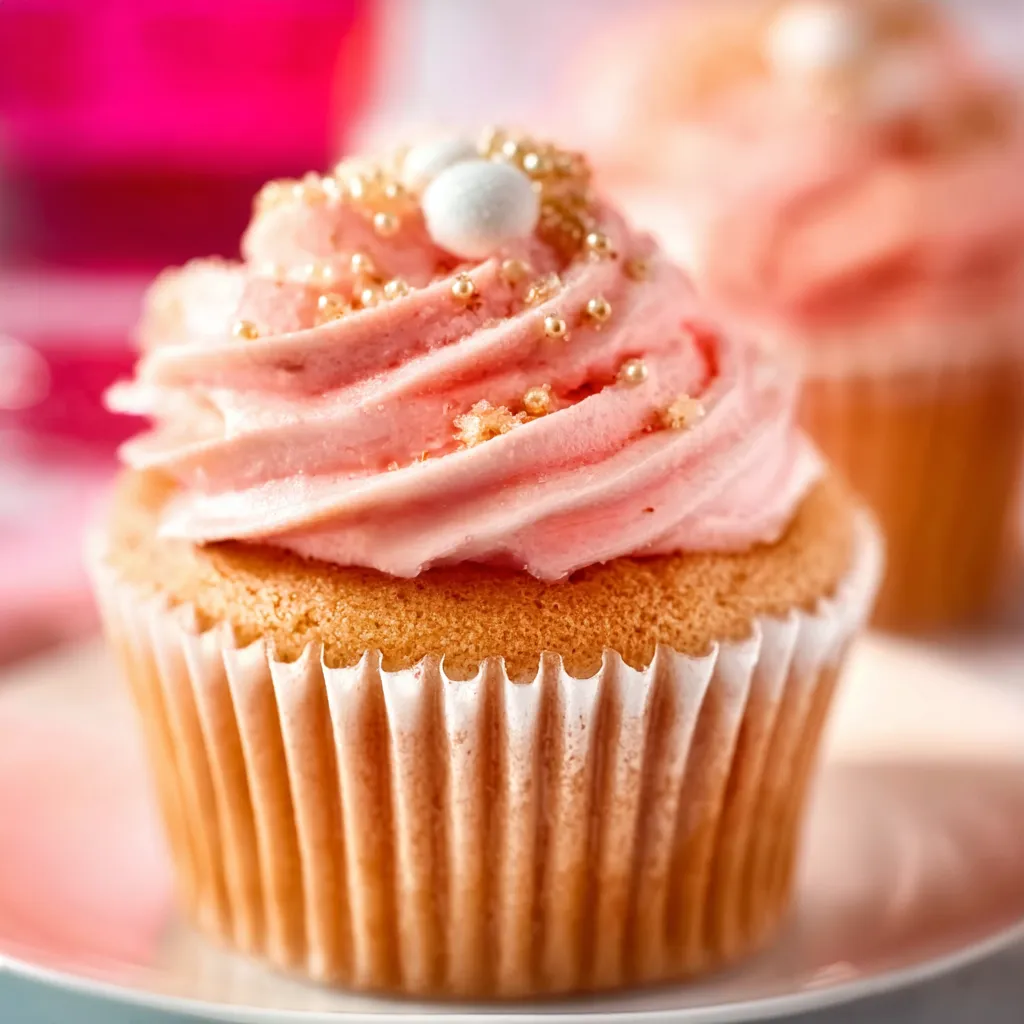
Pink Champagne Cupcakes
These Pink Champagne Cupcakes are a delightful dessert that perfectly balances the delicate flavors of champagne with a light and airy texture. The recipe involves a champagne reduction for concentrated flavor and a champagne-infused buttercream for an extra burst of bubbly goodness, creating an irresistible treat for any celebration.
Ingredients
Equipment
Method
- **Making the Champagne Reduction:** In a small saucepan, bring the champagne to a simmer over medium heat.
- Reduce the heat to low and simmer gently for about 15-20 minutes, or until the champagne has reduced to about 1/4 cup. It should be slightly syrupy.
- Remove from heat and let cool completely.
- **Making the Cupcakes:** Preheat oven to 350°F (175°C). Line a 12-cup muffin tin with cupcake liners.
- In a medium bowl, whisk together the flour, baking powder, baking soda, and salt.
- In a large bowl, cream together the softened butter and granulated sugar until light and fluffy.
- Beat in the eggs one at a time, then stir in the vanilla extract.
- Gradually add the dry ingredients to the wet ingredients, alternating with the milk, beginning and ending with the dry ingredients. Mix until just combined. Do not overmix.
- Stir in the cooled champagne reduction. Add pink food coloring, if desired, until you reach your desired shade of pink.
- Fill the cupcake liners about 2/3 full.
- Bake for 18-20 minutes, or until a toothpick inserted into the center comes out clean.
- Let the cupcakes cool in the muffin tin for a few minutes before transferring them to a wire rack to cool completely.
- **Making the Champagne Buttercream Frosting:** In a large bowl, beat the softened butter until light and fluffy.
- Gradually add the powdered sugar, one cup at a time, beating well after each addition.
- Pour in the champagne and vanilla extract, and beat until smooth and creamy. Add more powdered sugar if the frosting is too thin, or more champagne if it’s too thick.
- **Assembling the Cupcakes:** Once the cupcakes are completely cooled, frost them generously with the champagne buttercream frosting.
- Garnish with sprinkles, edible glitter, or fresh berries, if desired.
Notes
For the best flavor, use a Brut or Extra Brut pink champagne. Reducing the champagne is crucial for a concentrated flavor. Avoid overmixing the batter to prevent tough cupcakes. Ensure cupcakes are completely cooled before frosting to prevent melting. Store frosted cupcakes in an airtight container in the refrigerator.