Unlocking the Flavor: The Science Behind Garlic Chicken Pasta
The key to exceptional garlic chicken pasta lies in understanding the Maillard reaction and its role in developing flavor. The Maillard reaction is a chemical reaction between amino acids and reducing sugars, usually requiring heat. This is what creates the delicious browning and complex flavors we associate with seared chicken and toasted garlic. But there’s a delicate balance. Overcook the garlic, and it turns bitter, ruining the entire dish. Under-cook the chicken, and well, you know. The creaminess comes from emulsification, the process of binding fat and water-based liquids together. In this case, the fat from the butter and the water from the pasta cooking water create a luscious sauce when combined with the starch released from the pasta. Salt is also an unsung hero, amplifying flavors and drawing moisture out of the chicken to promote better browning. Finally, the choice of pasta matters. Shapes like penne or rotini, with their ridges and tubes, are excellent at grabbing and holding the sauce.The Perfect Plate: Garlic Chicken Pasta Recipe
 Here’s my go-to recipe for consistently delicious garlic chicken pasta:
Ingredients:
- 1 pound boneless, skinless chicken breasts, cut into bite-sized pieces
- 1 pound pasta (penne, rotini, or your favorite shape)
- 4 tablespoons butter
- 6 cloves garlic, minced
- 1/2 cup chicken broth
- 1/2 cup heavy cream
- 1/4 cup grated Parmesan cheese, plus more for serving
- 2 tablespoons chopped fresh parsley, plus more for garnish
- Salt and pepper to taste
- 1 tablespoon olive oil
Instructions:
- Cook the Pasta: Bring a large pot of salted water to a boil. Add the pasta and cook according to package directions until al dente. Reserve about 1 cup of pasta water before draining.
- Sear the Chicken: While the pasta is cooking, heat olive oil in a large skillet over medium-high heat. Season the chicken with salt and pepper. Add the chicken to the skillet and cook until browned and cooked through, about 5-7 minutes. Remove the chicken from the skillet and set aside.
- Sauté the Garlic: Reduce the heat to medium. Add the butter to the skillet. Once melted, add the minced garlic and sauté until fragrant, about 1-2 minutes. Be careful not to burn the garlic.
- Create the Sauce: Pour in the chicken broth and bring to a simmer, scraping up any browned bits from the bottom of the pan. Stir in the heavy cream and Parmesan cheese. Season with salt and pepper to taste.
- Combine: Add the cooked pasta to the skillet with the sauce. Toss to coat. If the sauce is too thick, add a little of the reserved pasta water until it reaches your desired consistency.
- Finish and Serve: Add the cooked chicken back to the skillet and toss to combine. Stir in the parsley. Serve immediately, garnished with extra Parmesan cheese and parsley.
From Frustration to Flavor: My Garlic Chicken Pasta Investigation
My journey to garlic chicken pasta perfection was far from smooth. Like many of you, I initially thought it was a dump-and-stir kind of recipe. My first few attempts were a disaster, resulting in either bland, watery pasta or overly garlicky, bitter monstrosities.The Bitter Truth About Garlic
My initial problem was the garlic. I’d throw it in at the beginning with the chicken, thinking more was better. The result? Acrid, overpowering bitterness that permeated the entire dish. I tried different varieties of garlic, thinking maybe that was the issue. It wasn’t. Then, I had an “Aha!” moment. I realized that garlic’s flavor is delicate and easily ruined by high heat. Sautéing it gently in butter after the chicken was cooked, for just a minute or two, made a world of difference.The Chicken Conundrum
Another issue was the chicken. It was often dry and flavorless. I experimented with marinades, but they masked the garlic flavor I was trying to highlight. The solution was simple: properly searing the chicken. Using a hot skillet and not overcrowding it allowed the chicken to brown beautifully, developing a rich, savory flavor. Also, properly seasoning with salt and pepper before searing is crucial.The Saucy Secret
The sauce was another challenge. Early versions were thin and watery. I tried adding flour as a thickener, but it gave the sauce a pasty texture. The breakthrough came when I started reserving pasta water. The starch in the pasta water helped to thicken the sauce naturally, creating a creamy, emulsified texture without any flour. And the Parmesan cheese, added at the end, provided the perfect salty, nutty finish. I also realised that using heavy cream made a big difference – it provides a richness that milk or half-and-half simply can’t match. Using chicken broth instead of just water also adds more depth of flavour to the sauce. Once you master this simple sauce, why not try similar variations like Creamy Garlic Parmesan Chicken Pasta?Pasta Perfection
Finally, the pasta itself needed attention. Overcooked pasta turns mushy and releases too much starch, making the sauce gummy. Al dente pasta, cooked just until tender but still firm to the bite, is the key. And the shape matters! I found that penne and rotini, with their ridges and tubes, are excellent at grabbing and holding the sauce. You can even try Garlic Beef Pasta if you ever want to use a different protein.The Foolproof Method: A Step-by-Step Guide
To ensure success every time, follow these steps:- Cook Pasta Al Dente: In salted boiling water, reserve pasta water.
- Sear Chicken Properly: Use high heat and don’t overcrowd the pan. Season well.
- Sauté Garlic Gently: After removing the chicken, sauté minced garlic in butter until fragrant, but not brown.
- Create a Creamy Sauce: Deglaze the pan with chicken broth, then stir in heavy cream and Parmesan cheese.
- Combine and Adjust: Toss pasta and chicken with the sauce. Use reserved pasta water to adjust consistency.
- Serve Immediately: Garnish with Parmesan cheese and fresh parsley.
Why is it important to reserve pasta water when making garlic chicken pasta?
Reserving pasta water is crucial because the starch in the water helps to thicken the sauce naturally, creating a creamy, emulsified texture without needing to use flour.
What is the key to preventing the garlic from becoming bitter in garlic chicken pasta?
The key is to sauté the minced garlic gently in butter after the chicken is cooked, for only a minute or two, being careful not to burn it. Adding garlic too early or cooking it at too high a heat will result in bitterness.
What kind of pasta shapes are best suited for garlic chicken pasta, and why?
Shapes like penne or rotini, with their ridges and tubes, are excellent at grabbing and holding the sauce, making them ideal for this dish.
How do you ensure the chicken is cooked properly without becoming dry and flavorless?
Use a hot skillet and don’t overcrowd it when searing the chicken. Properly seasoning the chicken with salt and pepper before searing is also crucial for developing a rich, savory flavor.
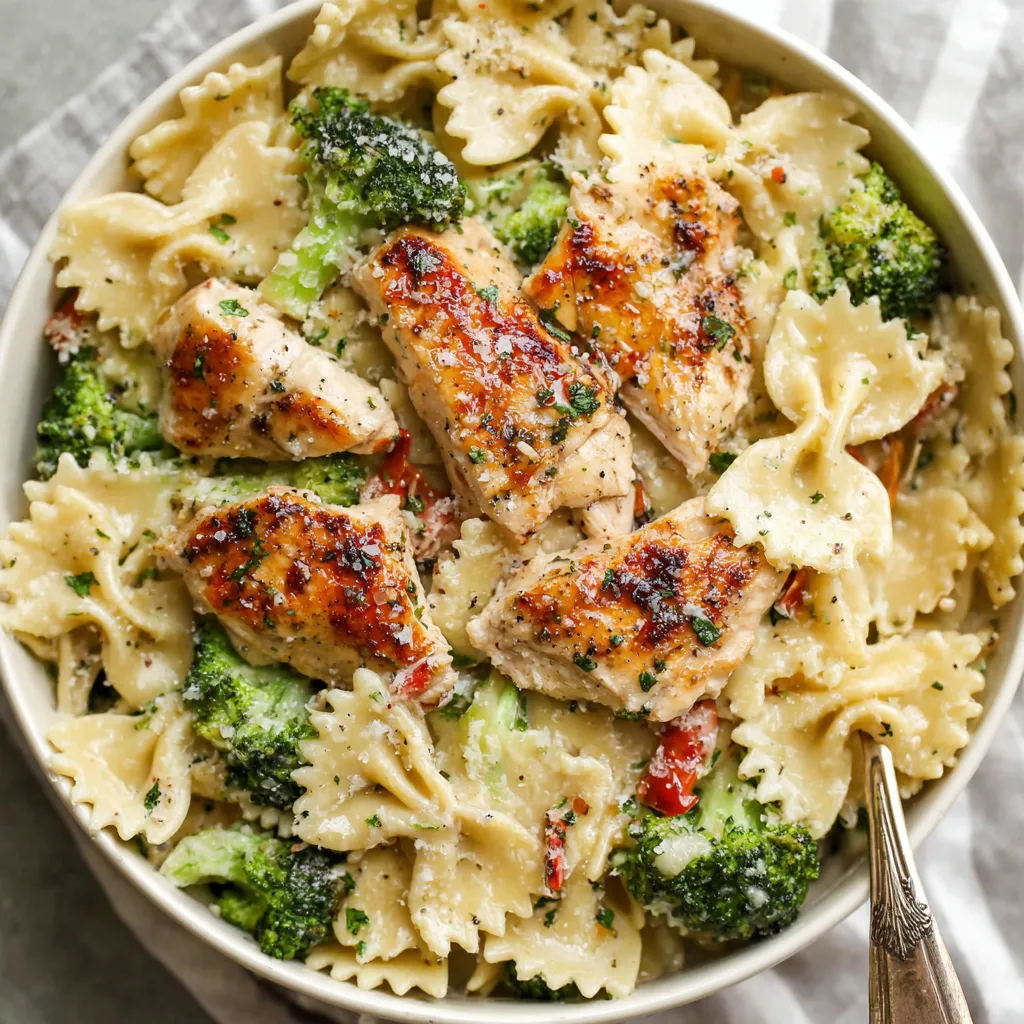
Garlic Chicken Pasta Easy Dinner
This recipe delivers a flavorful and satisfying garlic chicken pasta dish. By properly searing the chicken, gently sautéing the garlic, and creating a creamy sauce using reserved pasta water, you’ll achieve the perfect balance of flavors and textures in this easy-to-make dinner.
Ingredients
Equipment
Method
- Bring a large pot of salted water to a boil. Add the pasta and cook according to package directions until al dente. Reserve about 1 cup of pasta water before draining.
- While the pasta is cooking, heat olive oil in a large skillet over medium-high heat. Season the chicken with salt and pepper.
- Add the chicken to the skillet and cook until browned and cooked through, about 5-7 minutes. Remove the chicken from the skillet and set aside.
- Reduce the heat to medium. Add the butter to the skillet. Once melted, add the minced garlic and sauté until fragrant, about 1-2 minutes. Be careful not to burn the garlic.
- Pour in the chicken broth and bring to a simmer, scraping up any browned bits from the bottom of the pan. Stir in the heavy cream and Parmesan cheese. Season with salt and pepper to taste.
- Add the cooked pasta to the skillet with the sauce. Toss to coat. If the sauce is too thick, add a little of the reserved pasta water until it reaches your desired consistency.
- Add the cooked chicken back to the skillet and toss to combine. Stir in the parsley.
- Serve immediately, garnished with extra Parmesan cheese and parsley.
Notes
For a richer flavor, use freshly grated Parmesan cheese. To prevent the garlic from burning, sauté it over medium heat and watch it carefully. If you don’t have heavy cream, you can substitute half-and-half, but the sauce won’t be as rich. Store leftovers in an airtight container in the refrigerator for up to 3 days. Reheat gently on the stovetop or in the microwave.