How do you consistently achieve that restaurant-quality, melt-in-your-mouth, perfectly seared garlic butter ribeye steak at home?
Unlocking the Secrets: The Science Behind the Sizzle
The magic of a truly exceptional garlic butter ribeye lies in understanding the interplay of heat, fat, and protein. Let’s break it down. First, consider the Maillard reaction, that chemical reaction between amino acids and reducing sugars that gives browned food its distinctive flavor. High heat is crucial for this process. We need a screaming hot pan to create that beautiful, flavorful crust on the steak. Then, there’s the rendered fat – butter, in this case, infused with garlic’s pungent aroma – which not only adds richness but also helps to conduct heat evenly and baste the steak as it cooks. Finally, understanding how the steak’s internal temperature relates to its doneness is paramount. Knowing when to pull the steak from the heat is the difference between a chewy disappointment and a succulent masterpiece.
The Ultimate Garlic Butter Ribeye Recipe
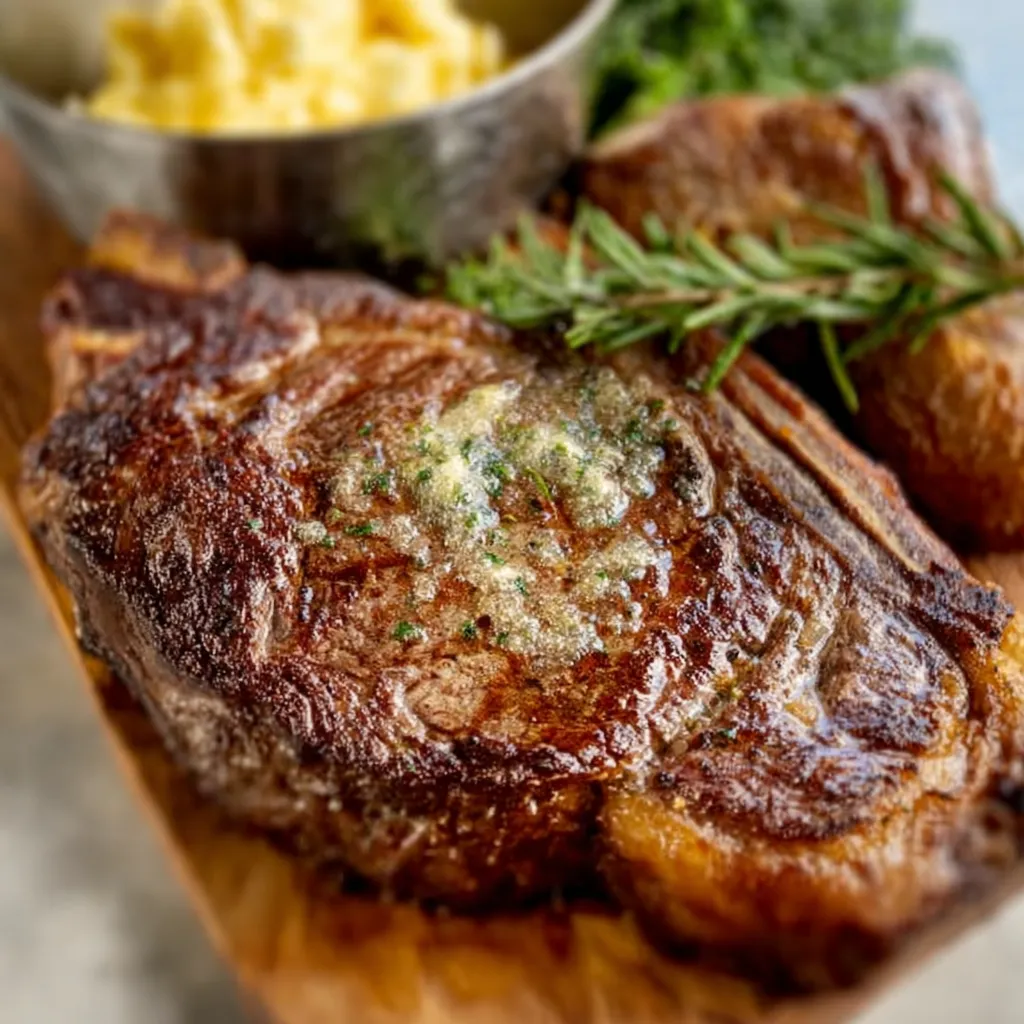
Ingredients:
- 1 (14-16 ounce) Ribeye Steak, about 1.5 inches thick
- 2 tablespoons Olive Oil
- 4 tablespoons Unsalted Butter
- 4 cloves Garlic, minced
- 1 tablespoon Fresh Rosemary, chopped (optional)
- 1 teaspoon Fresh Thyme, chopped (optional)
- Salt and freshly ground Black Pepper, to taste
Instructions:
- Prepare the Steak: Pat the ribeye steak dry with paper towels. This is crucial for achieving a good sear. Season generously with salt and freshly ground black pepper on both sides.
- Heat the Pan: Place a cast-iron skillet (or a heavy-bottomed skillet) over high heat. Add the olive oil and heat until it begins to shimmer and almost smoke.
- Sear the Steak: Carefully place the steak in the hot skillet. Sear for 3-4 minutes per side, without moving it, until a deep, golden-brown crust forms.
- Add the Butter and Aromatics: Reduce the heat to medium. Add the butter, minced garlic, rosemary, and thyme (if using) to the skillet. As the butter melts, tilt the skillet slightly and use a spoon to continuously baste the steak with the garlic butter.
- Cook to Desired Doneness: Continue basting the steak for another 2-4 minutes, depending on your desired level of doneness. Use a meat thermometer to check the internal temperature:
- Rare: 125-130°F
- Medium-Rare: 130-135°F
- Medium: 135-145°F
- Medium-Well: 145-155°F
- Well-Done: 155°F+ (Not Recommended)
- Rest the Steak: Remove the steak from the skillet and place it on a cutting board. Tent loosely with foil and let it rest for at least 10 minutes. This allows the juices to redistribute, resulting in a more tender and flavorful steak.
- Slice and Serve: Slice the steak against the grain and serve immediately. Drizzle with any remaining garlic butter from the skillet.
My Culinary Quest: The Garlic Butter Ribeye Saga
The Initial Flame-Outs
My first few attempts were a disaster, I’m not going to lie. I thought I could just throw a steak in a pan with some butter and garlic and call it a day. The results? Either burnt garlic and a raw center, or a gray, lifeless steak swimming in greasy butter. Like many of you, I initially thought the key was just adding more garlic and butter. I was wrong. Terribly wrong.
The Cast Iron Revelation
Then, I had an ‘Aha!’ moment when I realized the importance of proper heat and a good sear. I switched to a cast-iron skillet, which retains heat beautifully, and started preheating it until it was screaming hot. This alone made a huge difference. Suddenly, I was getting that beautiful, brown crust I was after. It reminded me of the sear I aim for when making Chinese Pepper Steak, although the flavors are vastly different.
Taming the Garlic Inferno
But the garlic still burned! The solution? Adding the garlic later, along with the butter, after the initial sear. This allowed the garlic to infuse the butter with its flavor without turning acrid. I also started using fresh rosemary and thyme, which added a wonderful depth of flavor that complemented the garlic perfectly. It elevated the steak to something truly special, a flavor profile I also enjoy when I whip up some Rosemary Garlic Mashed Potatoes.
The Resting Game Changer
Finally, the importance of resting the steak cannot be overstated. I used to slice right into it, and all the juices would run out, leaving a dry, lackluster piece of meat. Allowing the steak to rest for at least 10 minutes, tented with foil, made a world of difference. The juices redistributed throughout the steak, resulting in a much more tender and flavorful experience. It’s just as important as letting the meat rest when making a Steak And Shrimp Stir-fry!
The Foolproof Technique: A Step-by-Step Guide to Garlic Butter Ribeye Perfection
- Pat the Steak Dry: Moisture is the enemy of a good sear. Pat your ribeye steak dry with paper towels before seasoning.
- Season Generously: Don’t be shy with the salt and pepper. Season both sides of the steak generously.
- Use a Screaming Hot Pan: Preheat a cast-iron skillet (or heavy-bottomed skillet) over high heat until it’s almost smoking. Add olive oil.
- Sear, Don’t Move: Place the steak in the hot pan and sear for 3-4 minutes per side, without moving it. Let that crust develop!
- Add Butter and Aromatics Later: Reduce heat to medium, then add the butter, minced garlic, and herbs (rosemary and thyme, if using).
- Baste, Baste, Baste: Tilt the pan and continuously spoon the garlic butter over the steak as it cooks.
- Check the Temperature: Use a meat thermometer to ensure the steak reaches your desired level of doneness.
- Rest is Best: Let the steak rest for at least 10 minutes, tented with foil, before slicing.
- Slice Against the Grain: Slice the steak against the grain for maximum tenderness.
- Drizzle and Devour: Drizzle with the remaining garlic butter from the pan and enjoy! This would also be delicious drizzled over a Grilled Steak Bowl.
Why is it important to pat the ribeye steak dry before searing?
Patting the ribeye steak dry with paper towels is crucial for achieving a good sear. Moisture is the enemy of a good sear, so removing excess moisture allows the steak to develop a deep, golden-brown crust.
Why should I add the garlic and herbs after the initial sear?
Adding the garlic and herbs after the initial sear prevents the garlic from burning and becoming bitter. This allows the garlic to infuse the butter with its flavor without turning acrid.
How long should I rest the steak after cooking, and why is resting important?
You should rest the steak for at least 10 minutes, tented with foil, after cooking. Resting allows the juices to redistribute throughout the steak, resulting in a more tender and flavorful experience.
What internal temperature should I aim for if I want a medium-rare ribeye steak?
For a medium-rare ribeye steak, aim for an internal temperature of 130-135°F.

Garlic Butter Ribeye Steak
Ingredients
Equipment
Method
- Pat the ribeye steak dry with paper towels. Season generously with salt and freshly ground black pepper on both sides.
- Place a cast-iron skillet (or a heavy-bottomed skillet) over high heat. Add the olive oil and heat until it begins to shimmer and almost smoke.
- Carefully place the steak in the hot skillet. Sear for 3-4 minutes per side, without moving it, until a deep, golden-brown crust forms.
- Reduce the heat to medium. Add the butter, minced garlic, rosemary, and thyme (if using) to the skillet. As the butter melts, tilt the skillet slightly and use a spoon to continuously baste the steak with the garlic butter.
- Continue basting the steak for another 2-4 minutes, depending on your desired level of doneness. Use a meat thermometer to check the internal temperature:
- Remove the steak from the skillet and place it on a cutting board. Tent loosely with foil and let it rest for at least 10 minutes.
- Slice the steak against the grain and serve immediately. Drizzle with any remaining garlic butter from the skillet.