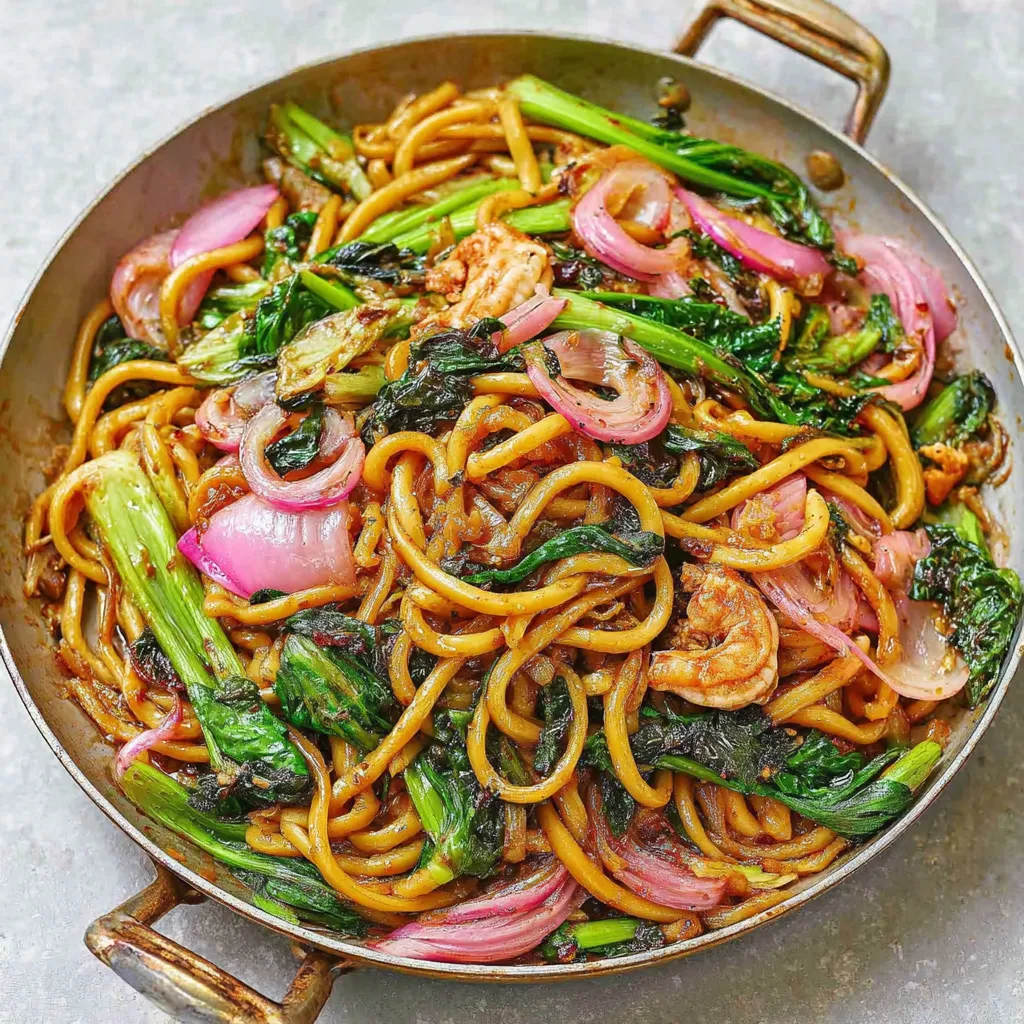
What Makes This Yaki Udon So Good?
This isn’t just any noodle stir-fry; it’s Yaki Udon, and what sets it apart is the wonderful chewy texture of the udon noodles combined with a flavorful sauce that clings to every strand. My recipe has been crafted to ensure that you get the perfect balance of flavors and textures with minimal fuss. I’ve included tips to prevent your noodles from becoming mushy or sticking together, and I’ve made the sauce customizable so you can tailor it to your personal preferences. This recipe uses ingredients you can easily find at most grocery stores.Gather Your Ingredients
 A well-stocked pantry and fridge are your friends in the kitchen. Let’s make sure you have everything you need to create this Yaki Udon masterpiece.
Noodles
- Udon Noodles: 1 pound, fresh or frozen (thawed). If using dried, cook according to package directions.
Protein (Choose One or Mix!)
- Pork: 1/2 pound, thinly sliced
- Chicken: 1/2 pound, cut into bite-sized pieces
- Shrimp: 1/2 pound, peeled and deveined
- Tofu: 1 block, firm or extra-firm, pressed and cubed
Vegetables
- Onion: 1 medium, thinly sliced
- Carrot: 1 medium, julienned
- Cabbage: 2 cups, shredded (napa or regular)
- Bell Pepper: 1/2, thinly sliced (any color)
- Mushrooms: 4 oz, sliced (shiitake, cremini, or button)
- Green Onions: 2, chopped, for garnish
Yaki Udon Sauce
- Soy Sauce: 1/4 cup
- Oyster Sauce: 2 tablespoons (or vegetarian oyster sauce alternative)
- Mirin: 2 tablespoons (sweet rice wine)
- Sugar: 1 tablespoon
- Sesame Oil: 1 teaspoon
- Garlic: 2 cloves, minced
- Ginger: 1 teaspoon, grated
- Cornstarch: 1 teaspoon (mixed with 1 tablespoon cold water)
Other Essentials
- Vegetable Oil: 2 tablespoons, for stir-frying
- Sesame Seeds: For garnish (optional)
Step-by-Step Instructions: Let’s Cook!
Okay, you’ve got your ingredients prepped and ready to go. Now, let’s dive into the cooking process. Don’t worry, I’ll guide you through each step!Preparing the Ingredients
- Prepare the Protein: If using meat, marinate it for at least 15 minutes in a mixture of 1 tablespoon soy sauce and 1 teaspoon cornstarch. This will help tenderize the meat and give it a nice coating. If using tofu, press it well to remove excess water.
- Cook the Noodles (If Necessary): If using frozen udon, thaw them. If using dried udon, cook according to package directions until al dente. Be careful not to overcook, as they will become mushy in the stir-fry. Drain and rinse the noodles with cold water to stop the cooking process and prevent sticking.
- Mix the Sauce: In a small bowl, whisk together the soy sauce, oyster sauce, mirin, sugar, sesame oil, minced garlic, and grated ginger. Set aside.
Stir-Frying the Yaki Udon
- Stir-Fry the Protein: Heat 1 tablespoon of vegetable oil in a large wok or skillet over medium-high heat. Add the marinated meat (or tofu) and stir-fry until cooked through. Remove from the wok and set aside.
- Stir-Fry the Vegetables: Add the remaining 1 tablespoon of vegetable oil to the wok. Add the onion, carrot, and bell pepper and stir-fry for 2-3 minutes, until slightly softened. Add the mushrooms and cabbage and continue to stir-fry for another 2-3 minutes, until the vegetables are tender-crisp.
- Combine and Sauce: Add the cooked protein (or tofu) back to the wok with the vegetables. Pour in the prepared Yaki Udon sauce and bring to a simmer. Stir in the cornstarch slurry (cornstarch mixed with water) to thicken the sauce.
- Add the Noodles: Add the cooked udon noodles to the wok and toss everything together until the noodles are evenly coated in the sauce.
- Serve: Garnish with chopped green onions and sesame seeds (if using). Serve immediately and enjoy!
Tips and Tricks for Yaki Udon Success
Making Yaki Udon is pretty straightforward, but here are some extra tips to make sure yours turns out absolutely perfect. Trust me, these little things make a BIG difference!- Don’t Overcrowd the Wok: Stir-frying in batches helps maintain the heat and prevents the vegetables from steaming instead of stir-frying.
- Use High Heat: A screaming hot wok is essential for achieving that authentic stir-fry flavor.
- Don’t Overcook the Noodles: Slightly undercooked noodles are better than overcooked ones, as they will continue to cook in the sauce.
- Adjust the Sauce to Your Taste: Feel free to adjust the amount of sugar or soy sauce to suit your preferences. If you like it spicy, add a pinch of red pepper flakes or a dash of sriracha.
- Get Creative with Add-Ins: Feel free to add other vegetables, such as bok choy, snow peas, or bean sprouts.
Variations and Adaptations
The beauty of Yaki Udon is that it’s so easily customizable. Here are some fun ideas to switch things up:- Vegetarian Yaki Udon: Use tofu as your protein source and substitute vegetable broth for chicken broth in the sauce. You can also add extra vegetables to make it even heartier.
- Spicy Yaki Udon: Add a pinch of red pepper flakes or a dash of sriracha to the sauce for a spicy kick.
- Seafood Yaki Udon: Use shrimp, scallops, or calamari as your protein source.
- Deluxe Yaki Udon: Top with a fried egg for added richness.
Storing and Reheating Leftovers
Leftover Yaki Udon can be stored in an airtight container in the refrigerator for up to 3 days. To reheat, simply microwave until heated through or stir-fry in a pan with a little bit of oil until heated through. Add a splash of water or broth if the noodles seem dry.Final Thoughts
There you have it – a foolproof recipe for incredibly delicious Yaki Udon that you can easily make at home. Now, grab your wok, gather your ingredients, and get ready to enjoy a flavorful and satisfying meal that’s sure to impress. Happy cooking!What makes this Yaki Udon recipe different from other noodle stir-fries?
This recipe focuses on the wonderfully chewy texture of udon noodles combined with a flavorful sauce that clings to every strand. It includes tips to prevent mushy noodles and allows for sauce customization.
What are some protein options I can use in this Yaki Udon recipe?
The recipe suggests pork, chicken, shrimp, or tofu as protein options. You can choose one or mix them!
How do I prevent the udon noodles from becoming mushy during cooking?
If using dried udon, cook them according to package directions until al dente. Drain and rinse the noodles with cold water to stop the cooking process and prevent sticking. Also, don’t overcook them initially, as they will continue to cook in the sauce.
Can I store and reheat leftover Yaki Udon?
Yes, leftover Yaki Udon can be stored in an airtight container in the refrigerator for up to 3 days. Reheat it in the microwave or stir-fry in a pan with a little oil. Add a splash of water or broth if the noodles seem dry.
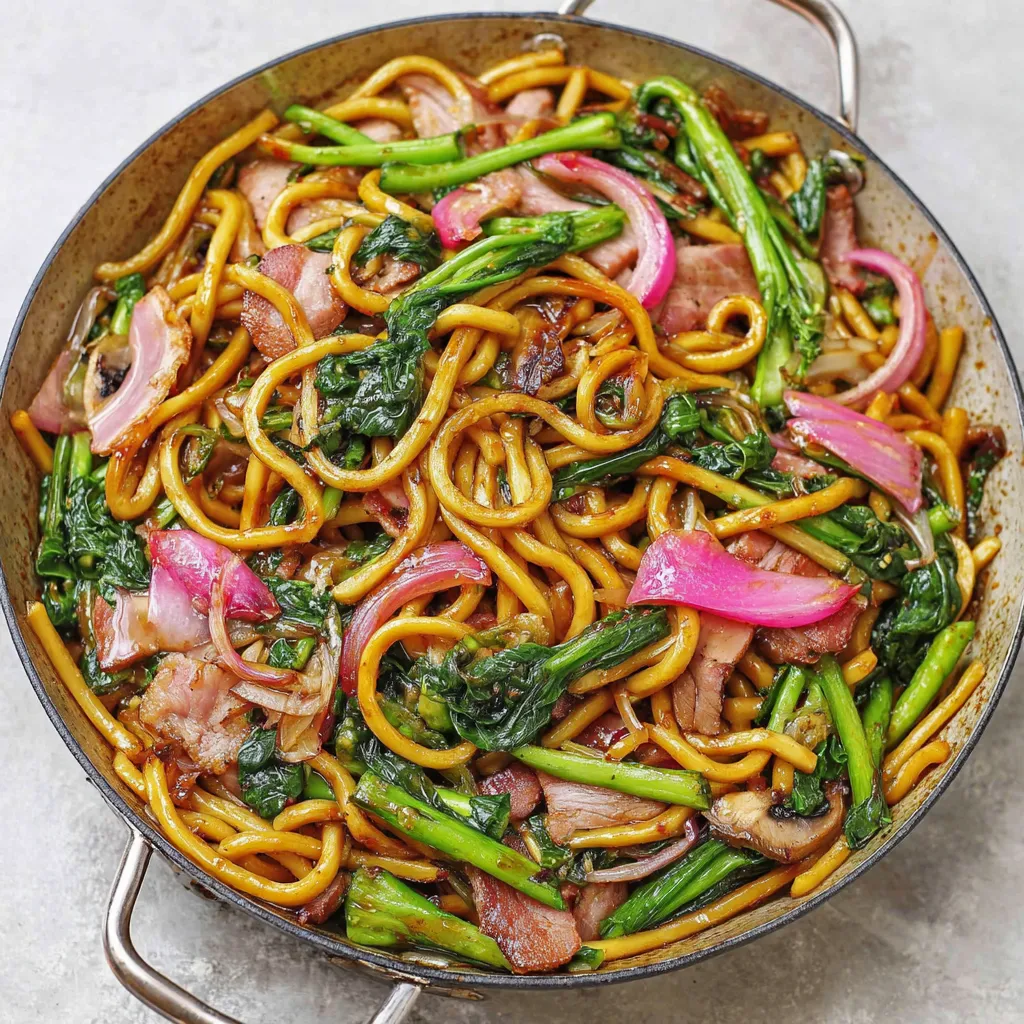
Best Easy Yaki Udon
Ingredients
Equipment
Method
- If using meat, marinate it for at least 15 minutes in a mixture of 1 tablespoon soy sauce and 1 teaspoon cornstarch. If using tofu, press it well to remove excess water.
- If using frozen udon, thaw them. If using dried udon, cook according to package directions until al dente. Be careful not to overcook. Drain and rinse the noodles with cold water.
- In a small bowl, whisk together the soy sauce, oyster sauce, mirin, sugar, sesame oil, minced garlic, and grated ginger. Set aside.
- Heat 1 tablespoon of vegetable oil in a large wok or skillet over medium-high heat. Add the marinated meat (or tofu) and stir-fry until cooked through. Remove from the wok and set aside.
- Add the remaining 1 tablespoon of vegetable oil to the wok. Add the onion, carrot, and bell pepper and stir-fry for 2-3 minutes, until slightly softened. Add the mushrooms and cabbage and continue to stir-fry for another 2-3 minutes, until the vegetables are tender-crisp.
- Add the cooked protein (or tofu) back to the wok with the vegetables. Pour in the prepared Yaki Udon sauce and bring to a simmer. Stir in the cornstarch slurry (cornstarch mixed with water) to thicken the sauce.
- Add the cooked udon noodles to the wok and toss everything together until the noodles are evenly coated in the sauce.
- Garnish with chopped green onions and sesame seeds (if using). Serve immediately and enjoy!