Unveiling the Mushroom Mystery: The Science of the Sear
The key to unlocking the potential of roasted mushrooms lies in understanding the science behind what makes them so delicious. Mushrooms are primarily water – typically around 90%. This high water content presents a challenge: before they can brown and develop those delectable Maillard reaction compounds, that water needs to evaporate. If the oven temperature is too low or the mushrooms are overcrowded, they’ll steam in their own juices, resulting in a soggy, lackluster outcome. The Maillard reaction, that magical chemical process between amino acids and reducing sugars, is what gives roasted foods their characteristic brown color and complex flavor. For the Maillard reaction to occur effectively, high heat and a relatively dry surface are essential. That’s why properly preheating your oven and ensuring adequate spacing between the mushrooms are crucial. Furthermore, fat plays a vital role, not just in flavor, but also in heat transfer, helping to crisp and brown the mushrooms evenly. Certain mushrooms are more prone to water release than others; for instance, cremini or button mushrooms can often release a lot of liquid, while varieties like shiitake tend to hold their shape better. Finally, remember the impact of salt; adding it too early can draw out moisture, inhibiting browning, while adding it later allows for better caramelization.The Holy Grail of Roasted Mushrooms: The Recipe
 Here’s a recipe that, after much experimentation, consistently delivers perfectly roasted mushrooms.
Ingredients:
- 1.5 lbs Mixed Mushrooms (Cremini, Shiitake, Oyster, or your favorites), cleaned and sliced or quartered depending on size
- 3 tablespoons Olive Oil
- 2 cloves Garlic, minced
- 1 tablespoon Fresh Thyme leaves
- 1 tablespoon Balsamic Vinegar
- 1/2 teaspoon Salt (or to taste)
- 1/4 teaspoon Black Pepper (or to taste)
- Optional: 1 tablespoon chopped fresh parsley, for garnish
Instructions:
- Preheat: Preheat your oven to 425°F (220°C). Make sure the oven is fully preheated before adding the mushrooms.
- Prepare Mushrooms: Clean the mushrooms gently with a damp cloth or brush. Avoid soaking them in water, as they will absorb it. Slice larger mushrooms into even pieces, keeping in mind that they will shrink during roasting.
- Combine Ingredients: In a large bowl, toss the mushrooms with olive oil, minced garlic, thyme leaves, balsamic vinegar, salt, and pepper. Ensure that the mushrooms are evenly coated with the mixture.
- Arrange on Baking Sheet: Spread the mushrooms in a single layer on a large baking sheet. Avoid overcrowding the pan, as this will cause the mushrooms to steam instead of roast. If necessary, use two baking sheets.
- Roast: Roast in the preheated oven for 20-25 minutes, or until the mushrooms are tender and deeply browned, stirring halfway through to ensure even cooking.
- Garnish and Serve: Remove from the oven and garnish with chopped fresh parsley, if desired. Serve immediately as a side dish or use in other recipes.
My Mushroom Revelation: A Culinary Investigation
My first few attempts at roasting mushrooms were a disaster. Like many of you, I initially thought it was as simple as tossing them with some oil and throwing them in the oven. The results were always the same: pale, rubbery, and bland. I knew there had to be a better way.The Soggy Start
My initial error was twofold: low oven temperature and overcrowding the pan. I was using a relatively low temperature, around 375°F (190°C), thinking it would prevent burning. Instead, it just allowed the mushrooms to stew in their own released moisture. The overcrowded pan exacerbated the problem, creating a sauna-like environment that prevented any real browning.The Salty Mistake
Then, I made the mistake of salting the mushrooms *before* roasting. While salt enhances flavor, it also draws out moisture. The mushrooms released even more liquid, further hindering the browning process. I was essentially poaching them in salty mushroom broth.The “Aha!” Moment: High Heat and Space
The turning point came when I cranked up the heat to 425°F (220°C) and made sure to spread the mushrooms in a single layer on the baking sheet. Suddenly, I started to see some color! The higher heat allowed the water to evaporate more quickly, and the increased airflow around the mushrooms facilitated browning.Fat is Your Friend
I also experimented with different types of fat. While olive oil is a classic, I found that a combination of olive oil and a small amount of butter added a richness and depth of flavor that was truly exceptional. The fat helped to conduct heat and create a beautifully crisp exterior. This method could be easily adapted to create a Garlic Butter Pork Chops recipe as well.The Balsamic Boost
Finally, I discovered the magic of balsamic vinegar. A small amount of balsamic vinegar, added towards the end of the roasting process, provided a touch of acidity and sweetness that balanced the earthy flavor of the mushrooms perfectly. It also contributes to the deep, rich color. The principle of adding acidity to balance out the richness could be applied to other dishes, like Garlic Butter Mushroom Chicken.The Foolproof Formula: Mastering the Technique
After numerous trials and errors, I’ve distilled the process down to a simple, foolproof technique:- High Heat is Key: Preheat your oven to 425°F (220°C) and ensure it is fully heated.
- Don’t Overcrowd: Spread the mushrooms in a single layer on a baking sheet. Use two baking sheets if necessary.
- Fat is Flavor: Use a generous amount of olive oil, or a combination of olive oil and butter, to coat the mushrooms.
- Salt Strategically: Add salt after the mushrooms have started to brown to avoid drawing out too much moisture early on. Consider using soy sauce as an alternative like in this Honey Soy Mushrooms recipe.
- Balsamic Boost: Drizzle with a touch of balsamic vinegar towards the end of roasting for added flavor and color.
- Embrace the Stir: Stir the mushrooms halfway through roasting to ensure even browning.
Why do my roasted mushrooms sometimes turn out watery and pale instead of browned and flavorful?
Mushrooms have a high water content (around 90%). If the oven temperature is too low or the mushrooms are overcrowded on the baking sheet, they will steam in their own juices instead of browning properly due to the Maillard reaction.
What is the best temperature to roast mushrooms and why?
The article recommends preheating your oven to 425°F (220°C). This high heat allows the water in the mushrooms to evaporate quickly, facilitating browning and preventing them from becoming soggy.
When should I add salt to my mushrooms when roasting them?
The article suggests adding salt after the mushrooms have started to brown. Adding salt too early can draw out moisture and inhibit browning.
What’s the purpose of adding balsamic vinegar to roasted mushrooms?
A small amount of balsamic vinegar, added towards the end of the roasting process, provides a touch of acidity and sweetness that balances the earthy flavor of the mushrooms perfectly. It also contributes to the deep, rich color.
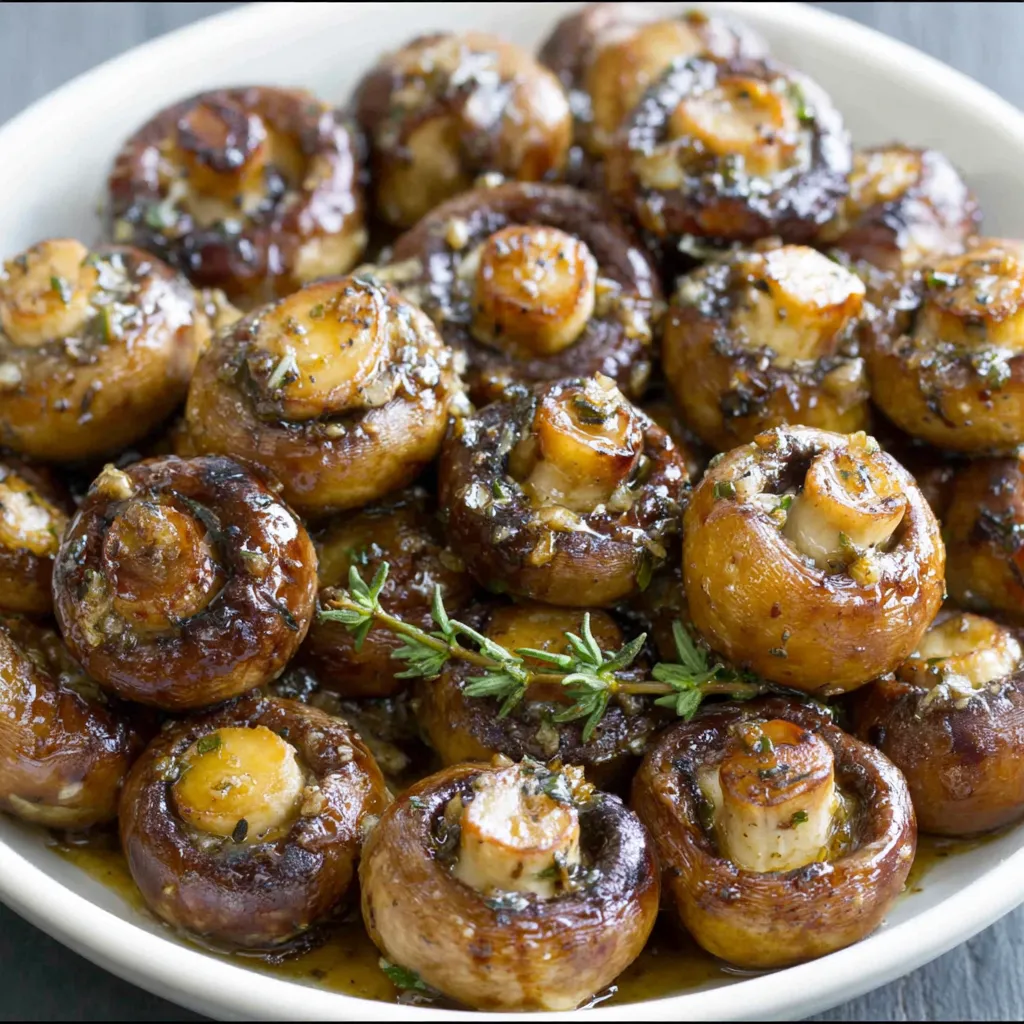
Best Roasted Mushrooms
Ingredients
Equipment
Method
- Preheat your oven to 425°F (220°C). Make sure the oven is fully preheated before adding the mushrooms.
- Clean the mushrooms gently with a damp cloth or brush. Avoid soaking them in water, as they will absorb it. Slice larger mushrooms into even pieces.
- In a large bowl, toss the mushrooms with olive oil, minced garlic, thyme leaves, balsamic vinegar, salt, and pepper. Ensure that the mushrooms are evenly coated with the mixture.
- Spread the mushrooms in a single layer on a large baking sheet. Avoid overcrowding the pan, as this will cause the mushrooms to steam instead of roast. If necessary, use two baking sheets.
- Roast in the preheated oven for 20-25 minutes, or until the mushrooms are tender and deeply browned, stirring halfway through to ensure even cooking.
- Remove from the oven and garnish with chopped fresh parsley, if desired. Serve immediately as a side dish or use in other recipes.