Melting a generous knob of butter into a pan with fragrant garlic is a culinary love language we all understand, the foundation for countless comfort dishes. But what happens when that familiar, savory start takes an unexpected turn, veering away from pasta or steak and diving headfirst into a vibrant, creamy coconut curry? It becomes the secret weapon, the game-changing first step that transforms a good salmon curry into something utterly unforgettable. This isn’t just another curry; it’s a fusion of comfort, a bridge between two worlds of flavor that results in pure magic.
The result is a dish that will make you feel like a five-star chef in your own kitchen, all in under 30 minutes. Imagine flaky, perfectly seared salmon fillets bathing in a luscious, aromatic sauce that’s rich with coconut milk, warmed by curry spices, and grounded by that incredible, savory depth of garlic butter. Each bite is a perfect harmony of textures and tastes—creamy, savory, slightly sweet, and deeply satisfying. This is the weeknight dinner that feels like a weekend indulgence.
The Coconut Curry Salmon Difference
- Garlic Butter Foundation: Starting with garlic butter instead of just oil creates an incredible layer of savory richness that you can’t get any other way. It infuses the entire sauce with a familiar, comforting depth that beautifully complements the exotic curry spices.
- Sear-Then-Simmer Technique: We pan-sear the salmon first to create a gorgeous, crispy skin and lock in moisture. It then finishes cooking gently in the sauce, ensuring it’s perfectly flaky and infused with flavor, never dry or overcooked.
- Balanced, Luxurious Sauce: This sauce strikes the perfect balance. Full-fat coconut milk provides creaminess, red curry paste brings the heat and complexity, a touch of sweetness balances the spice, and lime juice brightens everything up for a truly restaurant-quality finish.
The Building Blocks
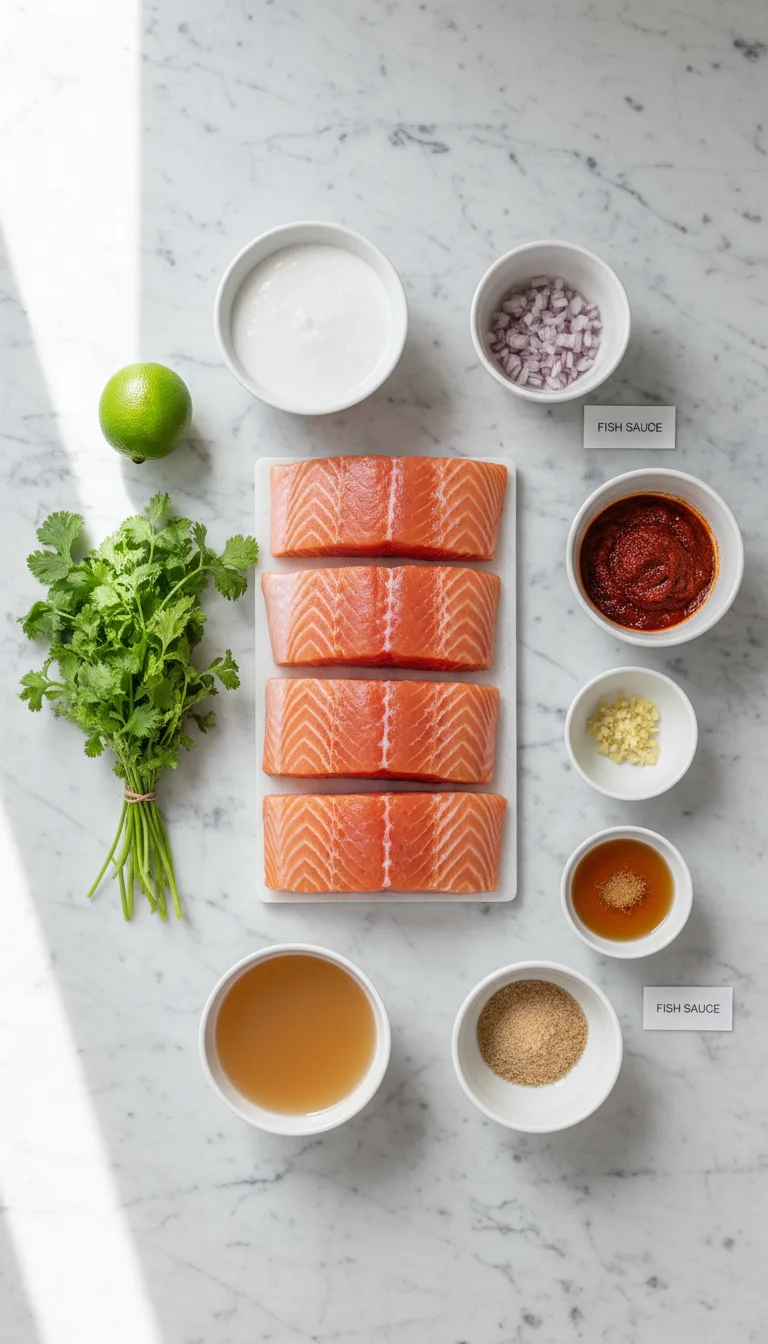
- Salmon Fillets: About 1.5 lbs, cut into 4 equal portions. You can use skin-on or skinless, but skin-on will give you that delightfully crispy texture.
- Unsalted Butter: The heart of our garlic butter base. Using unsalted allows you to control the final seasoning of the dish perfectly.
- Garlic: Freshly minced is non-negotiable here. It’s a star player, and the pre-minced jarred kind just doesn’t have the same potent, aromatic flavor.
- Shallot: Finely chopped. Shallots are milder and sweeter than onions, adding a delicate aromatic layer without overpowering the other flavors.
- Red Curry Paste: This is the soul of the curry. Brands vary in heat and flavor, so start with the recommended amount and adjust to your liking. (Thai Kitchen and Mae Ploy are excellent choices).
- Full-Fat Coconut Milk: This is crucial for a rich, creamy, and luscious sauce. Do not use “light” coconut milk, as it will result in a thin, watery curry. (The creaminess is what makes it so luxurious).
- Chicken or Vegetable Broth: Just a splash to help thin the sauce to the perfect consistency.
- Brown Sugar or Maple Syrup: A small amount is essential to balance the saltiness of the broth and the spice of the curry paste.
- Fish Sauce: The secret umami weapon of Southeast Asian cooking. It adds a deep, savory complexity that you can’t get from salt alone.
- Lime: You’ll use both the zest and the juice. The zest adds aromatic oils, and the juice provides a critical burst of fresh acidity at the end to brighten and lift all the flavors.
- Fresh Cilantro or Thai Basil: For garnish and a final pop of fresh, herbaceous flavor.
- Olive Oil: Just a little for searing the salmon.
- Salt & Black Pepper: To season the salmon and the final sauce.
Swaps & Alternatives
Don’t have everything on hand? No problem! This recipe is wonderfully flexible. Here are a few simple swaps you can make in a pinch.- For Salmon: This recipe works beautifully with other firm fish like cod, halibut, or even large shrimp. Adjust cooking time accordingly; shrimp will cook much faster.
- For Shallot: If you don’t have a shallot, you can use half of a small yellow onion, finely diced.
- For Red Curry Paste: Green or yellow curry paste can be used for a different flavor profile. Green is typically brighter and more herbaceous, while yellow is milder and richer in turmeric.
- For Fish Sauce: If you need a vegetarian or vegan alternative, you can use tamari or soy sauce. It won’t be an exact match, but it will still provide a nice umami depth.
- For Brown Sugar: Coconut sugar or a drizzle of honey can also be used to provide that necessary touch of sweetness.
Flavor Boosts
Ready to take this incredible dish to the next level? These simple additions and twists can add new layers of complexity and make the recipe truly your own.First, consider adding a knob of fresh ginger, grated alongside the garlic and shallot. It introduces a warm, zesty spice that cuts through the richness of the coconut milk beautifully.
For a deeper, more complex flavor, try adding a tablespoon of miso paste along with the curry paste. This is the secret to our popular Coconut-miso Salmon Curry, and it brings an incredible savory, umami dimension that is absolutely divine.
Don’t be afraid to add vegetables! A handful of fresh spinach or kale can be wilted into the sauce at the very end. For heartier veggies like bell peppers or broccoli florets, add them with the shallots to give them time to soften. This is a great way to turn it into a one-pan meal, similar to this easy Chickpea Vegetable Curry.
Finally, for a bit of crunch and nutty flavor, toast some unsweetened shredded coconut or chopped cashews in a dry pan until fragrant and sprinkle them over the finished dish.
How to Make Coconut Curry Salmon
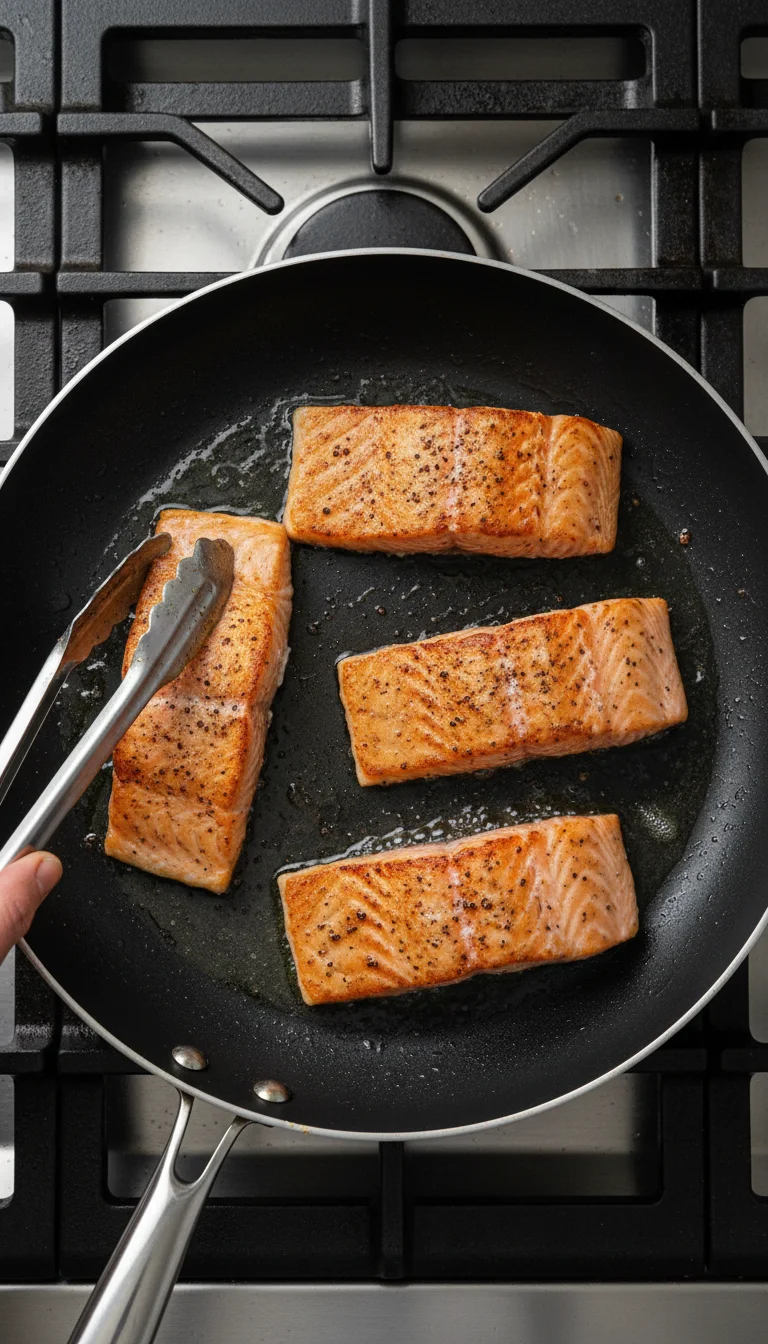
1. Prepare and Sear the Salmon
First things first, pat your salmon fillets completely dry with a paper towel. This is the most important step for achieving a crispy skin and a beautiful sear. Season both sides generously with salt and pepper.Heat a tablespoon of olive oil in a large, non-stick skillet over medium-high heat. Once the oil is shimmering, carefully place the salmon fillets skin-side down. Press gently on each fillet with a spatula for about 10 seconds to ensure the entire surface of the skin makes contact with the pan. Sear for 4-5 minutes, until the skin is golden and crispy. Flip the salmon and cook for just 1-2 minutes on the other side. The salmon will not be cooked through at this point, and that’s exactly what we want. Transfer the seared salmon to a plate and set it aside.
2. Build the Aromatic Base
Reduce the heat to medium and add the unsalted butter to the same skillet. Once it’s melted and foaming, add the finely chopped shallot and cook for about 2 minutes, stirring frequently, until it has softened.Now, add the minced garlic and cook for just another 30-60 seconds until fragrant. Be very careful not to let the garlic burn, as it will become bitter and ruin the sauce. This garlic butter foundation is what sets this recipe apart from a standard Pan-fried Salmon In Curry Cream Sauce.
3. Create the Curry Sauce
Add the red curry paste to the skillet with the garlic and shallots. Cook for one minute, stirring constantly, to “bloom” the spices. This step is crucial for unlocking the full depth and aroma of the curry paste.Pour in the full-fat coconut milk and the chicken or vegetable broth, whisking to combine everything smoothly. Bring the sauce to a gentle simmer, then stir in the brown sugar and fish sauce. Let it simmer for 3-4 minutes, allowing the flavors to meld and the sauce to thicken slightly. The aroma in your kitchen right now should be absolutely incredible, reminiscent of a comforting Slow Cooker Thai Coconut Chicken Soup.
4. Finish the Dish
Taste the sauce and adjust the seasoning if necessary. It might need another pinch of salt or a little more sugar depending on the brands of curry paste and broth you used.Nestle the seared salmon fillets back into the skillet, skin-side up, to keep it crispy. Spoon some of the luscious curry sauce over the top of each fillet. Let the salmon simmer gently in the sauce for another 3-5 minutes, or until it’s cooked through to your liking and flakes easily with a fork.
5. Add the Finishing Touches
Remove the skillet from the heat. Squeeze the fresh lime juice all over the salmon and sauce, and sprinkle with the lime zest. This final hit of acid is essential—it cuts through the richness and makes all the flavors pop.Garnish generously with fresh, chopped cilantro or Thai basil. Serve immediately and prepare for the rave reviews.
Avoid These Pitfalls
- Overcooking the Salmon: The biggest mistake is cooking the salmon completely during the initial sear. Remember, it will continue to cook in the sauce. Searing is for texture; simmering is for finishing. Pull it from the pan when it’s still slightly underdone in the center.
- Using Light Coconut Milk: Using “light” or “lite” coconut milk is a recipe for a thin, disappointing sauce. The full-fat version contains the cream that gives the curry its signature body and luxurious mouthfeel. Don’t substitute this!
- Skipping the Final Lime Juice: It might seem like a small step, but adding acid at the end is transformative. Without it, the rich, creamy sauce can feel a bit heavy or one-note. The lime juice brightens everything and provides a crucial, vibrant contrast.
Complete the Menu
This Coconut Curry Salmon is a star, but the right supporting cast will turn it into a truly memorable meal. The sauce is so delicious you won’t want to waste a single drop, so serving it with something to soak it all up is a must.Steamed jasmine or basmati rice is the classic and perfect choice. Its fluffy texture and subtle fragrance are the ideal canvas for the rich curry. For a slightly heartier and nuttier option, try brown rice or quinoa. If you love coconut as much as I do, serving it alongside a fluffy Coconut Chicken And Rice would be a flavor explosion.
Warm, pillowy naan bread or roti is fantastic for dipping and scooping. A side of lightly steamed or roasted vegetables, like broccoli, asparagus, or bok choy, adds a wonderful freshness and a bit of crunch to contrast with the creamy sauce.
For garnish, think fresh and vibrant. Beyond the cilantro, consider adding thinly sliced red chilies for a kick of heat, a sprinkle of toasted sesame seeds for texture, or a few extra lime wedges on the side for those who love extra zest. The flavor profile is globally beloved, much like this Brazilian Coconut Chicken Curry which also pairs beautifully with similar sides.
Did you change any ingredients? Let me know in the comments how you made this recipe your own
What makes this coconut curry salmon recipe unique?
This recipe’s uniqueness comes from two key elements: its garlic butter foundation, which adds a deep, savory richness, and its ‘sear-then-simmer’ technique. The salmon is seared first to create a crispy skin and lock in moisture, then it finishes cooking gently in the sauce, ensuring it’s perfectly flaky and never dry.
Can I use light coconut milk for this curry?
No, it is not recommended. The recipe specifically calls for full-fat coconut milk because it is crucial for creating a rich, creamy, and luscious sauce. Using light coconut milk will result in a thin and watery curry, lacking the desired luxurious texture.
What other types of fish or protein can I use instead of salmon?
This recipe is quite versatile. You can substitute salmon with other firm fish like cod or halibut. It also works beautifully with large shrimp, but be sure to adjust the cooking time as shrimp cook much more quickly than fish fillets.
How can I add vegetables to this salmon curry?
You can easily add vegetables to make it a one-pan meal. For heartier vegetables like bell peppers or broccoli, add them to the pan with the shallots to give them time to soften. For leafy greens like spinach or kale, stir them into the sauce at the very end until they are just wilted.
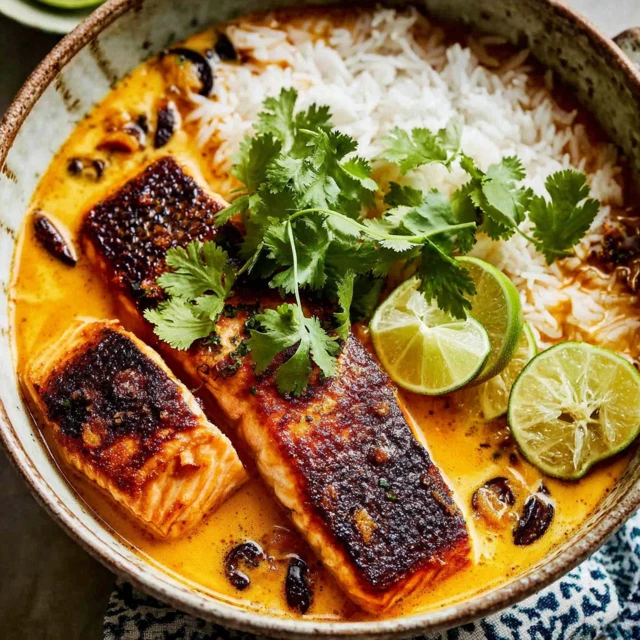
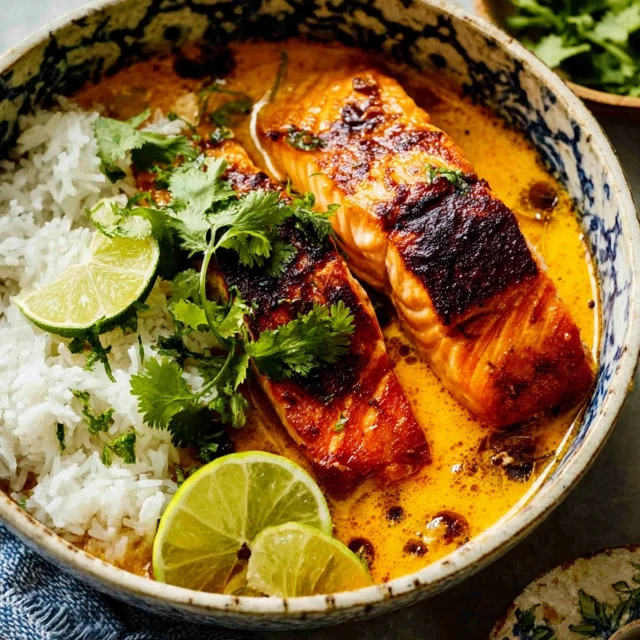
Coconut Curry Salmon in Garlic Butter
Ingredients
Equipment
Method
- Pat the salmon fillets completely dry with a paper towel and season both sides generously with salt and pepper.
- Heat olive oil in a large, non-stick skillet over medium-high heat. Once shimmering, place the salmon skin-side down and sear for 4-5 minutes until the skin is golden and crispy. Flip and cook for another 1-2 minutes. The salmon will not be fully cooked. Transfer to a plate and set aside.
- Reduce heat to medium and add the unsalted butter to the same skillet. Once melted, add the chopped shallot and cook for 2 minutes until softened.
- Add the minced garlic and cook for another 30-60 seconds until fragrant, being careful not to let it burn.
- Stir in the red curry paste and cook for 1 minute, stirring constantly, to bloom the spices.
- Pour in the full-fat coconut milk and broth, whisking to combine. Stir in the brown sugar and fish sauce. Bring to a gentle simmer and cook for 3-4 minutes, allowing the sauce to thicken slightly.
- Taste the sauce and adjust seasoning with more salt or sugar if needed. Nestle the seared salmon fillets back into the skillet, skin-side up.
- Spoon some of the curry sauce over the salmon and let it simmer gently for 3-5 minutes, or until cooked through and flaky.
- Remove the skillet from the heat. Squeeze the fresh lime juice over the dish and sprinkle with the lime zest. Garnish generously with fresh cilantro or Thai basil and serve immediately.
Notes
– For the crispiest skin, ensure the salmon is patted completely dry before seasoning and searing.
– Do not overcook the salmon in the initial sear; it will finish cooking in the sauce.
– Full-fat coconut milk is essential for a rich, creamy sauce. Do not substitute with light coconut milk.
– The final squeeze of lime juice is crucial; it brightens and balances the richness of the curry. Variations & Substitutions:
– Protein: This recipe works well with other firm fish like cod or halibut, or with large shrimp (adjust cooking time).
– Aromatics: Add 1 teaspoon of freshly grated ginger along with the garlic for extra warmth.
– Umami Boost: Whisk in 1 tablespoon of miso paste with the curry paste for a deeper savory flavor.
– Vegetables: Wilt in a handful of spinach or kale at the end, or add chopped bell peppers or broccoli florets with the shallots to make it a one-pan meal.
– Garnish: Top with toasted cashews, toasted shredded coconut, or thinly sliced red chilies for extra texture and heat. Serving Suggestions:
– Serve with steamed jasmine or basmati rice to soak up the delicious sauce.
– Warm naan bread or roti is perfect for dipping.
– Pair with a side of steamed or roasted vegetables like broccoli, asparagus, or bok choy.