The Alchemy of Beef and Barley
At its heart, Beef and Barley Soup is a symphony of flavors extracted through careful cooking. The beef contributes umami richness and depth, while the barley provides a nutty, slightly chewy texture and acts as a natural thickener. Vegetables contribute sweetness, aroma, and essential nutrients. But it’s not just about throwing everything into a pot; it’s about understanding how these ingredients interact and coaxing out their full potential. The key principles at play are:- Maillard Reaction: Searing the beef before simmering triggers the Maillard reaction, a chemical process between amino acids and reducing sugars that creates hundreds of flavor compounds. This is what gives the beef that delicious browned crust and contributes to the soup’s overall depth.
- Gelatinization: Bone-in beef or the addition of beef broth made from bones releases gelatin, a protein that adds body and richness to the soup. This gelatinization process is crucial for achieving a velvety texture.
- Starch Release: Barley, like rice or potatoes, contains starch. As it cooks, the starch granules absorb water and swell, thickening the soup to a desirable consistency. Overcooking can lead to a gummy texture, so timing is essential.
- Flavor Infusion: Slowly simmering the ingredients allows the flavors to meld and deepen over time. This process extracts the essence of each ingredient and creates a harmonious blend.
The Definitive Beef and Barley Soup Recipe
 This recipe reflects my hard-won knowledge and techniques for creating the ultimate Beef and Barley Soup.
Yields:
6-8 servingsPrep time:
25 minutesCook time:
2-3 hoursIngredients:
- 2 tablespoons olive oil
- 1.5 lbs beef chuck, cut into 1-inch cubes
- 1 large onion, chopped
- 2 carrots, peeled and chopped
- 2 celery stalks, chopped
- 4 cloves garlic, minced
- 8 cups beef broth (low sodium)
- 1 cup pearl barley, rinsed
- 1 (14.5 ounce) can diced tomatoes, undrained
- 1 teaspoon dried thyme
- 1 teaspoon dried rosemary
- 1 bay leaf
- 1 cup frozen peas
- Salt and freshly ground black pepper to taste
- Fresh parsley, chopped (for garnish)
Equipment:
- Large Dutch oven or soup pot
- Cutting board
- Chef’s knife
Instructions:
- Sear the Beef: Heat olive oil in a large Dutch oven or soup pot over medium-high heat. Season beef cubes with salt and pepper. Working in batches, sear the beef on all sides until browned. Remove beef from the pot and set aside.
- Sauté Vegetables: Add onion, carrots, and celery to the pot and sauté until softened, about 5-7 minutes. Add garlic and cook for another minute until fragrant.
- Combine Ingredients: Return the beef to the pot. Pour in beef broth and add barley, diced tomatoes (with their juice), thyme, rosemary, and bay leaf.
- Simmer: Bring the soup to a boil, then reduce heat to low, cover, and simmer for 2-3 hours, or until the beef is tender and the barley is cooked through. Stir occasionally.
- Adjust and Finish: Remove the bay leaf. Stir in frozen peas during the last 15 minutes of cooking. Season with salt and pepper to taste.
- Serve: Ladle soup into bowls and garnish with fresh parsley.
My Soup-Making Saga: A Culinary Investigation
My journey to perfecting Beef and Barley Soup wasn’t a straight line. It was a winding road filled with soggy barley, bland broth, and beef that resembled shoe leather. But with each mistake, I learned something valuable.The Soggy Barley Debacle
My first few attempts were a disaster, largely because I treated barley like rice. I added it at the beginning and let it cook for hours, resulting in a mushy, flavorless mess. Then, I had an “Aha!” moment when I realized that barley releases starch as it cooks, thickening the soup. The longer it cooks, the more starch is released, leading to a gummy consistency. The solution? Rinse the barley thoroughly before adding it to remove excess starch and monitor the cooking time closely. I also found that pearl barley, while quicker to cook, can become mushy more easily than hulled barley (though hulled barley requires a much longer cooking time).The Case of the Bland Broth
Like many of you, I initially thought that any beef broth would do. But I soon discovered that the quality of the broth is paramount. Store-bought broths often lack depth and complexity. My breakthrough came when I started using homemade beef broth, rich with collagen and bone marrow. Alternatively, a high-quality, low-sodium store-bought broth can be elevated by adding beef bouillon or a splash of red wine during the simmering process. This small addition made a world of difference, transforming the soup from bland to deeply savory. You can achieve a similar richness in your Broccoli Cheddar Soup by using homemade vegetable stock or adding a parmesan rind while it simmers.Taming the Tough Beef Beast
Ah, the beef. My initial attempts resulted in tough, chewy meat that was far from enjoyable. I tried various cuts and cooking methods, but nothing seemed to work consistently. The key, I realized, was twofold: selecting the right cut and employing a slow, low-heat cooking method. Beef chuck, with its generous marbling, is ideal for braising. Searing it before simmering creates a flavorful crust and locks in moisture. And the low, slow simmer allows the collagen in the chuck to break down, resulting in tender, melt-in-your-mouth beef. This same principle applies when making a hearty Beef Stew – the longer it simmers, the more tender the beef becomes.The Vegetable Harmony
Initially, I was haphazard with my vegetables, throwing them in at random times. I learned that timing is everything. Sautéing the onions, carrots, and celery (mirepoix) at the beginning builds a flavorful base. Adding the garlic towards the end of the sauté prevents it from burning. And stirring in the frozen peas during the last 15 minutes ensures they retain their vibrant color and texture. This same method of layering flavors is essential when creating the perfect French Onion Soup.The Foolproof Method: A Summary of Success
After countless experiments and taste tests, I’ve distilled the process into a simple, foolproof method. Follow these steps, and you’ll be rewarded with a Beef and Barley Soup that is both delicious and satisfying.- Sear the Beef for Maximum Flavor: Don’t skip the searing step! It’s crucial for developing a rich, complex flavor.
- Build a Flavorful Base: Sauté the mirepoix (onions, carrots, and celery) until softened to create a foundation of flavor.
- Use High-Quality Broth: The broth is the backbone of the soup. Opt for homemade or a high-quality, low-sodium store-bought option.
- Rinse the Barley: Thoroughly rinse the barley before adding it to the soup to remove excess starch and prevent a gummy texture.
- Simmer Low and Slow: Allow the soup to simmer gently for at least 2 hours, or until the beef is tender and the barley is cooked through.
- Add Vegetables at the Right Time: Add the peas towards the end to preserve their color and texture.
- Season Generously: Don’t be afraid to season with salt and pepper to taste. Taste and adjust as needed.
Why is it important to sear the beef before adding it to the soup?
Searing the beef triggers the Maillard reaction, a chemical process that creates hundreds of flavor compounds, giving the beef a delicious browned crust and contributing to the soup’s overall depth.
How do I prevent the barley from becoming mushy in the soup?
Rinse the barley thoroughly before adding it to the soup to remove excess starch and monitor the cooking time closely. Overcooking releases too much starch, leading to a gummy texture.
What kind of beef is best to use for beef and barley soup?
Beef chuck, with its generous marbling, is ideal for braising in beef and barley soup. Searing it before simmering creates a flavorful crust, and the low, slow simmer allows the collagen in the chuck to break down, resulting in tender, melt-in-your-mouth beef.
Why is the quality of broth important and what can I do to improve it?
The broth is the backbone of the soup. Homemade beef broth is best, or a high-quality, low-sodium store-bought broth can be elevated by adding beef bouillon or a splash of red wine during simmering.
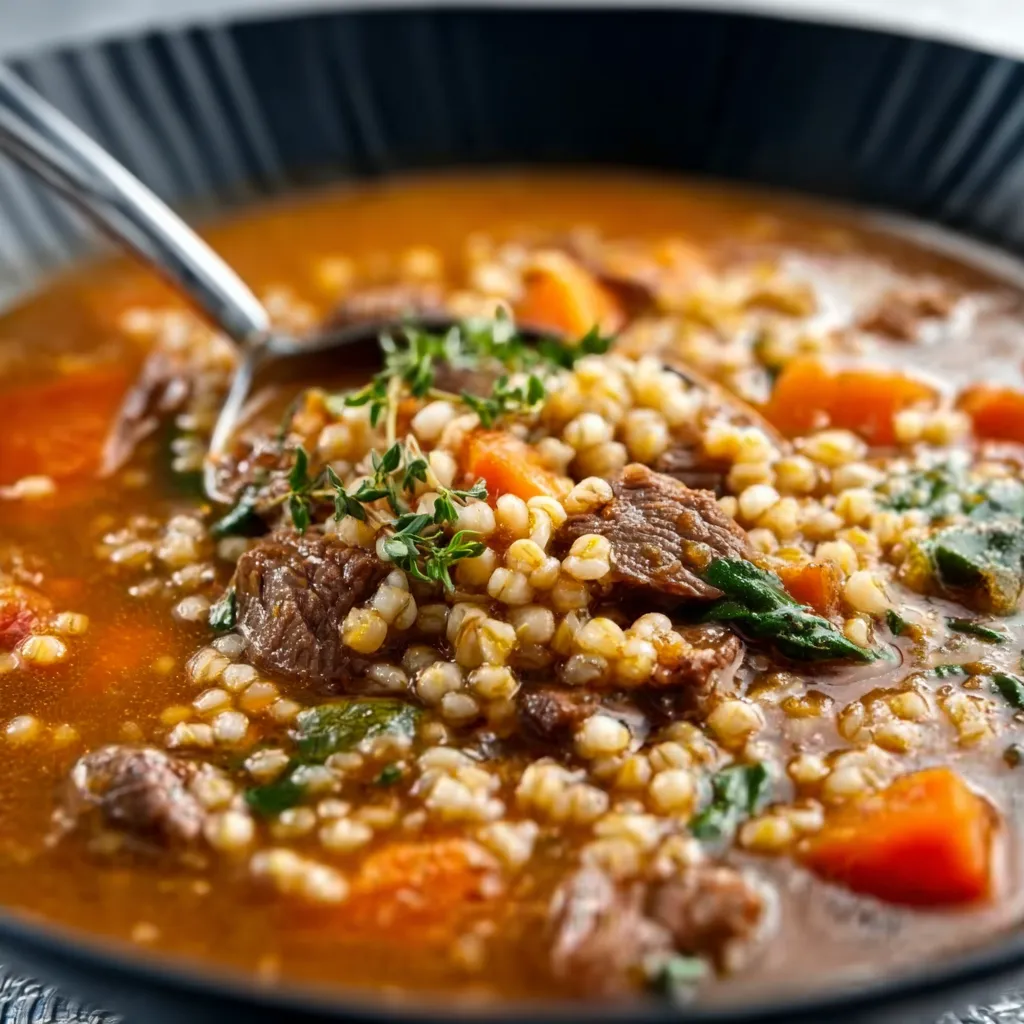
Best Beef and Barley Soup
Ingredients
Equipment
Method
- Heat olive oil in a large Dutch oven or soup pot over medium-high heat.
- Season beef cubes with salt and pepper.
- Working in batches, sear the beef on all sides until browned. Remove beef from the pot and set aside.
- Add onion, carrots, and celery to the pot and sauté until softened, about 5-7 minutes.
- Add garlic and cook for another minute until fragrant.
- Return the beef to the pot.
- Pour in beef broth and add barley, diced tomatoes (with their juice), thyme, rosemary, and bay leaf.
- Bring the soup to a boil, then reduce heat to low, cover, and simmer for 2-3 hours, or until the beef is tender and the barley is cooked through. Stir occasionally.
- Remove the bay leaf.
- Stir in frozen peas during the last 15 minutes of cooking.
- Season with salt and pepper to taste.
- Ladle soup into bowls and garnish with fresh parsley.