Is it truly possible to create a Pasta Carbonara that is both authentically Italian and consistently perfect, avoiding the dreaded scrambled egg scenario that haunts so many home cooks?
Unlocking Carbonara’s Secrets: The Science of Silky Smoothness
The beauty of Pasta Carbonara lies in its simplicity: pasta, guanciale (or pancetta), eggs, Pecorino Romano cheese, and black pepper. However, this simplicity belies a complex dance of chemistry and technique. The key to success is understanding how heat interacts with the eggs and cheese to create a creamy, emulsified sauce, not a clumpy, eggy mess.
The “sauce” isn’t really a sauce in the traditional sense. It’s an emulsion formed by the rendered fat from the guanciale, the starchy pasta water, and the egg yolks and cheese. The heat from the pasta and pasta water gently cooks the egg yolks, thickening the mixture. Too much heat, however, and the proteins in the eggs coagulate too quickly, leading to scrambling. The cheese, particularly Pecorino Romano, also plays a crucial role. Its high fat content contributes to the richness and helps stabilize the emulsion. The starch from the pasta water acts as a binder, further preventing the sauce from separating.
The Definitive Carbonara Recipe
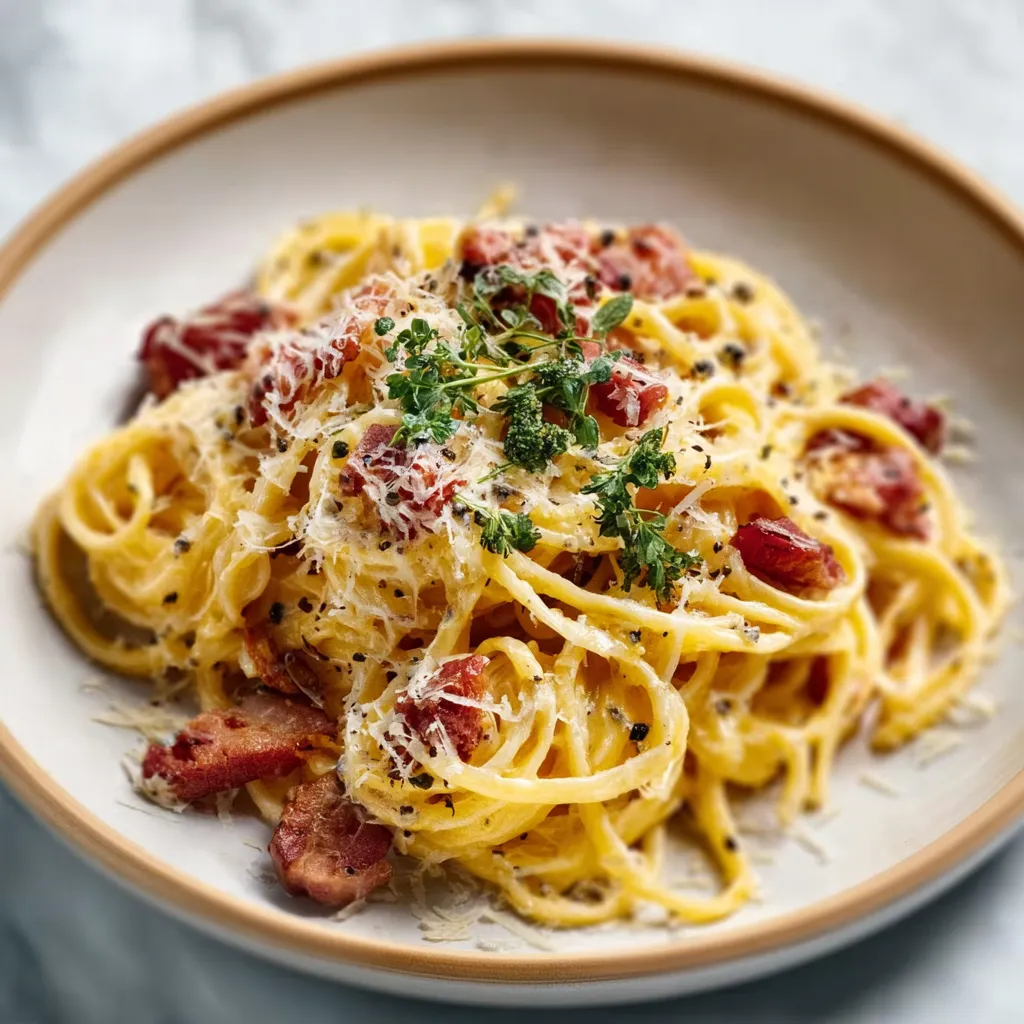
Ingredients:
- 1 pound (450g) dried pasta (spaghetti, bucatini, or rigatoni)
- 4 ounces (115g) guanciale, cut into 1/4-inch thick lardons
- 4 large egg yolks
- 1 whole large egg
- 1 cup (100g) finely grated Pecorino Romano cheese, plus more for serving
- Freshly ground black pepper, to taste (at least 1 teaspoon)
- Salt, for pasta water
Instructions:
- Cook the pasta: Bring a large pot of salted water to a rolling boil. Add the pasta and cook according to package directions until al dente. Reserve about 1 cup of pasta water before draining.
- Prepare the guanciale: While the pasta is cooking, cook the guanciale in a large skillet over medium heat until crispy and golden brown, rendering out its fat. Remove the guanciale from the skillet and set aside, leaving the rendered fat in the pan.
- Make the egg mixture: In a medium bowl, whisk together the egg yolks, whole egg, and Pecorino Romano cheese until smooth and well combined. Season generously with freshly ground black pepper.
- Combine everything: Drain the pasta and immediately add it to the skillet with the rendered guanciale fat. Toss to coat. Remove the skillet from the heat (this is crucial!). Pour the egg mixture over the hot pasta and quickly toss everything together, adding a little of the reserved pasta water at a time, until a creamy sauce forms that coats the pasta. The heat from the pasta and residual heat from the pan will gently cook the eggs. It’s very important to work quickly at this stage to prevent scrambling.
- Add guanciale and serve: Add the crispy guanciale to the pasta and toss again. Serve immediately, topped with more grated Pecorino Romano cheese and freshly ground black pepper.
My Carbonara Journey: From Disaster to Deliciousness
The Scrambled Start: Early Missteps
My first few attempts were a disaster. Like many of you, I initially thought, “How hard can it be?” Famous last words! I ended up with a pan full of scrambled eggs and sad, lonely pasta. I was using bacon instead of guanciale, which is a sin in the eyes of purists, and I wasn’t careful enough with the heat. The eggs cooked too quickly, and the sauce separated. It was a culinary catastrophe.
Bacon vs. Guanciale: A Revelation
Then, I had an ‘Aha!’ moment. I realized the importance of using guanciale. The rendered fat from guanciale is different from bacon fat; it has a richer, more porky flavor and a smoother texture. Bacon, while delicious, is often too smoky and salty and doesn’t render as nicely. Once I switched to guanciale (or pancetta when guanciale was unavailable), the flavor profile improved dramatically.
Temperature Control: The Game Changer
The biggest breakthrough came when I focused on temperature control. Removing the skillet from the heat before adding the egg mixture was the key. The residual heat from the pasta and the pan is enough to gently cook the eggs without scrambling them. Adding pasta water, a little at a time, helped to create a smooth, emulsified sauce.
The Cheese Factor: Pecorino Perfection
Finally, I experimented with different cheeses. While Parmesan cheese is a common substitute, I found that Pecorino Romano, with its sharp, salty flavor and high fat content, was the perfect complement to the richness of the guanciale and eggs. Don’t skimp on the cheese! It’s essential for creating the creamy texture and authentic flavor.
This recipe goes great with Garlic Beef Pasta, or if you want something lighter, Garlic Lemon Pasta. You can also use similar flavors to make a Chicken Carbonara if you prefer!
The Foolproof Carbonara Technique: A Step-by-Step Guide to Perfection
Here’s a summary of the technique, ensuring you achieve that perfect, creamy Carbonara every time:
- Use Guanciale (or Pancetta): The right fat source is crucial for authentic flavor and texture.
- Cook Pasta Al Dente and Reserve Pasta Water: The starchy water is essential for creating the emulsion.
- Remove the Skillet from the Heat: This is the most important step to prevent scrambled eggs.
- Add Egg Mixture Gradually and Toss Vigorously: Work quickly to emulsify the sauce.
- Adjust Consistency with Pasta Water: Add a little at a time until the sauce coats the pasta beautifully.
- Serve Immediately: Carbonara is best enjoyed fresh, before the sauce can separate.
What is the most important step to avoid scrambled eggs when making Carbonara?
Removing the skillet from the heat before adding the egg mixture is the most important step. The residual heat from the pasta and pan gently cooks the eggs without scrambling them.
Why is guanciale preferred over bacon in authentic Carbonara?
Guanciale’s rendered fat has a richer, more porky flavor and smoother texture compared to bacon fat. Bacon is often too smoky and salty and doesn’t render as nicely.
What role does pasta water play in creating a creamy Carbonara sauce?
The starchy pasta water acts as a binder, helping to create an emulsion and prevent the sauce from separating. It also helps to adjust the consistency of the sauce.
Why is Pecorino Romano recommended over Parmesan cheese in this recipe?
Pecorino Romano, with its sharp, salty flavor and high fat content, complements the richness of the guanciale and eggs, contributing to the creamy texture and authentic flavor.
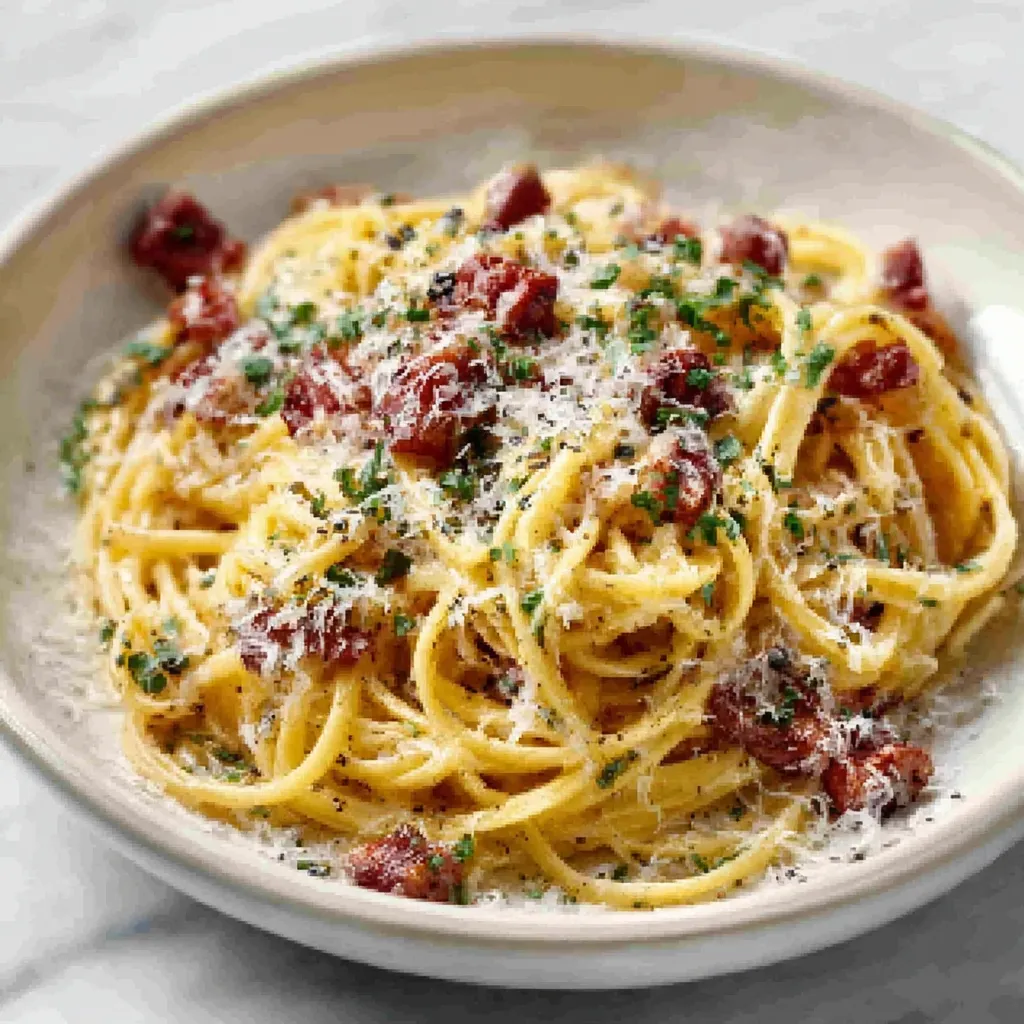
PASTA CARBONARA ULTIMATE RECIPE
Ingredients
Equipment
Method
- Bring a large pot of salted water to a rolling boil.
- Add the pasta and cook according to package directions until al dente. Reserve about 1 cup of pasta water before draining.
- While the pasta is cooking, cook the guanciale in a large skillet over medium heat until crispy and golden brown, rendering out its fat.
- Remove the guanciale from the skillet and set aside, leaving the rendered fat in the pan.
- In a medium bowl, whisk together the egg yolks, whole egg, and Pecorino Romano cheese until smooth and well combined.
- Season generously with freshly ground black pepper.
- Drain the pasta and immediately add it to the skillet with the rendered guanciale fat. Toss to coat.
- Remove the skillet from the heat.
- Pour the egg mixture over the hot pasta and quickly toss everything together, adding a little of the reserved pasta water at a time, until a creamy sauce forms that coats the pasta.
- Add the crispy guanciale to the pasta and toss again.
- Serve immediately, topped with more grated Pecorino Romano cheese and freshly ground black pepper.